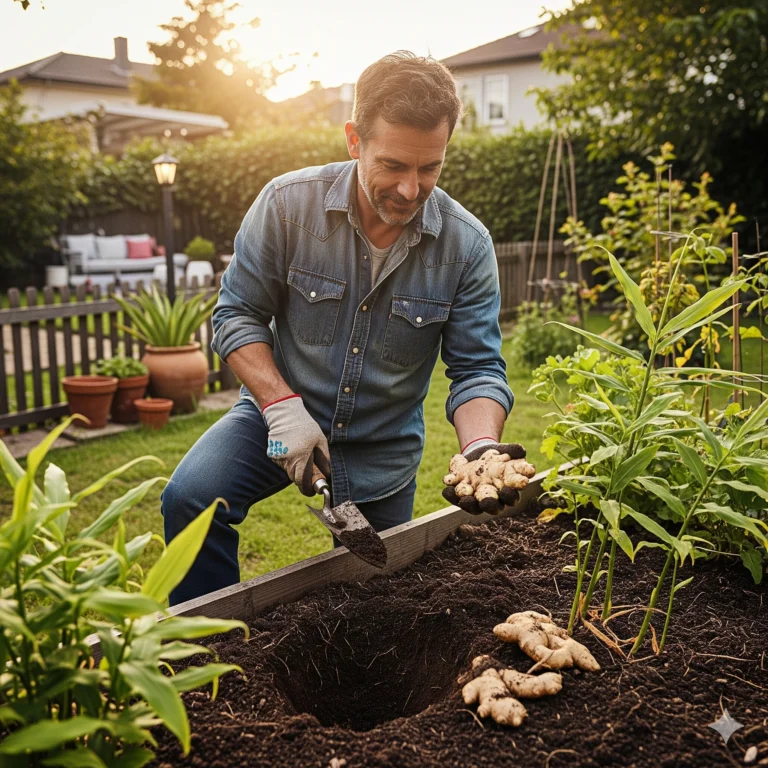
Grow Perfect Japanese Satsumaimo: The Complete Guide
Introduction: Satsumaimo — Japan’s Beloved Sweet Potato
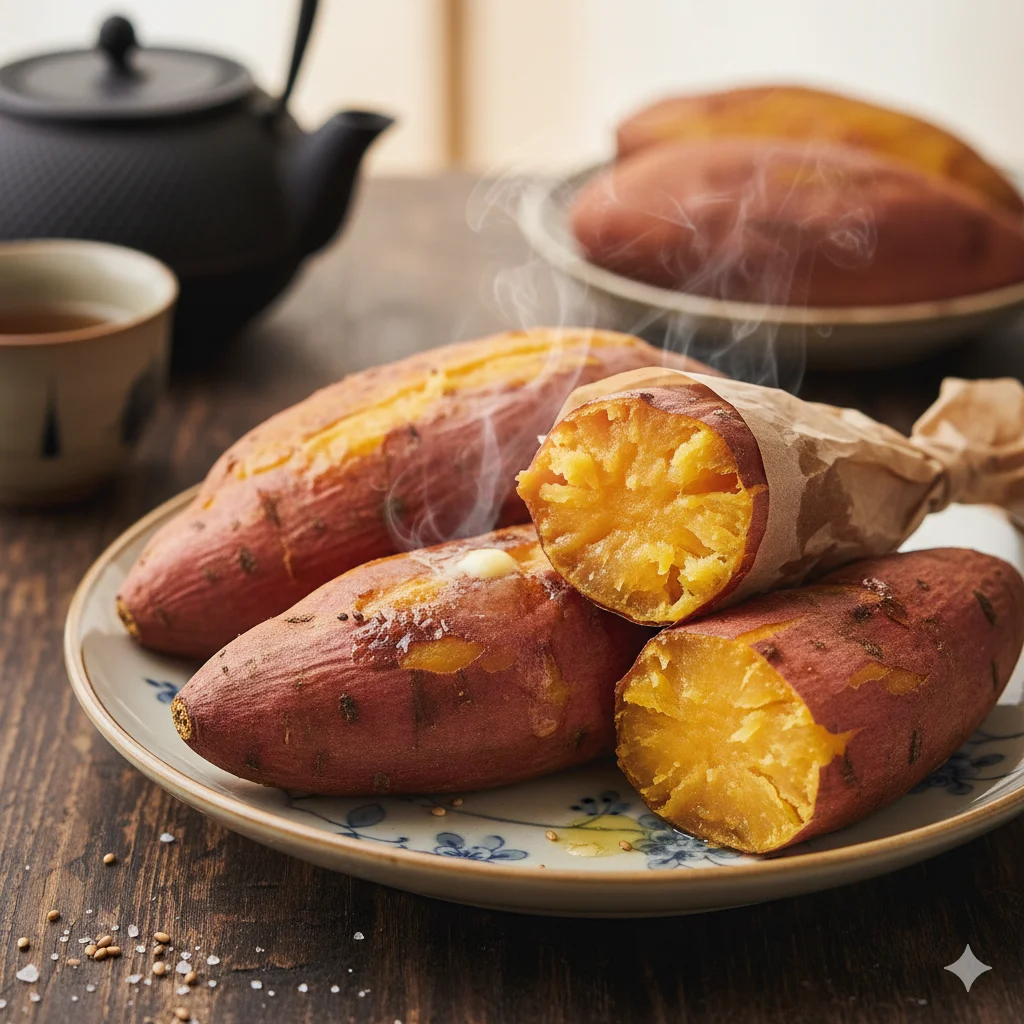
Satsumaimo (Ipomoea batatas) represents Japan’s premier sweet potato, cultivated for over 400 years and deeply woven into Japanese cuisine and culture. Unlike the orange-fleshed varieties dominating American markets, Satsumaimo features cream to pale yellow flesh beneath purple-red skin, delivering a distinctly chestnut-like sweetness and dry, fluffy texture when cooked.
American gardeners increasingly seek Satsumaimo for its superior flavor profile and culinary versatility. This guide eliminates confusion between Japanese and American varieties, providing the precise knowledge needed to successfully cultivate Satsumaimo in USDA zones 7-9 and select areas of zones 6 and 10.
What Sets Satsumaimo Apart From US Sweet Potatoes?
Physical Characteristics
Satsumaimo displays purple-red to copper skin with pale yellow to cream-colored flesh. The tubers grow more elongated and slender than most American varieties, typically 6-10 inches long and 2-3 inches in diameter. Japanese varieties include Beniazuma (紅あずま), Naruto Kintoki (鳴門金時), and Beni Haruka (べにはるか), each offering subtle flavor variations.
American sweet potatoes, particularly Beauregard and Covington, feature orange flesh and copper-to-tan skin. These varieties contain higher moisture content and beta-carotene, creating their characteristic bright color.
Flavor and Texture Differences
The defining characteristic of Satsumaimo is its dry, fluffy texture with 25-35% starch content compared to 15-20% in American varieties. When cooked, Satsumaimo develops concentrated sweetness resembling roasted chestnuts or caramel, without the wet, stringy texture of orange-fleshed types.
This lower moisture content makes Satsumaimo ideal for roasting, steaming, and traditional preparations like yakiimo (stone-roasted sweet potato). The sugars concentrate during slow cooking at 150-160°F, creating the prized honey-like sweetness.
Growing Season Requirements
Satsumaimo requires 120-150 days of warm growing conditions, approximately 20-30 days longer than quick-maturing American varieties like Beauregard (90-100 days). This extended season demand makes site selection and timing critical for gardeners outside ideal zones.
Growing Requirements for Satsumaimo
Climate and Hardiness Zones
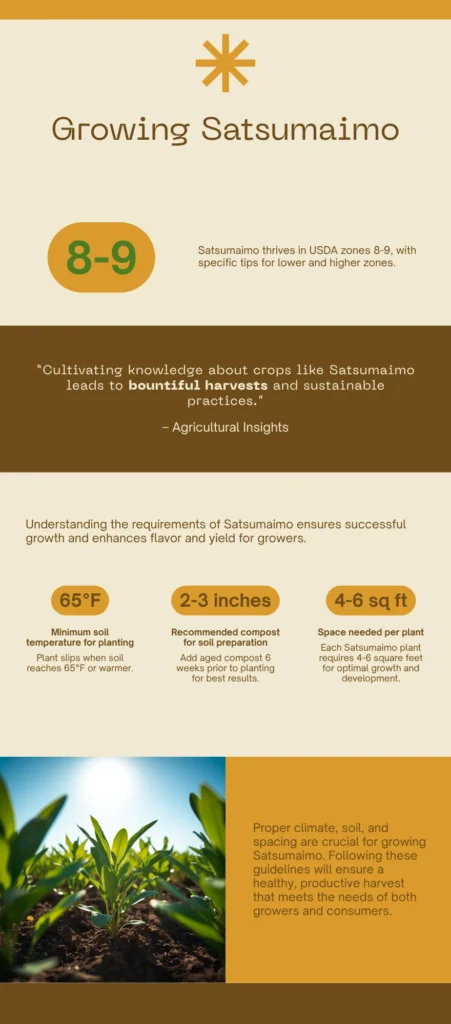
Satsumaimo thrives in USDA zones 8-9, where sustained summer heat and long growing seasons allow full maturation. Zone 7 gardeners succeed using black plastic mulch, row covers, and carefully timed planting. Zone 10 works in areas without extreme heat spikes above 95°F for extended periods.
Minimum soil temperature for slip planting is 65°F, with optimal growth occurring between 75-85°F. Nighttime temperatures below 55°F slow growth significantly. Calculate your last spring frost date, then add 2-3 weeks to determine safe planting time.
Soil Preparation
Satsumaimo demands well-drained, loose soil with pH 5.5-6.5. Heavy clay or compacted soil produces deformed, stunted tubers. Sandy loam or amended sandy soil delivers best results.
Prepare beds by incorporating 2-3 inches of aged compost six weeks before planting. Avoid fresh manure or high-nitrogen fertilizers—excess nitrogen produces abundant foliage with small, underdeveloped tubers. Form raised ridges 8-10 inches high and 36-48 inches apart to improve drainage and warm soil faster in spring.
Test soil pH and adjust if needed. Satsumaimo tolerates slightly acidic conditions better than alkaline soil. Add sulfur to lower pH in alkaline areas.
Sunlight and Spacing
Full sun exposure—minimum 8 hours daily—is non-negotiable. Shaded areas reduce yields by 40-60% and produce tubers with poor flavor development.
Space slips 12-18 inches apart within rows, with 36-48 inches between rows. Crowding reduces individual tuber size and increases disease risk. Each plant requires approximately 4-6 square feet for optimal production.
Planting & Care
Sourcing Slips
Slips are rooted sprouts grown from mature Satsumaimo tubers. Order from specialized suppliers offering authentic Japanese varieties—local garden centers typically stock only American types. Reputable sources include Kitazawa Seed Company, Sand Hill Preservation Center, and specialty Asian agricultural suppliers.
Order slips 4-6 weeks before your planting date. They arrive as rooted cuttings 6-10 inches tall and should be planted within 48 hours of receipt. If delayed, keep them in moist paper towels in a cool location (60-65°F) for up to five days.
Growing Your Own Slips
Starting slips from tubers requires 6-8 weeks before field planting. Place whole Satsumaimo tubers in shallow water or moist potting mix at 75-80°F. Sprouts emerge from eyes within 2-3 weeks.
When sprouts reach 6-8 inches with multiple leaves, twist them off at the base and place stems in water to root. Roots develop within 5-7 days. This method ensures varietal purity if you saved tubers from previous harvests.
Planting Procedure
Plant slips when soil consistently maintains 65°F or higher at 4-inch depth. In zone 8, this typically occurs mid-May to early June; zone 9 gardeners plant late April to mid-May.
Create 4-inch deep planting holes in prepared ridges. Set slips at a 45-degree angle, burying 2-3 nodes (the bumps where leaves attach) below soil level. This horizontal planting encourages multiple tuber formation along the buried stem.
Water thoroughly immediately after planting, providing 1-2 inches. Keep soil consistently moist for the first two weeks while slips establish.
Irrigation Management
Water deeply once weekly during establishment, then reduce frequency as vines spread. Satsumaimo tolerates drought better than American varieties once established—overwatering causes tuber splitting and encourages disease.
Provide 1 inch weekly during active growth (weeks 4-12). Reduce watering to 0.5 inches weekly during the final 4-6 weeks before harvest to concentrate sugars and prevent tuber rot. Cease irrigation entirely 2-3 weeks before digging.
Use drip irrigation or soaker hoses to keep foliage dry and reduce foliar disease pressure.
Fertilization Strategy
Satsumaimo requires minimal fertilization. Over-fertilizing produces luxuriant vines with minimal tuber development—gardeners call this “all vine, no potato.”
Apply balanced organic fertilizer (5-5-5) at planting time, using half the manufacturer’s recommended rate. Side-dress once at 4-6 weeks with potassium-rich fertilizer (0-0-10 or wood ash) to promote tuber formation. Potassium strengthens tuber skins and improves storage quality.
Avoid nitrogen applications after initial planting. High nitrogen delays tuber formation and reduces harvest quality.
Weed Control and Mulching
Black plastic mulch serves triple duty: warming soil, suppressing weeds, and conserving moisture. Install plastic 1-2 weeks before planting to pre-warm soil. Cut X-shaped slits for slip insertion.
Alternatively, apply 2-3 inches of straw mulch after vines establish (3-4 weeks post-planting). Vines create a living mulch layer by mid-summer, naturally suppressing weeds. Hand-pull any weeds that penetrate this canopy early—mechanical cultivation damages shallow tubers.
Vine Management
Satsumaimo vines spread 6-10 feet, producing roots at nodes touching soil. These secondary roots divert energy from main tuber production. Lift and reposition vines every 2-3 weeks to prevent rooting, or grow on trellises in space-limited gardens.
Some Japanese farmers train vines vertically on A-frame trellises, producing cleaner tubers with less pest pressure. This method works well in zones 9-10 with extended growing seasons.
Harvesting Satsumaimo
Determining Harvest Readiness
Harvest begins when vines yellow and die back naturally, typically after 120-150 days or following the first light frost (28-32°F). Light frost kills foliage but doesn’t damage tubers if harvested promptly within 3-5 days.
In frost-free zones 9-10, harvest when day lengths shorten and nighttime temperatures consistently drop below 55°F, signaling tuber maturation. Calculate from planting date—most varieties require minimum 120 days.
Don’t harvest too early. Immature tubers lack developed sugars and store poorly. Taste-test one plant at 110 days if uncertain—properly mature Satsumaimo has fully formed skin that doesn’t peel easily when rubbed.
Harvest Technique
Cut vines 2-3 days before digging to allow skins to toughen slightly, reducing harvest damage. Use a spading fork, working 12-18 inches from the plant base to avoid puncturing tubers.
Gently lift soil and follow tubers along the ridge. Satsumaimo grows 4-8 inches deep in loose soil. Handle tubers carefully—bruised or cut sweet potatoes rot quickly during storage.
Harvest during dry weather with soil moisture low. Muddy tubers require careful cleaning, increasing damage risk. Brush off loose soil but don’t wash tubers before curing.
Yield Expectations
Well-grown Satsumaimo produces 3-5 pounds per plant in optimal conditions. A 10-foot row (6-8 plants) yields 20-40 pounds. Yields vary by variety, with Beniazuma producing slightly higher yields than Naruto Kintoki, which prioritizes flavor over production.
American varieties typically outyield Satsumaimo by 20-30% but lack the superior flavor and texture.
Post-Harvest Curing & Storage
The Critical Curing Process
Curing transforms Satsumaimo from bland to extraordinarily sweet. This process heals harvest wounds, thickens skins, and initiates enzymatic conversion of starches to sugars—the key to authentic flavor.
Place unwashed tubers in a warm (80-85°F), humid (85-90% relative humidity) environment for 7-10 days immediately after harvest. A small enclosed space with a humidifier and space heater works effectively. Some gardeners use spare bathrooms or insulated sheds.
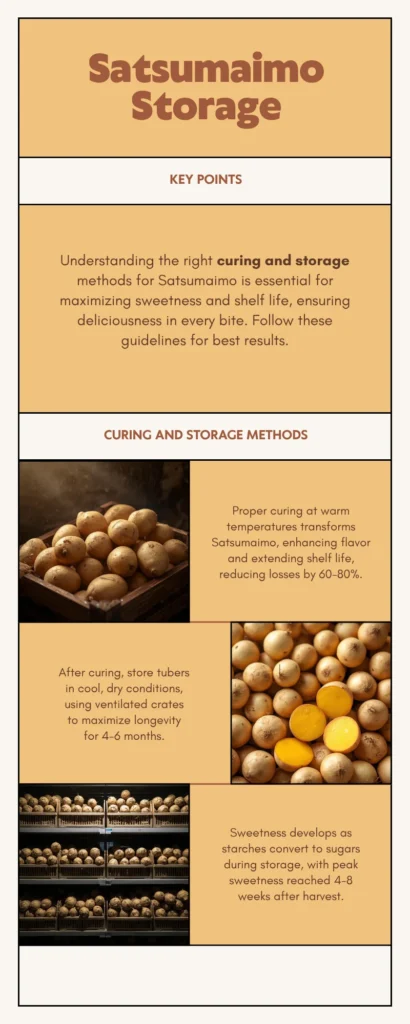
Check tubers daily. Discard any showing soft spots or damage. Proper curing reduces storage losses by 60-80%.
Long-Term Storage
After curing, move Satsumaimo to cool (55-60°F), dry storage (60-70% humidity). Basements, root cellars, or climate-controlled closets provide ideal conditions.
Store tubers in single layers in ventilated crates or cardboard boxes. Don’t refrigerate—temperatures below 50°F cause hard core and off-flavors. Properly cured and stored Satsumaimo keeps 4-6 months.
Inspect monthly. Remove any tubers showing deterioration to prevent spread.
Sweetness Development
Satsumaimo sweetness continues developing during storage as starches slowly convert to sugars. Tubers are good immediately after curing but reach peak sweetness 4-8 weeks post-harvest. Many Japanese growers deliberately age Satsumaimo 2-3 months before sale.
This aging process doesn’t occur with American varieties, which are typically sweetest at harvest.
Satsumaimo vs. American Sweet Potatoes: Flavor, Cooking, and Cultural Tips
Cooking Methods
Satsumaimo’s dry texture requires different cooking approaches than moist American varieties. Traditional Japanese preparation—yakiimo—slow-roasts whole tubers at 300°F for 60-90 minutes, maximizing sugar conversion through sustained low heat.
Steam Satsumaimo whole for 40-50 minutes until tender. The dry flesh absorbs butter and seasonings readily, unlike stringy American types. Avoid boiling, which waterloogs the flesh and dilutes flavor.
For authentic yakiimo at home, wrap tubers individually in aluminum foil and bake at 300°F for 75-90 minutes. The extended low-temperature cooking caramelizes sugars, creating honey-like sweetness.
Culinary Applications
Satsumaimo excels in applications where American varieties fail. The dry, dense texture makes superior tempura, where batter adheres cleanly and fries remain crisp. Thinly sliced chips stay crunchy, while orange varieties turn leathery.
Use Satsumaimo for daigaku imo (candied sweet potato), sweet potato yokan (jellied dessert), and mont blanc (chestnut cream) substitutes. The nutty flavor complements both sweet and savory preparations.
In contrast, American sweet potatoes work better in casseroles, mashes, and applications requiring moisture and binding properties.
Cultural Context
In Japan, Satsumaimo represents autumn harvest, appearing in seasonal dishes from September through January. Street vendors sell yakiimo from mobile ovens, filling neighborhoods with its distinctive aroma.
Growing Satsumaimo connects American gardeners to this cultural heritage while producing superior flavor. Sharing harvest with Japanese neighbors or at cultural events builds community connections and educates others about authentic varieties.
Troubleshooting Common Problems
Pest Management
Sweet potato weevils represent the most serious Satsumaimo pest in zones 9-10. These beetles bore into tubers, making them inedible. Prevent introduction by sourcing certified clean slips, practicing crop rotation (wait 3 years before replanting Satsumaimo in the same location), and removing all volunteer plants.
Deer damage occurs in rural areas—fencing is the only reliable control. Deer particularly target young slips and tender vine tips.
Wireworms tunnel through tubers in newly cultivated ground. Rotate with dense cover crops (buckwheat, rye) for two seasons before planting Satsumaimo in former pasture or lawn areas.
Disease Issues
Black rot appears as dark, circular spots on tubers, often at wounds. Caused by the fungus Ceratocystis fimbriata, it spreads rapidly in storage. Prevention requires careful handling, proper curing, and immediate removal of damaged tubers.
Fusarium wilt causes yellowing and wilting despite adequate moisture. This soilborne disease has no cure—remove affected plants and avoid planting Satsumaimo in that location for 5+ years. Resistant varieties like Beni Haruka show some tolerance.
Root-knot nematodes create galls on tubers and roots, severely reducing yields. Solarize soil by covering moist beds with clear plastic for 6-8 weeks in summer heat, or rotate with nematode-suppressing cover crops (marigolds, mustard).
Growth Problems
Small tubers result from inadequate growing season, poor soil, or excess nitrogen. Ensure minimum 120-day frost-free period, improve drainage, and reduce fertility.
Cracked tubers indicate irregular watering—rapid growth after drought causes splitting. Maintain consistent moisture during active growth, then gradually reduce irrigation before harvest.
All vines and no tubers signals over-fertilization, particularly with nitrogen. Satsumaimo naturally produces abundant foliage; prioritize potassium over nitrogen in fertilization programs.
Climate Challenges
Cool-season areas (zones 6-7) benefit from black plastic mulch, row covers for the first 3-4 weeks, and selecting short-season varieties when available. Start slips indoors 2-3 weeks early, transplanting as soon as soil warms.
Extreme heat above 95°F for extended periods reduces tuber quality in zone 10. Provide afternoon shade using shade cloth (30% density) during heat waves, and maintain consistent soil moisture.
Conclusion & Resources
Growing Satsumaimo successfully requires understanding its unique characteristics—extended growing season, minimal fertilizer needs, critical curing process, and distinct culinary properties. Unlike American sweet potato varieties, Satsumaimo rewards patient cultivation with unmatched flavor complexity and versatility.
Start with site selection and soil preparation. Source authentic Japanese varieties from specialty suppliers. Follow proper planting, irrigation, and harvest timing for your zone. Most importantly, complete the full curing and aging process—this step separates mediocre from extraordinary Satsumaimo.
Recommended Varieties for USA Gardeners
- Beniazuma: Reliable producer, good balance of yield and flavor
- Beni Haruka: Premium eating quality, slightly lower yields
- Naruto Kintoki: Traditional favorite, exceptional sweetness
- Murasaki: Purple-skinned, white-fleshed alternative with nutty flavor
Further Learning Cooperative Extension offices in zones 8-9 provide region-specific sweet potato growing guides. While focused on commercial American varieties, the pest management and soil preparation information applies to Satsumaimo.
Japanese agricultural research publications (translated via university libraries) offer advanced cultivation techniques. The Japan Agricultural Research Quarterly publishes peer-reviewed studies on Satsumaimo breeding and cultivation.
Connect with regional Japanese cultural centers and gardening groups. Experienced growers share practical knowledge about adapting traditional methods to local conditions.
Your first Satsumaimo harvest may yield variable results as you learn your soil and microclimate. Each season refines technique—by year three, you’ll produce tubers rivaling Japan’s finest. The effort rewards you with flavors unavailable in any grocery store and connects you to centuries of Japanese agricultural tradition.
Start your Satsumaimo journey this spring. Your autumn harvest awaits.