Successful Guide to Thriving Vegetable Gardens in California
Introduction: Why California Is a Vegetable Gardener’s Dream
California offers one of the most forgiving environments for vegetable gardeners. Long frost-free seasons, mild winters, and abundant sunshine allow for year-round planting when managed correctly. Even small spaces—raised beds, patios, and container gardens—can produce generous harvests because the state’s climate supports both cool-season and warm-season crops. The key is understanding your microclimate and adjusting planting times to match it.
Understanding California’s Climate and Zones
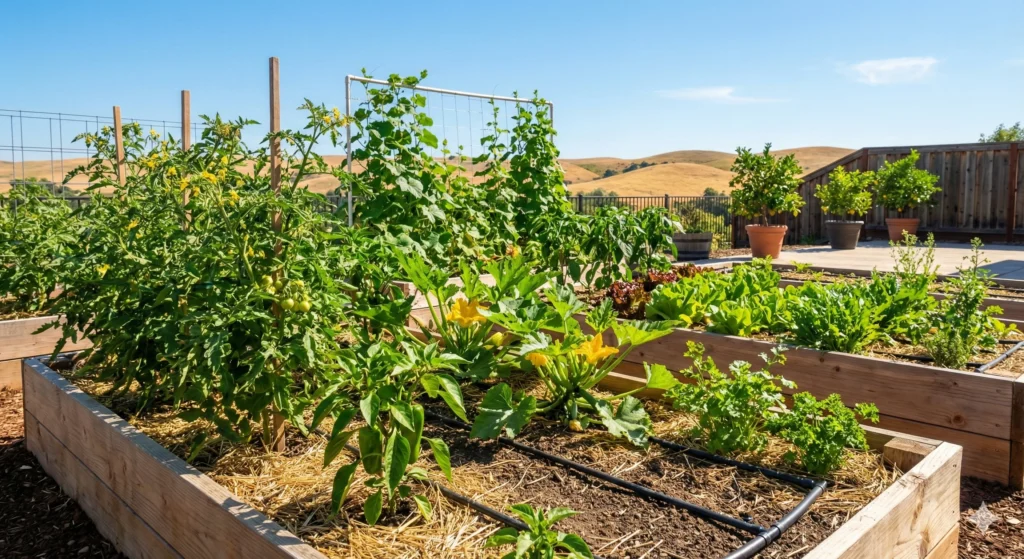
California’s gardening success hinges on three layers of climate awareness:
1. USDA Hardiness Zones
Most populated areas fall between Zones 8–10, with some coastal pockets in Zone 10b and foothills dropping to Zone 7.
- Zones 9–10: Long warm seasons; ideal for tomatoes, peppers, squash, and year-round greens.
- Zones 7–8: Shorter frost-free windows; cool-season vegetables excel, and timing for heat-loving crops is tighter.
Why it matters: Your zone dictates frost risk. Planting tomatoes too early in a Zone 8 inland area, for example, leads to stunting or frost damage.
2. California Microclimates
California has some of the world’s most dramatic microclimate shifts. The three most important for vegetable gardeners:
- Coastal California: Cool summers, mild winters, frequent fog; great for leafy greens, brassicas, peas, and herbs.
- Central Valley & Inland Areas: Hot, dry summers and chilly winters; warm-season vegetables thrive, but heat waves can stress crops.
- Foothill & Mountain Regions: Cooler nights, shorter seasons, and spring frost pockets; best for hardy cool-season crops.
3. Mediterranean Climate Basics
Most of California functions as a Mediterranean climate: wet winters and long dry summers. This affects irrigation, mulch needs, and crop choices—especially for drought-tolerant vegetables.
Key California Regions for Vegetable Gardening
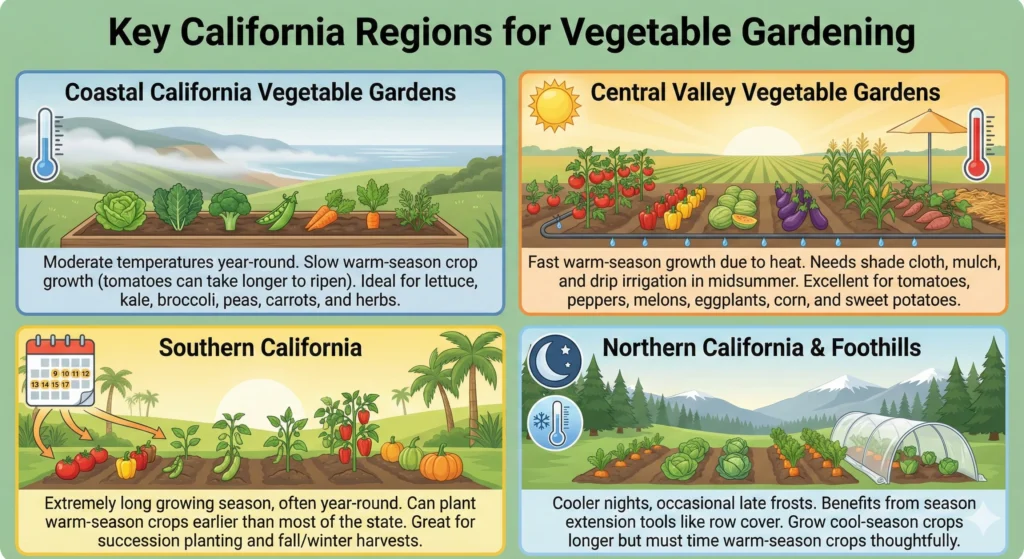
Coastal California Vegetable Gardens
- Moderate temperatures year-round
- Slow warm-season crop growth (tomatoes can take longer to ripen)
- Ideal for lettuce, kale, broccoli, peas, carrots, and herbs
Central Valley Vegetable Gardens
- Fast warm-season growth due to heat
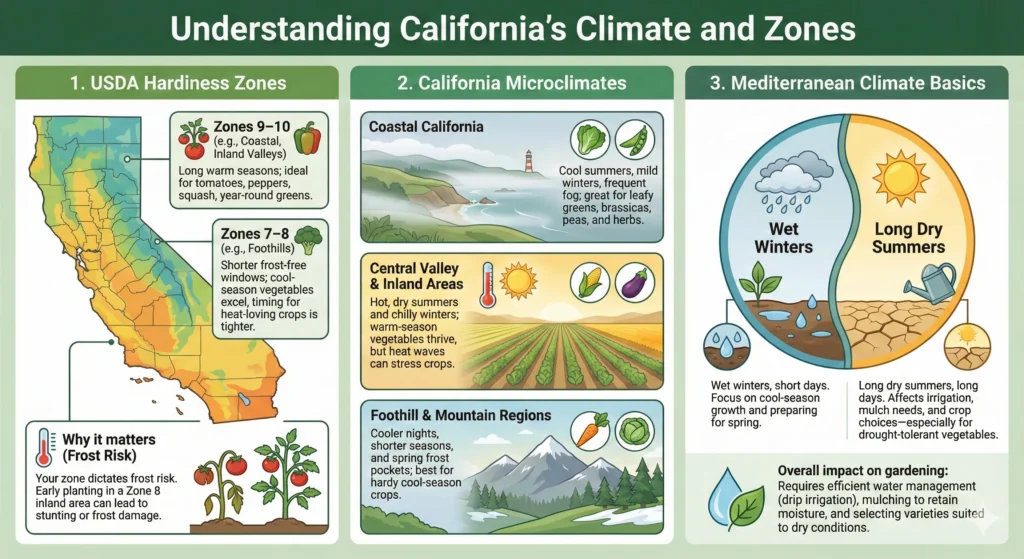
- Needs shade cloth, mulch, and drip irrigation in midsummer
- Excellent for tomatoes, peppers, melons, eggplants, corn, and sweet potatoes
Southern California
- Extremely long growing season, often year-round
- Can plant warm-season crops earlier than most of the state
- Great for succession planting and fall/winter harvests
Northern California & Foothills
- Cooler nights, occasional late frosts
- Benefits from season extension tools like row cover
- Grow cool-season crops longer but must time warm-season crops thoughtfully
Choosing the Right Site and Soil
A productive California vegetable garden depends on site selection more than anything else.
Sunlight
- Aim for 6–8 hours of direct sun.
- In hot inland areas, afternoon shade is beneficial for leafy greens and herbs.
Soil
Typical California soils range from sandy coastal loam to dense clay in the Central Valley.
What to do:
- In clay-heavy areas: Add compost to improve drainage; raised beds help roots breathe.
- In sandy areas: Use compost and mulch to slow water loss.
- In containers: Use high-quality potting mix—native soil compacts too easily.
Drainage Test
Dig a hole, fill with water, and check if it drains within an hour. Slow drainage = amend with compost and consider raised beds.
Raised Beds and Containers
These solve many California soil challenges:
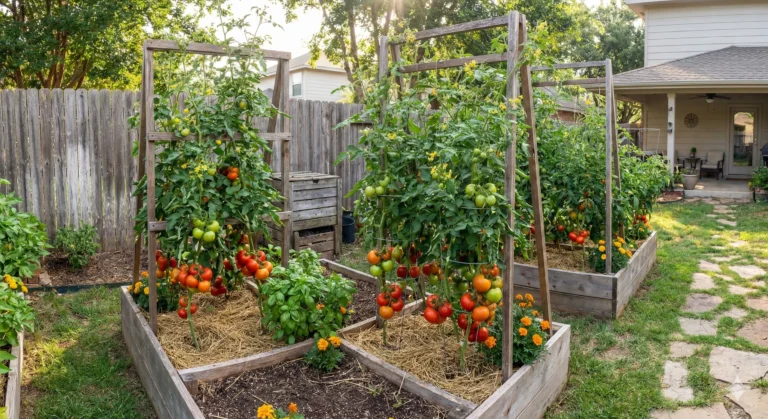
- Warm faster in spring
- Reduce weed pressure
- Allow precise control over fertility and moisture
Planning Your California Vegetable Garden
Start with a plan that matches your climate, space, and time.
1. Start Small
A pair of 4×8 raised beds or ten large containers is enough for most beginners.
2. Prioritize Your Climate
- Coastal gardeners should grow more cool-season vegetables.
- Central Valley gardeners should stagger warm-season plantings and use heat-tolerant varieties.
3. Grow What You Eat
Stick to versatile crops: tomatoes, lettuces, green onions, zucchini, peppers, carrots, and herbs.
4. Group by Water Needs
Mediterranean herbs like rosemary and thyme need far less water than lettuce or cucumbers.
5. Rotate Crops
Helps avoid soilborne diseases, especially in warm, dry climates where pathogens persist.
California Planting Calendars: What to Plant When
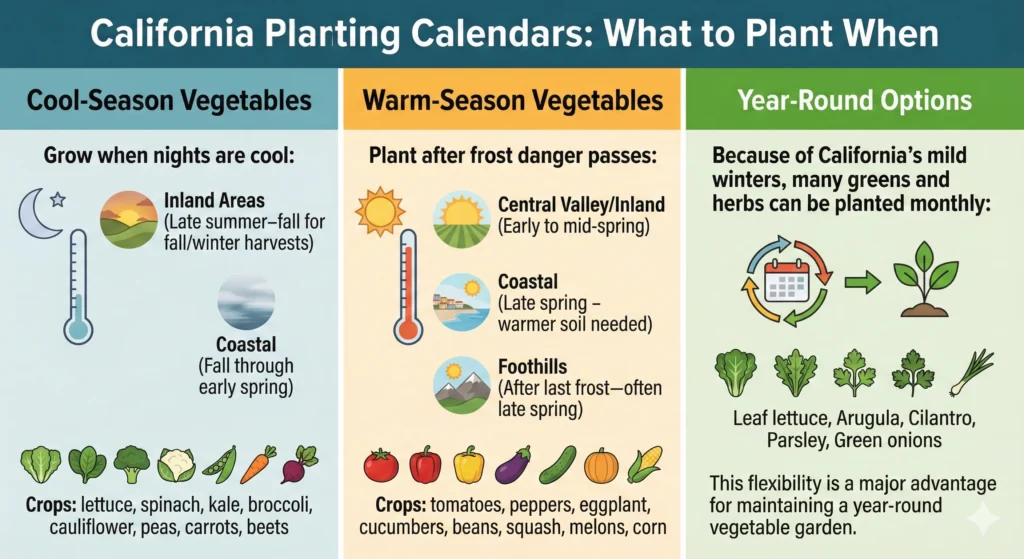
Cool-Season Vegetables
Grow when nights are cool:
- Late summer–fall in inland areas (for fall/winter harvests)
- Fall through early spring on the coast
- Crops: lettuce, spinach, kale, broccoli, cauliflower, peas, carrots, beets
Warm-Season Vegetables
Plant after frost danger passes:
- Central Valley/inland: Early to mid-spring
- Coastal: Late spring (warmer soil needed)
- Foothills: After last frost—often late spring
- Crops: tomatoes, peppers, eggplant, cucumbers, beans, squash, melons, corn
Year-Round Options
Because of California’s mild winters, many greens and herbs can be planted monthly:
- Leaf lettuce
- Arugula
- Cilantro
- Parsley
- Green onions
This flexibility is a major advantage for maintaining a year-round vegetable garden.
Best Vegetables to Grow in California
Top Warm-Season Vegetables
- Tomatoes: Thrive inland; choose early varieties for coastal zones.
- Peppers & Eggplants: Excellent heat-lovers.
- Zucchini & Summer Squash: Productive in all regions.
- Cucumbers: Best with consistent moisture.
- Melons: Best in Central Valley and inland heat.
Top Cool-Season Vegetables
- Lettuce & Greens: Year-round on the coast; fall–spring inland.
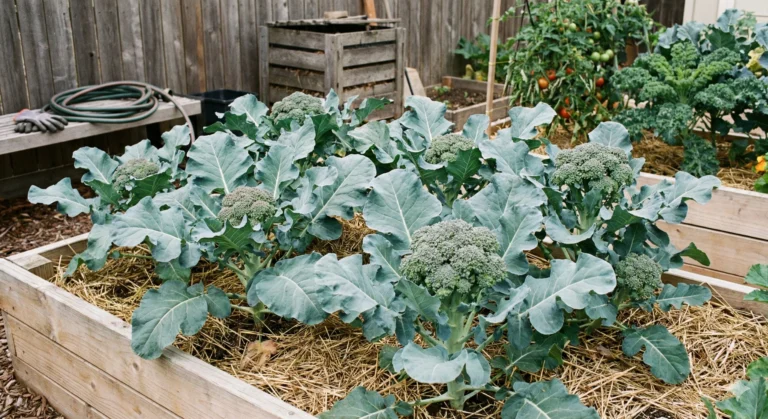
- Broccoli, Cabbage, Cauliflower: Coastal climates excel.
- Peas: Plant fall on the coast, late winter inland.
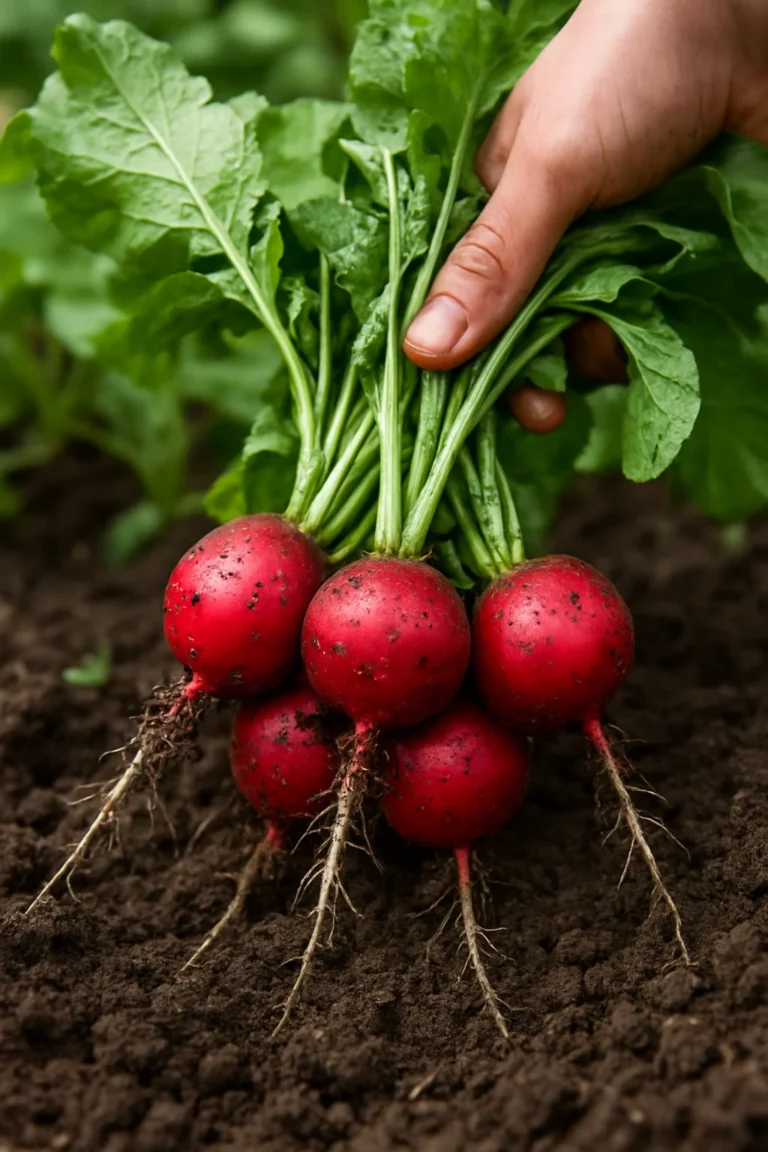
- Root Crops: Carrots, radishes, beets thrive almost anywhere with loose soil.
Drought-Tolerant Vegetables
Useful in California’s dry summers:
- Cherry tomatoes
- Zucchini
- Eggplant
- Chickpeas
- Mustard greens
- Mediterranean herbs (sage, thyme, rosemary)
Watering Wisely in a Drought-Prone State
Efficient irrigation is essential in California vegetable gardening.
Use Drip Irrigation
- Delivers water slowly at the root zone
- Reduces evaporation
- Compatible with timers for consistent watering
Mulch
Apply 2–3 inches of mulch around vegetables:
- Conserves moisture
- Keeps soil cool in inland heat
- Reduces weeds
Watering Frequency
General guidance:
- Containers: daily in summer
- Raised beds: every 1–3 days
- In-ground beds: every 3–5 days
Adjust based on weather—Central Valley gardeners often water more frequently during heat waves.
Fertility, Mulch, and Organic Matter
Compost
Add compost at least twice per year:
- Before spring planting
- Before fall planting
California soils, especially in hot inland areas, break down organic matter quickly.
Organic Fertilizers
Use slow-release options such as:
- Fish meal
- Feather meal
- Compost blends
Mulch Options
- Straw (weed-free)
- Shredded leaves
- Wood chips for pathways
Mulch is vital because California’s intense sun dries soil quickly.
Dealing With Pests, Diseases, and Weeds
Common California Pests
- Aphids (common on coastal greens)
- Tomato hornworms
- Cabbage worms
- Whiteflies
- Snails and slugs (especially along the coast)
Solutions:
- Use floating row covers for brassicas.
- Handpick hornworms.
- Neem or insecticidal soap for soft-bodied pests.
- Beer traps or copper tape for slugs.
Disease Management
- Plant disease-resistant varieties.
- Avoid overhead watering.
- Improve airflow—especially important in foggy coastal areas.
- Rotate crops yearly.
Weed Management
Mulch heavily.
In raised beds and containers, weeds are minimal if soil is kept covered.
Season Extension and Year-Round Harvests
California’s mild climate allows vegetables almost every month of the year.
Tools for Extending the Season
- Row covers to protect from frost
- Shade cloth in inland heat
- Cold frames for winter greens
- Mulch to moderate soil temperatures
Fall and Winter Gardening
Coastal and Southern California gardeners can grow:
- Broccoli
- Lettuce
- Spinach
- Carrots
- Radishes
- Beets
- Asian greens
Inland gardeners can grow these as well but may need row covers during cold snaps.
Simple Beginner-Friendly Garden Plans
1. 4×8 Raised Bed – Easy Salad and Stir-Fry Garden
- 4 lettuces
- 6 spinach plants
- 2 kale
- 2 Swiss chard
- 1 row carrots
- 1 row radishes
Great for coastal or fall/winter inland.
2. Warm-Season Productivity Bed
- 2 tomato plants
- 2 peppers
- 1 cucumber trellis
- 1 zucchini
- Basil around edges
Ideal for Central Valley or Southern California.
3. Container Garden Setup
- 15–20 gallon pots for tomatoes/peppers
- 5–10 gallon pots for greens and herbs
- A small trellis for cucumbers or beans
Common Mistakes California Gardeners Should Avoid
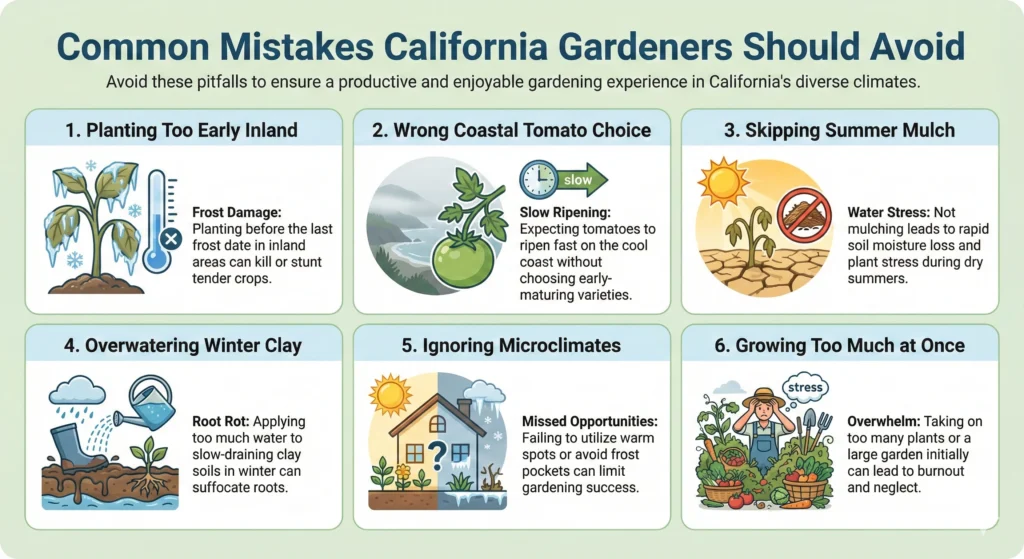
- Planting too early inland (frost damage).
- Expecting tomatoes to ripen fast on the coast without choosing early varieties.
- Not mulching during summer—leads to water stress.
- Overwatering clay soils in winter.
- Ignoring microclimates such as warm south-facing walls or frost pockets.
- Growing too much at once—leads to overwhelm.
Resources and Next Steps
To continue improving your California vegetable gardening skills:
- Monitor your microclimate and adjust planting times.
- Use a California planting calendar tailored to your region.
- Add compost twice yearly and mulch consistently.
- Install drip irrigation and automate watering.
- Start with reliable, climate-appropriate crops and expand gradually.
With the right approach, a California garden—no matter how small—can produce vegetables nearly year-round with minimal stress and maximum reward.