10 Brilliant Vertical Garden Ideas for Tiny Balconies in Australia
Vertical gardening on a tiny balcony or rooftop in Australia solves three problems at once: limited floor space, the need for privacy, and the desire to grow fresh food or greenery without spending hundreds of dollars. This guide shows you how to build productive vertical gardens using cheap or recycled materials, from plastic bottles to old pallets, specifically adapted for Australian conditions—intense sun, unpredictable wind, and water restrictions in many regions.
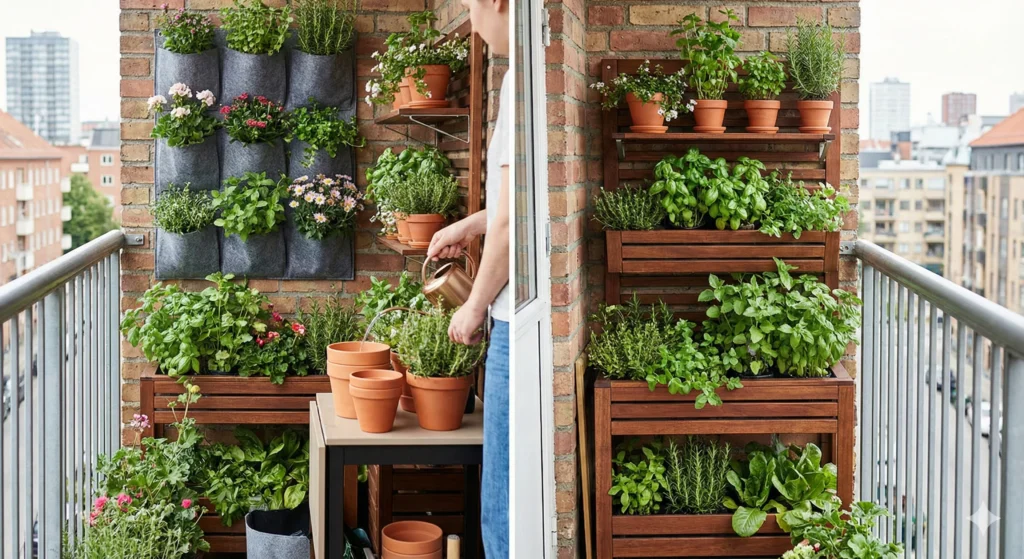
Whether you’re in a city apartment in Melbourne, a unit balcony in Sydney, or a small rooftop space in Brisbane, these ten ideas will help you create a space-saving garden that’s practical, safe, and genuinely productive.
Introduction: Why Go Vertical in Australia
Australian urban gardeners face unique challenges: small balconies often measuring just 1–2 metres wide, scorching summer heat, strong wind gusts on upper floors, and building regulations that limit what you can attach or hang. Vertical gardening addresses these constraints by using wall space, railings, and overhead structures instead of the floor.
Growing upward allows you to fit 20–30 plants in a space that might otherwise hold three pots. Vertical structures also create microclimates—shaded pockets for lettuces, sunny spots for tomatoes, and wind barriers that protect delicate herbs. For renters, most vertical systems can be installed without drilling into walls or causing permanent damage.
The methods in this article prioritise upcycled containers and materials you can find for free or under $50 total. This approach suits apartment gardening where budgets are tight and storage space is limited.
Before You Start: Safety, Sun and Wind
Weight limits matter. Most apartment balconies in Australia are rated for 200–400 kg per square metre when built to current standards, but older buildings may have lower limits. Saturated soil is heavy—a large planter can weigh 50 kg when wet. Distribute weight evenly, place heavier items near walls or support beams, and avoid clustering pots in one corner. Check your lease or strata bylaws before installing permanent fixtures.
Sun exposure determines success. Observe your balcony at different times of day. North-facing balconies receive the most sun year-round (ideal for vegetables), east-facing spots get gentle morning light (good for leafy greens), west-facing areas endure harsh afternoon heat (drought-tolerant plants only), and south-facing balconies stay shaded (herbs and ferns). Most vegetables need at least 6 hours of direct sun daily.
Wind accelerates water loss and damages plants. High-rise balconies above the fifth floor often experience constant wind that dries soil within hours and snaps stems. Secure all vertical structures to railings or walls using wire, cable ties, or brackets. Choose sturdy containers over lightweight plastic that can blow away. Create windbreaks using trellis panels or larger plants positioned strategically.
Drainage prevents water damage. Every container must have drainage holes to prevent root rot and water pooling that could damage balcony surfaces or drip onto neighbours below. Place saucers under pots or use drip trays. In apartments, waterproofing is critical—one overflow can mean expensive repairs and conflicts with building management.
Choosing the Right Containers and Materials
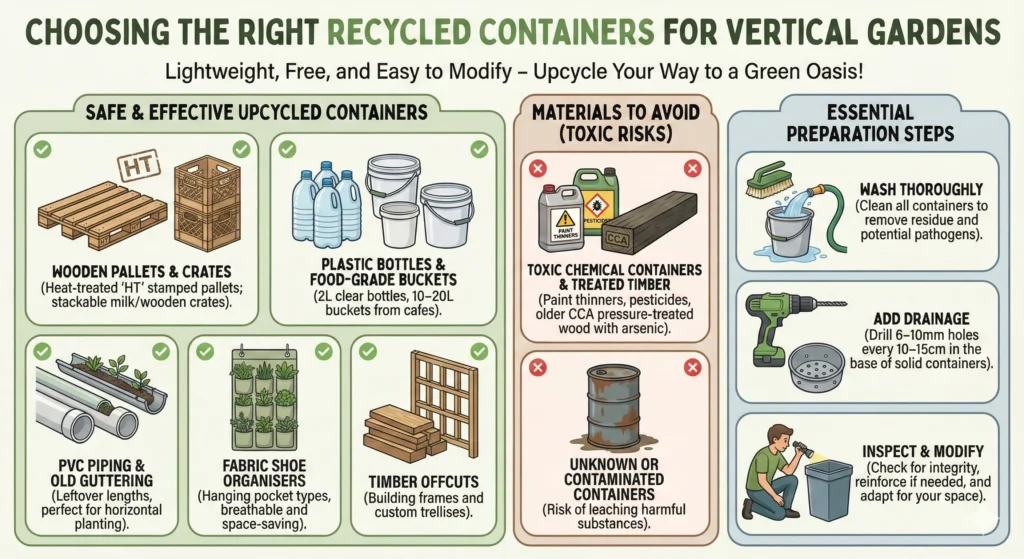
Recycled materials are ideal for vertical gardens because they’re lightweight, free, and easy to modify. Effective upcycled containers include:
- Wooden pallets (from building sites, furniture stores, or warehouses—choose heat-treated “HT” stamped pallets, avoid chemical-treated ones)
- Plastic bottles (2-litre soft drink bottles work best; clear bottles heat up less than dark ones)
- Food-grade buckets and tins (ask cafes and restaurants for empty 10–20 litre buckets)
- Milk crates and old wooden crates (stackable and sturdy)
- PVC piping or old guttering (leftover from renovations)
- Fabric shoe organisers (hanging pocket types from discount stores)
- Timber offcuts (for building frames and trellises)
When selecting materials, avoid anything that held toxic chemicals (paint thinners, pesticides) or pressure-treated timber with arsenic (older CCA-treated wood). Wash all recycled containers thoroughly. Add drainage by drilling 6–10mm holes every 10–15cm in the base of solid containers.
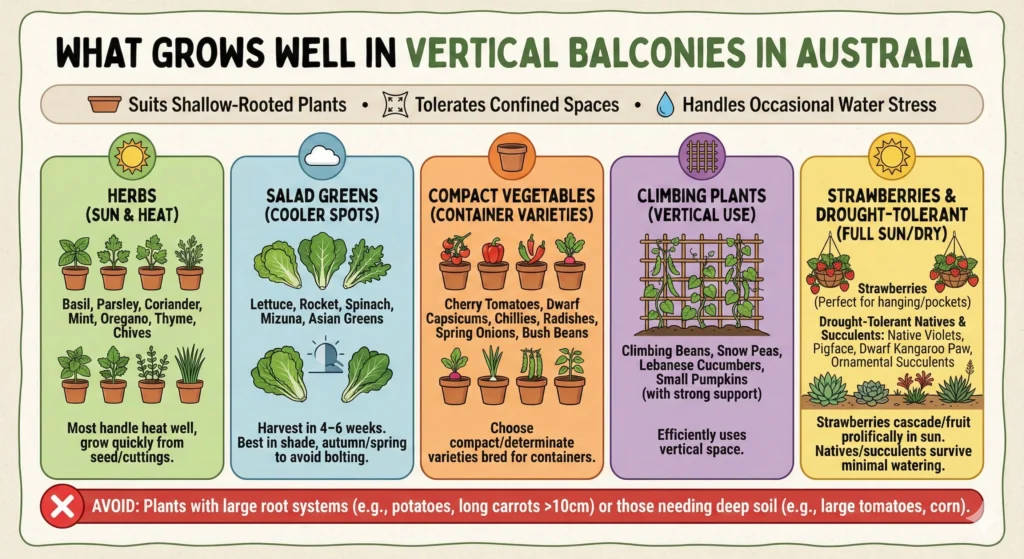
What Grows Well in Vertical Balconies in Australia
Vertical gardens suit shallow-rooted plants that tolerate confined spaces and can handle occasional water stress. The best performers in Australian conditions include:
Herbs: Basil, parsley, coriander, mint, oregano, thyme, and chives thrive in small spaces. Most herbs handle heat well and grow quickly from seed or cuttings.
Salad greens: Lettuce, rocket, spinach, mizuna, and Asian greens produce harvests in 4–6 weeks. Plant these in shadier spots or during autumn and spring to avoid bolting in summer heat.
Compact vegetables: Cherry tomatoes, dwarf capsicums, chillies, radishes, spring onions, and bush beans work in vertical setups. Choose compact or determinate varieties bred for container growing.
Climbing plants: Climbing beans, snow peas, cucumbers (Lebanese varieties), and even small pumpkins (if you have strong trellis support) use vertical space efficiently.
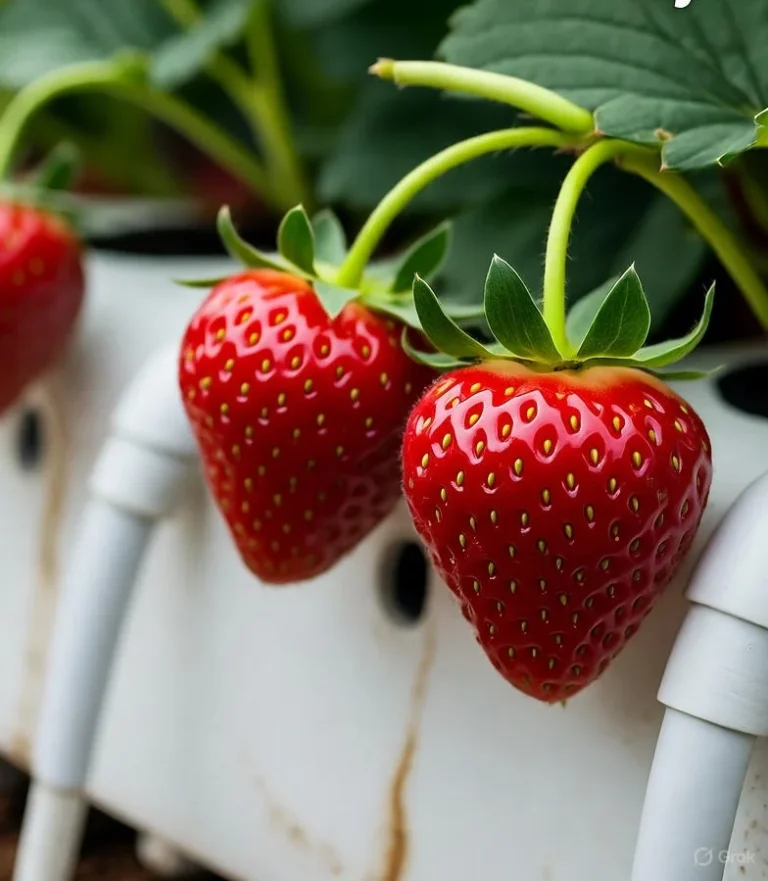
Strawberries: Perfect for hanging baskets or pocket planters. They cascade naturally and fruit prolifically in full sun.
Drought-tolerant natives and succulents: For hot, dry balconies, consider native violets, pigface, dwarf kangaroo paw, or ornamental succulents that survive with minimal watering.
Avoid plants with large root systems (potatoes, carrots longer than 10cm) or those that need deep soil (large tomato varieties, corn).
Idea #1: Pallet Pocket Garden
Best for: Walls or railings on sunny balconies; provides privacy while growing herbs and greens.
Materials: One wooden pallet (standard size is 120cm x 100cm), landscape fabric or shade cloth, staple gun, potting mix.
How to build:
- Stand the pallet upright and inspect for loose boards. Reinforce with screws if needed.
- Staple landscape fabric across the back and bottom to create pockets between slats.
- Lay the pallet flat, fill pockets with potting mix through the front slats, and plant seedlings or seeds.
- Leave horizontal for 1–2 weeks while roots establish, then carefully lean against a wall or secure to railings with cable ties or brackets.
- Water gently from the top and allow excess to drain before standing fully upright.
Plant suggestions: Basil, parsley, coriander, lettuce, strawberries, dwarf marigolds (for pest control).
This design creates 6–12 planting pockets depending on pallet size. It’s heavier than other options (20–30kg when wet), so secure it properly and position it where weight distribution is safe.
Idea #2: Plastic Bottle Garden Wall
Best for: Ultra-compact spaces; renters who can’t drill holes; herb walls in sunny or partially shaded spots.
Materials: Twenty to thirty 2-litre plastic bottles, sharp knife or scissors, wire or strong string, cable ties, potting mix.
How to build:
- Cut each bottle in half lengthwise, creating two long planters from each bottle.
- Poke 4–6 drainage holes in the bottom of each half using a heated nail or drill bit.
- Thread wire horizontally along a balcony railing or wall, spacing rows 15–20cm apart.
- Attach bottle halves to the wire using cable ties, overlapping slightly so lower bottles catch drips from above.
- Fill with potting mix and plant.
Plant suggestions: Coriander, parsley, lettuce, rocket, spring onions, small succulents.
Plastic bottles are lightweight and free, making this the cheapest vertical garden option. Clear bottles expose roots to light, which most plants tolerate, but covering the outside with hessian or painted newspaper reduces heat buildup in summer.
Idea #3: Hanging Shoe Organiser Herb Garden
Best for: Balcony walls or door backs; spaces with partial shade; renters needing removable setups.
Materials: One fabric or plastic over-door shoe organiser (20–24 pockets), hooks or hanging rail, scissors, potting mix.
How to build:
- Hang the organiser from a tension rod, hook, or balcony railing.
- Cut small drainage slits (2cm long) in the bottom of each pocket.
- Fill pockets halfway with lightweight potting mix.
- Plant one seedling or a pinch of seeds per pocket.
- Water gently to avoid overflow into lower pockets.
Plant suggestions: Basil, mint, thyme, oregano, chives, small flowers like violas or alyssum.
Shoe organisers work brilliantly for herbs but struggle with larger vegetables due to shallow depth (usually 10–15cm). Water frequently in hot weather as pockets dry out quickly. This system weighs under 10kg when full, making it safe for any balcony.
Idea #4: Stacked Crates and Old Shelving
Best for: Rooftops or wide balconies; creating tiered gardens that maximise sun exposure.
Materials: Wooden or plastic milk crates, old bookshelves, or timber offcuts to build simple frames, pots or containers to sit inside crates.
How to build:
- Stack crates in a stepped pyramid (3 on the bottom, 2 in the middle, 1 on top) or position an old shelf unit against a wall.
- Secure crates to each other with cable ties or place a wooden board behind them attached to the wall.
- Place pots, fabric grow bags, or line crates with plastic (add drainage holes) and fill with soil.
- Arrange plants with tallest at the back, cascading plants at the front.
Plant suggestions: Cherry tomatoes, capsicums, eggplant, strawberries, trailing herbs like oregano, dwarf beans.
Stacked crates allow flexible rearrangement and easy access for harvesting. Position heavy pots on lower tiers and lighter plants on top. This setup suits balconies with 1–2 square metres of floor space.
Idea #5: Gutter or PVC Pipe Planters
Best for: Horizontal growing along railings; shallow-rooted crops in full sun.
Materials: PVC pipes (90–100mm diameter) or old roof guttering (100–150mm wide), end caps or timber blocks, brackets or wire for mounting, drill, potting mix.
How to build:
- Cut pipes or gutters to desired length (60–120cm works well).
- Drill drainage holes every 15cm along the bottom.
- Attach end caps or seal ends with timber pieces and silicone.
- Mount horizontally along railings using brackets, or hang from ceiling hooks using wire.
- Fill with potting mix and plant in a single row down the centre.
Plant suggestions: Lettuce, rocket, radishes, spring onions, shallow-rooted herbs, strawberries.
Gutter planters provide excellent drainage and suit leafy greens that don’t need deep soil. They heat up quickly in metal or dark plastic, so use white PVC if possible or position in morning-sun locations. You can stack multiple levels 30cm apart to create a tiered system.
Idea #6: DIY Trellis for Climbing Veggies
Best for: Maximising vertical space for productive vegetables; creating privacy screens.
Materials: Bamboo stakes or timber battens, garden twine or wire, cable ties, pots or grow bags for base planting.
How to build:
- Create a frame by positioning two vertical stakes (180–240cm tall) in large pots filled with soil or secured to balcony railings.
- Run horizontal bamboo or string every 20–30cm between verticals, creating a ladder grid.
- Secure intersections with cable ties or twine.
- Plant climbing vegetables at the base in pots (minimum 20–30cm deep and wide).
- Train vines upward as they grow, weaving through the grid or tying gently with soft string.
Plant suggestions: Climbing beans, snow peas, Lebanese cucumbers, passionfruit (for permanent installations), small melons if trellis is very sturdy.
Trellises support heavy crops—a single cucumber vine can produce 5–10kg of fruit. Ensure pots are stable and won’t tip in wind. Face the trellis north or east for maximum sun exposure. This method produces the highest food yield per square metre of any vertical technique.
Idea #7: Ladder or A-Frame Garden
Best for: Freestanding gardens on rooftops or large balconies; decorative displays.
Materials: Old wooden ladder or build an A-frame from timber offcuts, pots or hanging containers, hooks or wire.
How to build:
- If using a ladder, lean it securely against a wall or railings and tie off at the top.
- For an A-frame, join two timber pieces (120–180cm long) at the top with hinges or screws, and stabilise with a cross-brace 30–40cm up from the bottom.
- Attach S-hooks to each rung or frame level.
- Hang pots, tins with handles, or small fabric grow bags from hooks.
- Plant and water carefully so overflow doesn’t drip onto plants below.
Plant suggestions: Trailing herbs (oregano, thyme), strawberries, cherry tomatoes in larger pots, petunias or native violets for ornamental displays.
Ladder gardens are highly portable and suit renters who might move. They add vertical interest without attaching to walls. An A-frame can support 10–15 small pots and works well in corners where floor space is limited.
Idea #8: Fabric or Felt Pocket Wall
Best for: Lightweight installations on balcony walls; shaded or semi-shaded areas.
Materials: Landscape fabric or thick felt sheets, timber frame or attach directly to railings, cable ties or hooks, scissors, potting mix.
How to build:
- Cut fabric into strips 20–30cm wide and 15–20cm tall to create pockets.
- Fold the bottom edge up 10cm and stitch or staple sides to form pockets, leaving the top open.
- Attach rows of pockets to a timber frame or hang directly on railings using cable ties.
- Space pockets 5–10cm apart in rows.
- Fill each pocket with potting mix and plant seedlings.
Plant suggestions: Small herbs (basil, coriander, chives), succulents, lettuce, native violets, small flowers.
Fabric pockets drain rapidly, which prevents root rot but requires frequent watering (sometimes daily in summer). They’re feather-light (under 5kg for a 1m x 1m wall) and fold up for storage when not in use. This design suits herbs and ornamentals better than heavy fruiting plants.
Idea #9: Hanging Baskets and Rail Planters
Best for: Adding levels without using floor space; decorative and productive combinations.
Materials: Hanging baskets with coir or plastic liners, rail planters that hook over balcony railings, brackets or hooks rated for outdoor use, potting mix.
How to build:
- Install sturdy hooks into balcony ceilings or overhangs (ensure they’re rated for 5–10kg).
- Hang baskets at varying heights to create layers.
- For rail planters, hook directly over railings, ensuring they’re secure and can’t tip.
- Line baskets with coir or puncture drainage holes in plastic liners.
- Fill with potting mix and plant.
Plant suggestions: Strawberries, trailing cherry tomatoes, herbs (especially trailing varieties like oregano), petunias, lobelia, native violet.
Hanging baskets require consistent watering—sometimes twice daily in hot weather—because they’re exposed to wind and sun on all sides. Rail planters distribute weight safely and add growing space without reducing floor area. Mix productive and ornamental plants to create an attractive balcony garden.
Idea #10: Mixed “Living Wall” from Odds and Ends
Best for: Creative, personalised vertical gardens; using whatever recycled materials you have.
Materials: Combination of any items above—tins, buckets, cut bottles, small pots, wooden boxes, old colanders—plus a timber board or wire grid as backing, screws, wire, or heavy-duty adhesive hooks.
How to build:
- Mount a timber board vertically on your balcony wall or lean it securely against a surface.
- Attach miscellaneous containers at varying heights using screws through pre-drilled holes or by wire-wrapping to a grid.
- Ensure every container has drainage.
- Create visual interest by mixing container sizes and colours.
- Fill and plant according to sun exposure—place sun-lovers higher, shade-tolerant plants lower.
Plant suggestions: Anything from previous ideas—mix herbs, greens, flowers, and compact vegetables for a diverse, productive wall.
This approach lets you experiment with what works on your specific balcony. You can add or remove containers seasonally, swap out plants, and adapt the design as you learn. It’s the most flexible vertical garden method and costs almost nothing if you source materials from hard rubbish or community recycling centres.
Watering, Soil, and Fertiliser on a Budget
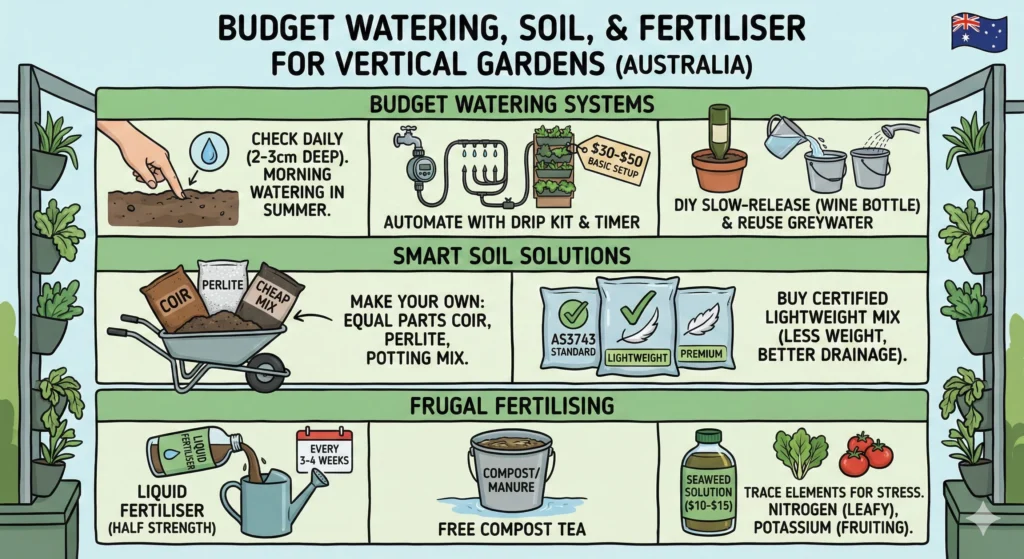
Watering systems: Vertical gardens dry out faster than ground-level gardens because containers have less soil volume and increased air exposure. Check soil moisture daily by poking your finger 2–3cm deep—if it’s dry, water thoroughly until it drains from the bottom. During Australian summer, morning watering is essential to reduce heat stress.
For apartments with water restrictions or to reduce effort, install a cheap drip irrigation kit from hardware stores (around $30–50 for a basic setup). Thread drip lines through your vertical structures with emitters positioned in each container. Connect to a tap timer to automate watering during permitted hours. Alternatively, reuse wine bottles as slow-release watering stakes: fill the bottle, invert it, and push the neck into the soil—it releases water gradually over several days.
Collect shower warm-up water and cooking water (once cooled, unsalted) in buckets for garden use. Greywater from rinsing vegetables is safe for edible plants.
Potting mix matters: Never use garden soil in containers—it compacts, drains poorly, and may contain weed seeds or diseases. Buy lightweight potting mix formulated for containers, or make your own by mixing equal parts coir (coconut fibre), perlite or vermiculite (for drainage), and cheap potting mix. Australian potting mixes meeting the AS3743 standard contain controlled-release fertiliser and are certified pathogen-free.
For vertical gardens where weight is critical, look for potting mixes labelled “premium” or “lightweight”—these contain more coir and perlite and weigh 30–40% less than standard mixes when wet.
Feeding your plants: Container plants exhaust nutrients quickly because frequent watering leaches fertiliser away. Every 3–4 weeks, apply liquid fertiliser diluted to half the recommended strength. Make free fertiliser by steeping compost, worm castings, or aged manure in water for 24 hours to create “compost tea.” Seaweed solution (available from garden centres for $10–15) provides trace elements and strengthens plants against heat and wind stress—especially valuable in harsh Australian conditions.
For herbs and leafy greens, higher nitrogen promotes leaf growth. For fruiting plants like tomatoes and strawberries, switch to a fertiliser higher in potassium once flowering begins.
Maintenance, Safety and Seasonal Adjustments
Regular tasks: Remove dead leaves and spent flowers weekly to prevent disease and encourage new growth. Check cable ties, wires, and brackets monthly—UV exposure degrades plastic fittings over time. Replace any that look brittle or loose before they fail.
Prune herbs regularly to prevent them becoming woody and leggy. Most herbs respond well to harvesting—cutting encourages bushier growth. Rotate pots quarterly if some plants aren’t getting enough light, moving shaded plants into sunnier positions and vice versa.
Pest management: Small balcony gardens attract fewer pests than ground-level gardens, but aphids, whiteflies, and caterpillars still appear. Spray infested plants with a mix of water and a few drops of dish soap, or use diluted neem oil. Introduce beneficial insects by planting flowers like alyssum and marigolds—they attract ladybirds and hoverflies that eat aphids.
Check undersides of leaves weekly for early pest detection. Isolate affected plants immediately to prevent spread.
Seasonal adjustments: Australian gardening follows opposite seasons to the Northern Hemisphere. Plant cool-season crops (lettuce, peas, broad beans, coriander) from March to May and again in August–September. Warm-season crops (tomatoes, basil, beans, capsicums) go in from September to November.
In summer (December–February), shade-cloth (30–50% shade) protects plants from scorching afternoon sun, especially on west-facing balconies. Attach shade-cloth to railings with clips for easy removal in winter. Increase watering frequency—some vertical gardens need twice-daily watering during heatwaves.
In winter (June–August), move frost-sensitive plants (basil, tomatoes) to protected spots or bring indoors overnight if temperatures drop below 5°C. Most Australian cities don’t experience hard frosts, but elevated balconies can be several degrees colder than ground level.
Wind protection: If wind damages plants repeatedly, install clear acrylic panels or shade-cloth screens on the windward side of your balcony. Even a 60cm high barrier reduces wind speed significantly. Cluster pots together—plants shelter each other and create humid microclimates that reduce water loss.
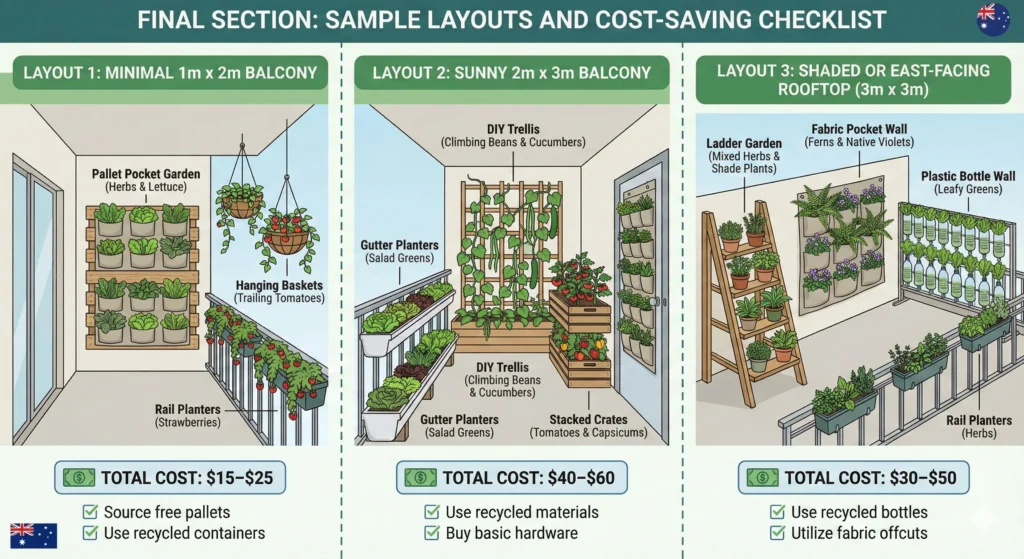
Final Section: Sample Layouts and Cost-Saving Checklist
Layout 1: Minimal 1m x 2m Balcony
- One pallet pocket garden against the back wall (herbs and lettuce)
- Rail planters with strawberries along the railing
- Two hanging baskets at different heights for trailing tomatoes
- Total cost: $15–25 if sourcing free pallets and recycled containers
Layout 2: Sunny 2m x 3m Balcony
- Gutter planters (two levels) along one railing for salad greens
- DIY trellis along the back for climbing beans and cucumbers
- Stacked crates (three tiers) in one corner for tomatoes and capsicums
- Shoe organiser on the door for herbs
- Total cost: $40–60 using recycled materials and basic hardware
Layout 3: Shaded or East-Facing Rooftop (3m x 3m)
- Ladder garden with mixed herbs and shade-tolerant plants
- Fabric pocket wall for decorative ferns and native violets
- Plastic bottle wall along one edge for leafy greens
- Several rail planters for herbs
- Total cost: $30–50 with recycled bottles and fabric offcuts
Cost-Saving Checklist:
- Source free pallets from furniture stores, factories, or construction sites (always ask permission)
- Collect 2-litre bottles from workplace recycling or ask at cafes
- Check hard rubbish collections for old shelves, crates, ladders, and buckets
- Buy potting mix in bulk (30-litre bags) rather than small packs—saves 40–60%
- Propagate herbs from cuttings instead of buying seedlings: basil, mint, and rosemary root easily in water
- Join local gardening groups on social media—members often give away excess seedlings, cuttings, and materials
- Shop end-of-season sales at hardware stores for seeds (50–70% off)
- Make your own compost tea instead of buying liquid fertiliser
- Use collected rainwater or greywater where permitted by your water authority
- Start small with 3–5 containers and expand as you learn—this prevents waste and discouragement
Weight distribution guide:
- Keep heaviest items (large pots, water reservoirs) near walls or structural supports
- Spread weight across the balcony rather than clustering in one spot
- A saturated 30-litre pot weighs approximately 35–40kg—distribute multiple large pots evenly
- Vertical structures attached to railings transfer some weight to the building frame, reducing floor load
Vertical gardening on tiny balconies and rooftops in Australia transforms unused wall space into productive growing areas without requiring large budgets or permanent installations. By using recycled materials creatively, understanding your microclimate, and choosing plants suited to container growing, you can harvest fresh herbs, vegetables, and fruit year-round from even the smallest urban space. Start with one or two simple projects from this guide, observe what works in your specific conditions, and expand your vertical garden as your confidence grows.