Ultimate Thriving Huge-Leaf Plants for Low-Light Flats
Introduction
Instagram is full of towering fiddle-leaf figs glowing in sun-drenched lofts. The reality for many European apartments is very different: north- or east-facing windows, compact rooms, and long, dark winters with weak natural light.
That doesn’t mean you have to give up on statement indoor plants with large leaves. Some big-leaf houseplants are genuinely adapted to lower light and cope far better with typical UK, German, Dutch, or Scandinavian flats than popular but demanding species.
This guide explains which huge-leaf indoor plants for low light actually work, why some famous choices fail, and how to choose and care for large leaf houseplants that stay healthy in real apartments.
Section 1 – What “low light” really means indoors
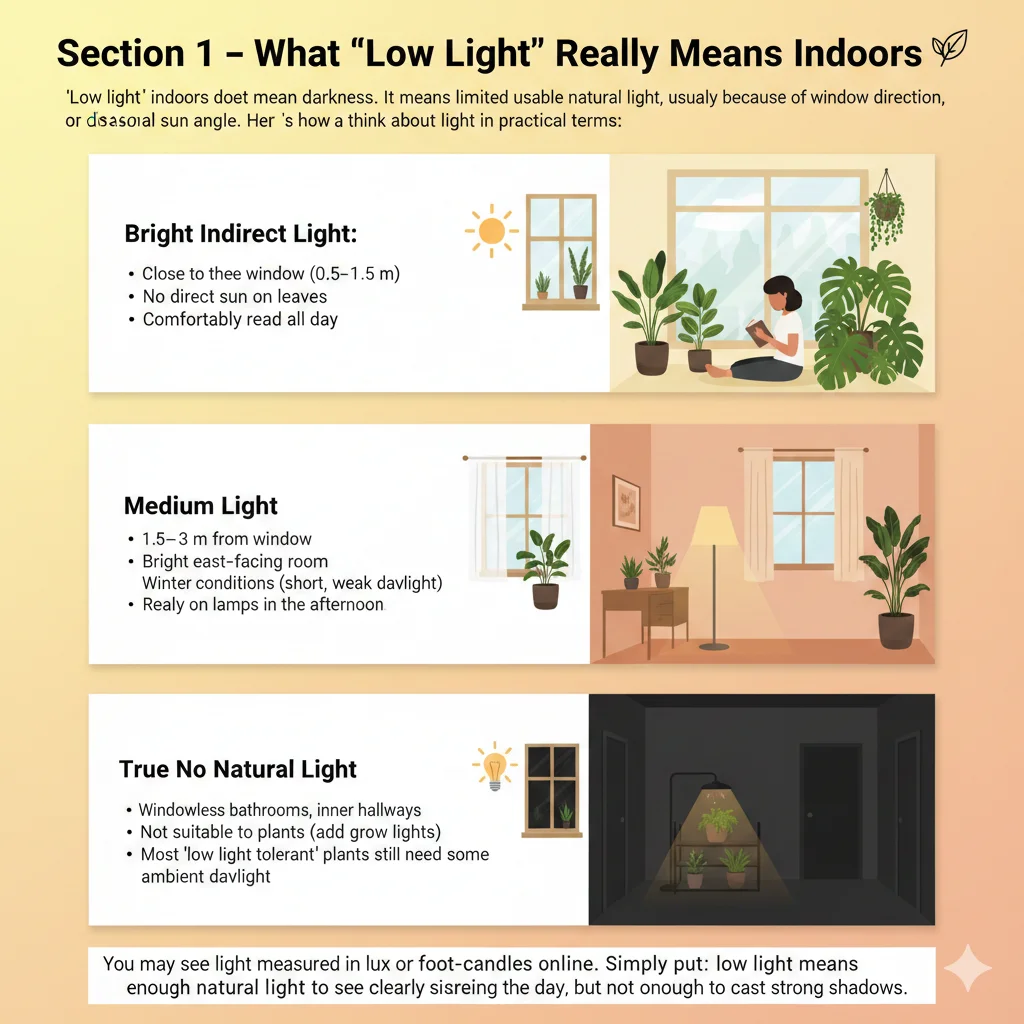
“Low light” indoors does not mean darkness. It means limited usable natural light, usually because of window direction, distance, or seasonal sun angle.
Here’s how to think about light in practical terms:
- Bright indirect light: Close to a window (0.5–1.5 m), no direct sun on leaves. You can comfortably read all day without turning lights on.
- Medium light: 1.5–3 m from a window, or a bright east-facing room. Reading is possible most of the day.
- Low light: 3 m or more from a window, north-facing rooms, or winter conditions where daylight is short and weak. You rely on lamps in the afternoon.
True no natural light (windowless bathrooms, inner hallways) is not suitable for plants unless you add grow lights. Most “low light tolerant” plants still need some ambient daylight to survive.
You may see light measured in lux or foot-candles online. Simply put: low light means enough natural light to see clearly during the day, but not enough to cast strong shadows.
Section 2 – Why fiddle-leaf figs struggle in low light
The fiddle-leaf fig (Ficus lyrata) became popular because of its large, sculptural leaves and upright, indoor-tree shape. In the wild and in greenhouses, it grows in very bright conditions.
In European apartments, it often fails for predictable reasons:
- Insufficient light: Low winter light causes leaf drop and weak growth.
- Overwatering: Slow growth in low light means roots sit wet for too long, leading to root rot.
- Dry indoor air: Central heating dries the air, stressing the leaves.
- Frequent moving: Fiddle-leaf figs hate being repositioned.
- Cold drafts: Common near windows in winter.
These problems are environmental, not a sign of a “bad plant owner.” Ficus lyrata simply isn’t a forgiving choice for low-light rooms.
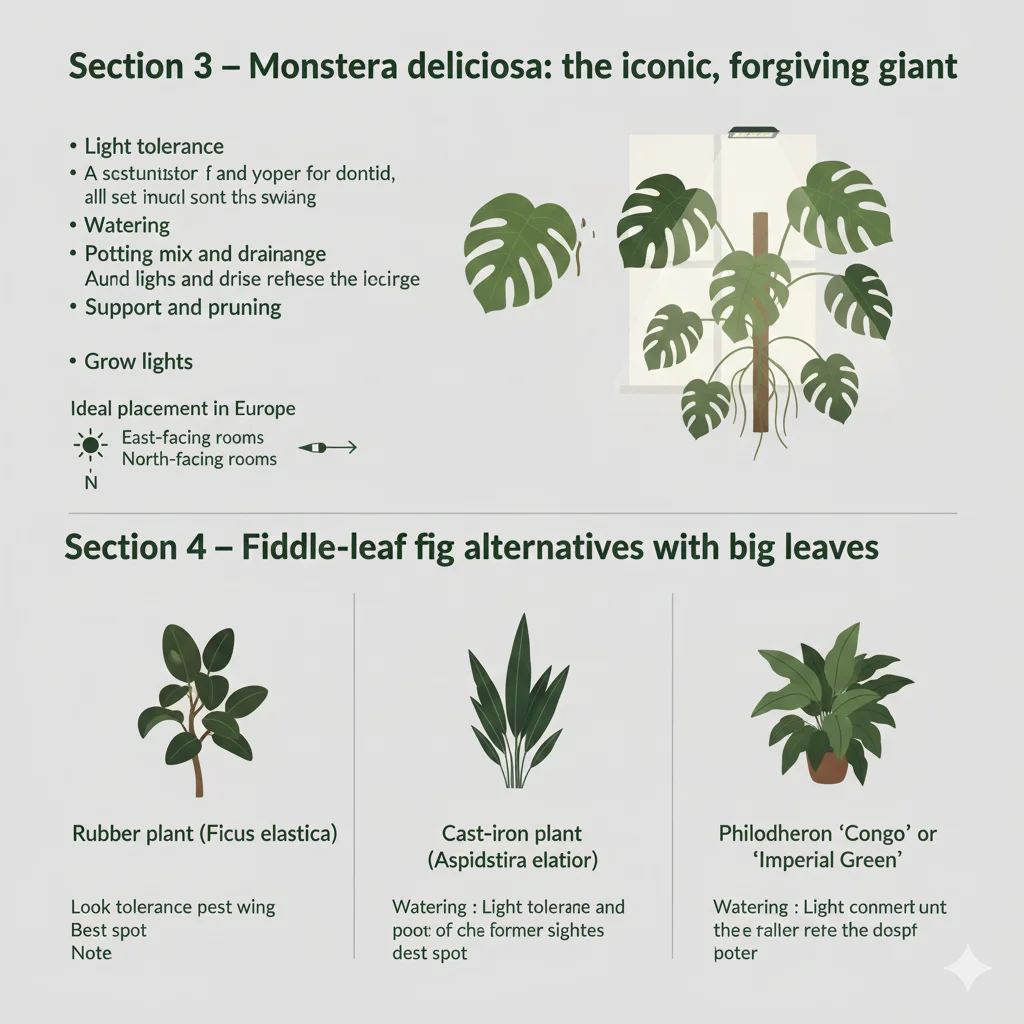
Section 3 – Monstera deliciosa: the iconic, forgiving giant
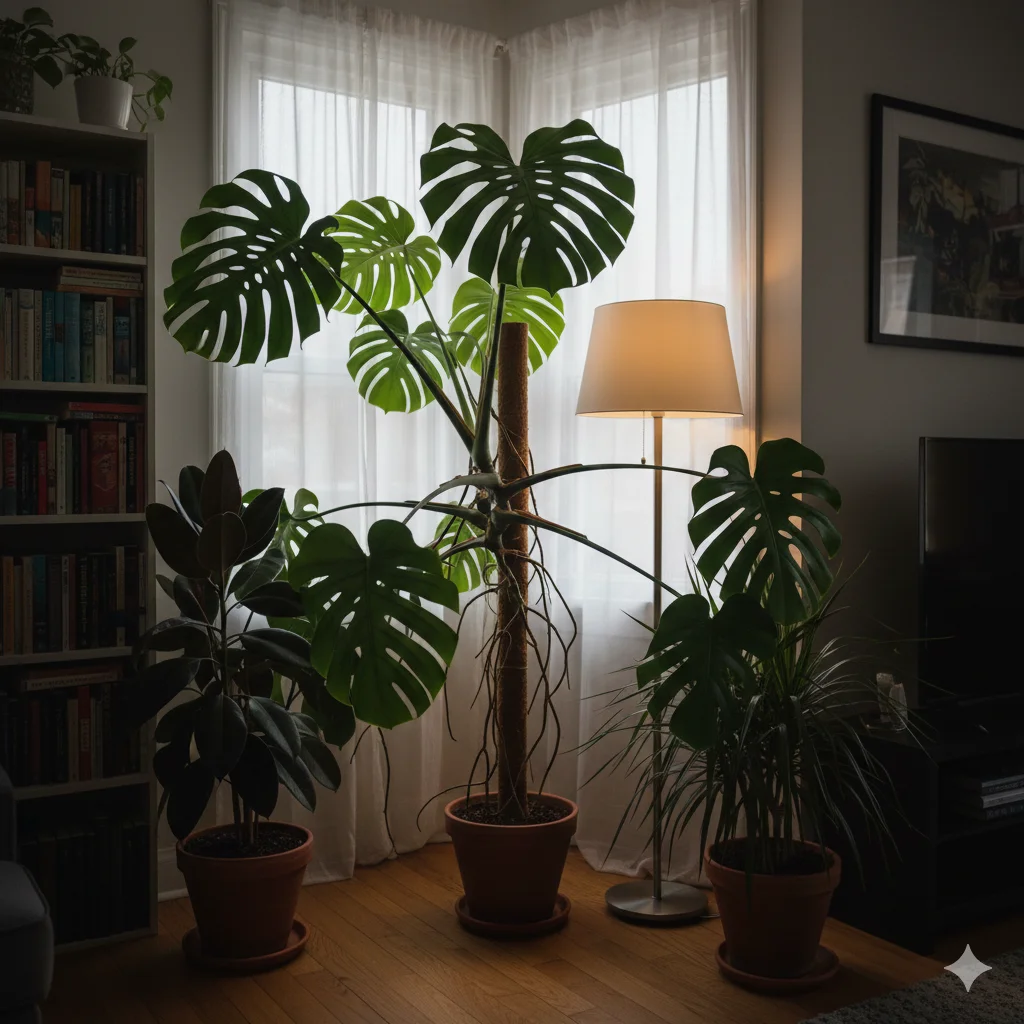
Monstera deliciosa is one of the best big leaf indoor plants for apartments because it evolved as an understory rainforest plant, growing beneath taller trees.
Light tolerance
Monstera tolerates low light but grows best in bright indirect light. In lower light, leaves stay smaller and fenestrations (holes) develop more slowly, but the plant remains healthy.
Ideal placement in Europe
- East-facing living rooms or bedrooms: 1.5–3 m from the window.
- North-facing rooms: as close to the window as possible without direct sun.
Watering
- Water when the top 3–4 cm of soil are dry.
- In summer: roughly every 7–10 days.
- In winter: often every 2–3 weeks.
Always empty excess water from the saucer.
Potting mix and drainage
Use a well-draining mix: houseplant soil with added bark, perlite, or coco chips. Good drainage is essential to avoid root rot in low light.
Support and pruning
- Add a moss pole or stake to encourage larger leaves.
- Prune leggy growth in spring.
- Rotate the plant every few weeks for even growth.
Grow lights
In very dim flats, a small LED grow light during winter can significantly improve leaf size and overall health.
Section 4 – Fiddle-leaf fig alternatives with big leaves
If you want a statement plant but struggle with low light, these are far better fiddle-leaf fig alternatives for low light.
Rubber plant (Ficus elastica)
- Look: Thick, glossy leaves; bold and architectural.
- Light tolerance: Medium to low light (darker varieties tolerate less).
- Watering: Let the top 5 cm dry out.
- Best spot: North- or east-facing living room near a window.
- Note: Much tougher than Ficus lyrata.
Cast-iron plant (Aspidistra elatior)
- Look: Long, dark green leaves; understated but elegant.
- Light tolerance: True low light champion.
- Watering: Infrequent; prefers drying slightly.
- Best spot: Dark corners, hallways with ambient light.
- Note: Slow growth but extremely resilient.
Philodendron ‘Congo’ or ‘Imperial Green’
- Look: Broad, lush leaves with a jungle feel.
- Light tolerance: Medium to low light.
- Watering: Even moisture; avoid soggy soil.
- Best spot: Bright north-facing rooms or shaded east-facing spaces.
Section 5 – Other huge-leaf low-light candidates for Europe
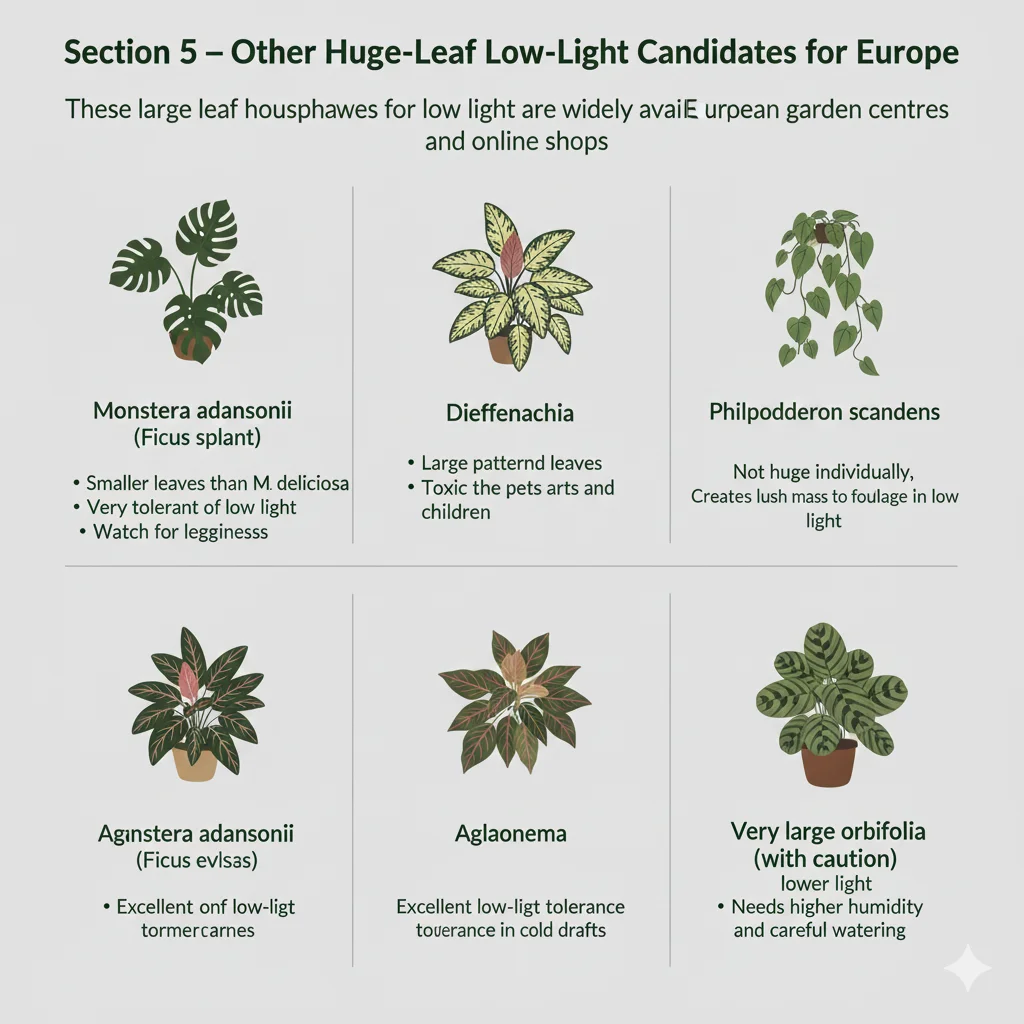
These large leaf houseplants for low light are widely available in European garden centres and online shops.
- Monstera adansonii (Swiss cheese plant)
Smaller leaves than M. deliciosa but very tolerant of low light. Watch for legginess. - Dieffenbachia (dumb cane)
Large patterned leaves; tolerates low light but toxic to pets and children. - Philodendron scandens (heartleaf philodendron)
Not huge individually, but creates a lush mass of foliage in low light. - Aglaonema (Chinese evergreen)
Broad leaves, excellent low-light tolerance. Sensitive to cold drafts. - Calathea orbifolia (with caution)
Very large leaves, handles lower light but needs higher humidity and careful watering.
Section 6 – How to choose the right plant for your flat
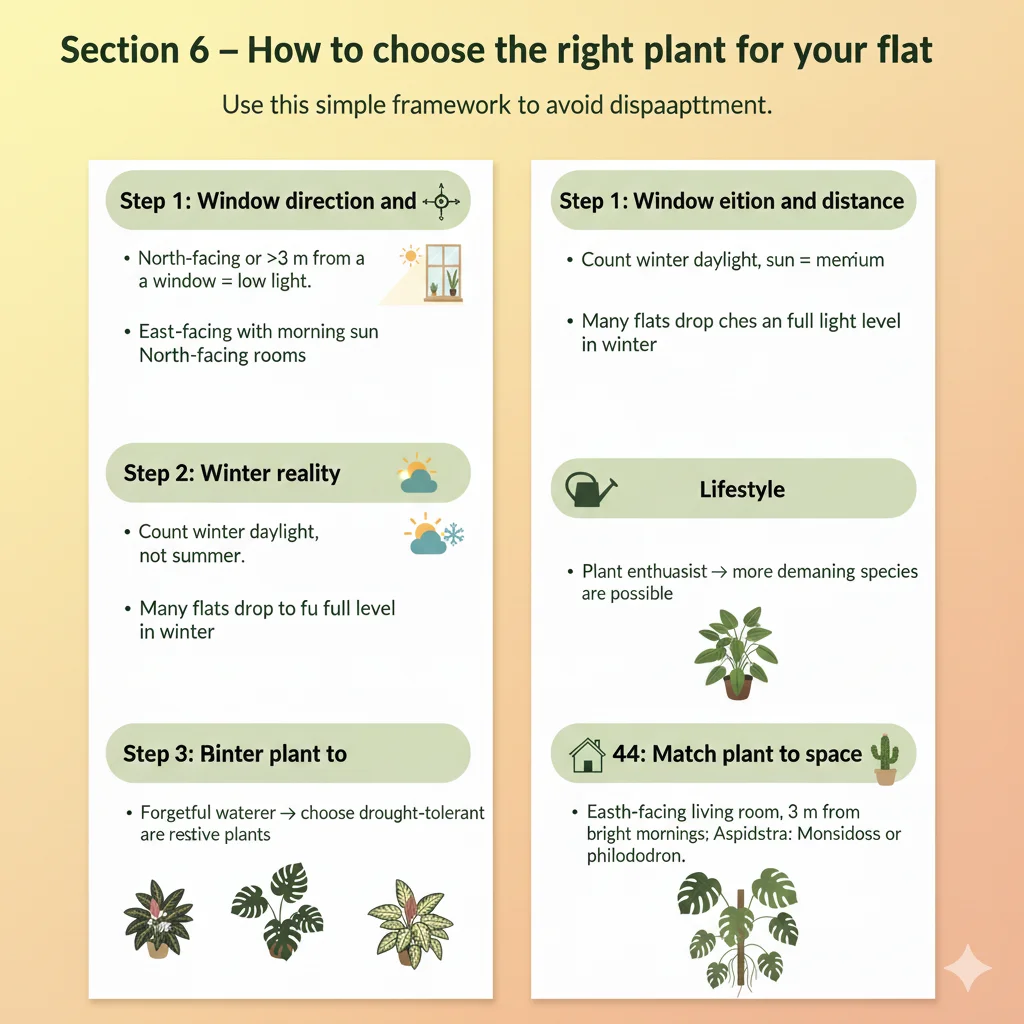
Use this simple framework to avoid disappointment.
Step 1: Window direction and distance
- North-facing or >3 m from a window = low light.
- East-facing with morning sun = medium light.
Step 2: Winter reality
- Count winter daylight, not summer. Many flats drop a full light level in winter.
Step 3: Lifestyle
- Forgetful waterer → choose drought-tolerant plants.
- Plant enthusiast → more demanding statement species are possible.
Step 4: Match plant to space
- North-facing living room, 3 m from window, low effort: Aspidistra or rubber plant.
- East-facing bedroom, bright mornings, attentive care: Monstera deliciosa or philodendron.
- Small flat needing floor plants: Upright rubber plant or Monstera on a pole.
Section 7 – Quick care cheat sheet
| Plant | Leaf look / size | Light tolerated | Watering style | Best for |
|---|---|---|---|---|
| Monstera deliciosa | Huge split leaves | Low–bright indirect | Moderate, dries slightly | Living rooms, beginners |
| Rubber plant | Thick, glossy, large | Medium–low | Let top dry | Statement floor plants |
| Cast-iron plant | Long, dark green | Low | Infrequent | Dark rooms, forgetful owners |
| Philodendron Congo | Broad, lush leaves | Medium–low | Even moisture | Jungle vibe flats |
| Dieffenbachia | Large patterned leaves | Low–medium | Regular, not soggy | Bright low-sun rooms |
| Aglaonema | Broad, decorative | Low | Light but consistent | Small spaces, low light |
Choosing the right huge-leaf indoor plants for low light is less about chasing trends and more about matching plants to real European homes. With the right species and realistic expectations, even dim apartments can become a calm, green indoor oasis.