Stress-Free Houseplants That Forgive Missed & Irregular Waterings
Working Title & Angle
Angle: This guide is for real people with busy lives—travelers, beginners, and anyone who forgets to water sometimes. These are houseplants that tolerate irregular watering and still look good doing it.
Introduction: Plants for Real Life
Not everyone remembers to water plants on a perfect schedule. Work gets busy, trips come up, and sometimes you just forget. That’s normal.
Irregular watering means watering inconsistently—maybe too late, sometimes too often, sometimes skipping weeks entirely. While many houseplants struggle with this, some are naturally built to handle it.
These forgiving houseplants store water, grow slowly, or have tough root systems. They don’t panic when life gets in the way—and that makes them ideal houseplants for forgetful plant parents.
How Irregular Watering Affects Plants
Understanding what goes wrong helps you avoid killing even tough plants.
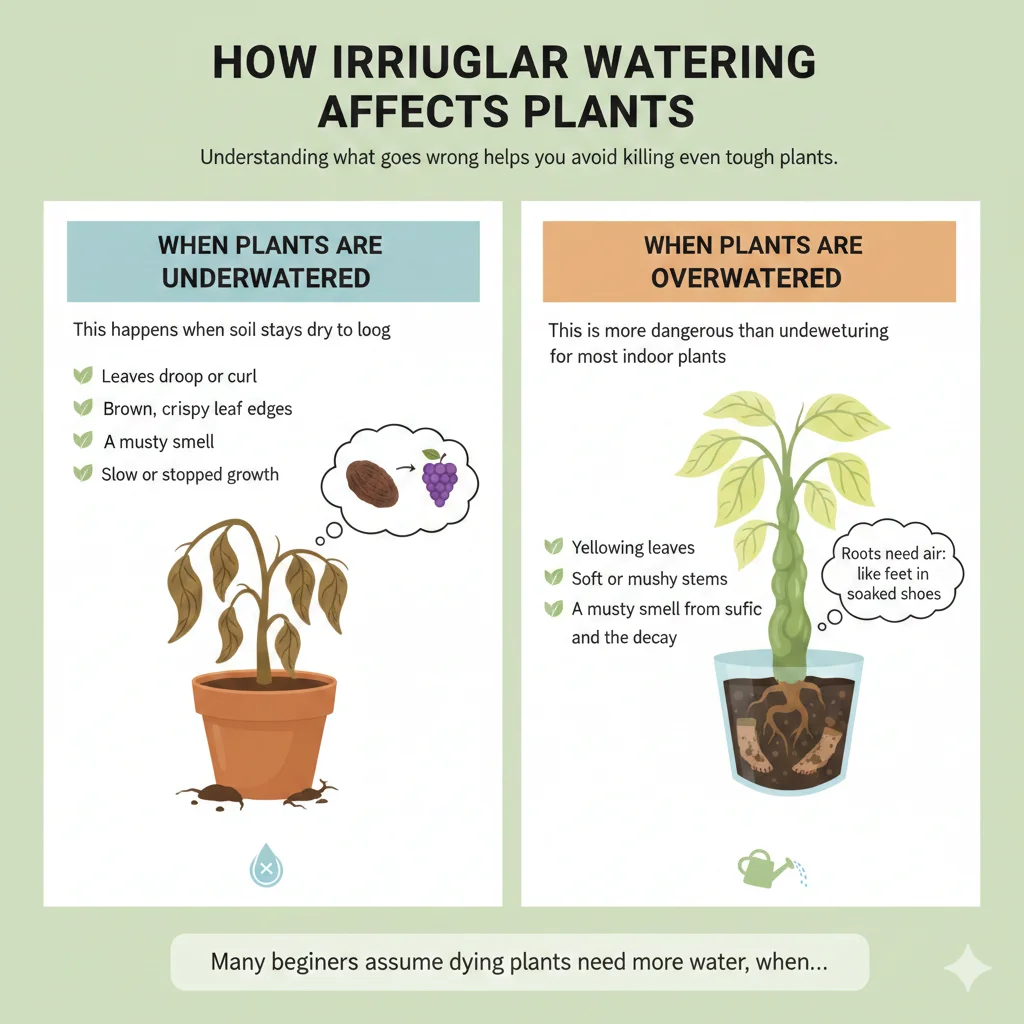
When Plants Are Underwatered
This happens when soil stays dry for too long.
Common signs:
- Leaves droop or curl
- Brown, crispy leaf edges
- Slow or stopped growth
Visual example:
Think of a raisin instead of a grape—leaves lose firmness as water pressure inside the plant drops.
When Plants Are Overwatered
This is more dangerous than underwatering for most indoor plants.
Common signs:
- Yellowing leaves
- Soft or mushy stems
- A musty smell from the soil
- Root rot (roots suffocate and decay)
Visual example:
Roots need air. Sitting in wet soil is like keeping your feet in soaked shoes—eventually, damage sets in.
Many beginners assume dying plants need more water, when the real problem is too much.
What Makes a Plant “Forgiving”?
Forgiving plants share physical traits that help them survive inconsistent care.
Key Traits of Low-Maintenance, Forgiving Houseplants
- Thick or fleshy leaves
Store water (succulents, snake plants) - Underground storage (rhizomes or tubers)
Act like water batteries (ZZ plant, cast iron plant) - Slow growth
Slower plants use water more efficiently - Strong root systems
Less prone to damage from missed waterings
How to Spot These Traits in a Store
- Leaves feel firm or waxy, not thin and papery
- Plant labels mention drought tolerant, low-water, or easy care
- Thick stems or swollen leaf bases are a good sign
These are classic indicators of indoor plants that handle irregular watering.
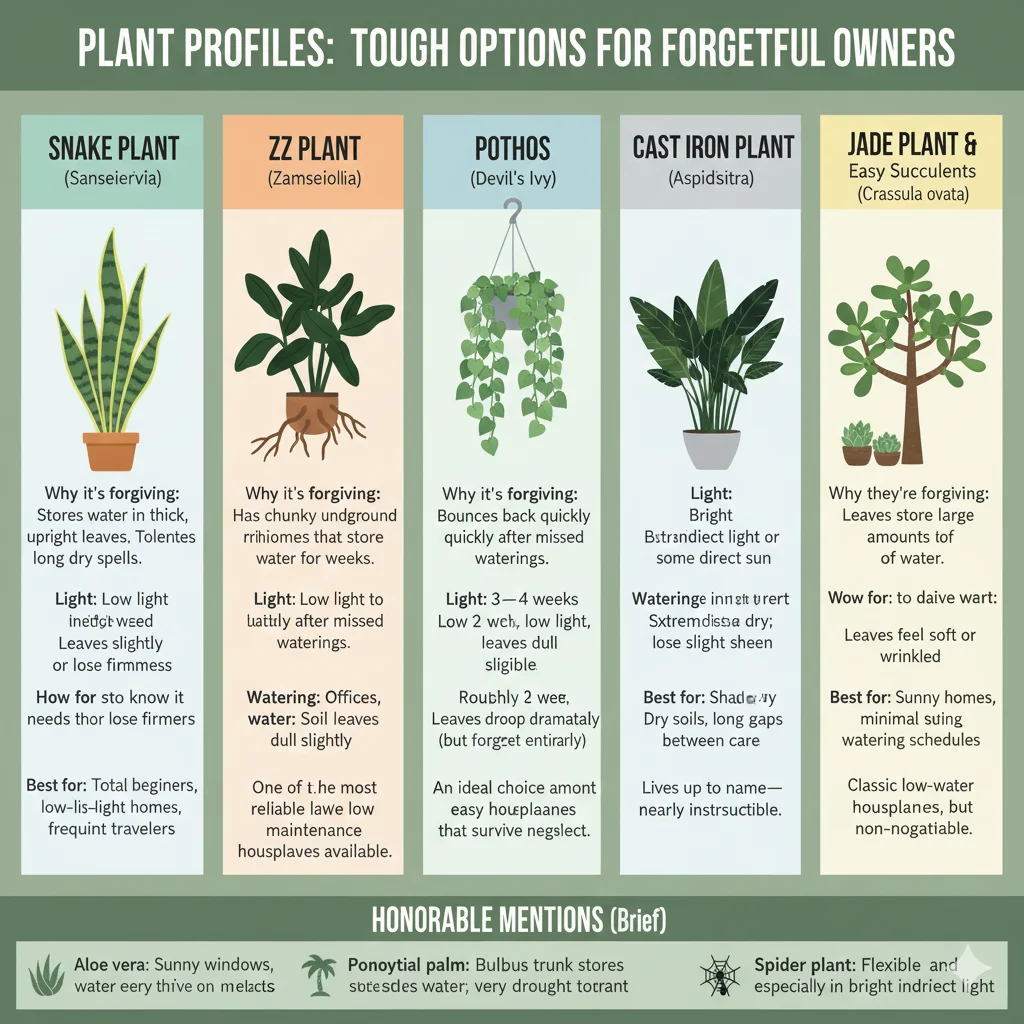
Plant Profiles: Tough Options for Forgetful Owners
Snake Plant (Sansevieria / Dracaena trifasciata)
Why it’s forgiving:
Stores water in thick, upright leaves. Tolerates long dry spells.
- Light: Low light to bright indirect light
- Watering: Every 2–4 weeks
- How to know it needs water: Leaves wrinkle slightly or lose firmness
- Best for: Total beginners, low-light homes, frequent travelers
A textbook example of plants that thrive on neglect.
ZZ Plant (Zamioculcas zamiifolia)
Why it’s forgiving:
Has chunky underground rhizomes that store water for weeks.
- Light: Low to medium indirect light
- Watering: Every 3–4 weeks
- How to know it needs water: Soil completely dry; leaves dull slightly
- Best for: Offices, low light, people who forget entirely
One of the most reliable low maintenance houseplants available.
Pothos (Devil’s Ivy, Epipremnum aureum)
Why it’s forgiving:
Bounces back quickly after missed waterings.
- Light: Low light to bright indirect light
- Watering: Roughly once a week, flexible
- How to know it needs water: Leaves droop dramatically (but recover fast)
- Best for: Beginners who want visible feedback
An ideal choice among easy houseplants that survive neglect.
Cast Iron Plant (Aspidistra)
Why it’s forgiving:
Extremely tough roots and slow growth.
- Light: Low to medium light
- Watering: Every 2–3 weeks
- How to know it needs water: Dry soil; leaves lose slight sheen
- Best for: Shady rooms, long gaps between care
Lives up to its name—nearly indestructible.
Jade Plant (Crassula ovata) & Easy Succulents
Why they’re forgiving:
Leaves store large amounts of water.
- Light: Bright indirect light or some direct sun
- Watering: Every 2–4 weeks
- How to know it needs water: Leaves feel soft or wrinkled
- Best for: Sunny homes, minimal watering schedules
Classic low-water houseplants, but light is non-negotiable.
Honorable Mentions (Brief)
- Aloe vera: Sunny windows, water every 3 weeks
- Ponytail palm: Bulbous trunk stores water; very drought tolerant
- Spider plant: Flexible and forgiving, especially in bright indirect light
Matching Plants to Your Lifestyle
If You Forget for Weeks at a Time
- Snake plant
- ZZ plant
- Cast iron plant
If You Have Bright Light but Forget Often
- Jade plant
- Aloe vera
- Ponytail palm
Simple, Foolproof Bundles
- Bare-minimum care: Snake plant + ZZ plant
- Sunny but forgetful: Jade plant + aloe
- Visual feedback lovers: Pothos + spider plant
Matching care to reality—not intention—is the secret.
Simple Watering Systems for Forgetful People
No perfection required.
- Phone reminders: One monthly reminder is better than none
- Group plants: Keep similar watering needs together
- Use well-draining potting mix: Prevents root rot
- Always use drainage holes: Standing water kills more plants than drought
These small systems dramatically improve success with low maintenance houseplants.
Common Mistakes to Avoid
- Drowning plants after forgetting
Water thoroughly once—don’t compensate - Letting pots sit in water
Empty saucers after watering - Ignoring light needs
“Tough” doesn’t mean “no light required”
Even drought-tolerant indoor plants have limits.
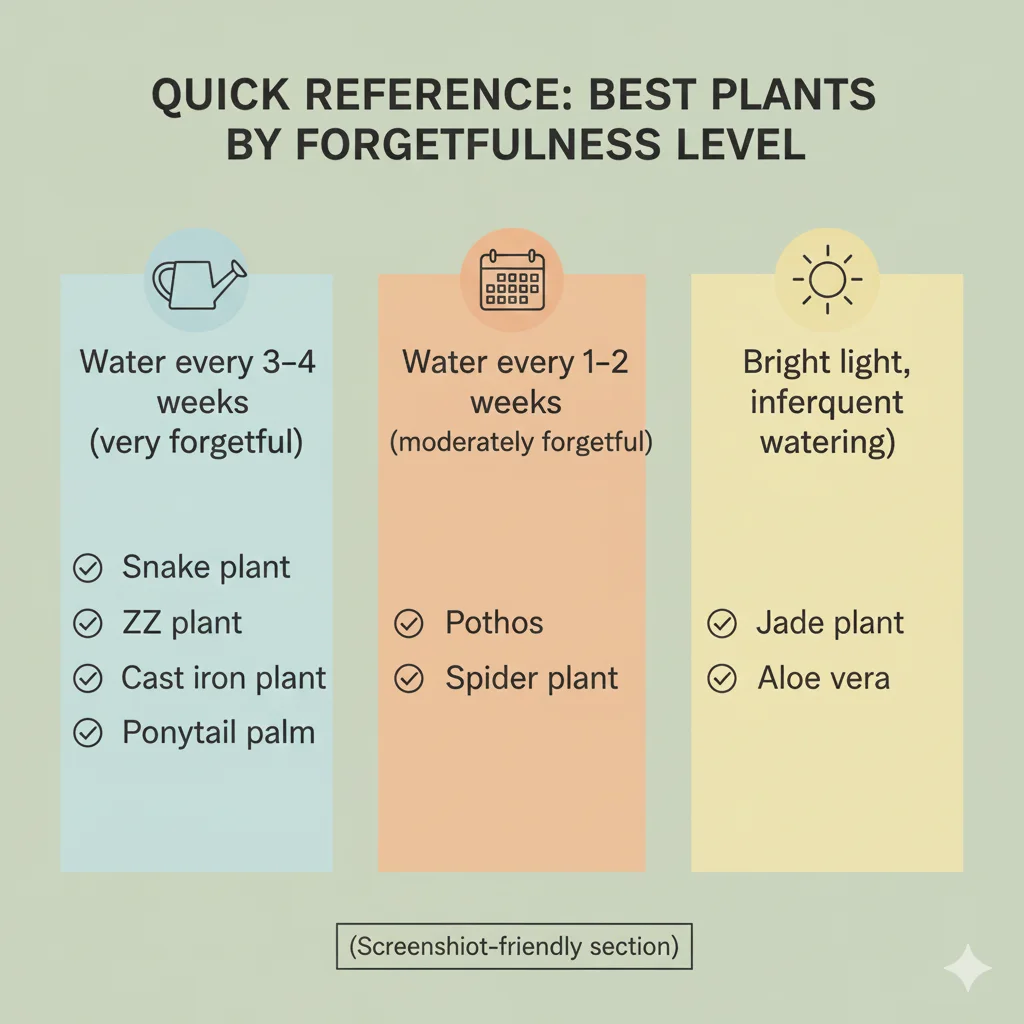
Quick Reference: Best Plants by Forgetfulness Level
Water every 3–4 weeks (very forgetful):
- Snake plant
- ZZ plant
- Cast iron plant
- Ponytail palm
Water every 1–2 weeks (moderately forgetful):
- Pothos
- Spider plant
Bright light, infrequent watering:
- Jade plant
- Aloe vera
(Screenshot-friendly section)
Closing: Progress, Not Perfection
Plant care isn’t about discipline—it’s about choosing the right plants for your life.
If you’re forgetful, busy, or still learning, forgiving houseplants are a smart strategy, not a shortcut. Start with plants that tolerate irregular watering, build confidence, and grow from there.
Healthy plants don’t need perfect owners—just realistic ones.