Rain Garden Basics: Essential Guide to Roof Runoff
Introduction: Why Capture Roof Runoff?
Every time it rains, your roof sheds hundreds or thousands of gallons of water directly onto your property. Without intervention, this concentrated flow races across driveways, lawns, and sidewalks, picking up pollutants, eroding soil, and overwhelming storm drains. In many neighborhoods, this roof runoff contributes to flooded streets, degraded streams, and contaminated waterways.
A rain garden offers a simple, beautiful solution. Instead of letting roof water rush away, you direct it into a shallow planted depression where it soaks slowly into the ground. The plants and soil naturally filter out pollutants while recharging groundwater—the underground reserves that feed wells and streams during dry periods. You transform a drainage problem into a landscape asset that reduces flooding, supports wildlife, and requires less maintenance than traditional lawns once established.
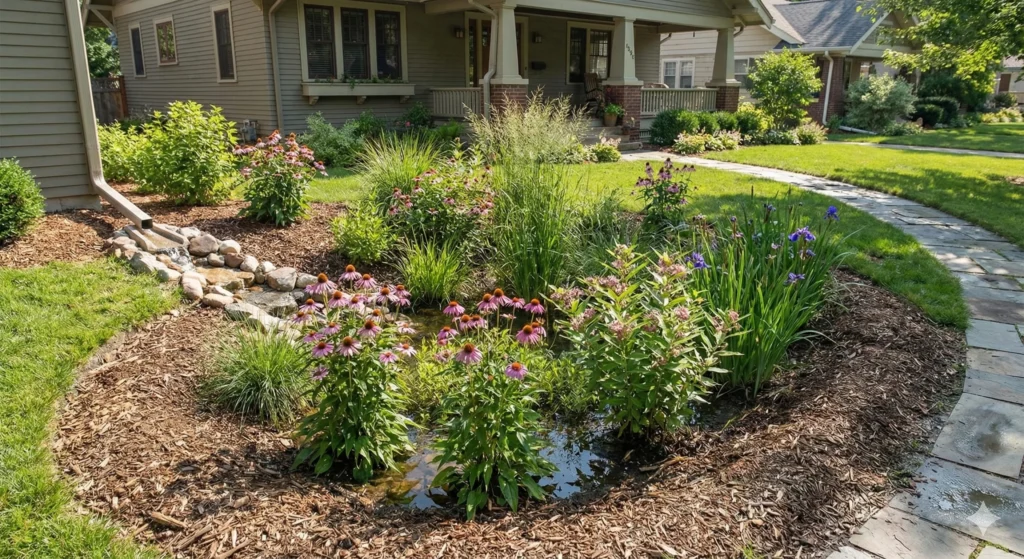
This guide walks you through everything you need to plan and build a basic rain garden designed specifically to handle water from your roof downspouts.
What Is a Rain Garden?
A rain garden is a shallow, vegetated basin designed to temporarily hold and absorb stormwater runoff. Think of it as a purposeful low spot in your yard, planted with water-tolerant native species that thrive in both wet and dry conditions.
Here’s how it works: rainwater flows from your roof through gutters and downspouts, then travels via a pipe, swale, or channel into the rain garden. The basin fills during storms—typically holding water just 6 to 12 inches deep—then drains completely within 12 to 48 hours as the water infiltrates (soaks) into the ground below. Between storms, the garden looks and functions like any other planted bed.
This is not a pond or wetland. The water doesn’t sit long enough for mosquitoes to breed, and the plants are selected to handle both flooding and drought. You’re essentially creating a specialized garden bed that serves double duty: managing water and enhancing your landscape.
Benefits of a Rain Garden
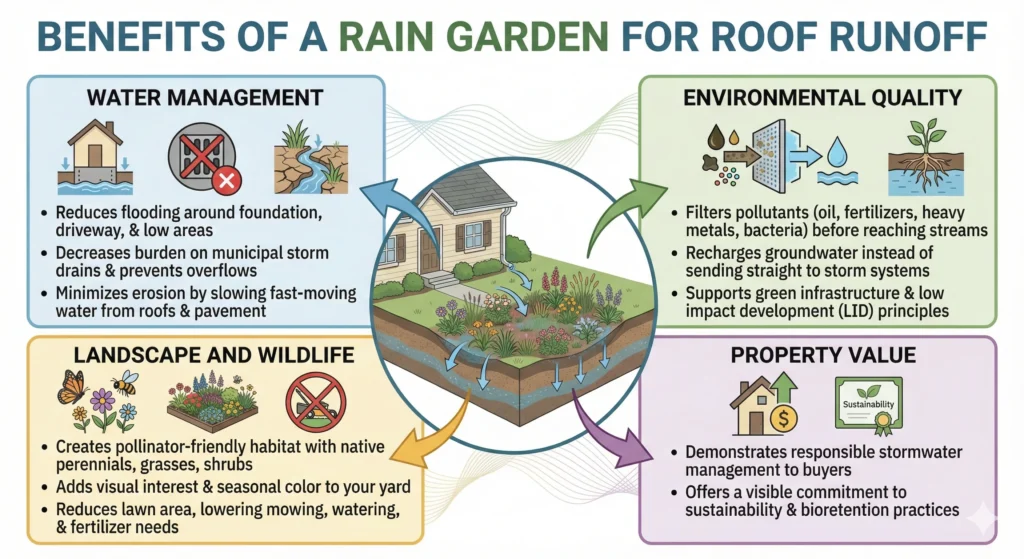
Installing a rain garden for roof runoff delivers multiple practical and environmental advantages:
Water Management
- Reduces flooding around your foundation, driveway, and low-lying areas
- Decreases the burden on municipal storm drains and prevents combined sewer overflows in older systems
- Minimizes erosion by slowing down fast-moving water from impermeable surfaces like roofs and pavement
Environmental Quality
- Filters pollutants (oil, fertilizers, heavy metals, bacteria) from runoff before they reach streams and rivers
- Recharges groundwater instead of sending water straight to storm systems
- Supports green infrastructure and low impact development (LID) principles in residential settings
Landscape and Wildlife
- Creates pollinator-friendly habitat with native flowering perennials, grasses, and shrubs
- Adds visual interest and seasonal color to your yard
- Reduces lawn area, lowering mowing, watering, and fertilizer needs once established
Property Value
- Demonstrates responsible stormwater management to buyers
- Offers a visible commitment to sustainability and bioretention practices
Is Your Site Suitable? Basic Checks
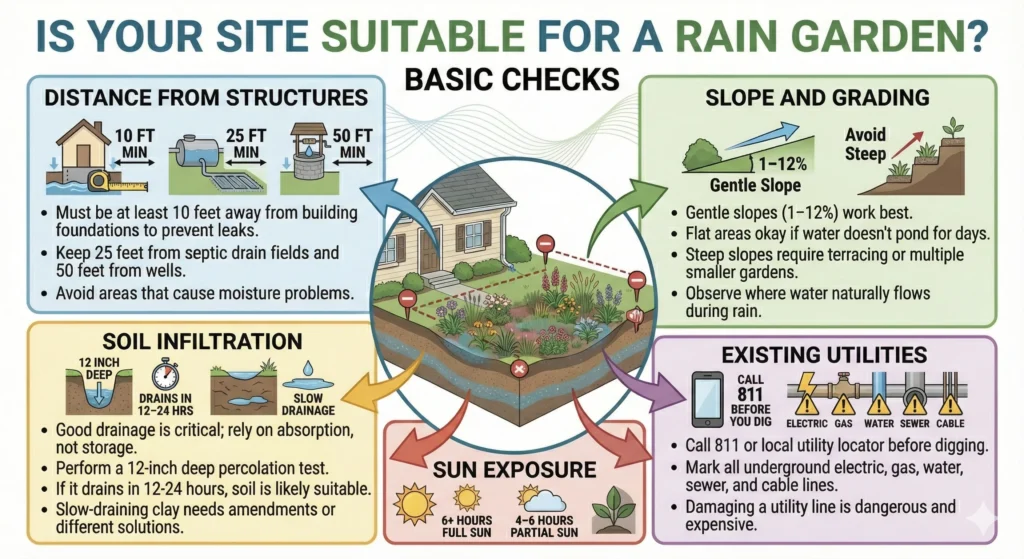
Not every yard works for a rain garden, but most properties with decent drainage can accommodate at least a small one. Run through these basic site checks before you start planning:
Distance from Structures Your rain garden must be at least 10 feet away from building foundations. Water infiltrating too close to your house can cause basement leaks, foundation settlement, or moisture problems. If you have a septic system, keep the garden at least 25 feet from the drain field and 50 feet from the well.
Slope and Grading Gentle slopes (1–12%) work best. Flat areas are fine as long as water doesn’t already pond for days. Steep slopes require terracing or multiple smaller gardens to prevent water from rushing through too quickly. Walk your yard during a heavy rain and observe where water naturally flows—you want to intercept that flow, not fight it.
Soil Infiltration Good drainage is critical. Dig a hole about 12 inches deep and fill it with water. If it drains within 12 to 24 hours, your soil can likely support a rain garden. If water sits for days, you have slow-draining clay or a high water table. In that case, you’ll need to excavate deeper and backfill with sandy loam, or consider a different stormwater solution entirely.
This simple percolation test tells you whether water will infiltrate at a reasonable rate. Rain gardens rely on absorption, not storage, so drainage matters more than anything else.
Existing Utilities Call 811 (or your local utility locator service) before you dig. Underground electric, gas, water, sewer, and cable lines must be marked. Damaging a utility line is dangerous and expensive.
Sun Exposure Most rain garden plants need at least 4 to 6 hours of direct sun. Full sun (6+ hours) gives you the widest plant selection. Shade-tolerant options exist, but fewer flowering species thrive in low light.
Planning and Sizing for Roof Runoff
Sizing a rain garden correctly ensures it captures the runoff you want to manage without overflowing constantly or staying too dry. Here’s a straightforward method for beginners:
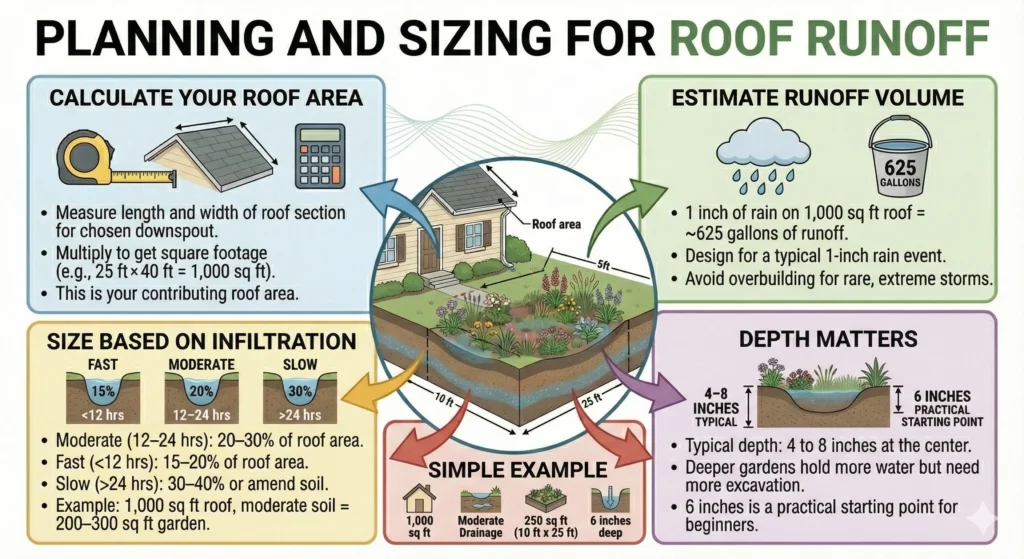
Calculate Your Roof Area Measure the length and width of the roof section that drains to your chosen downspout. Multiply to get square footage. For example, a section 25 feet by 40 feet = 1,000 square feet.
Estimate Runoff Volume A general rule: 1 inch of rain on 1,000 square feet of roof produces about 625 gallons of runoff. For most residential applications, designing your rain garden to capture runoff from a 1-inch rain event works well without overbuilding.
Size the Garden Based on Infiltration If your soil drains in 12 to 24 hours (moderate infiltration), size your rain garden to about 20–30% of the roof area it serves. For our 1,000-square-foot roof example, that’s a garden between 200 and 300 square feet.
If your soil drains faster (sandy, under 12 hours), you can go smaller—15 to 20% of roof area. If it drains slowly, go larger—30 to 40%—or dig deeper and amend with better-draining soil.
Depth Matters Rain gardens are typically 4 to 8 inches deep at the center. Deeper gardens (up to 12 inches) hold more water but require more excavation. For beginners managing a single downspout, 6 inches is a practical starting point.
Simple Example
- Roof area: 1,000 sq ft
- Soil: moderate drainage
- Garden size: 250 sq ft (for example, 10 ft × 25 ft)
- Depth: 6 inches at the center, sloping to grade at edges
This garden will temporarily hold about 125 cubic feet of water (250 sq ft × 0.5 ft depth), which equals roughly 935 gallons—more than enough for a typical 1-inch rain event.
Don’t overthink the math. Conservative sizing means your garden might overflow occasionally during extreme storms, but that’s fine. You’re capturing most of the runoff most of the time, which is the goal.
Choosing the Best Location
Location determines success. Follow these priorities:
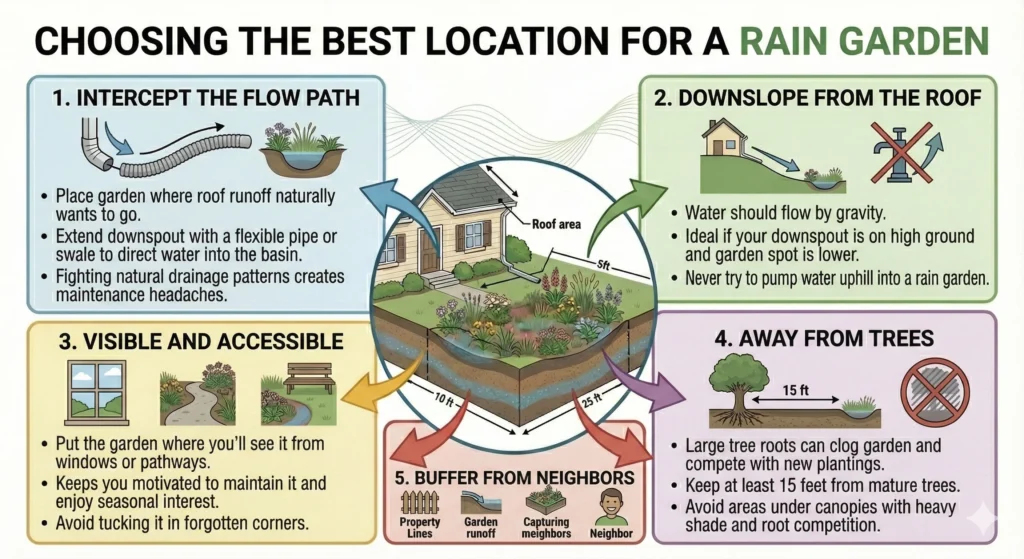
1. Intercept the Flow Path Place the garden where roof runoff naturally wants to go. Extend your downspout with a flexible pipe or swale to direct water into the basin. Fighting natural drainage patterns creates maintenance headaches.
2. Downslope from the Roof Water should flow by gravity. If your downspout is on high ground and your desired garden spot is lower, that’s ideal. Never try to pump water uphill into a rain garden unless you’re managing a commercial property with specific requirements.
3. Visible and Accessible Put the garden where you’ll see it from windows or pathways. This keeps you motivated to maintain it and lets you enjoy the seasonal interest. Avoid tucking it in forgotten corners where weeds take over unnoticed.
4. Away from Trees Large tree roots can clog your garden and compete with new plantings. Keep at least 15 feet from mature trees. Avoid areas directly under tree canopies where heavy shade and root competition make establishment difficult.
5. Buffer from Neighbors If your property slopes toward a neighbor’s yard, position the garden to capture runoff before it crosses the property line. Confirm that overflow won’t create problems for adjacent properties. Good fences make good neighbors; good drainage does too.
Design Basics for Beginners
A functional rain garden design doesn’t require engineering software. Here are the core elements:
Basin Shape Kidney shapes, ovals, and irregular curves look natural and integrate well into landscapes. Rectangles work too, especially along driveways or fences. Avoid long, narrow shapes—they concentrate water into channels rather than spreading it evenly.
Flat Bottom The basin floor should be level so water spreads evenly and infiltrates uniformly. Uneven bottoms create wet and dry pockets that stress plants.
Gentle Side Slopes Sides should slope at 3:1 or gentler (3 feet horizontal for every 1 foot vertical). This prevents erosion and makes mowing or maintenance around the edges easier.
Berm or Raised Edge (If Needed) On flat or slightly sloped sites, use excavated soil to build a low berm (mound) on the downslope side. This berm keeps water in the basin long enough to infiltrate. A 4- to 6-inch berm is usually sufficient.
Inlet This is where water enters—typically a pipe from your downspout or the end of a swale. Line the inlet with rocks or gravel to prevent erosion as water rushes in.
Overflow Outlet Even well-sized gardens overflow during heavy storms. Plan for this. The overflow can be:
- A shallow vegetated swale leading to a lower area
- A gap in the berm directing water safely away from structures
- Connection to an existing drainage system
Never let overflow drain toward your foundation or your neighbor’s property.
Mulch and Stone Use a 2- to 3-inch layer of shredded hardwood mulch across the basin to suppress weeds, retain moisture, and reduce erosion. Place larger river rock or stone at the inlet and outlet for erosion control.
Step-by-Step: Building a Small Rain Garden
Here’s a realistic sequence for a DIY rain garden serving one or two downspouts. Adjust scale as needed.
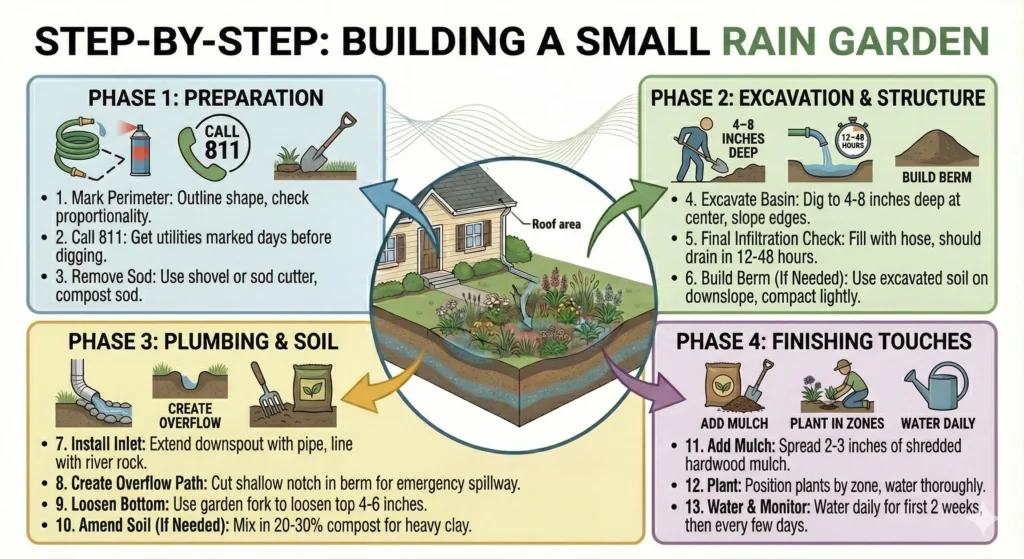
Step 1: Mark the Perimeter Use a garden hose or spray paint to outline your chosen shape. Walk around it. Make sure it looks proportional and fits the space. Adjust as needed.
Step 2: Call 811 Get utilities marked at least a few days before digging. This is legally required in most areas and prevents disasters.
Step 3: Remove Sod and Vegetation Use a flat shovel or sod cutter to remove grass and weeds within the marked area. Set the sod aside or compost it—you won’t need it.
Step 4: Excavate the Basin Dig down 4 to 8 inches at the center, sloping gently to the edges so the perimeter stays at grade. Keep the bottom flat and level. Use a long board and a level to check. Pile excavated soil to the side.
Step 5: Conduct a Final Infiltration Check Fill the basin with a hose and let it sit. It should drain within 12 to 48 hours. If it doesn’t, either excavate deeper and replace with sandy loam, or choose another location.
Step 6: Build the Berm (If Needed) On the downslope side, use your excavated soil to create a low, gentle berm that keeps water from immediately flowing out. Compact it lightly by walking on it to prevent settling.
Step 7: Install the Inlet Extend your downspout with flexible corrugated pipe or PVC. Bury it shallowly (1–2 inches deep) or run it on the surface if aesthetics allow. Direct it into the basin. Line the inlet point with 6- to 12-inch river rock to dissipate energy and prevent erosion.
Step 8: Create the Overflow Path Cut a shallow notch in the berm or dig a small swale leading safely away. This is your emergency spillway. Test it by filling the basin with a hose.
Step 9: Loosen the Bottom If your soil is compacted (common in new construction), use a garden fork or rototiller to loosen the top 4 to 6 inches of the basin floor. This improves infiltration.
Step 10: Amend Soil (If Necessary) If your soil is heavy clay or drains slowly, mix in compost (20–30% by volume) to improve texture. Don’t add sand alone—it can create concrete-like conditions. Compost enhances infiltration and supports plant roots.
Step 11: Add Mulch Spread 2 to 3 inches of shredded hardwood or native mulch across the basin. Avoid dyed mulch or large bark chunks.
Step 12: Plant Position plants according to zones (explained below). Water them in thoroughly. Mulch around plants to the original level.
Step 13: Water and Monitor Water plants daily for the first two weeks, then every few days for the first growing season. Once established, rain gardens are largely self-sufficient.
Plant Selection: Roof-Runoff Rain Garden Palette
Rain gardens experience extreme conditions: soggy during storms, dry between rains, and occasional drought. Native perennials, grasses, and shrubs adapted to these swings perform best. Non-native ornamentals often struggle or die.
Understanding Zones
Divide your rain garden mentally into three zones based on moisture:
Zone 1: Bottom/Center (Wettest) This area stays saturated longest. Choose plants that tolerate standing water for 24 to 48 hours.
Examples:
- Sedges (Carex species)—grasslike plants that thrive in wet soils
- Blue flag iris
- Swamp milkweed
- Cardinal flower
Zone 2: Middle Slope (Moderate Moisture) This zone gets wet but drains faster. Most rain garden perennials go here.
Examples:
- Black-eyed Susan
- Purple coneflower (Echinacea)
- Native asters
- Switchgrass or little bluestem (ornamental grasses)
- Bee balm
Zone 3: Edge/Berm (Driest) The perimeter rarely floods and dries out quickly. Drought-tolerant plants work here.
Examples:
- Yarrow
- Coreopsis
- Lavender (in hot, dry climates)
- Ornamental sages
- Native shrubs like sumac or elderberry (check local suitability)
Plant Selection Tips for Hot Climates If you experience hot summers and seasonal monsoons or heavy rains:
- Prioritize heat-tolerant natives
- Choose plants with deep root systems—they handle drought and flooding better
- Avoid shallow-rooted annuals that need constant watering
- Consider native grasses like sideoats grama or muhly grass for texture and resilience
Pollinator-Friendly Choices Rain gardens are ideal pollinator habitat. Include:
- Flowering perennials that bloom at different times (spring through fall)
- Native milkweeds for monarch butterflies
- Tubular flowers for hummingbirds (penstemons, salvias)
Spacing and Quantity Plant densely—12 to 18 inches apart for perennials. This shades out weeds and fills in faster. For a 250-square-foot garden, budget for 30 to 50 plants depending on mature size.
Start with small plants (4-inch or 1-gallon pots). They establish faster and cost less than larger specimens.
First-Year Care and Long-Term Maintenance
Rain gardens are low-maintenance once established, but the first year requires attention.
First Growing Season
- Water regularly: Even water-tolerant plants need consistent moisture while establishing roots. Water deeply 2 to 3 times per week if it doesn’t rain.
- Weed diligently: Pull weeds weekly for the first few months. Mulch helps, but new bare soil invites weeds.
- Monitor drainage: After the first few storms, check that water infiltrates within 48 hours. If it pools longer, you may need to aerate the soil or check for compaction.
- Replace failures: Some plants won’t make it. Replace them promptly before weeds fill the gaps.
Year Two Onward
- Watering: Reduce gradually. By year two, water only during extended droughts (3+ weeks without rain). By year three, most rain gardens need no supplemental water.
- Weeding: Drops to a few times per year as plants fill in and shade the soil.
- Mulch replenishment: Add 1 inch of mulch annually to maintain the 2- to 3-inch layer.
- Pruning: Cut back dead plant material in late winter or early spring. Leave stems standing through winter for seed-eating birds and overwintering insects.
- Sediment removal: Every 5 to 10 years, remove accumulated sediment and organic debris from the inlet and basin if infiltration slows noticeably.
Common Issues
- Standing water beyond 48 hours: Aerate soil with a garden fork, or consider adding sand/compost to improve drainage.
- Erosion at inlet: Add more rock to slow water velocity.
- Invasive weeds: Hand-pull or spot-treat with targeted herbicide if necessary. Avoid broad applications that harm desirable plants.
- Plant die-off: Check for root competition from nearby trees, compacted soil, or poor plant-zone matching.
Simple Example: Mini Rain Garden for One Downspout
Let’s walk through a specific, real-world scenario.
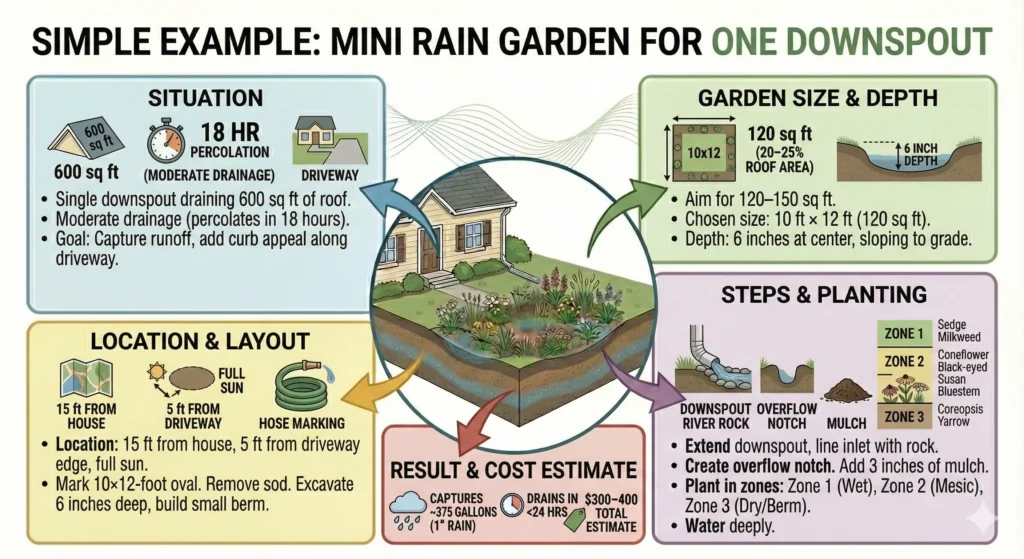
Situation You have a single downspout draining a 600-square-foot section of roof. Your yard has moderate drainage (water percolates in 18 hours). You want to capture runoff and add curb appeal along the side of your driveway.
Garden Size Aim for 20–25% of roof area: 120 to 150 sq ft. You choose 10 feet by 12 feet (120 sq ft)—manageable for a weekend project.
Depth 6 inches at the center, sloping gently to grade at edges.
Location 15 feet from the house, 5 feet from the driveway edge, full sun.
Steps
- Mark a 10×12-foot oval with a hose.
- Remove sod.
- Excavate 6 inches deep, keeping the bottom flat.
- Build a small berm on the low side with excavated soil.
- Run a 10-foot section of flexible downspout pipe into the basin inlet. Line the inlet with river rock.
- Cut a shallow overflow notch in the berm leading away from the house.
- Add 3 inches of mulch.
- Plant:
- Zone 1 (center): 6 sedge plants, 3 swamp milkweeds
- Zone 2 (middle slope): 8 coneflowers, 6 black-eyed Susans, 4 little bluestem grasses
- Zone 3 (edges/berm): 6 coreopsis, 4 yarrows
- Water deeply after planting.
Result In the first storm, your garden captures roughly 375 gallons of runoff from a 1-inch rain. Water pools 4 to 5 inches deep and drains within 24 hours. By the end of the season, plants are established and the garden requires minimal maintenance.
Cost Estimate
- Plants (35 total in 4-inch pots): $150–250
- Mulch (1 cubic yard): $40
- River rock (½ cubic yard): $50
- Downspout extension: $20
- Tools/supplies (if needed): $50
- Total: $300–400
This is a fraction of the cost of regrading or installing underground drainage systems.
Safety, Regulations, and When to Get Help
Permit Requirements Most residential rain gardens under 300 square feet don’t require permits, but rules vary by municipality. Check with your local planning or stormwater department before starting. Some jurisdictions offer rebates or incentives for installing green infrastructure.
Homeowners Associations (HOAs) If you live in a community with an HOA, submit your plan for approval. Emphasize stormwater management, native plantings, and aesthetic benefits.
When to Hire a Professional Consider professional help if:
- Your site has complex grading, steep slopes, or poor drainage
- You’re managing runoff from a large roof area (3,000+ sq ft)
- You have a high water table or difficult soil conditions
- You want to integrate underground storage, French drains, or other advanced bioretention features
- Your project requires grading near utilities or structures
Landscape architects, stormwater engineers, or experienced landscapers with rain garden experience can design and install systems that handle challenging sites safely.
Safety Notes
- Never dig without calling 811 first
- Avoid working in saturated soil—it compacts easily
- Watch for underground utilities even after they’re marked (lines aren’t always where records indicate)
- Don’t create standing water within 10 feet of your foundation
- Ensure overflow directs water away from structures and neighboring properties
Conclusion and Next Steps
Rain gardens offer one of the simplest, most effective ways for homeowners to manage roof runoff while enhancing their landscapes. By capturing and filtering stormwater at its source, you reduce flooding, protect water quality, and create valuable habitat—all with a manageable DIY project.
The process doesn’t require specialized skills or expensive equipment. Start small: a single downspout and a modest 100- to 200-square-foot garden teach you everything you need to know. As you gain confidence, expand or add additional gardens throughout your property.
Ready to Begin?
- Walk your property during the next rainstorm and observe where roof water flows.
- Conduct a simple percolation test in your chosen location.
- Sketch a rough design and estimate plant quantities.
- Source plants from a local native nursery that understands your climate.
Rain gardens succeed because they work with nature, not against it. You’re not fighting drainage—you’re directing it purposefully into a system designed to handle exactly what your roof produces. The plants, soil, and natural infiltration do the rest.
Within two growing seasons, you’ll have a thriving, largely self-sufficient garden that quietly manages hundreds or thousands of gallons of runoff every year, asking little in return beyond occasional weeding and an annual layer of mulch. That’s the power of simple, well-designed green infrastructure at the residential scale.
Start planning your rain garden today. Your watershed—and your neighbors downstream—will benefit from every gallon you keep on your property and return to the ground.