Ultimate Compact Crops for Pots & Small Spaces
1. Introduction: Why Go Compact In Pots
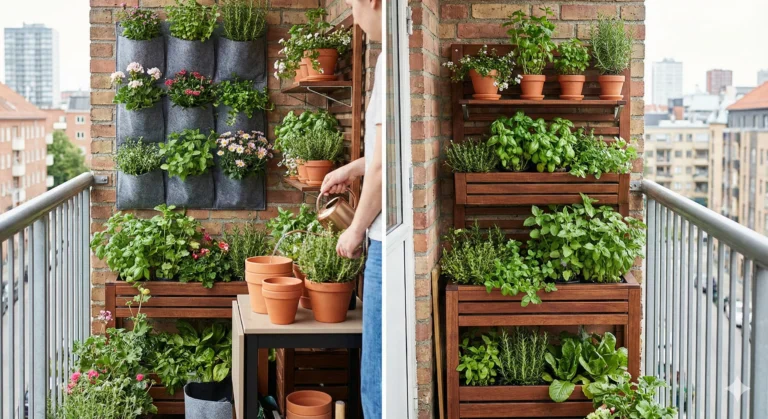
Compact and dwarf varieties are designed for small-space gardening. They stay shorter, have tighter growth habits, and produce well with limited root space. This makes them ideal for a balcony garden, patio, rooftop, or any area where growing in the ground isn’t possible.
In containers, space, soil volume, and light are limited. Compact crops are bred to handle these limits better than standard varieties. They’re also easier to move, simpler to care for, and faster to harvest.
Key terms explained simply:
- Dwarf: Genetically smaller than normal, not stunted.
- Compact / Patio: Bred for short height and tight growth.
- Bush: Grows as a self-supporting plant, not a long vine.
- Determinate tomatoes: Grow to a fixed size, then set fruit all at once.
- Indeterminate tomatoes: Keep growing and fruiting until frost (usually poor for small pots).
In this guide, you’ll get:
- A full, practical variety list of compact fruits and vegetables for pots.
- A clear spacing and pot-size guide you can actually use.
2. Container Basics For Compact Crops
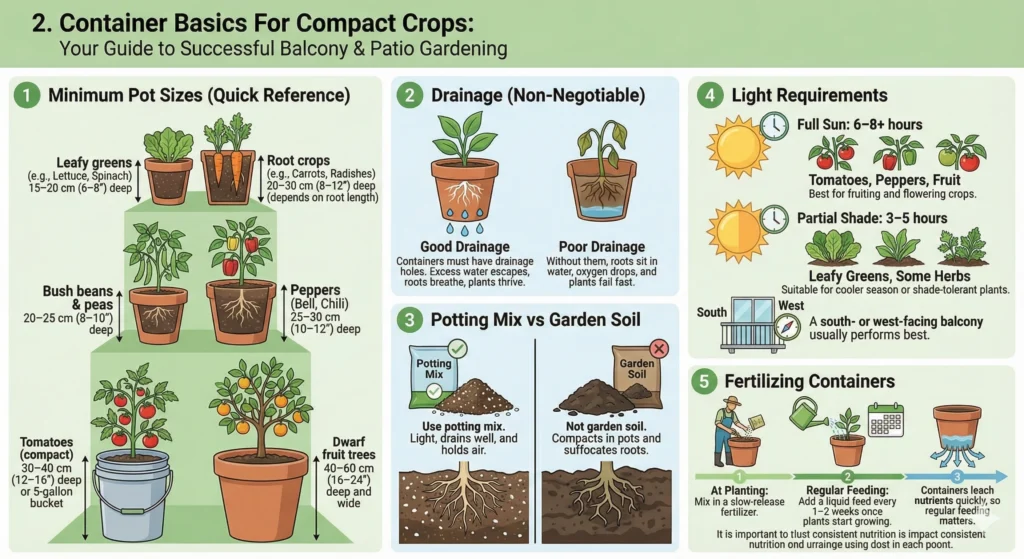
Minimum Pot Sizes (Quick Reference)
- Leafy greens: 15–20 cm (6–8″) deep
- Root crops: 20–30 cm (8–12″) deep (depends on root length)
- Bush beans & peas: 20–25 cm (8–10″) deep
- Peppers: 25–30 cm (10–12″) deep
- Tomatoes (compact): 30–40 cm (12–16″) deep or 5-gallon bucket
- Dwarf fruit trees: 40–60 cm (16–24″) deep and wide
Drainage (Non-Negotiable)
Containers must have drainage holes. Without them, roots sit in water, oxygen drops, and plants fail fast.
Potting Mix vs Garden Soil
Use potting mix, not garden soil.
- Potting mix is light, drains well, and holds air.
- Garden soil compacts in pots and suffocates roots.
Light Requirements
- Full sun: 6–8+ hours (tomatoes, peppers, fruit)
- Partial shade: 3–5 hours (leafy greens, some herbs)
A south- or west-facing balcony usually performs best.
Fertilizing Containers
- Mix in a slow-release fertilizer at planting.
- Add a liquid feed every 1–2 weeks once plants start growing.
Containers leach nutrients quickly, so regular feeding matters.
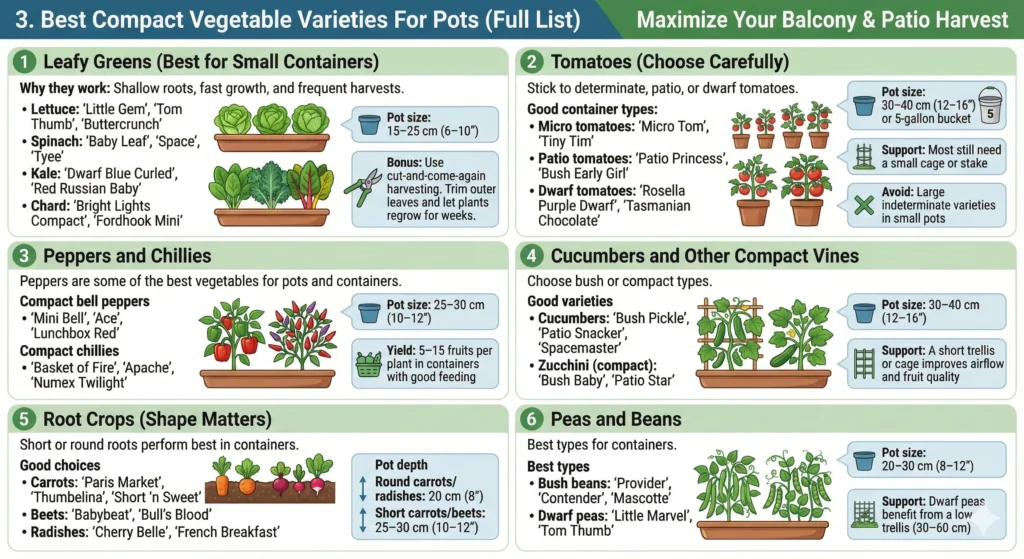
3. Best Compact Vegetable Varieties For Pots (Full List)
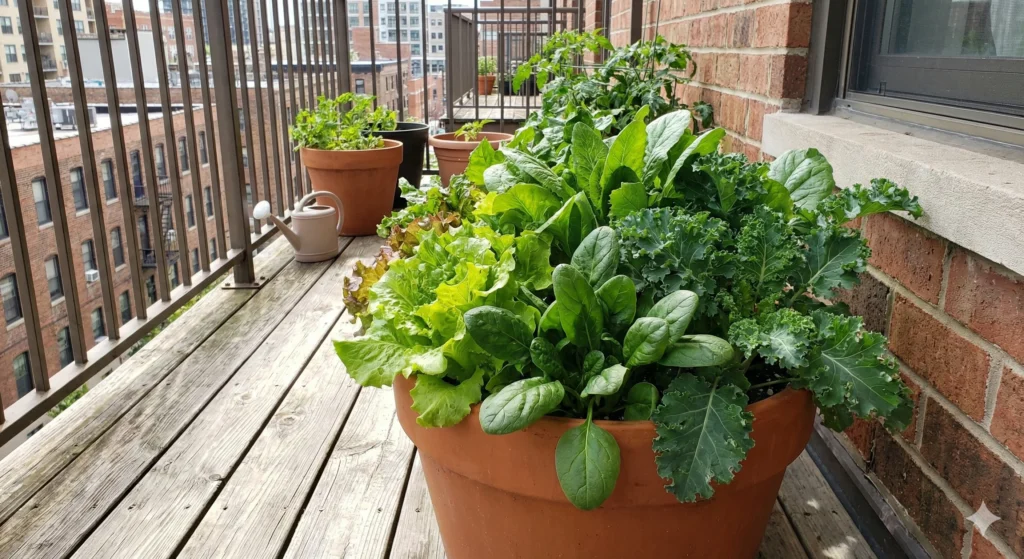
Leafy Greens (Best for Small Containers)
Why they work: Shallow roots, fast growth, and frequent harvests.
Good compact options:
- Lettuce: ‘Little Gem’, ‘Tom Thumb’, ‘Buttercrunch’
- Spinach: ‘Baby Leaf’, ‘Space’, ‘Tyee’
- Kale: ‘Dwarf Blue Curled’, ‘Red Russian Baby’
- Chard: ‘Bright Lights Compact’, ‘Fordhook Mini’
Pot size: 15–25 cm (6–10″)
Bonus: Use cut-and-come-again harvesting. Trim outer leaves and let plants regrow for weeks.
Tomatoes (Choose Carefully)
Stick to determinate, patio, or dwarf tomatoes.
Good container types:
- Micro tomatoes: ‘Micro Tom’, ‘Tiny Tim’
- Patio tomatoes: ‘Patio Princess’, ‘Bush Early Girl’
- Dwarf tomatoes: ‘Rosella Purple Dwarf’, ‘Tasmanian Chocolate’
Pot size: 30–40 cm (12–16″) or 5-gallon
Support: Most still need a small cage or stake
Avoid: Large indeterminate varieties in small pots
Peppers and Chillies
Peppers are some of the best vegetables for pots and containers.
Compact bell peppers:
- ‘Mini Bell’, ‘Ace’, ‘Lunchbox Red’
Compact chillies:
- ‘Basket of Fire’, ‘Apache’, ‘Numex Twilight’
Pot size: 25–30 cm (10–12″)
Yield: 5–15 fruits per plant in containers with good feeding
Cucumbers and Other Compact Vines
Choose bush or compact types.
Good varieties:
- Cucumbers: ‘Bush Pickle’, ‘Patio Snacker’, ‘Spacemaster’
- Zucchini (compact): ‘Bush Baby’, ‘Patio Star’
Pot size: 30–40 cm (12–16″)
Support: A short trellis or cage improves airflow and fruit quality
Root Crops (Shape Matters)
Short or round roots perform best in containers.
Good choices:
- Carrots: ‘Paris Market’, ‘Thumbelina’, ‘Short ‘n Sweet’
- Beets: ‘Babybeat’, ‘Bull’s Blood’
- Radishes: ‘Cherry Belle’, ‘French Breakfast’
Pot depth:
- Round carrots/radishes: 20 cm (8″)
- Short carrots/beets: 25–30 cm (10–12″)
Peas and Beans
Best types:
- Bush beans: ‘Provider’, ‘Contender’, ‘Mascotte’
- Dwarf peas: ‘Little Marvel’, ‘Tom Thumb’
Pot size: 20–30 cm (8–12″)
Support: Dwarf peas benefit from a low trellis (30–60 cm)
4. Best Compact Fruit Varieties For Pots
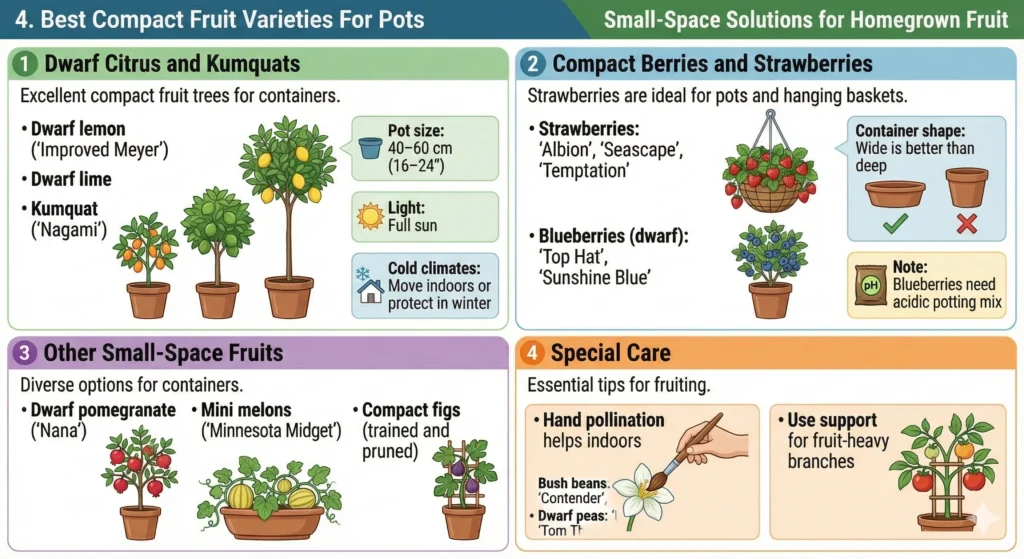
Dwarf Citrus and Kumquats
Excellent compact fruit trees for containers.
Good options:
- Dwarf lemon (‘Improved Meyer’)
- Dwarf lime
- Kumquat (‘Nagami’)
Pot size: 40–60 cm (16–24″)
Light: Full sun
Cold climates: Move indoors or protect in winter
Compact Berries and Strawberries
Strawberries are ideal for pots and hanging baskets.
- Varieties: ‘Albion’, ‘Seascape’, ‘Temptation’
Blueberries (dwarf):
- ‘Top Hat’, ‘Sunshine Blue’
Container shape: Wide is better than deep
Note: Blueberries need acidic potting mix
Other Small-Space Fruits
- Dwarf pomegranate (‘Nana’)
- Mini melons (‘Minnesota Midget’)
- Compact figs (trained and pruned)
Special care:
- Hand pollination helps indoors
- Use support for fruit-heavy branches
5. Spacing And Pot-By-Pot Planting Guide
General Rules of Thumb
- Small pots = fewer plants, not smaller spacing.
- Overcrowding reduces airflow, yield, and root health.
- One healthy plant usually beats three struggling ones.
Practical Spacing Table
| Crop | Example compact variety | Minimum pot size | Plants per pot | Notes |
|---|---|---|---|---|
| Lettuce | Little Gem | 20 cm / 8″ | 2–3 | Harvest outer leaves |
| Spinach | Baby Leaf | 20 cm / 8″ | 3–4 | Partial shade OK |
| Carrots | Paris Market | 25 cm / 10″ | 6–8 | Thin seedlings early |
| Bush beans | Provider | 30 cm / 12″ | 4–6 | No support needed |
| Dwarf peas | Tom Thumb | 30 cm / 12″ | 4–5 | Low trellis helps |
| Pepper | Mini Bell | 30 cm / 12″ | 1 | Stake if loaded |
| Patio tomato | Tiny Tim | 40 cm / 16″ | 1 | Small cage |
| Strawberry | Albion | 30 cm wide | 3 | Replace every 1–2 yrs |
| Dwarf citrus | Meyer lemon | 50+ cm | 1 | Long-term container |
6. Planting, Care And Yield Tips In Small Spaces
Planting Correctly
- Plant at the same depth as the nursery pot (except tomatoes, which can be planted deeper).
- Water thoroughly after planting to remove air pockets.
- Avoid rough handling of roots.
Watering Containers
- Check moisture daily in warm weather.
- Water when the top 2–3 cm (1″) is dry.
- Wilting in heat doesn’t always mean dry soil—check first.
Feeding Schedule
- Slow-release fertilizer at planting.
- Liquid feed every:
- 10–14 days for leafy greens
- 7–10 days for fruiting crops
Small-Space Techniques That Increase Yield
- Pinch early flowers on peppers to build stronger plants.
- Rotate pots weekly for even light.
- Use self-watering pots or grow bags to reduce stress.
- Refresh potting mix or replant after heavy feeders like tomatoes finish.
Compact varieties, correct pot size, and proper spacing make container gardening predictable and productive. Choose plants bred for small spaces, give them enough root zone, and manage water and nutrients carefully. That’s the fastest path to success in pots.