Resilient Summer Vegetables for South Asian Heat
Introduction
South Asian summers are tough on vegetables. Long heatwaves, hot dry winds, high night temperatures, and sudden monsoon rains cause many cool-season crops to bolt, drop flowers, or fail completely.
The good news is that several heat-tolerant vegetables are naturally adapted to these conditions. If you choose the right crops and sow them at the correct time, summer kitchen gardening in Pakistan and India can be productive and reliable.
Understanding South Asian summer conditions
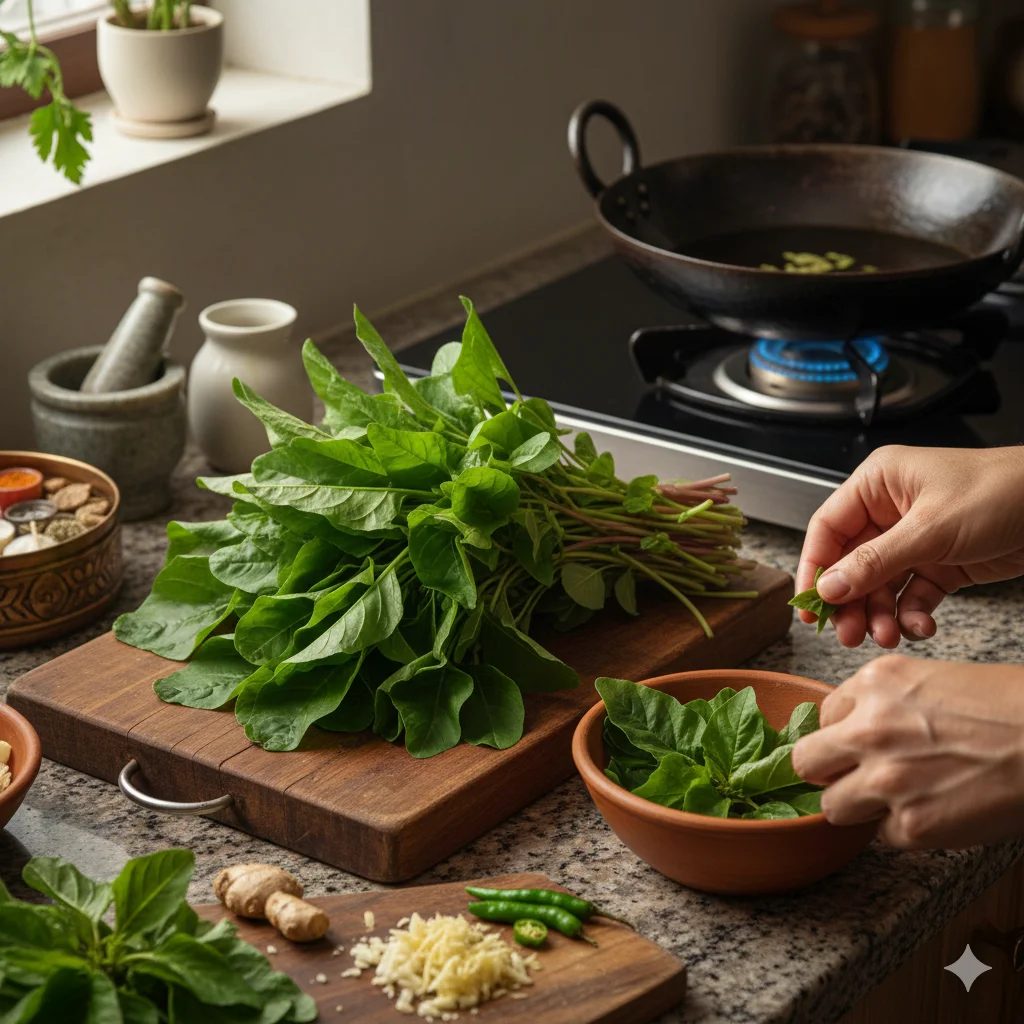
Plains vs hills and plateaus
- Hot plains (most of Pakistan and Indian plains):
- Day temperatures often exceed 40 °C
- Hot winds (loo), intense sun, warm nights
- Monsoon humidity from July onward
- Cooler hills and plateaus:
- Milder daytime temperatures
- Cooler nights
- Sowing is usually 4–6 weeks later than the plains
What stresses vegetables in summer
- High soil temperature damages young roots
- Hot nights reduce flowering and fruit set
- Dry winds cause rapid moisture loss
- Monsoon rain can lead to fungal diseases if drainage is poor
Practical heat-gardening principles
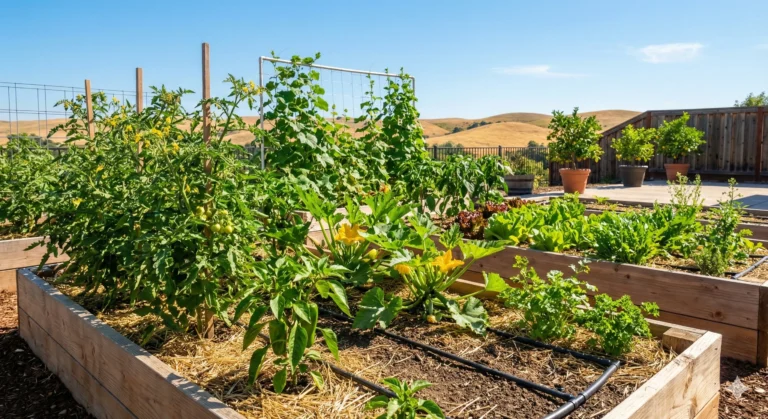
- Mulch heavily to cool soil and reduce water loss
- Water early morning or evening, never midday
- Give light shade to seedlings and leafy greens
- Use desi varieties and local landraces bred for heat
- Good drainage is essential during monsoon rains
These basics make a huge difference in extreme heat.
Fruit vegetables that love the heat
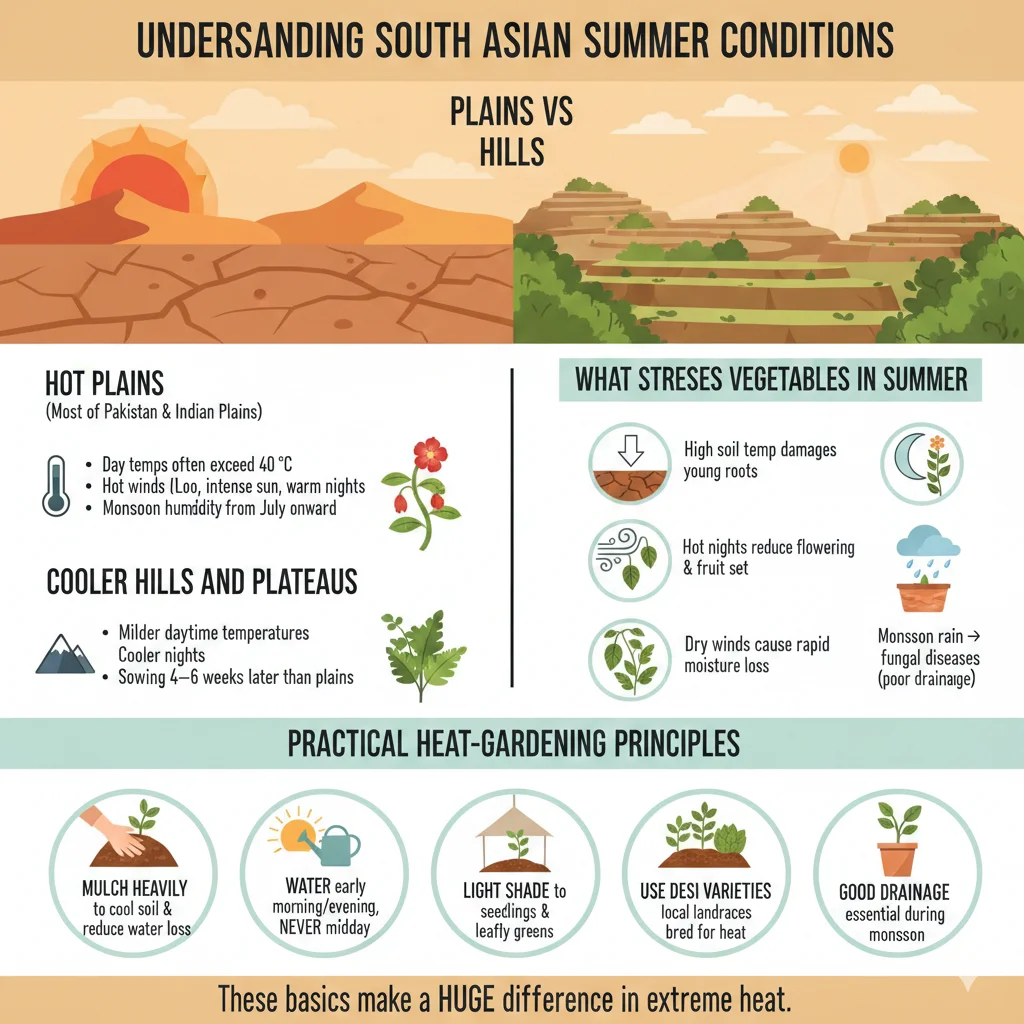
Okra (Lady’s finger)
Why it suits summer:
Okra thrives in high temperatures and continues flowering when many vegetables stop.
Growing needs
- Full sun (6–8 hours)
- Loose, well-drained soil
- Moderate but regular watering
- Spacing: 30–45 cm between plants
Sowing window
- Plains: March–April and again June–July
- Hills/plateaus: April–May
Tip: Flower drop happens if plants dry out—consistent moisture is key.
Eggplant (Brinjal)
Why it suits summer:
Brinjal tolerates heat well and handles warm nights better than tomatoes.
Growing needs
- Full sun
- Rich soil with compost
- Deep watering once or twice a week
- Spacing: 45–60 cm
Sowing window
- Plains: February–March (main crop), July–August (monsoon crop)
- Hills/plateaus: March–April
Tip: Mulch helps prevent stress that causes bitter fruits.
Chilies and hot peppers
Why they suit summer:
Chilies love warmth and set fruit well in hot, humid climates.
Growing needs
- Full sun
- Well-drained soil
- Regular watering, avoid waterlogging
- Spacing: 30–45 cm
Sowing window
- Plains: February–March and June–July
- Hills/plateaus: March–April
Tip: Excess heat can drop flowers—light afternoon shade helps during heatwaves.
Cucumbers and Asian gourds
Includes bottle gourd, ridge gourd, sponge gourd, bitter gourd, ash gourd.
Why they suit summer:
These are classic summer season vegetables with strong heat tolerance and fast growth.
Growing needs
- Full sun
- Fertile soil with good drainage
- Frequent watering
- Space generously or grow on trellises
Sowing window
- Plains: February–March and June–July
- Hills/plateaus: April–May
Tip: Poor drainage during monsoon leads to root rot—raised beds help.
Yardlong beans / Cowpeas
Why they suit summer:
Excellent tolerance to heat and drought; reliable even in hot and dry climates.
Growing needs
- Full sun
- Average soil (too much nitrogen = leaves, fewer pods)
- Moderate watering
- Trellis recommended
Sowing window
- Plains: March–April and June–July
- Hills/plateaus: April–May
Tip: Pick pods regularly to encourage continuous flowering.
Sweet potato (optional but reliable)
Why it suits summer:
Highly resilient to heat, drought, and poor soils.
Growing needs
- Full sun
- Loose soil
- Minimal watering once established
Planting window
- Plains: March–April and June
- Hills/plateaus: April–May
Heat-tolerant leafy greens
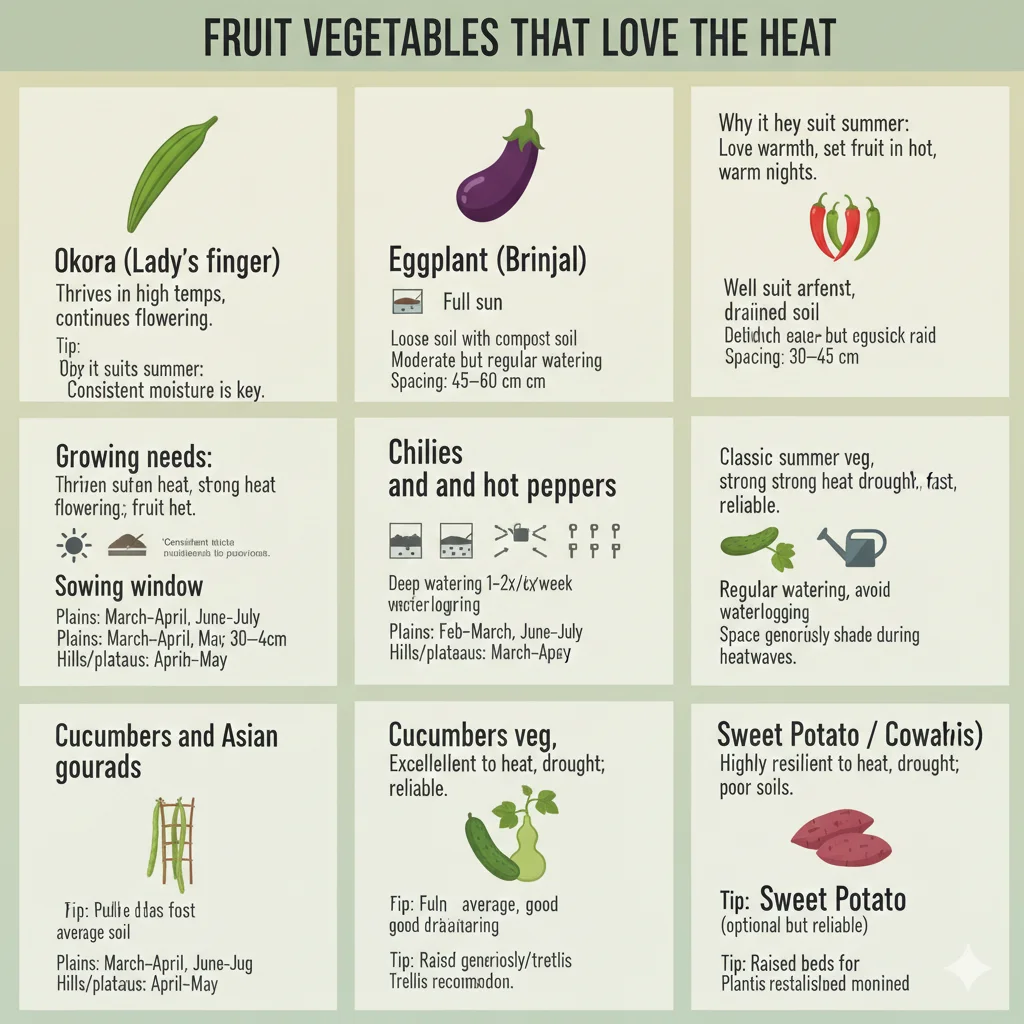
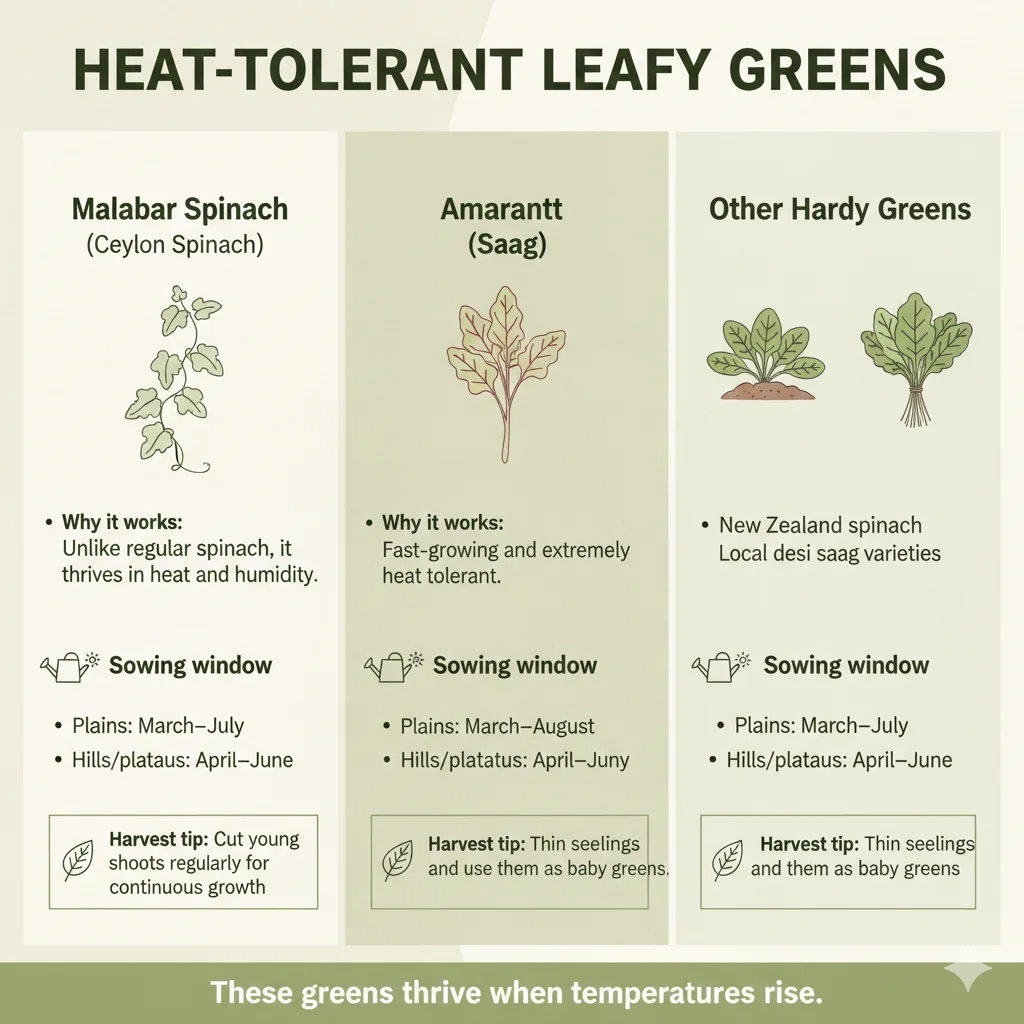
Malabar spinach (Ceylon spinach)
Why it works:
Unlike regular spinach, it thrives in heat and humidity.
Sowing window
- Plains: March–July
- Hills/plateaus: April–June
Harvest tip:
Cut young shoots regularly for continuous growth.
Amaranth (Saag)
Why it works:
Fast-growing and extremely heat tolerant.
Sowing window
- Plains: March–August
- Hills/plateaus: April–July
Harvest tip:
Thin seedlings early and use them as baby greens.
Other hardy greens
- New Zealand spinach
- Local desi saag varieties
Sowing window
- Plains: March–July
- Hills/plateaus: April–June
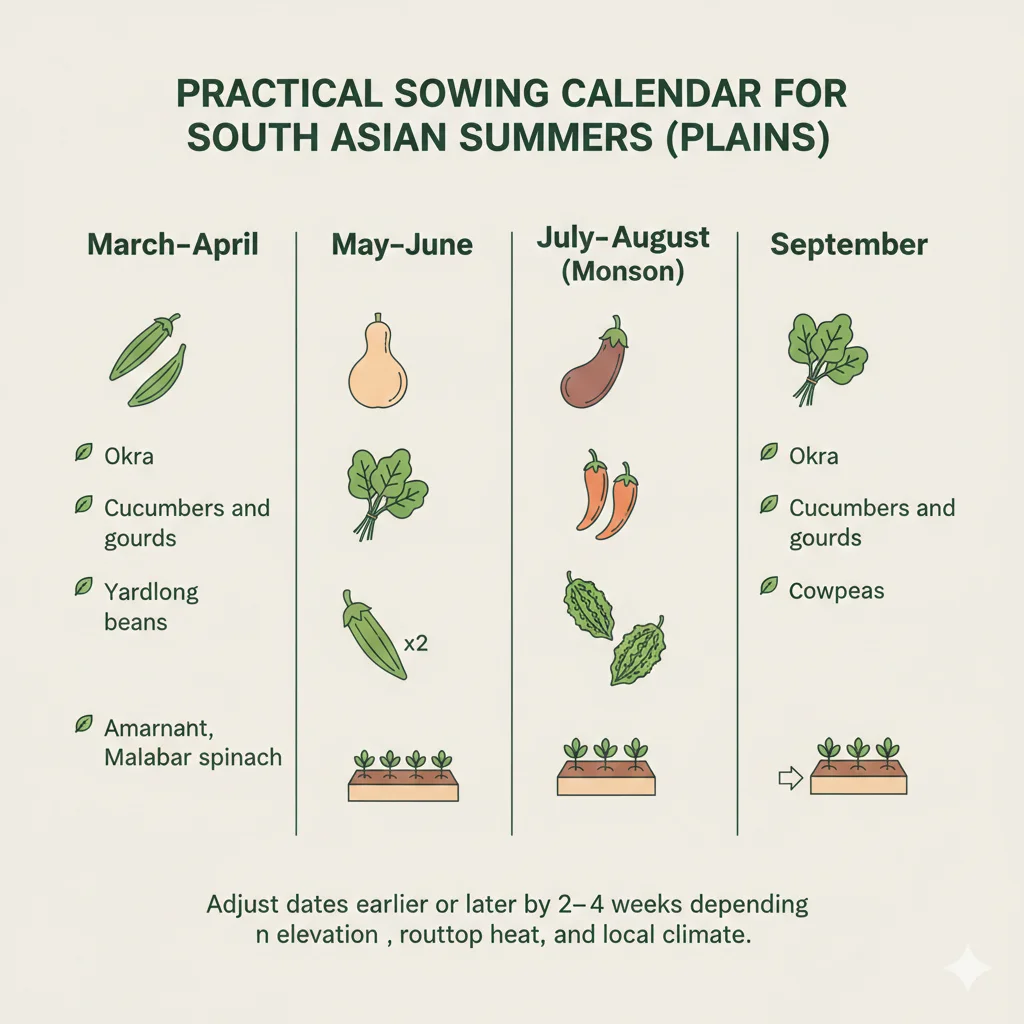
Practical sowing calendar for South Asian summers (plains)
March–April
- Okra
- Cucumbers and gourds
- Yardlong beans
- Amaranth, Malabar spinach
May–June
- Heat-tolerant greens
- Second sowing of okra and beans
- Prepare beds for monsoon crops
July–August (monsoon)
- Brinjal
- Chilies
- Gourds
- Cowpeas
September
- Late summer greens
- Prepare for autumn crops
Adjust dates earlier or later by 2–4 weeks depending on elevation, rooftop heat, and local climate.
Tips to improve performance in extreme heat
- Mulch thickly: Keeps soil cooler and protects roots
- Water smartly: Early morning or evening reduces stress
- Temporary shade: Cloth or net for young seedlings
- Use local seeds: Desi varieties handle heat better
- Stagger sowing: Every 2–3 weeks to avoid total crop loss
Each of these improves flowering, fruit set, and survival during heatwaves.
Closing
South Asian summers don’t have to mean failed gardens. By choosing vegetables that survive heatwaves and following the right sowing calendar, you can grow productive crops even in extreme conditions. Focus on resilient varieties, protect young plants, and work with the climate instead of fighting it. With the right timing and simple techniques, summer kitchen gardening can be both practical and rewarding.