
Rescue Your Pots: Beat Heat Waves Like a Pro
Introduction: Why Heat Waves Kill Potted Plants
Container plants face a brutal reality during heat waves that in-ground gardens never experience. Roots sit inches from scorching surfaces—concrete balconies, metal railings, dark pot walls—while the small soil volume heats through in hours. Moisture evaporates so fast that what you watered at dawn can be bone-dry by lunch.
I’ve seen entire balcony gardens collapse in a single 40°C afternoon, and it’s heartbreaking because most deaths are preventable. The warning signs scream for help: wilting at midday that doesn’t recover by evening, crispy leaf edges that spread inward, potting mix pulling away from pot sides like a shrinking sponge, and drooping new growth that never firms up. When you spot these signs of potted plant heat stress wilting, you have a narrow window to act.
The good news? With the right strategies to protect potted plants heat wave conditions throw at us, you can keep your containers thriving through the worst summer has to offer.
Know Your Enemy: How Heat Affects Pots
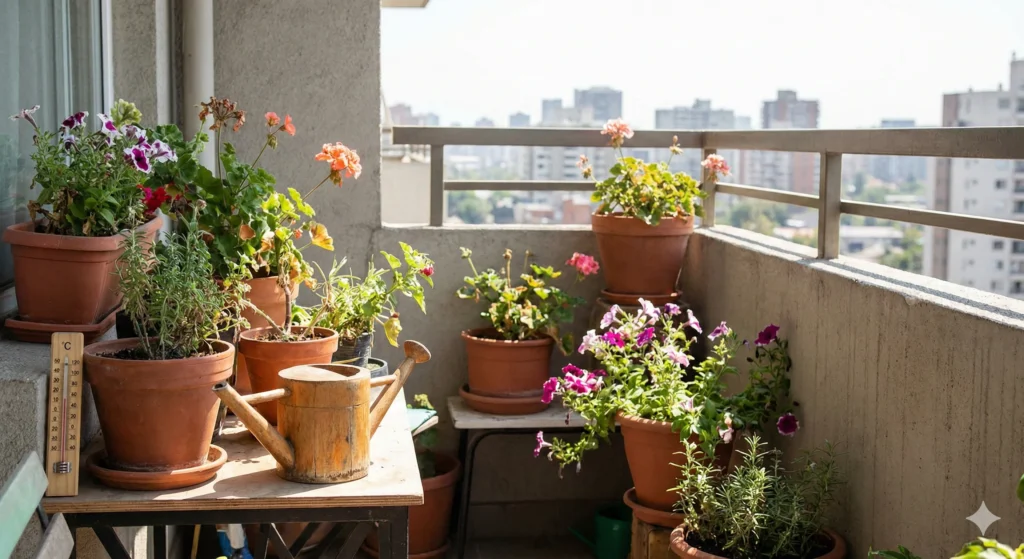
Most gardeners obsess over air temperature, but root-zone temperature is the real killer. While the weather report says 35°C, a black plastic pot on a concrete balcony can hit 50°C or higher. Roots cook. Cell walls rupture. The plant can’t absorb water even when the soil is moist because the root system is damaged.
Dark pots, metal containers, and anything sitting directly on heat-absorbing surfaces create ovens for your plants. I’ve measured a 15-degree difference between a white ceramic pot in dappled shade and a black nursery pot in full western sun—both holding the same plant species, both watered identically. The black pot plant was dead within three days.
Wind and reflected light compound the problem brutally. Balcony railings bounce concentrated sun, white walls create glare zones, and glass windows magnify heat like a lens. Plants labeled “partial shade” on balconies often get fried because the reflected and radiated heat creates full-sun conditions even when direct sun only hits for a few hours. Understanding how to keep container plants cool in heat requires thinking about these hidden heat sources, not just the sun overhead.
Smart Shade Strategies
1. Moveable Shade: Using Your Space Wisely
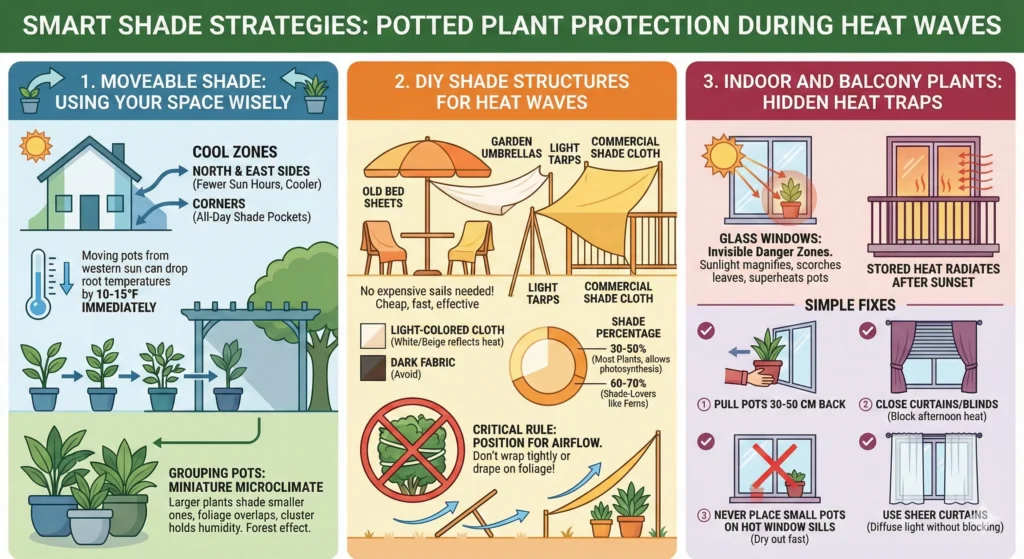
The fastest way to protect potted plants heat wave days bring is simple: move them. Rotating pots out of direct afternoon sun—especially brutal western exposure—into dappled shade under eaves, pergolas, or tree canopies can drop root temperatures by 10-15 degrees immediately.
Scout your space for “cool zones.” North and east sides of buildings get fewer sun hours and stay notably cooler. Corners where two walls meet often create all-day shade pockets perfect for heat-stressed plants.
Grouping pots together creates a miniature microclimate. Larger plants shade smaller ones, foliage overlaps to block direct sun on pot walls, and the cluster holds slightly more humidity. I’ve watched grouped arrangements survive heat waves that killed isolated pots of the same species just two meters away. This group pots together heatwave strategy works because plants essentially help each other—the way a forest stays cooler than a single tree in a field.
2. DIY Shade Structures for Heat Waves
You don’t need expensive shade sails. Garden umbrellas, old bed sheets, light tarps, or commercial shade cloth draped over chairs, stakes, or balcony railings work beautifully for emergency potted plants shade cloth heat protection.
Choose light-colored cloth—white or beige reflects heat far better than dark fabric. For shade percentage, 30-50% works for most plants, allowing enough light for photosynthesis while cutting heat intensity. Higher percentages (60-70%) suit shade-lovers like ferns during extreme conditions.
Critical rule: position shade so air flows freely. Don’t wrap plants tightly or drape fabric directly onto foliage. Trapped hot air under fabric can cook plants faster than full sun. Prop cloth at angles, leave gaps at ground level, and ensure wind can move through. This DIY shade for container garden approach has saved thousands of plants in my experience—cheap, fast, and effective when heat strikes with little warning.
3. Indoor and Balcony Plants: Hidden Heat Traps
Glass windows create invisible danger zones. Sunlight through glass magnifies and concentrates, reaching temperatures that scorch leaves and superheat pot walls. I’ve seen balcony plants heat protection efforts fail because gardeners didn’t realize their “shaded” corner had afternoon sun hitting glass doors that radiated stored heat for hours after sunset.
Simple fixes work wonders:
- Pull pots 30-50 cm back from windows during peak heat hours
- Close curtains or blinds during the afternoon to block heat buildup
- Never place small pots on hot window sills—they dry out in under an hour
- Use sheer curtains to diffuse light without blocking it entirely
Watering Like a Pro During Heat Waves
4. Timing: When to Water for Maximum Protection
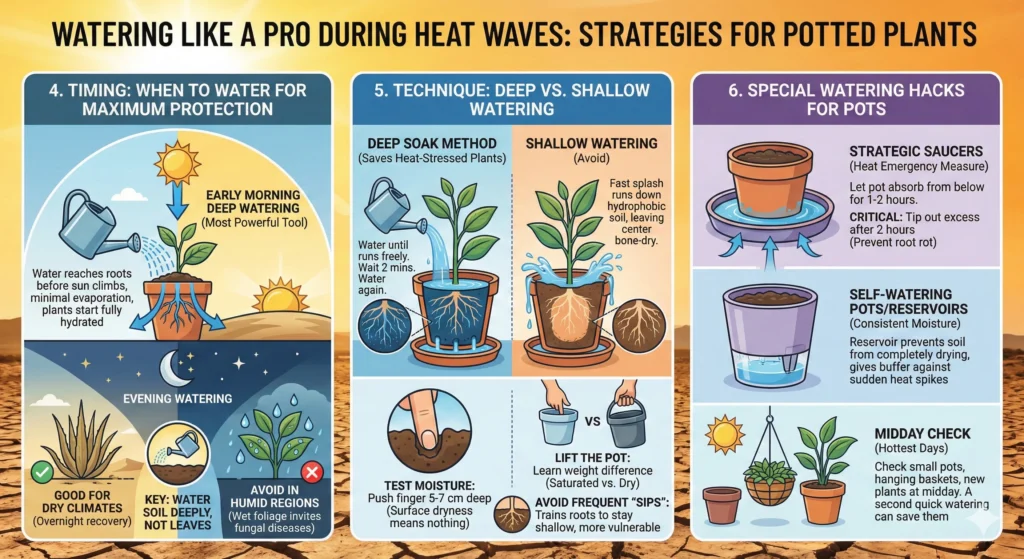
Early morning deep watering is your most powerful tool for watering container plants extreme heat conditions create. Water reaches roots before the sun climbs, evaporation stays minimal, and plants start the day fully hydrated—giving them maximum reserves to survive scorching hours.
Evening watering works well in dry climates and helps plants recover overnight. However, in very humid regions, avoid leaving foliage wet overnight as this invites fungal diseases. The key is watering the soil deeply, not splashing leaves.
5. Technique: Deep vs. Shallow Watering
The “deep soak” method saves more heat-stressed plants than any other technique. Water until it runs freely from drainage holes. Wait two minutes. Water again until more runs out. This ensures the entire root ball is saturated, not just the top layer.
Many gardeners water too quickly—a fast splash that runs down the sides of hydrophobic, dried-out mix and straight out the bottom, leaving the center bone-dry. The plant still wilts hours later because the roots never got moisture.
Test moisture properly: Push your finger 5-7 cm deep into the soil. Surface dryness means nothing. Or lift the pot—you’ll quickly learn the weight difference between saturated and dry. Small pots that feel light need water immediately during heat waves.
Avoid frequent “sips” that only wet the top 2 cm. This trains roots to stay shallow, making plants more vulnerable to heat stress. Deep soak potted plants hot weather strategy builds resilient, deep root systems that can access moisture longer between waterings.
6. Special Watering Hacks for Pots
Using saucers strategically during heat waves: Pour water into the saucer and let the pot absorb from below for 1-2 hours. This bottom-watering technique helps rehydrate hydrophobic potting mix rehydrate situations where top watering just runs off. Critical: tip out excess water after 2 hours to prevent root rot—this is a heat emergency measure, not a daily practice.
Self-watering pots or reservoir systems provide consistent moisture during extreme days, especially when you’re away. The reservoir prevents the soil from completely drying while excess drains away, giving you a buffer against sudden heat spikes.
On the hottest days, check small pots, hanging baskets, and newly potted plants at midday. These dry out fastest. A second quick watering can mean the difference between survival and loss.
Soil and Potting Mix Hacks to Beat the Heat
7. Mulch for Containers: A Simple but Powerful Tool
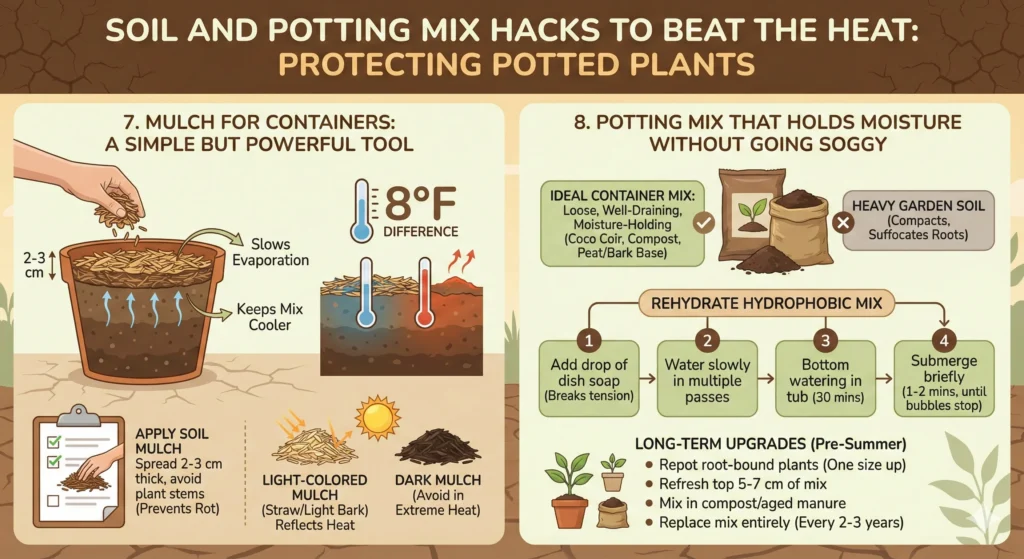
A 2-3 cm layer of organic mulch might be the single most underused trick for protecting potted plants. Straw, shredded bark, coco chips, or dried leaves keep potting mix cooler and slow evaporation dramatically. I’ve measured 8-degree temperature differences between mulched and unmulched pots in afternoon sun.
Apply soil mulch pots summer heatwave protection by spreading mulch evenly across the surface, keeping it away from stems, trunks, and plant crowns by 2-3 cm to prevent rot. Don’t pile it against the plant—think of it as a blanket over the soil, not a collar around the stem.
Light-colored mulches (straw, light bark) reflect more heat than dark mulches, keeping surface temperatures lower. This best mulch for pots during summer scorch depends on your climate—in extreme heat, lighter is better.
8. Potting Mix That Holds Moisture Without Going Soggy
The ideal container mix is loose and well-draining yet holds moisture in its structure. This means adding water-holding ingredients like finished compost or coco coir to peat-based or bark-based mixes, never using heavy garden soil that compacts and suffocates roots.
Very peat-heavy or old, compacted mixes turn hydrophobic—water runs off the surface or straight down the sides without penetrating. To rehydrate stubborn mix:
- Add a drop of dish soap to water (breaks surface tension)
- Water slowly in multiple passes, letting each soak in
- Use bottom watering by setting the pot in a tub of water for 30 minutes
- For severely hydrophobic mix, submerge the entire pot briefly (1-2 minutes) until bubbles stop
Long-term upgrades before peak summer:
- Repot root-bound plants into fresh mix one size up
- Refresh the top 5-7 cm of tired mix with new material
- Mix in compost or aged manure to improve structure and water retention
- Replace mix entirely if it’s more than 2-3 years old
9. Choosing Heat-Smart Pots
Pot color and material matter enormously. Light-colored pots (white, cream, terracotta) stay significantly cooler than dark plastic. Thick-walled containers (terracotta, ceramic, wood, quality plastics) insulate better than thin nursery pots that offer no thermal protection.
Terracotta pots overheating fix is often as simple as double-potting: slip the dark nursery pot inside a larger decorative pot with a 2-3 cm air gap between them. This insulation layer shields roots from direct sun while maintaining drainage. I use this move pots shade afternoon sun alternative constantly—if you can’t physically move a heavy pot, give it a protective outer shell.
Keep pots off hot surfaces using pot feet, bricks, wood blocks, or metal stands. Even 2-3 cm of air circulation underneath prevents heat transfer from concrete, tiles, and dark balcony floors that radiate stored heat for hours after sunset.
Extra Plant-Saving Tricks for Extreme Days
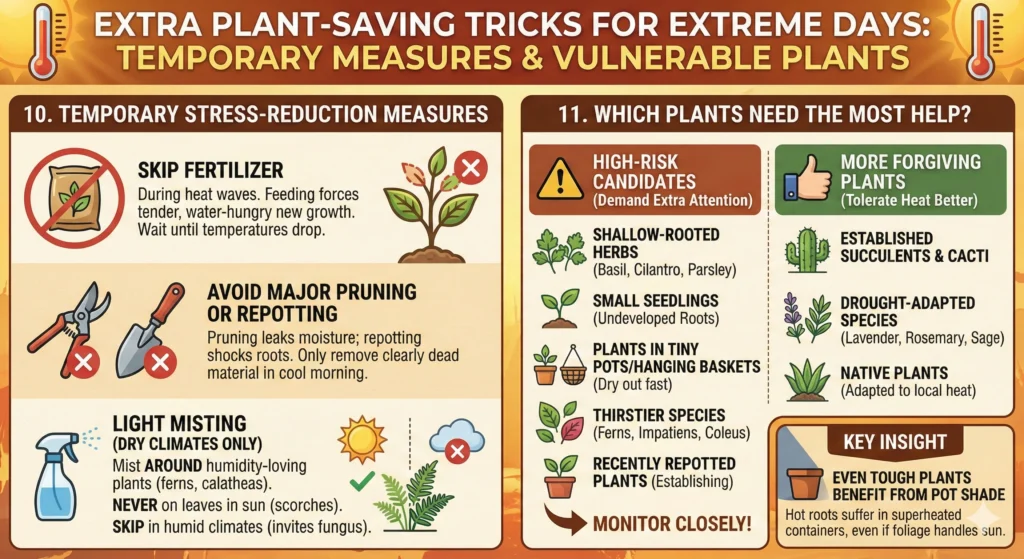
10. Temporary Stress-Reduction Measures
Skip fertilizer during heat waves. Feeding forces plants to produce new growth precisely when they’re struggling to maintain existing foliage. New growth is tender and heat-sensitive, requiring extra water and resources the plant can’t afford. Wait until temperatures drop.
Avoid major pruning or repotting on very hot days. Pruning creates wounds that leak moisture, and repotting exposes roots to air and shock. If you must prune, do it in the cool morning and only remove clearly dead material.
Light misting around (not on) humidity-loving plants helps in dry climates—think ferns, calatheas, some tropicals. The rising humidity cools the immediate air. However, never mist leaves in intense sun; water droplets magnify light and scorch foliage. And skip misting entirely in humid climates where it won’t help and may encourage fungus.
11. Which Plants Need the Most Help?
High-risk candidates demanding extra attention:
- Shallow-rooted herbs (basil, cilantro, parsley)
- Small seedlings with undeveloped roots
- Plants in tiny pots or hanging baskets (dry out in hours)
- Thirstier species: ferns, impatiens, coleus, many tropicals
- Recently repotted plants still establishing
More forgiving plants that tolerate heat better:
- Established succulents and cacti
- Drought-adapted species (lavender, rosemary, sage)
- Native plants adapted to your climate’s summer heat
Even tough plants benefit from shade for their pots and cooler root zones—the plant may handle full sun, but roots still suffer in superheated containers.
Quick Heat-Wave Checklist for Potted Plants
The Day Before:
- ☐ Deep water all pots thoroughly in early morning
- ☐ Add or top up mulch layer (2-3 cm)
- ☐ Move vulnerable pots to shadier locations
- ☐ Set up temporary shade cloth or umbrellas
- ☐ Group smaller pots together for microclimate protection
- ☐ Elevate pots off hot surfaces with feet or blocks
During the Heat Wave:
- ☐ Check moisture daily (finger test 5-7 cm deep)
- ☐ Check small pots and hanging baskets twice daily if needed
- ☐ Water deeply in early morning; add evening water for very dry pots
- ☐ Adjust shade as sun position shifts through the day
- ☐ Empty waterlogged saucers after 2 hours
- ☐ Pull indoor pots back from windows; close curtains at peak heat
- ☐ Skip fertilizing and major pruning
- ☐ Monitor for heat stress signs: wilting, crispy edges, shrinking soil
After the Heat Wave:
- ☐ Trim only clearly dead, brown, crispy foliage
- ☐ Re-assess pot placement for next heat event
- ☐ Evaluate pot color and material; consider double-potting dark containers
- ☐ Check potting mix quality; refresh or replace compacted, hydrophobic soil
- ☐ Add mulch to any pots that dried out too fast
- ☐ Note which plants struggled—move them permanently to cooler spots
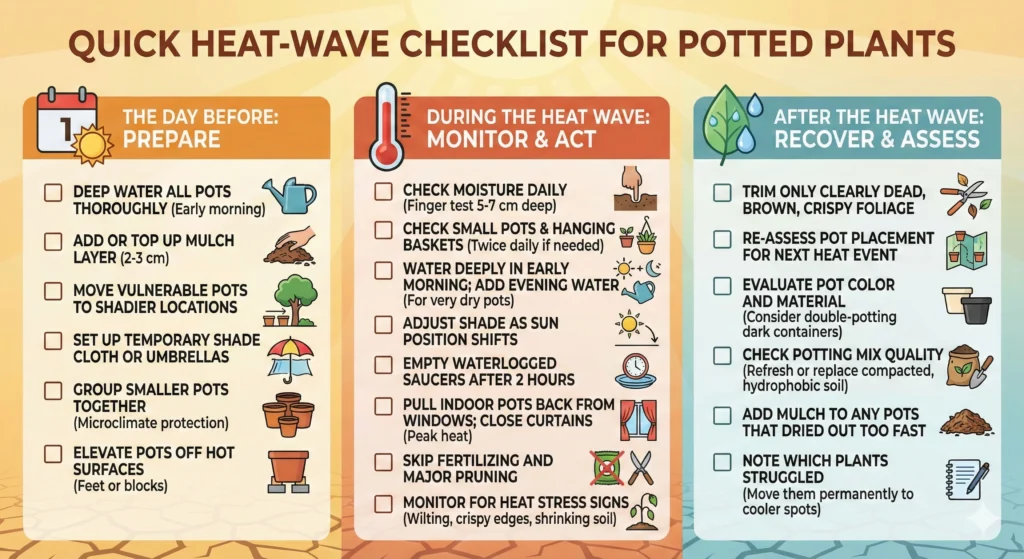
Print this checklist and keep it where you water. When the heat warning comes, you’ll have a battle-tested plan to protect every pot. Your plants depend on you during extreme weather—now you know exactly how to save them.