Ultimate Beginner Gardening Guide That Actually Works
I. Introduction
The first time I planted a seed as a child, I remember checking the soil every morning like it might whisper back. Gardening has a quiet way of improving your health—steady movement, fresh air, better food, calmer thoughts—and it rewards patience in ways few hobbies do. After 20+ years of guiding beginners, I’ve learned that success doesn’t come from fancy gear or perfect knowledge. It comes from starting simply and understanding the basics well.
The purpose of this guide is straightforward: give you a practical checklist so you can start gardening confidently, without guesswork or overwhelm. This is not theory—it’s the same advice I’ve shared with first-time gardeners who wanted real results.
We’ll cover three foundations: gardening tools for beginners, a beginner soil preparation guide, and a clear 10 beginner friendly plants list you can grow almost anywhere—backyard, balcony setup, or urban growing space.
II. Essential Gardening Tools for Beginners
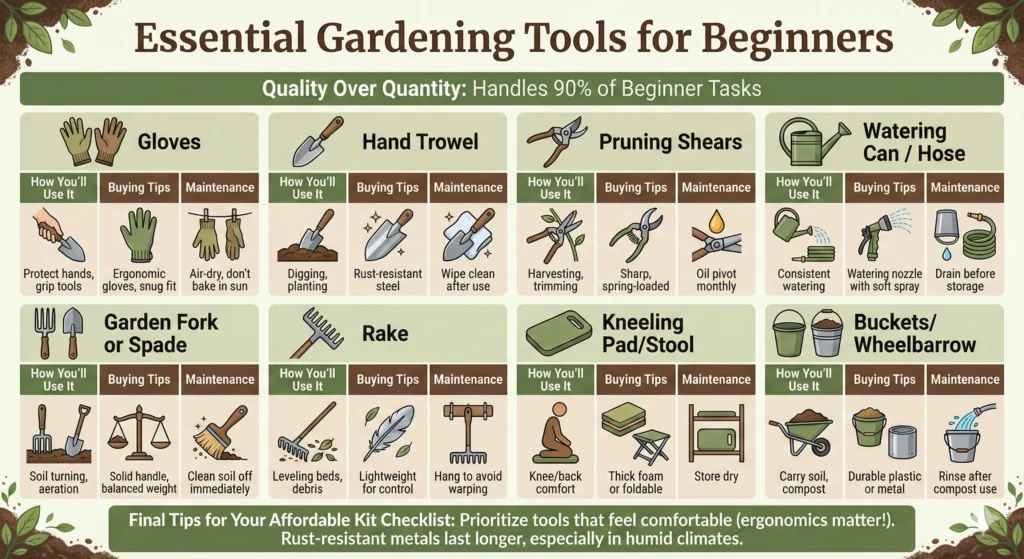
You don’t need a shed full of equipment. These essential tools new gardeners need will handle 90% of beginner tasks. Think quality over quantity.
| Tool | How You’ll Use It | Buying Tips | Maintenance |
|---|---|---|---|
| Gloves | Protect hands, grip tools | Ergonomic gloves, snug fit | Air-dry, don’t bake in sun |
| Hand trowel | Digging, planting | Rust-resistant steel | Wipe clean after use |
| Pruning shears | Harvesting, trimming | Sharp, spring-loaded | Oil pivot monthly |
| Watering can / hose | Consistent watering | Watering nozzle with soft spray | Drain before storage |
| Garden fork or spade | Soil turning, aeration | Solid handle, balanced weight | Clean soil off immediately |
| Rake | Leveling beds, debris | Lightweight for control | Hang to avoid warping |
| Kneeling pad/stool | Knee/back comfort | Thick foam or foldable | Store dry |
| Buckets/wheelbarrow | Carry soil, compost | Durable plastic or metal | Rinse after compost use |
When building an affordable gardening kit checklist, prioritize tools that feel comfortable in your hands. Poor ergonomics cause fatigue fast. Rust-resistant metals last longer, especially in humid climates.
III. Understanding Soil Basics
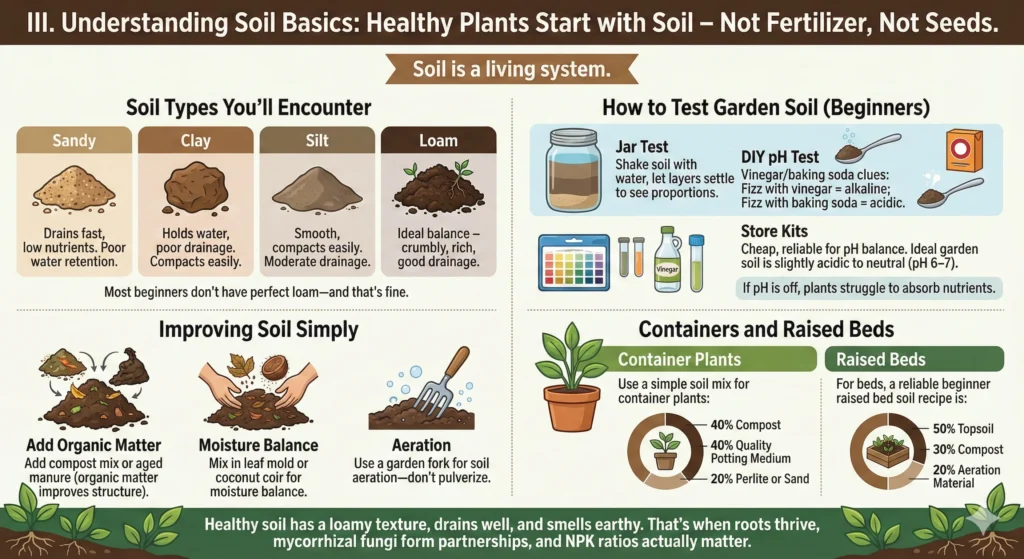
Healthy plants start with soil—not fertilizer, not seeds. Soil is a living system.
Soil types you’ll encounter:
- Sandy: Drains fast, low nutrients
- Clay: Holds water, poor drainage
- Silt: Smooth, compacts easily
- Loam: Ideal balance—crumbly, rich, good drainage
Most beginners don’t have perfect loam—and that’s fine.
How to test garden soil (beginners)
- Jar test: Shake soil with water, let layers settle
- DIY pH test: Vinegar/baking soda clues
- Store kits: Cheap, reliable for pH balance
Ideal garden soil is slightly acidic to neutral (pH 6–7). If pH is off, plants struggle to absorb nutrients, no matter how much you feed them.
Improving soil simply
- Add compost mix or aged manure (organic matter improves structure)
- Mix in leaf mold or coconut coir for moisture balance
- Use a garden fork for soil aeration—don’t pulverize
Containers and raised beds
- Use a simple soil mix for container plants:
40% compost, 40% quality potting medium, 20% perlite or sand - For beds, a reliable beginner raised bed soil recipe is:
50% topsoil, 30% compost, 20% aeration material
Healthy soil has a loamy texture, drains well, and smells earthy. That’s when roots thrive, mycorrhizal fungi form partnerships, and NPK ratios actually matter.
IV. The 10 Easiest Plants for Beginners
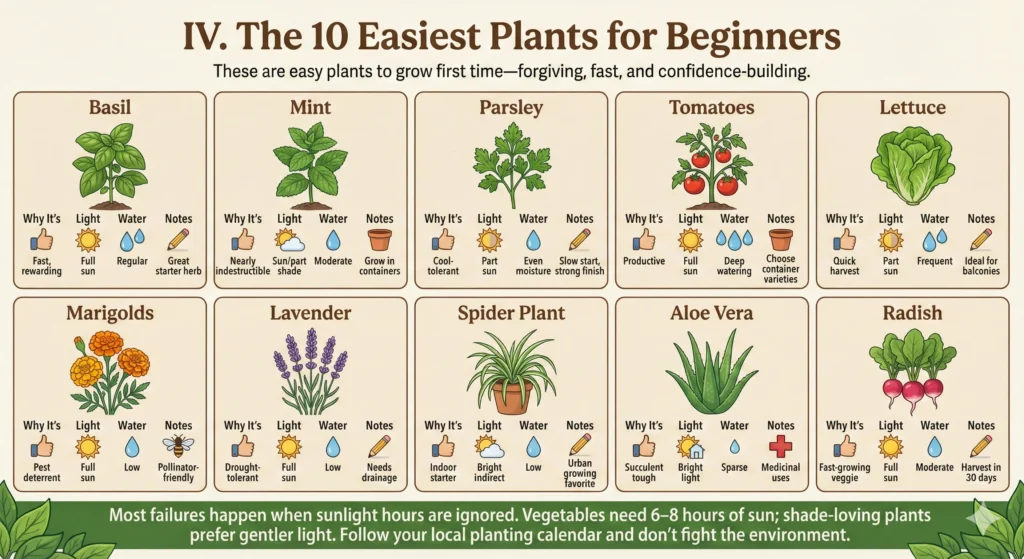
These are easy plants to grow first time—forgiving, fast, and confidence-building.
| Plant | Why It’s Easy | Light | Water | Notes |
|---|---|---|---|---|
| Basil | Fast, rewarding | Full sun | Regular | Great starter herb |
| Mint | Nearly indestructible | Sun/part shade | Moderate | Grow in containers |
| Parsley | Cool-tolerant | Part sun | Even moisture | Slow start, strong finish |
| Tomatoes | Productive | Full sun | Deep watering | Choose container varieties |
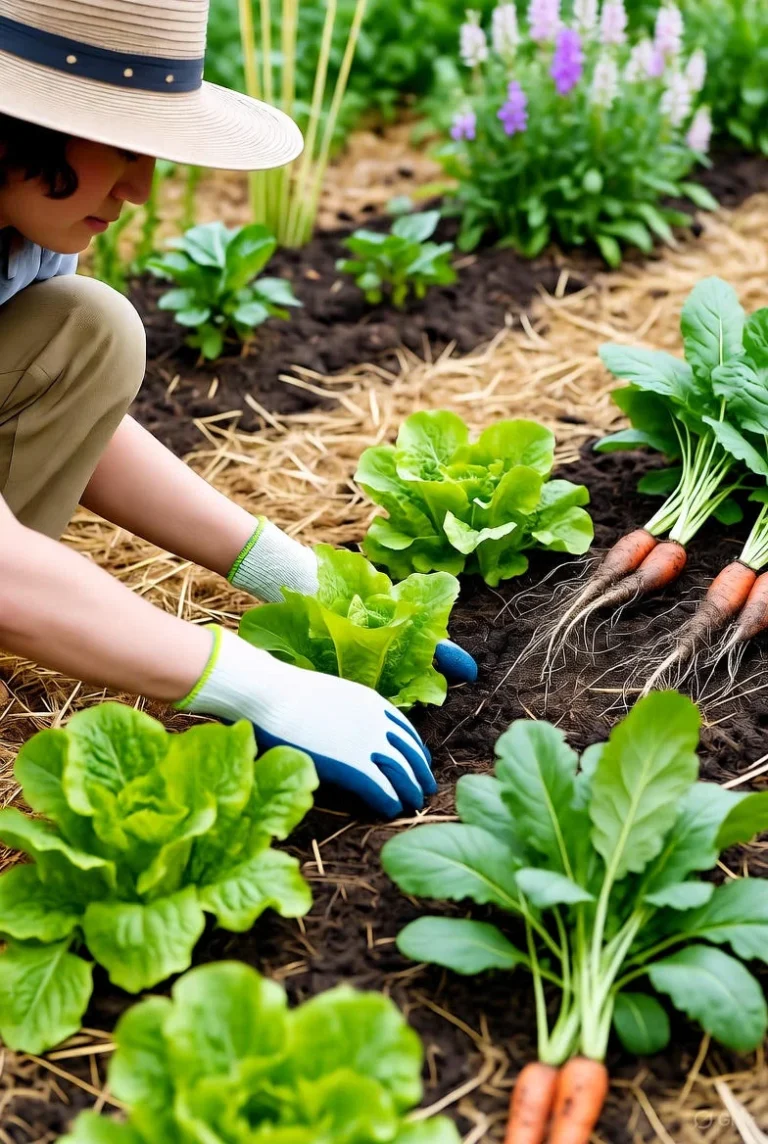
| Lettuce | Quick harvest | Part sun | Frequent | Ideal for balconies |
| Marigolds | Pest deterrent | Full sun | Low | Pollinator-friendly |
| Lavender | Drought-tolerant | Full sun | Low | Needs drainage |
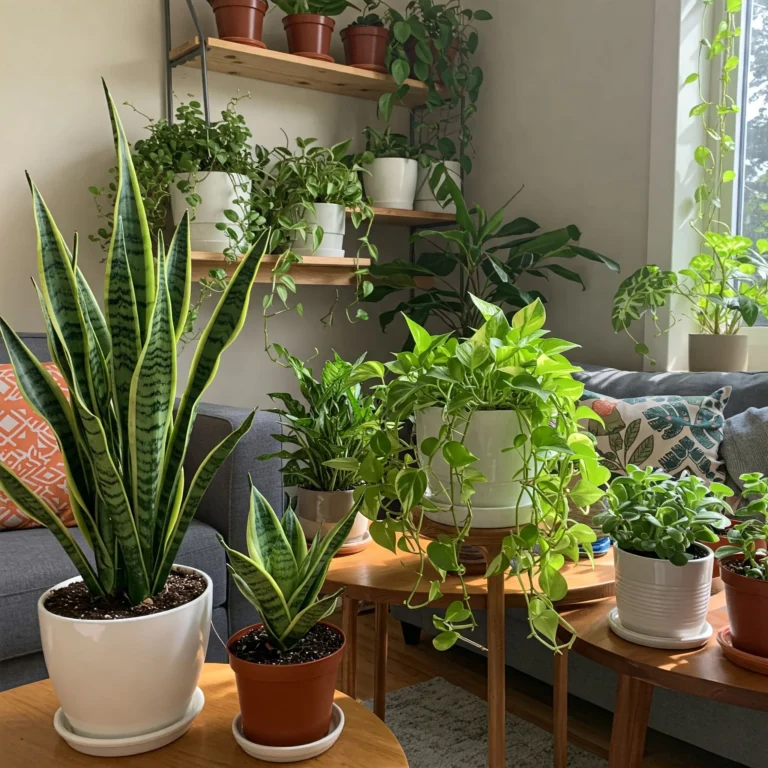
| Spider Plant | Indoor starter | Bright indirect | Low | Urban growing favorite |
| Aloe Vera | Succulent tough | Bright light | Sparse | Medicinal uses |
| Radish | Fast-growing veggie | Full sun | Moderate | Harvest in 30 days |
Most failures happen when sunlight hours are ignored. Vegetables need 6–8 hours of sun; shade-loving plants prefer gentler light. Follow your local planting calendar and don’t fight the seasons.
V. Maintenance Checklist for New Gardeners
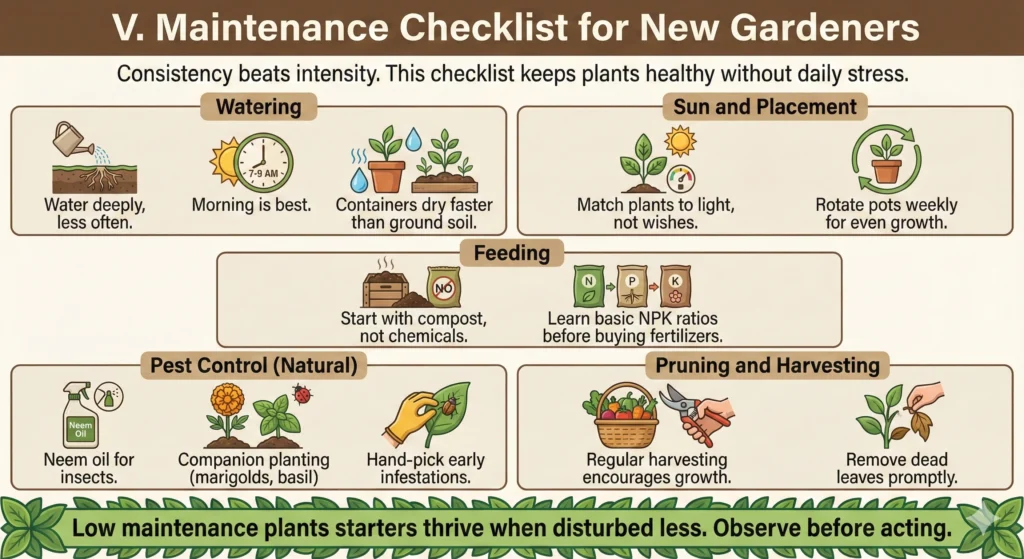
Consistency beats intensity. This checklist keeps plants healthy without daily stress.
Watering
- Water deeply, less often
- Morning is best
- Containers dry faster than ground soil
Sun and placement
- Match plants to light, not wishes
- Rotate pots weekly for even growth
Feeding
- Start with compost, not chemicals
- Learn basic NPK ratios before buying fertilizers
Pest control (natural)
- Neem oil for insects
- Companion planting (marigolds, basil)
- Hand-pick early infestations
Pruning and harvesting
- Regular harvesting encourages growth
- Remove dead leaves promptly
Low maintenance plants starters thrive when disturbed less. Observe before acting.
VI. Common Beginner Mistakes and How to Avoid Them
I’ve seen these mistakes hundreds of times—and fixed them just as often.
- Overwatering: Roots need air as much as water
- Crowding plants: Follow spacing; airflow prevents disease
- Poor soil: No tool fixes bad soil
- Ignoring sunlight: Plants don’t adapt magically
- Overplanting: Start small, expand later
Gardening punishes impatience but rewards attention.
VII. Conclusion
Start small. Grow a few plants well instead of many poorly. Experiment patiently, adjust as you learn, and trust the process—plants are honest teachers. Keep a simple notebook, track what works, and share progress with other gardeners. Confidence grows the same way gardens do: one successful season at a time.