Master Seed Germination: 9 Proven Mistakes to Fix
Introduction
Every gardener knows the quiet hope that comes with a freshly sown tray. You press seeds into the soil, water gently, label carefully—and then wait. Days pass. Sometimes weeks. The tray stays bare. If you’ve ever muttered “why won’t my vegetable seeds germinate?” you’re not alone. I’ve worked with thousands of home gardeners over two decades, and empty trays are the most common frustration I hear.
Seed germination is simple biology, but it demands balance. A seed needs moisture to wake up, oxygen to breathe, warmth to activate enzymes, and—depending on the species—the right relationship with light and darkness. Miss one of these, even slightly, and the process stalls. Too wet, and the seed suffocates or rots. Too cold, and it sleeps forever. Too dry, and it never even wakes.
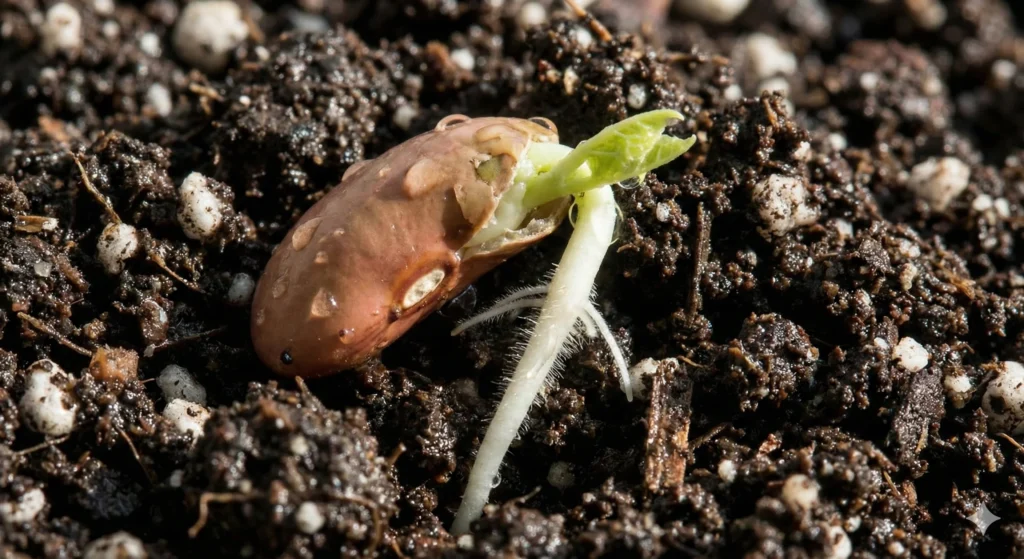
The good news is this: most failures come from the same handful of mistakes. They’re small, fixable, and once you correct them, germination rates often jump from 30–40% to 80–90% almost overnight. NurseryLive and Harris Seeds research both show that consistency—not luck—is the real secret.
In this guide, I’ll walk you through the nine most common seed-starting mistakes I see every season, from poor seed quality to seedling legginess causes. Read through them once, then pick one fix you can apply today. That single change may be all it takes to turn frustration into healthy green life.
Mistake 1: Poor Seed Quality
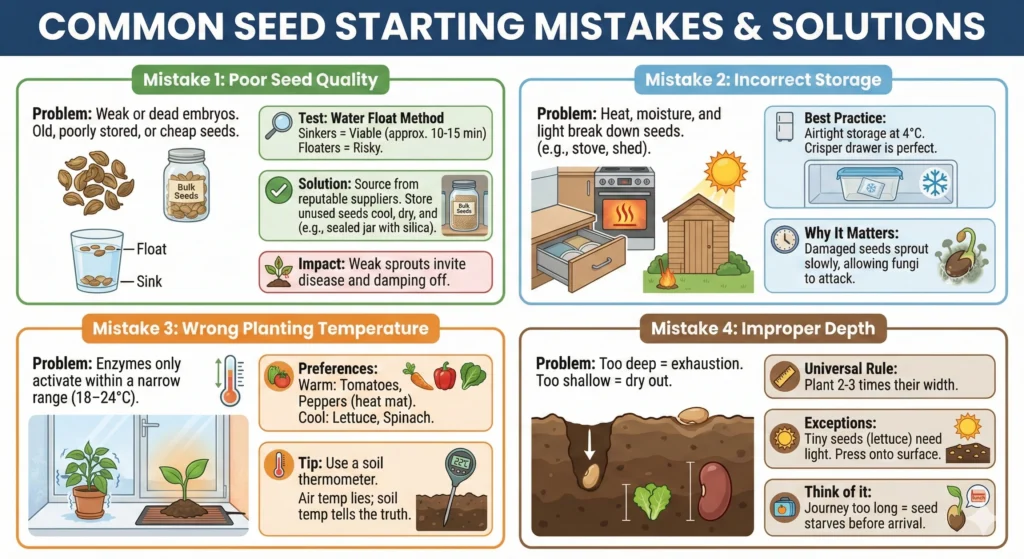
Seeds are living embryos. If they’re weak or dead, perfect technique won’t save them. Old seeds, poorly stored seeds, or cheap bulk packets are a leading reason vegetable seeds won’t germinate.
The simplest seed viability test is the water float method. Place seeds in room-temperature water for 10–15 minutes. Seeds that sink are usually viable. Those that float often have damaged or dried embryos. It’s not perfect, but it quickly flags bad batches.
Quality starts at the source. Reputable suppliers test germination rates and rotate stock. Avoid seeds that have sat in hot garden centers all summer. Once home, store unused seeds cool, dry, and dark. A sealed jar with a silica packet works well.
If you’re saving seed, label it clearly with the year. Most vegetable seeds lose vigor after two to four years. Weak seeds may sprout unevenly, inviting disease and damping off prevention problems later.
Mistake 2: Incorrect Storage
Even good seeds die when stored poorly. Heat, moisture, and light slowly break down the seed’s internal structures. A drawer near the stove or a shed that bakes in summer is a silent killer.
Research-backed best practice is simple: airtight storage at about 4°C. A refrigerator crisper drawer works perfectly. Use sealed containers or zip bags. Add a small desiccant to absorb humidity.
This matters because damaged seeds often sprout slowly. Slow germination gives fungi time to attack, increasing losses. Many gardeners blame soil or watering when the real issue started months earlier in storage.
Treat seeds like food you want to preserve, not tools you toss aside.
Mistake 3: Wrong Planting Temperature
Temperature controls everything. Enzymes that trigger germination only activate within a narrow germination temperature range. For most vegetables, the sweet spot is 18–24°C.
Tomatoes, peppers, and eggplants prefer the warm end. Lettuce and spinach like it cooler. If soil is too cold, seeds sit dormant. Too hot, and proteins denature.
Indoor gardeners often underestimate how cold windowsills get at night. A seed-starting heat mat can raise soil temperature by 5–10 degrees and cut germination time in half. Always pair it with a soil thermometer. Air temperature lies; soil temperature tells the truth.
If you’re trying to fix tomato seed starting mistakes indoors, this is usually the breakthrough.
Mistake 4: Improper Depth
Seeds planted too deep exhaust themselves before reaching light. Too shallow, and they dry out or wash away. The universal rule works: plant seeds two to three times their width.
Tiny seeds like lettuce need light exposure. Press them onto the surface instead of burying them. Larger seeds like beans and squash need deeper placement for moisture stability.
Think of it like this: a seed has a packed lunch. If the journey to the surface is too long, it starves before arrival.
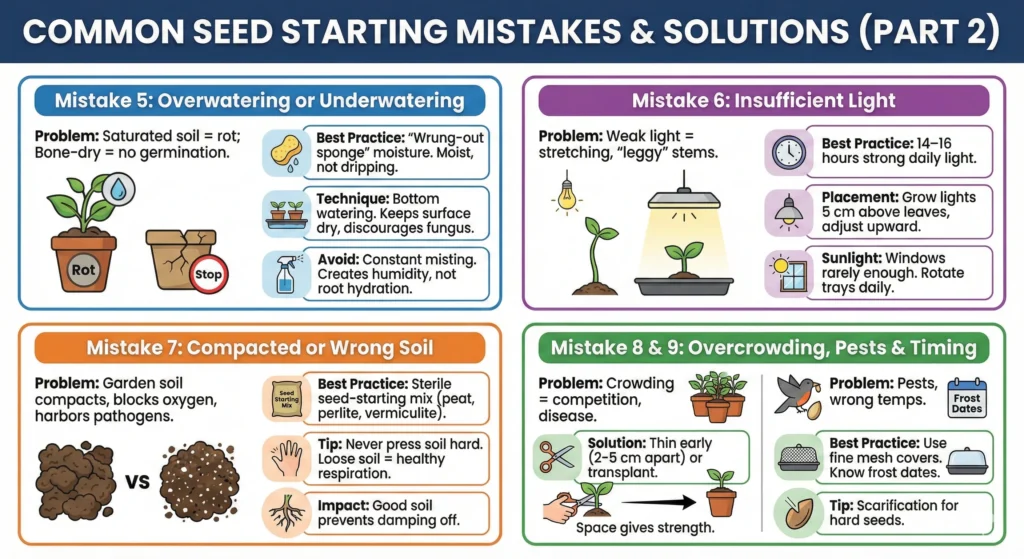
Mistake 5: Overwatering or Underwatering
Water kills more seedlings than neglect. Saturated soil drives out oxygen, causing rot. Bone-dry soil stops germination completely.
Aim for soil moisture balance that feels like a wrung-out sponge. Moist, not dripping. Containers must drain freely.
Bottom watering technique works best. Place trays in shallow water and let moisture rise naturally. This keeps seed surfaces dry and discourages fungal growth. Once the surface darkens, remove the tray.
Never mist constantly. That creates humidity without root hydration and encourages damping off.
Mistake 6: Insufficient Light
Light doesn’t start germination, but it shapes seedlings immediately after. Weak light causes stretching. Stems grow long, thin, and collapse—classic seedling legginess causes.
Seedlings need 14–16 hours of strong light daily. Grow lights should sit about 5 cm above the leaves and move upward as plants grow. Rotate trays daily to prevent leaning.
Sunlight through windows is rarely enough. Bright to your eyes isn’t bright to a plant.
Healthy seedlings grow stocky, slow, and confident—like weightlifters, not runners.
Mistake 7: Compacted or Wrong Soil
Garden soil is too heavy for seeds. It compacts, blocks oxygen, and harbors pathogens. Fertilized potting soil can burn delicate roots.
Use a sterile seed-starting mix made from peat, perlite, and vermiculite. This blend holds moisture while staying airy. Roots need oxygen as much as water.
Never press soil down hard. Gravity will settle it naturally. Loose soil equals healthy respiration.
Good soil prevents problems before they start. It’s the foundation of damping off prevention.
Mistake 8: Overcrowding
Too many seedlings in one space creates competition for light and air. Crowded trays stay damp longer and spread disease quickly.
Thin seedlings early. Leave 2–5 cm between plants depending on species. Yes, it feels wasteful. It’s also necessary.
Alternatively, transplant early. Small seedlings recover faster than root-bound ones. Space gives strength.
Think of it like raising puppies in a box. Cute at first. Chaos later.
Mistake 9: Pests or Timing Issues
Sometimes seeds vanish. Rodents, birds, and insects steal them before they sprout. Use fine mesh covers indoors and out.
Timing matters just as much. Sowing too early leads to cold stress. Too late, and heat prevents germination. Know your local frost dates. Use row covers to moderate extremes.
For hard-coated seeds, the scarification process—lightly nicking or soaking—can speed germination by letting water in.
Seeds want to grow. You just have to give them a fighting chance.
Conclusion
Consistent technique—not perfection—produces results. When seed quality, temperature, moisture, light, and spacing align, 80–90% germination becomes routine. Every tray teaches something. Adjust one variable at a time and observe closely.
Below is a quick-reference guide I’ve used with beginners for years:
| Crop | Ideal Temp | Germination Time |
|---|---|---|
| Tomato | 24°C | 7–10 days |
| Pepper | 24–27°C | 10–14 days |
| Lettuce | 18°C | 5–7 days |
| Cucumber | 22–25°C | 3–5 days |
| Spinach | 15–18°C | 7–14 days |
Seed starting is a skill, not a mystery. Experiment. Take notes. Fix one mistake today. The moment those first green loops break the soil, you’ll know—you’ve got this.