Thrive: Your 4-Container Salad Garden Blueprint
1. Introduction: A Complete Salad Garden in Just 4 Pots
You don’t need sprawling garden beds to eat fresh salads daily. Four strategically planned containers on a balcony, patio, or doorstep will produce bowls of crisp greens, crunchy radishes, aromatic herbs, and juicy tomatoes from spring through fall. This salad garden in containers system works because it leverages varieties bred for tight spaces, succession planting to avoid harvest gaps, and companion groupings that share water and light needs.
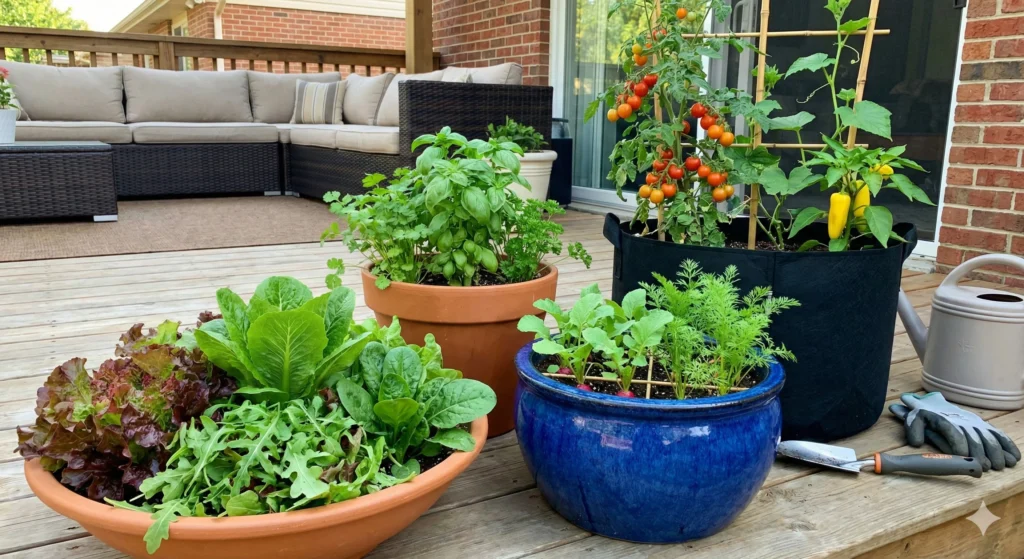
Each container serves a specific role. Container 1 delivers your salad base—lettuce, spinach, and mesclun blends you’ll cut repeatedly. Container 2 grows quick-turnover crunch crops like radishes and baby carrots. Container 3 houses herbs that elevate every bowl—basil, cilantro, parsley. Container 4 showcases your salad stars: dwarf cherry tomatoes, compact cucumbers, or sweet peppers that anchor meals. Together, they create a rotating harvest calendar where something ripens every week.
This guide walks you through container specs, exact plant spacing, variety selection by climate, and a care routine requiring 15 minutes daily. You’ll avoid common mistakes like overcrowding, nutrient depletion, and poor drainage that doom beginner container gardens. By week six, you’ll harvest bowl after bowl from your doorstep.
2. Planning Your 4-Container Salad Garden
2.1 Space, Light, and Climate
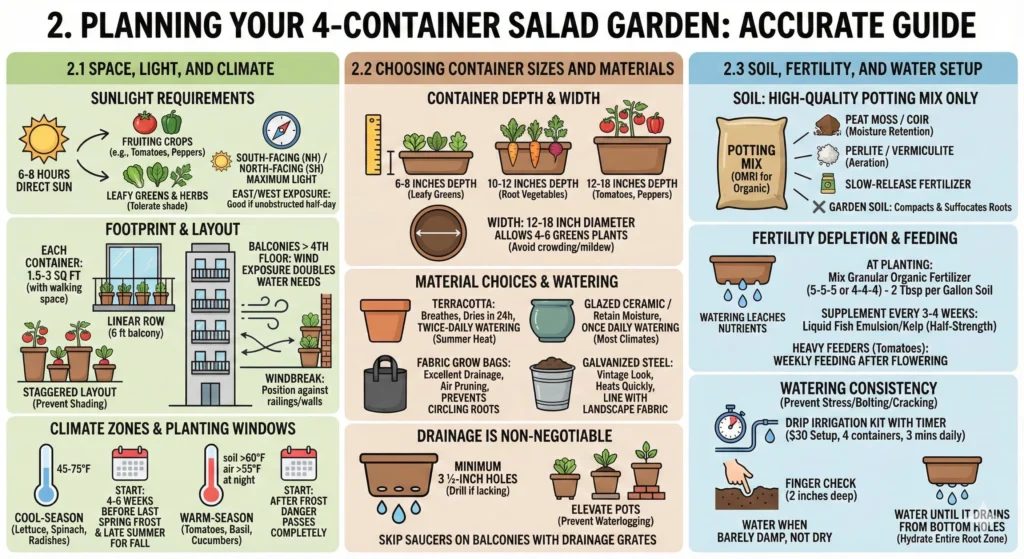
Your four containers need 6-8 hours of direct sunlight for fruiting crops like tomatoes and peppers. Leafy greens and herbs tolerate 4-6 hours, making them flexible for shadier balconies. South-facing spots in the Northern Hemisphere (north-facing in the Southern Hemisphere) deliver maximum light. East or west exposures work if unobstructed for half the day.
Measure your available footprint. Each container occupies 1.5-3 square feet including walking space. A 6-foot balcony holds all four in a linear row. Stagger them by height—tallest (tomatoes) in back, shortest (radishes) in front—to prevent shading. Wind exposure matters: balconies above the fourth floor create drying winds that double water needs. Position containers against railings or walls to create windbreaks.
Climate zones dictate planting windows. Cool-season crops (lettuce, spinach, radishes) thrive in temperatures between 45-75°F. Start them 4-6 weeks before your last spring frost and again in late summer for fall harvests. Warm-season crops (tomatoes, basil, cucumbers) need soil above 60°F and air temperatures consistently above 55°F at night. Wait until frost danger passes completely.
2.2 Choosing Container Sizes and Materials
Container depth determines root health. Leafy greens need 6-8 inches of soil depth. Root vegetables require 10-12 inches. Tomatoes and peppers demand 12-18 inches to establish strong root systems that support heavy fruiting. Width matters equally—a 12-18 inch diameter for greens allows 4-6 plants spaced to avoid crowding and mildew.
Material choices affect watering frequency and longevity. Terracotta breathes beautifully but dries out in 24 hours during summer heat, demanding twice-daily watering. Glazed ceramic and plastic retain moisture longer—once daily in most climates. Fabric grow bags offer excellent drainage and air pruning of roots, preventing the circling that stunts growth in solid pots. Galvanized steel tubs bring vintage aesthetics and durability but heat up quickly; line them with landscape fabric to insulate roots.
Drainage is non-negotiable. Every container needs holes allowing water to exit within seconds. Drill three ½-inch holes minimum in containers lacking them. Elevate pots on pot feet or bricks to prevent waterlogging from saucers. Skip saucers altogether on balconies with drainage grates.
2.3 Soil, Fertility, and Water Setup
Garden soil compacts disastrously in containers, suffocating roots. Use only high-quality potting mix formulated for containers—these blends contain peat moss or coir for moisture retention, perlite or vermiculite for aeration, and often slow-release fertilizer. For organic gardens, choose mixes certified by OMRI.
Fertility depletes rapidly in containers because frequent watering leaches nutrients. Mix granular organic fertilizer (5-5-5 or 4-4-4 NPK ratio) into soil at planting: 2 tablespoons per gallon of soil volume. Supplement every 3-4 weeks with liquid fish emulsion or kelp fertilizer diluted to half-strength. Heavy feeders like tomatoes need weekly feeding once flowering starts.
Watering consistency prevents the stress that causes lettuce to bolt and tomatoes to crack. Install a simple drip irrigation kit with timer if growing on a balcony—$30 setups water four containers for three minutes daily. Alternatively, check soil moisture by inserting a finger 2 inches deep; water when soil feels barely damp, not dry. Water until it drains from bottom holes, ensuring the entire root zone hydrates.
3. The 4-Container Layout (Top-Down Overview)
Visualize your setup as a production line. Container 1 sits at the edge of your space where you’ll access it most—this is your salad base, harvested multiple times weekly. Beside it, Container 2 holds quick-turnover crunch crops you’ll replant every 3-4 weeks. Container 3, your herb garden, positions centrally for easy snipping while cooking. Container 4 anchors the back or side with tall tomato cages or cucumber trellises, creating vertical interest.
Arrange containers to optimize light sharing. Tall Container 4 goes north (or south in Southern Hemisphere) so it doesn’t shade shorter pots. Containers 1 and 2 face full sun in front. Container 3 tolerates partial shade if light is limited. Leave 6-12 inches between pots for airflow, reducing fungal disease and allowing access for watering and harvesting.
Group containers by watering needs when possible. Tomatoes and cucumbers drink heavily; position them where soaker hoses or drip lines reach easily. Leafy greens need consistent moisture but less volume. Herbs tolerate slight drying between waterings. This clustering simplifies your daily routine.
4. Container 1 – The Salad Base (Leafy Greens)
4.1 Purpose
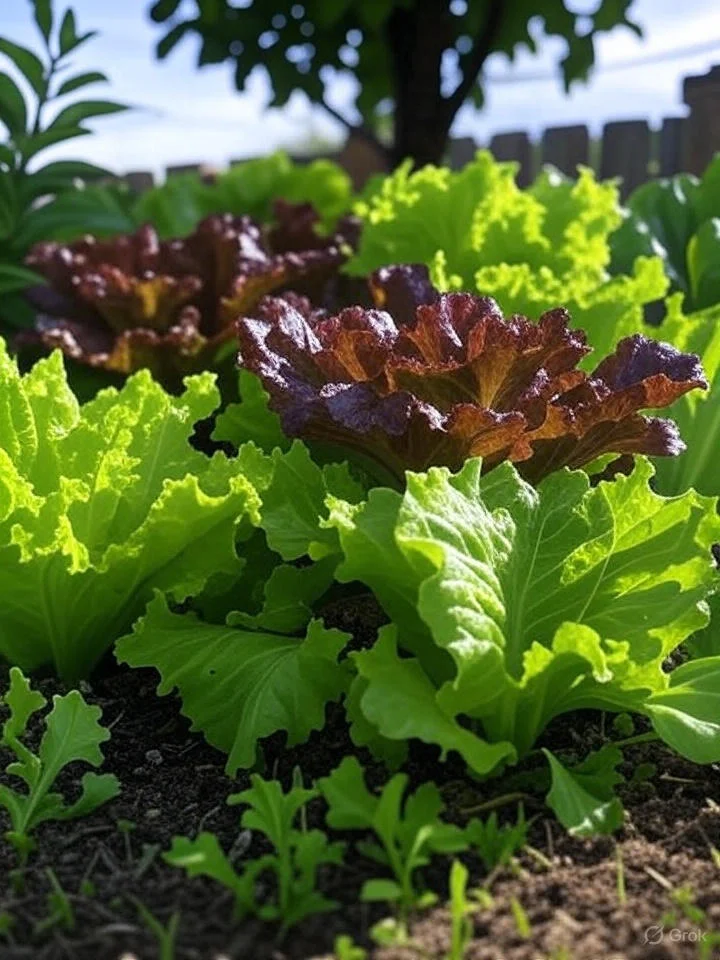
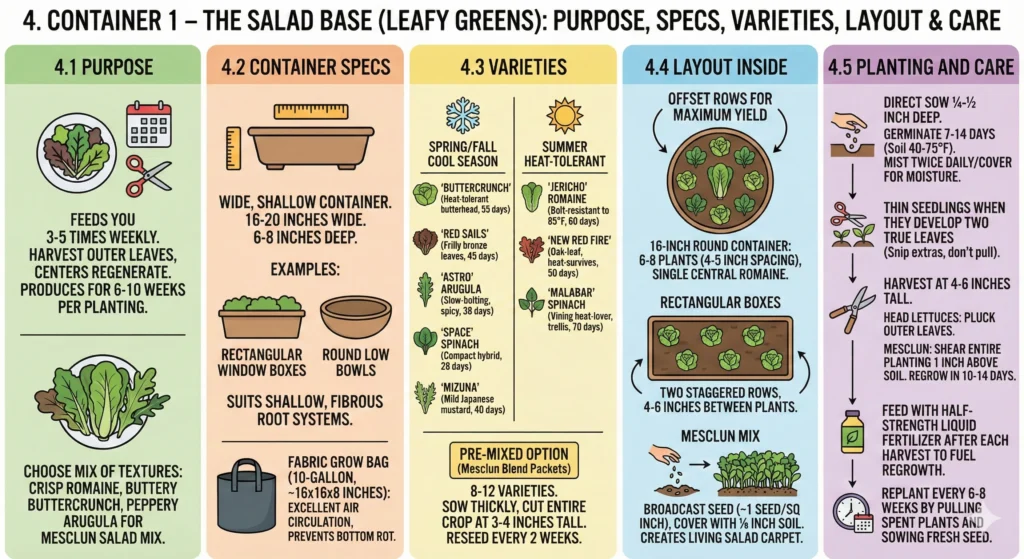
This container feeds you 3-5 times weekly with cut-and-come-again greens. You’ll harvest outer leaves while centers regenerate, producing for 6-10 weeks per planting. Choose a mix of textures—crisp romaine, buttery buttercrunch, peppery arugula—for restaurant-quality mesclun salad mix containers.
4.2 Container Specs
Use a wide, shallow container: 16-20 inches wide, 6-8 inches deep. Rectangular window boxes or round low bowls work perfectly. Shallow containers suit salad greens’ fibrous root systems, which spread horizontally rather than diving deep. Fabric grow bags (10-gallon size, dimensions roughly 16x16x8 inches) excel here, promoting air circulation that prevents bottom rot.
4.3 Varieties
Spring/Fall Cool Season:
- ‘Buttercrunch’ lettuce: Heat-tolerant butterhead, 55 days to maturity
- ‘Red Sails’ leaf lettuce: Frilly bronze leaves, cut at 45 days
- ‘Astro’ arugula: Slow-bolting, spicy bite, 38 days
- ‘Space’ spinach: Compact hybrid, harvest baby leaves at 28 days
- ‘Mizuna’: Mild Japanese mustard, feathery texture, 40 days
Summer Heat-Tolerant:
- ‘Jericho’ romaine: Bolt-resistant to 85°F, 60 days
- ‘New Red Fire’ lettuce: Oak-leaf type, survives heat, 50 days
- ‘Malabar’ spinach: Vining heat-lover (needs small trellis), 70 days
Pre-Mixed Option:
- Mesclun salad blend packets contain 8-12 varieties. Sow thickly and cut entire crop at 3-4 inches tall. Reseed every 2 weeks.
4.4 Layout Inside
Arrange plants in offset rows for maximum yield. In a 16-inch round container, plant 6-8 lettuce or spinach heads spaced 4-5 inches apart in a circular pattern, leaving the center for a single upright romaine. In rectangular boxes, create two staggered rows with 4-6 inches between plants.
For mesclun mix, broadcast seed across the entire soil surface—about 1 seed per square inch—then cover with ⅛ inch of soil. This dense planting creates a living salad carpet you’ll shear with scissors.
4.5 Planting and Care
Direct sow seeds ¼-½ inch deep. Lettuce and spinach germinate in 7-14 days at soil temperatures between 40-75°F. Keep soil consistently moist during germination by misting twice daily or covering with damp burlap. Thin seedlings to final spacing when they develop two true leaves, snipping extras with scissors at soil line rather than pulling and disturbing neighbors.
Begin harvesting when plants reach 4-6 inches tall. For head lettuces, pluck outer leaves, leaving the central growing point intact. For mesclun, shear the entire planting 1 inch above soil level with kitchen shears. Plants regrow in 10-14 days. Feed with half-strength liquid fertilizer after each harvest to fuel regrowth. Replant every 6-8 weeks by pulling spent plants and sowing fresh seed.
5. Container 2 – Crunch & Root Veg (Radish, Baby Carrots, Etc.)
5.1 Purpose
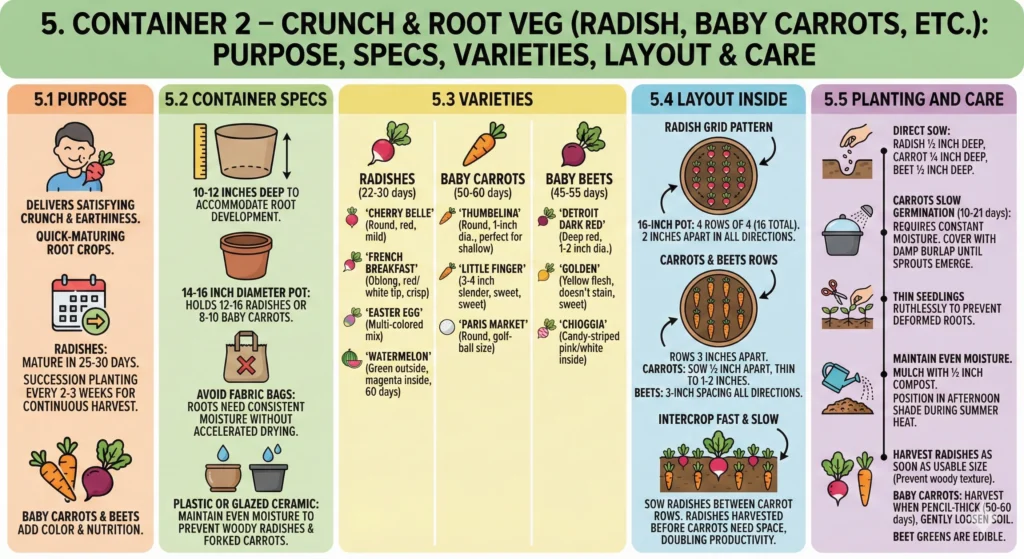
This container delivers the satisfying crunch and sweet earthiness that makes salads substantial. Quick-maturing root crops like radishes mature in 25-30 days, allowing succession planting every 2-3 weeks for continuous harvest. Baby carrots and beets add color and nutrition.
5.2 Container Specs
Choose containers 10-12 inches deep to accommodate root development. A 14-16 inch diameter pot holds 12-16 radishes or 8-10 baby carrots. Avoid fabric bags here—roots need consistent moisture without the accelerated drying bags cause. Plastic or glazed ceramic containers maintain the even moisture that prevents radishes from turning woody and carrots from forking.
5.3 Varieties
Radishes (22-30 days):
- ‘Cherry Belle’: Round, red, mild, thrives in containers
- ‘French Breakfast’: Oblong, red with white tip, crisp
- ‘Easter Egg’: Multi-colored mix, pink/purple/white
- ‘Watermelon’: Green outside, magenta inside, 60 days
Baby Carrots (50-60 days for finger-length):
- ‘Thumbelina’: Round, 1-inch diameter, perfect for shallow pots
- ‘Little Finger’: 3-4 inch slender roots, sweet
- ‘Paris Market’: Round, can harvest at golf-ball size
Baby Beets (45-55 days):
- ‘Detroit Dark Red‘: Deep red, harvest at 1-2 inch diameter
- ‘Golden’: Yellow flesh, doesn’t stain hands, sweet
- ‘Chioggia’: Candy-striped pink and white rings inside
5.4 Layout Inside
Sow radishes in a grid pattern: 2 inches apart in all directions. In a 16-inch pot, create 4 rows of 4 radishes (16 total). For carrots, sow in rows 3 inches apart with seeds ½ inch apart within rows, then thin to 1-2 inches for baby carrots or 2-3 inches for full-size. Beets need 3-inch spacing in all directions.
Intercrop fast radishes with slower carrots or beets: sow radishes between carrot rows. Radishes mature and get harvested before carrots need the space, doubling your container’s productivity.
5.5 Planting and Care
Direct sow radish seeds ½ inch deep, carrot seeds ¼ inch deep, beet seeds ½ inch deep. Carrot germination is notoriously slow (10-21 days) and requires constant moisture. Cover seeded containers with damp burlap or row cover until sprouts emerge. Thin seedlings ruthlessly—crowding causes deformed roots.
Maintain even moisture throughout growth. Uneven watering makes radishes pithy and splits carrots. Mulch soil surface with ½ inch of compost to retain moisture and moderate temperature. Radishes appreciate cooler soil; in summer heat, position this container where it receives afternoon shade.
Harvest radishes as soon as they reach usable size—leaving them in soil past maturity makes them hot and woody. Pull entire plants. For baby carrots, begin harvesting when roots are pencil-thick (usually 50-60 days), gently loosening soil around them before pulling. Beet greens are edible and delicious; harvest outer leaves like lettuce while roots mature.
6. Container 3 – Herbs & Flavor Boosters
6.1 Purpose
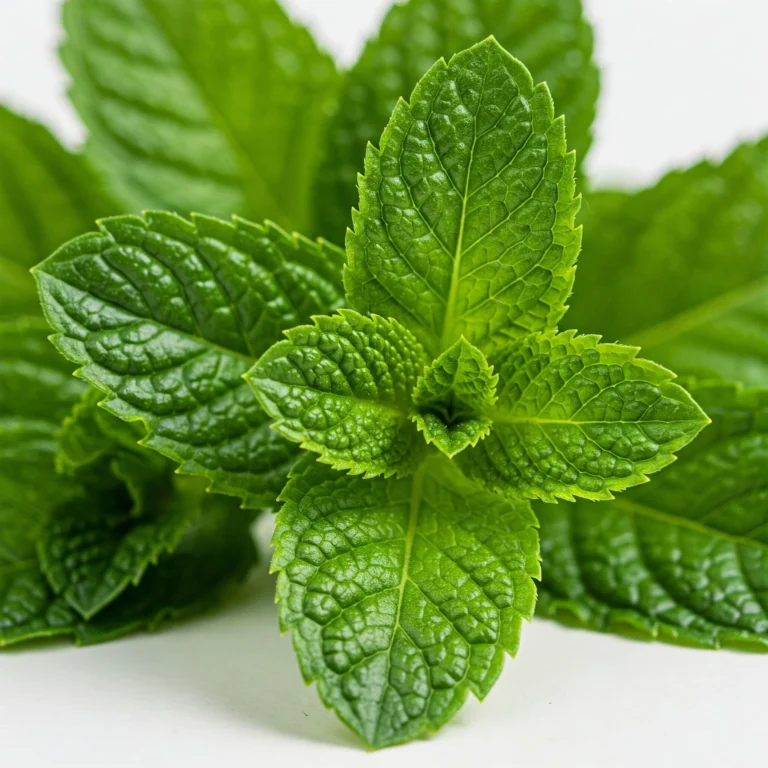
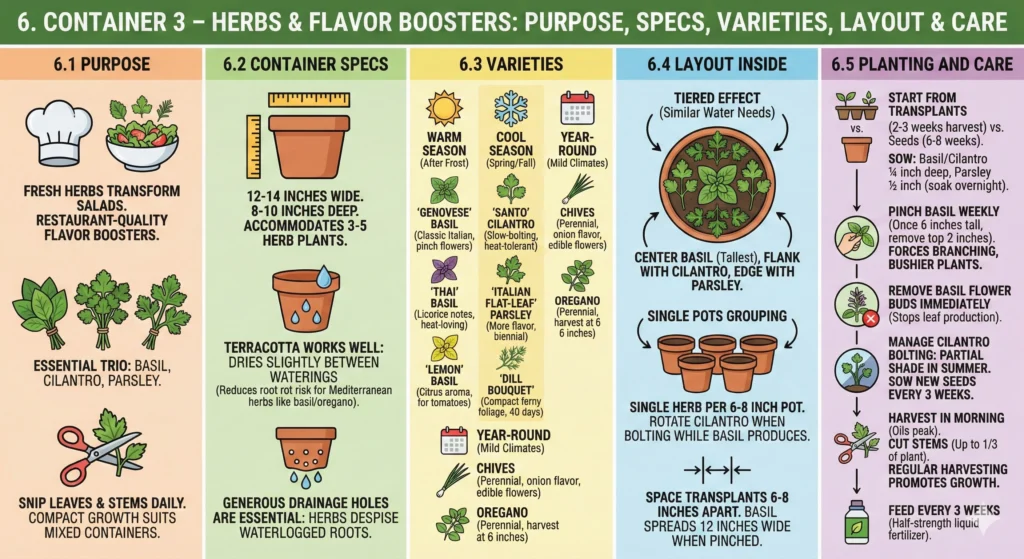
Fresh herbs transform salads from simple to restaurant-quality. This container grows the essential trio—basil, cilantro, parsley—plus optional additions like dill or chives. You’ll snip leaves and stems almost daily, and herbs’ compact growth suits mixed container plantings perfectly.
6.2 Container Specs
A 12-14 inch wide, 8-10 inch deep container accommodates 3-5 herb plants. Terracotta works well here despite faster drying—many Mediterranean herbs (basil, oregano) prefer soil that dries slightly between waterings, reducing root rot risk. Ensure drainage holes are generous; herbs despise waterlogged roots.
6.3 Varieties
Warm Season (plant after frost):
- ‘Genovese’ basil: Classic Italian, large leaves, pinch flowers to extend harvest
- ‘Thai’ basil: Licorice notes, purple stems, heat-loving
- ‘Lemon’ basil: Citrus aroma, excellent with tomatoes
Cool Season (plant spring and fall):
- ‘Santo’ cilantro: Slow-bolting, heat-tolerant for extended harvest
- ‘Italian Flat-Leaf’ parsley: More flavor than curly types, biennial (survives winter in zones 7+)
- ‘Dill Bouquet’: Compact, ferny foliage, 40 days
Year-Round (in mild climates):
- Chives: Perennial, mild onion flavor, edible purple flowers
- Oregano: Perennial, harvest once 6 inches tall
6.4 Layout Inside
Combine herbs with similar water needs. Plant one basil in the center (the tallest), flank with two cilantro plants, and edge with parsley. This creates a tiered effect where each plant receives light. Alternatively, grow a single herb per 6-8 inch pot and group pots together—this allows you to rotate out cilantro when it bolts while basil keeps producing.
Space transplants 6-8 inches apart. Herbs bush out considerably—basil can spread 12 inches wide when repeatedly pinched.
6.5 Planting and Care
Start from transplants rather than seeds for faster harvest—nursery seedlings produce harvestable leaves in 2-3 weeks versus 6-8 weeks from seed. If sowing, plant basil and cilantro seeds ¼ inch deep, parsley seeds (notoriously slow) ½ inch deep and soak overnight before sowing.
Basil requires warm soil (above 60°F). Pinch growing tips weekly once plants reach 6 inches tall, removing top 2 inches of stem. This forces branching, creating bushier plants with more leaves. Remove flower buds immediately—flowering signals the plant to stop leaf production and concentrate energy on seeds.
Cilantro bolts (flowers and goes to seed) quickly in heat. In summer, position this container in partial shade and choose slow-bolt varieties. Sow new cilantro seeds every 3 weeks for continuous supply. Once it bolts, let it go to seed—coriander seeds are a salad topping bonus.
Harvest herbs in the morning after dew dries but before heat intensifies—this is when essential oils peak. Cut stems, not individual leaves, taking up to one-third of the plant at a time. Regular harvesting promotes bushier growth. Feed every 3 weeks with balanced liquid fertilizer diluted to half-strength.
7. Container 4 – Salad “Stars” (Tomatoes, Cucumbers, or Peppers)
7.1 Purpose
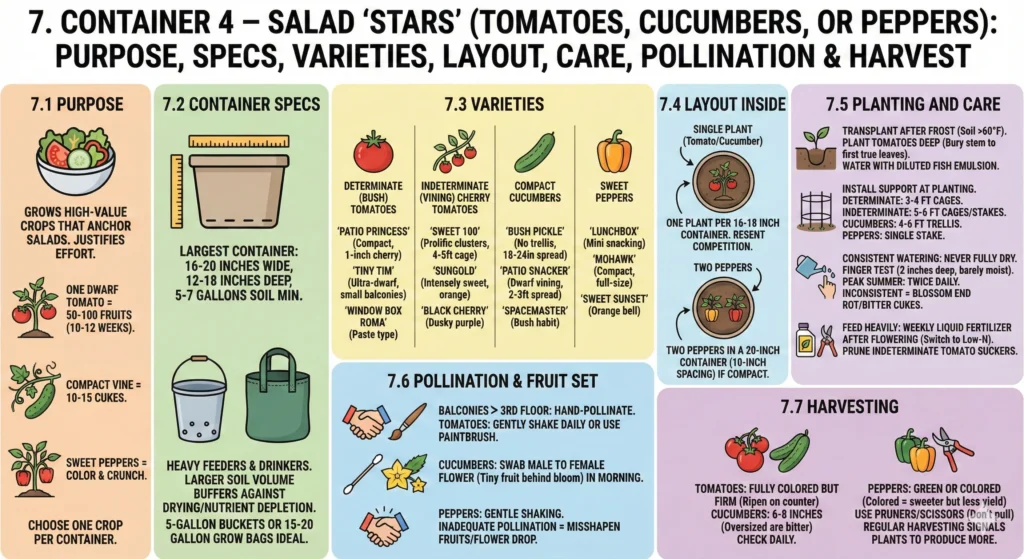
This container grows the high-value crops that anchor salads and justify container gardening’s effort. One dwarf cherry tomato plant produces 50-100 fruits over 10-12 weeks. A compact cucumber vine yields 10-15 cukes. Sweet peppers provide color and crunch. Choose one crop per container based on your taste preference.
7.2 Container Specs
Use the largest container in your setup: 16-20 inches wide, 12-18 inches deep, holding 5-7 gallons of soil minimum. Tomatoes and cucumbers are heavy feeders and drinkers—larger soil volume buffers against drying and nutrient depletion. Five-gallon buckets (drilled with drainage holes) work; fabric grow bags in 15-20 gallon sizes are ideal.
7.3 Varieties
Determinate (Bush) Tomatoes:
- ‘Patio Princess’: Compact, 20-24 inches tall, 1-inch cherry tomatoes, 68 days
- ‘Tiny Tim’: Ultra-dwarf, 12-18 inches, perfect for small balconies, 55 days
- ‘Window Box Roma’: Paste type for dicing, 24 inches tall, 70 days
Indeterminate (Vining) Cherry Tomatoes:
- ‘Sweet 100’: Prolific clusters, needs 4-5 foot cage, 65 days
- ‘Sungold’: Intensely sweet, orange fruits, 57 days
- ‘Black Cherry’: Dusky purple, complex flavor, 65 days
Compact Cucumbers:
- ‘Bush Pickle’: No trellis needed, 18-24 inch spread, pickling or fresh, 50 days
- ‘Patio Snacker’: Dwarf vining, 2-3 foot spread, smooth-skinned, 50 days
- ‘Spacemaster’: Bush habit, full-size 7-inch cukes, 60 days
Sweet Peppers:
- ‘Lunchbox’: Mini snacking peppers, red/orange/yellow, 55 days
- ‘Mohawk’: Compact plant, full-size bells, 60 days
- ‘Sweet Sunset’: Orange bell, early, 70 days
7.4 Layout Inside
Plant one tomato or cucumber per 16-18 inch container. These crops resent competition and need all available nutrients and water. For peppers, you can fit two plants in a 20-inch container spaced 10 inches apart if using compact varieties.
7.5 Planting and Care
Transplant seedlings after all frost danger passes and soil temperature exceeds 60°F. Plant tomatoes deep—bury stem up to the first true leaves. Buried stem develops additional roots, creating a stronger plant. Water transplants with diluted fish emulsion to reduce transplant shock.
Install support at planting to avoid damaging roots later. Determinate tomatoes need 3-4 foot cages. Indeterminate varieties require 5-6 foot cages or stakes with ties every 8 inches. Cucumbers climb willingly on 4-6 foot trellises made from bamboo teepees or string netting. Peppers stay compact but benefit from a single stake to prevent flopping when laden with fruit.
Tomatoes and cucumbers need consistent watering—never allowing soil to fully dry. Use your finger test: water when the top 2 inches feel barely moist. In peak summer, this may mean twice daily. Inconsistent watering causes blossom end rot in tomatoes and bitter cucumbers.
Feed heavily. Apply liquid fertilizer weekly once flowering begins. Switch to low-nitrogen (5-10-10 NPK) formulas when fruits start forming—too much nitrogen promotes leafy growth at the expense of fruiting. Prune tomato suckers (shoots emerging between main stem and branches) on indeterminate varieties to concentrate energy into fewer, larger fruits.
7.6 Pollination and Fruit Set
Balconies above the third floor may lack pollinators. Hand-pollinate by gently shaking flowering tomato plants daily to distribute pollen, or use a small paintbrush to transfer pollen between flowers. Cucumbers require male and female flowers (females have tiny fruits behind the bloom)—use a cotton swab to move pollen from male to female flowers in the morning.
Peppers are self-pollinating but benefit from gentle shaking. Inadequate pollination results in misshapen fruits or flower drop.
7.7 Harvesting
Begin harvesting tomatoes when fully colored but still firm. They’ll ripen further on the counter. Pick cucumbers when 6-8 inches long (or variety-specific size)—oversized cukes are seedy and bitter. Check plants daily during peak production; hidden fruits grow rapidly.
Harvest peppers green or wait for color change (red, yellow, orange). Colored peppers are sweeter but waiting reduces overall yield as the plant invests energy in ripening rather than new fruits. Use pruners or scissors to cut—pulling damages stems.
Regular harvesting signals plants to produce more. A single tomato plant yields for 10-12 weeks if you pick ripe fruits promptly.
8. Seasonal Adjustments and Succession Planting
Spring planting (4-6 weeks before last frost) focuses on cool-season crops: lettuce, spinach, radishes, peas, cilantro, parsley. Start Container 1 and 2 immediately. Wait until soil reaches 60°F for Container 4 tomatoes—usually 2 weeks after last frost date. Basil joins even later, when nighttime temperatures stay above 50°F.
Summer transition (late May-June in most zones) means bolting lettuce. Replace Container 1’s spent greens with heat-tolerant varieties: ‘Jericho’ romaine, New Zealand spinach, summer purslane. Cilantro bolts in heat—let it go to seed or pull and replant with basil. Add a second basil plant if you use it heavily.
Fall planting (late July-August for October-November harvest) revives cool-season crops. Replant Container 1 with ‘Winter Density’ romaine, ‘Tyee’ spinach, and arugula—these survive light frosts. Radishes sweeten in cool weather. Plant Container 2 succession crops every 2 weeks through early September. Container 3 gets a cilantro revival and parsley (which overwinters in zones 7+).
Winter care in mild climates (zones 8-10): kale, Asian greens, and hardy lettuces produce through winter. Protect containers from hard freezes with frost cloth. In cold climates, empty containers or move them to unheated garages to prevent cracking.
Succession planting prevents feast-or-famine cycles. Sow new lettuce seeds in a corner of Container 1 every 2 weeks. Plant radishes every 3 weeks in Container 2. Stagger cucumber or bean plantings 2 weeks apart in early summer for extended harvest.
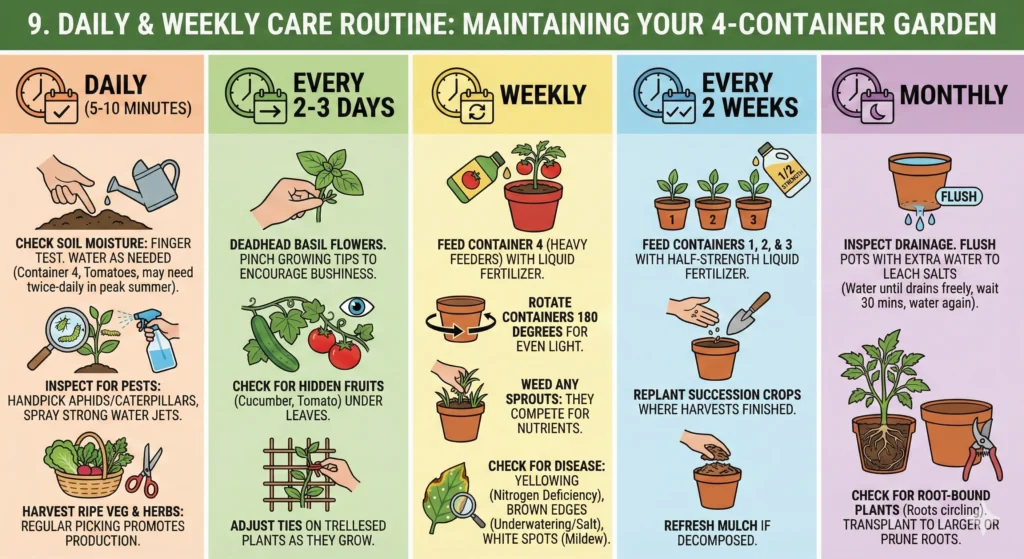
9. Daily & Weekly Care Routine
Daily (5-10 minutes): Check soil moisture in all containers using the finger test. Water as needed—Container 4 (tomatoes) may need twice-daily watering in peak summer. Inspect plants for pests: handpick aphids or caterpillars, spray strong water jets to dislodge them. Harvest ripe vegetables and herbs—regular picking promotes production.
Every 2-3 Days: Deadhead basil flowers. Pinch growing tips to encourage bushiness. Check cucumber and tomato vines for fruits hiding under leaves. Adjust ties on trellised plants as they grow.
Weekly: Feed Container 4 (heavy feeders) with liquid fertilizer. Rotate containers 180 degrees so all sides receive equal light, promoting even growth. Weed any sprouts in containers—they compete for nutrients. Check for signs of disease: yellowing leaves (nitrogen deficiency), brown leaf edges (underwatering or salt buildup), white powdery spots (mildew).
Every 2 Weeks: Feed Containers 1, 2, and 3 with half-strength liquid fertilizer. Replant succession crops where harvests have finished. Refresh mulch if it’s decomposed.
Monthly: Inspect containers for drainage issues. Flush pots with extra water to leach accumulated salts from fertilizers—water until it drains freely, wait 30 minutes, water again. Check for root-bound plants (roots circling the pot’s edge); if found, transplant to larger containers or prune roots.
10. Harvesting and Building Your Salad Bowl
Peak harvest time is early morning after dew dries, when leaves are crisp and sugars haven’t been depleted by afternoon heat. Bring a basket and scissors. For Container 1 greens, cut outer leaves from multiple plants rather than stripping one plant bare—this spreads the harvest load and maintains aesthetics.
Harvest radishes when shoulders push above soil line—usually 25-30 days after sowing. Pull, twist off greens, and wash. Baby carrots can be selectively harvested at 50 days, feeling for the largest roots and pulling those while leaving smaller ones to size up.
Snip herbs just above a leaf node (where leaves meet the stem). This cut point promotes branching. Take cilantro and parsley stems from the outside of the plant. Basil responds to aggressive harvesting—cut entire stems, not individual leaves.
A typical mid-summer harvest from your four containers fills a large salad bowl:
- Container 1: 4-6 cups mixed lettuce and spinach leaves
- Container 2: 6-8 radishes or 10 baby carrots, 2 small beets with greens
- Container 3: ½ cup fresh basil, ¼ cup cilantro, ¼ cup parsley
- Container 4: 10-15 cherry tomatoes or 1 slicing cucumber, 2 sweet peppers
Rinse greens in cold water immediately after harvest. Spin dry or pat with towels. Store in refrigerator in breathable produce bags—greens stay crisp for 5-7 days. Herbs keep best with stems in water like cut flowers, or wrapped in damp paper towels in the crisper.
Compose salads by layering textures: crisp romaine base, tender buttercrunch, peppery arugula, crunchy radish, sweet carrots, torn basil, halved cherry tomatoes. Dress lightly with olive oil and vinegar to let your homegrown flavors shine.
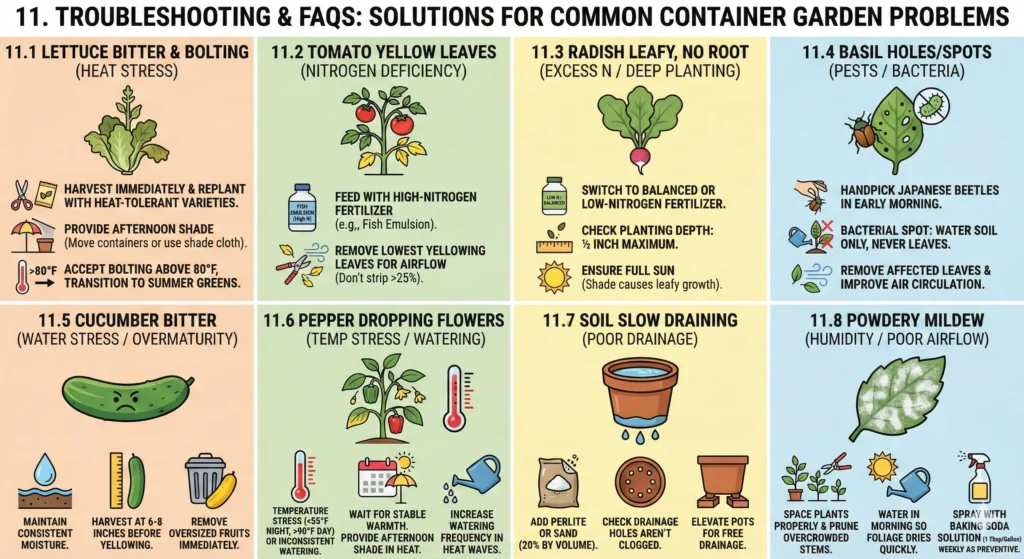
11. Troubleshooting & FAQs
Lettuce turning bitter and bolting: Heat stress. Harvest immediately and replant with heat-tolerant varieties. Provide afternoon shade by moving containers or using shade cloth. Bolt-resistant lettuce still bolts above 80°F—accept this and transition to summer greens.
Tomato leaves yellowing from bottom up: Nitrogen deficiency or natural senescence. Feed with high-nitrogen fertilizer (fish emulsion). Remove lowest yellowing leaves to improve airflow, but don’t strip more than 25% of foliage.
Radishes all leaves, no root: Too much nitrogen or planted too deep. Radish seeds should be ½ inch deep maximum. Switch to balanced or low-nitrogen fertilizer. Ensure full sun—shade causes leafy growth.
Basil leaves with holes, black spots: Likely Japanese beetles or bacterial leaf spot. Handpick beetles in early morning when sluggish. For bacterial spot (favored by overhead watering), water soil only, never leaves. Remove affected leaves. Improve air circulation.
Cucumbers taste bitter: Water stress or overmaturity. Maintain consistent moisture. Harvest cukes at 6-8 inches before they yellow. Remove any oversized fruits immediately to redirect plant energy.
Peppers dropping flowers: Temperature stress (below 55°F at night or above 90°F during day), or inconsistent watering. Peppers are temperature-sensitive. Wait for stable warmth in spring. In heat waves, provide afternoon shade and increase watering frequency.
Soil draining too slowly: Add perlite or sand (20% by volume) to improve drainage. Check that drainage holes aren’t clogged. Elevate pots to allow free drainage.
White powdery coating on leaves: Powdery mildew, a fungal disease favored by humidity and poor airflow. Space plants properly, prune overcrowded stems, water in morning so foliage dries quickly. Spray with baking soda solution (1 tablespoon per gallon water) weekly as preventive.
12. Conclusion
Your four-container salad garden transforms a small outdoor space into a daily harvest station. By mid-summer, you’ll walk outside each evening to gather lettuce, pluck tomatoes, and snip basil—ingredients that cost $15-20 at farmers markets, now growing 10 feet from your kitchen. The investment is minimal: $60 in containers, $30 in potting mix, $20 in seeds and transplants. The return is immeasurable: flavor unmatched by grocery stores, nutrition at peak ripeness, and the satisfaction of self-sufficiency.
Start small if this feels overwhelming. Plant Container 1 this week with a simple lettuce and arugula mix. Add Container 3’s herbs next week. Build confidence through daily observation—you’ll quickly learn your plants’ water needs, recognize signs of health, and develop the intuition that makes gardening second nature.
Succession planting ensures you never face a harvest gap. Mark your calendar now: every 2 weeks through summer, sow 10 more lettuce seeds or a row of radishes. Every 3 weeks, pinch back basil and start new cilantro. This rhythm creates abundance without the glut-and-famine cycle that frustrates beginners.
Take photos today of your empty containers. Compare them in 60 days when you’re harvesting your tenth salad. That visual transformation—from bare pots to lush edible gardens—will fuel your growing ambitions. Next season, you might add snap peas, edible flowers, or specialty greens. But for now, these four containers deliver complete, colorful, nutritious salads from spring through fall.
Your doorstep salad garden awaits. Fill those containers with soil, sow those seeds, and prepare to thrive on the freshest food you’ve ever tasted—grown by your hands, in the smallest of spaces.