Stop Tomato Blossom Drop in Hot Weather
Introduction
If you are growing tomatoes in hot, humid climates, I know how heartbreaking it is to see healthy plants covered in yellow flowers—only to find them scattered on the soil a few days later. No fruit. No warning. Just disappointment. This problem, commonly called blossom drop, is one of the most frustrating issues gardeners face during summer, especially in South Asia and the tropics.
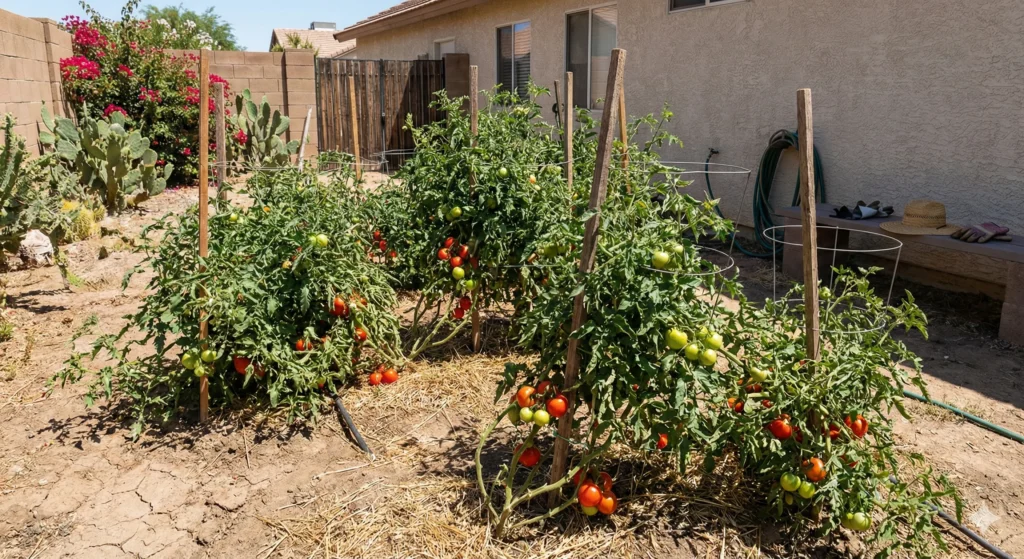
Blossom drop is not a disease. It is the plant protecting itself. When conditions become unfavorable—too hot, too humid, too dry, too wet—tomato plants abort flowers to conserve energy. Understanding why tomato flowers drop in hot weather is the first step to fixing it. The good news? In most cases, you can turn this around with practical, proven adjustments.
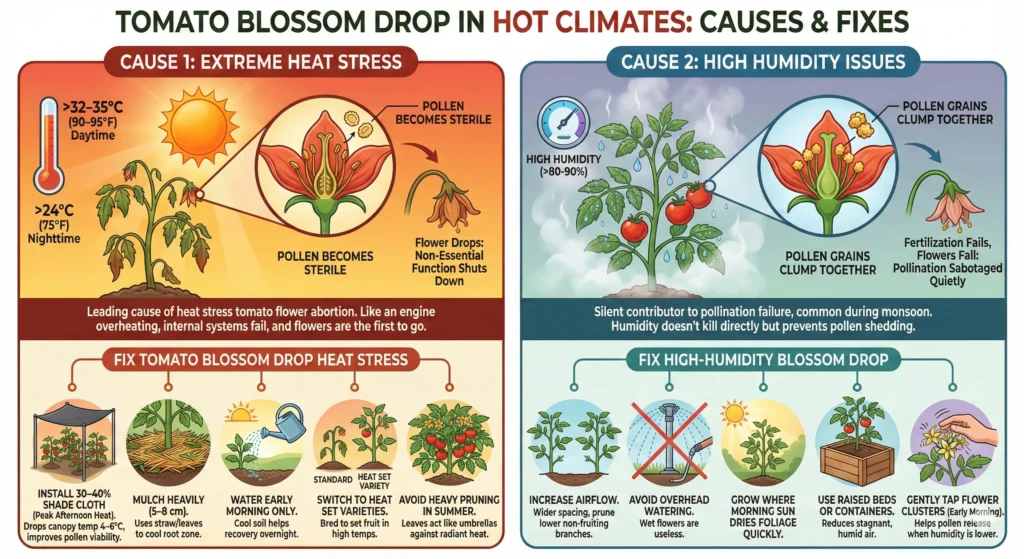
Cause 1: Extreme Heat Stress
+ Fix
Tomatoes are far less heat-tolerant at flowering than most gardeners realize. When daytime temperatures rise above 32–35°C (90–95°F) and night temperatures stay above 24°C (75°F), pollen becomes sterile. No viable pollen means no fertilization, and the flower drops. This is classic pollen sterility heat tomatoes behavior and a leading cause of heat stress tomato flower abortion.
In my field trials across Punjab and Sindh, even well-watered plants dropped flowers when high night temps tomato drop conditions persisted for more than a week.
Fix tomato blossom drop heat stress:
- Install 30–40% shade cloth during peak afternoon heat. This alone can drop canopy temperature by 4–6°C and directly improves pollen viability.
- Mulch heavily (5–8 cm) with straw, dried leaves, or sugarcane trash to cool the root zone.
- Water early morning only. Cool soil helps the plant recover overnight.
- Switch to heat set tomato varieties for summer planting. These are bred to set fruit despite high temperatures.
- Avoid heavy pruning in summer. Leaves act like umbrellas, protecting flowers from radiant heat.
Think of the tomato plant like an engine overheating. Once internal systems fail, it shuts down non-essential functions—flowers are the first to go.
Cause 2: High Humidity Issues
+ Fix
High humidity is a silent contributor to hot climate tomato pollination failure. In humid air, pollen grains clump together instead of shedding freely. Even when temperatures are acceptable, fertilization fails and flowers fall.
This is extremely common during monsoon season when humidity effects tomato blooms become more damaging than heat itself.
Fix high-humidity blossom drop:
- Increase airflow by wider plant spacing and pruning only lower, non-fruiting branches.
- Avoid overhead watering. Wet flowers are useless flowers.
- Grow tomatoes where morning sun dries foliage quickly.
- Use raised beds or containers to reduce stagnant, humid air around plants.
- Gently tap flower clusters in early morning to help pollen release when humidity is lower.
Humidity does not kill flowers directly—it sabotages pollination quietly.
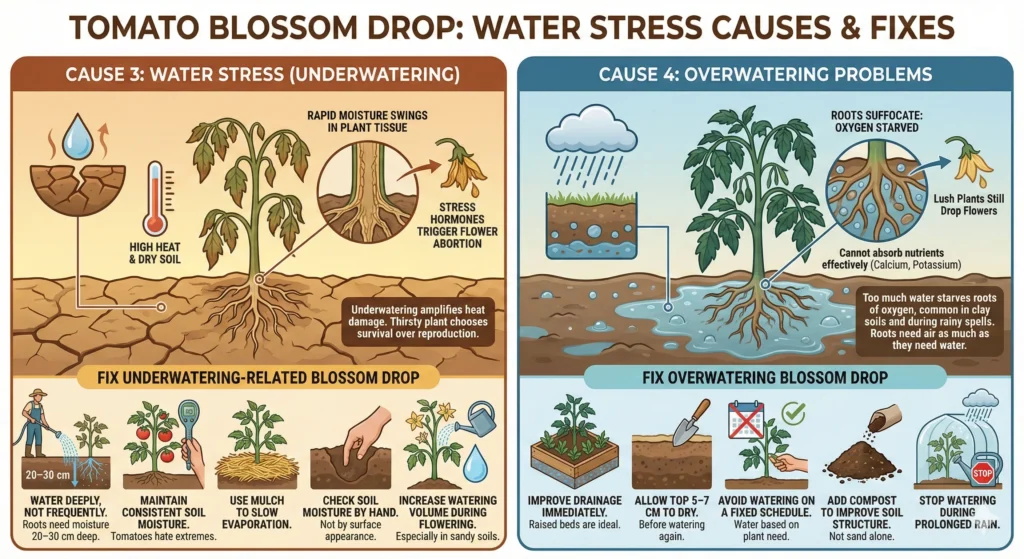
Cause 3: Water Stress (Underwatering)
+ Fix
Underwatering causes rapid moisture swings in plant tissue. When soil dries out too much, the plant experiences stress hormones that trigger flower abortion. Many gardeners assume heat is the culprit, but in reality, water stress amplifies heat damage.
I often see this during heat waves when gardeners water lightly every day instead of deeply.
Fix underwatering-related blossom drop:
- Water deeply, not frequently. Roots need moisture 20–30 cm deep.
- Maintain consistent soil moisture. Tomatoes hate extremes.
- Use mulch to slow evaporation.
- Check soil moisture by hand, not by surface appearance.
- Increase watering volume during flowering, especially in sandy soils.
A thirsty tomato plant will always choose survival over reproduction.
Cause 4: Overwatering Problems
+ Fix
Too much water suffocates roots. Oxygen-starved roots cannot absorb nutrients effectively, especially calcium and potassium, which are critical during flowering. Overwatered plants may look lush but still drop flowers.
This is common in clay soils and during rainy spells when gardeners keep watering out of habit.
Fix overwatering blossom drop:
- Improve drainage immediately. Raised beds are ideal.
- Allow top 5–7 cm of soil to dry before watering again.
- Avoid watering on a fixed schedule. Water based on plant need.
- Add compost to improve soil structure, not sand alone.
- Stop watering during prolonged rain.
Roots need air as much as they need water.
Cause 5: Nutrient Imbalances
+ Fix
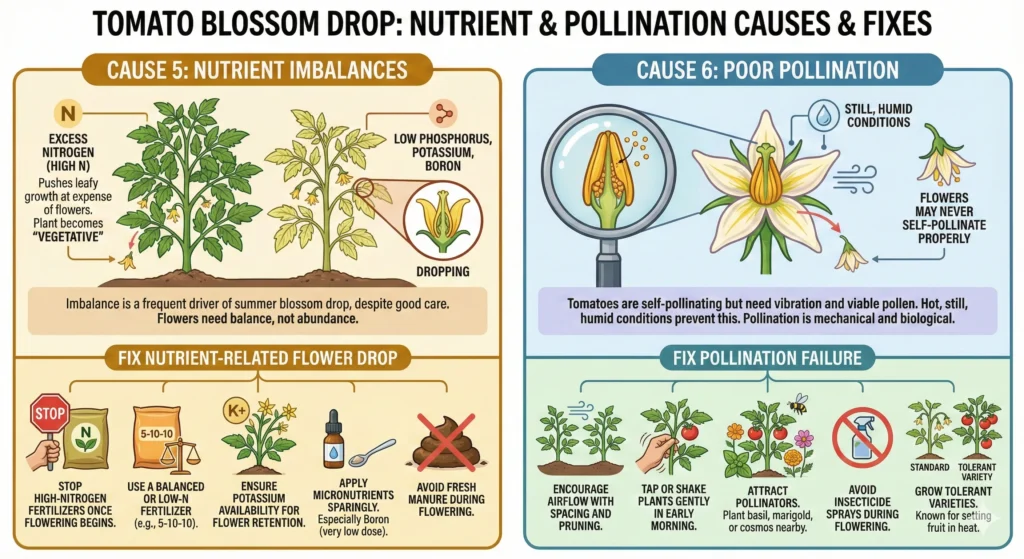
Excess nitrogen pushes leafy growth at the expense of flowers. The plant becomes “vegetative,” delaying or aborting fruit set. On the other hand, low phosphorus, potassium, or micronutrients like boron directly impair flowering.
This imbalance is a frequent driver of summer blossom drop tomato solutions failing despite good care.
Fix nutrient-related flower drop:
- Stop high-nitrogen fertilizers once flowering begins.
- Use a balanced or low-N fertilizer (e.g., 5-10-10).
- Ensure potassium availability for flower retention.
- Apply micronutrients sparingly, especially boron (very low dose).
- Avoid fresh manure during flowering.
Flowers need balance, not abundance.
Cause 6: Poor Pollination
+ Fix
Tomatoes are self-pollinating, but they still need vibration and viable pollen. In hot, still, humid conditions, flowers may never self-pollinate properly. This is a major cause of tomato flowers dropping hot weather, even when plants look healthy.
Fix pollination failure:
- Encourage airflow with spacing and pruning.
- Tap or shake plants gently in early morning.
- Attract pollinators by planting basil, marigold, or cosmos nearby.
- Avoid insecticide sprays during flowering.
- Grow tolerant varieties known for setting fruit in heat.
Pollination is mechanical and biological—both must work.
Cause 7: Inadequate Sunlight
+ Fix
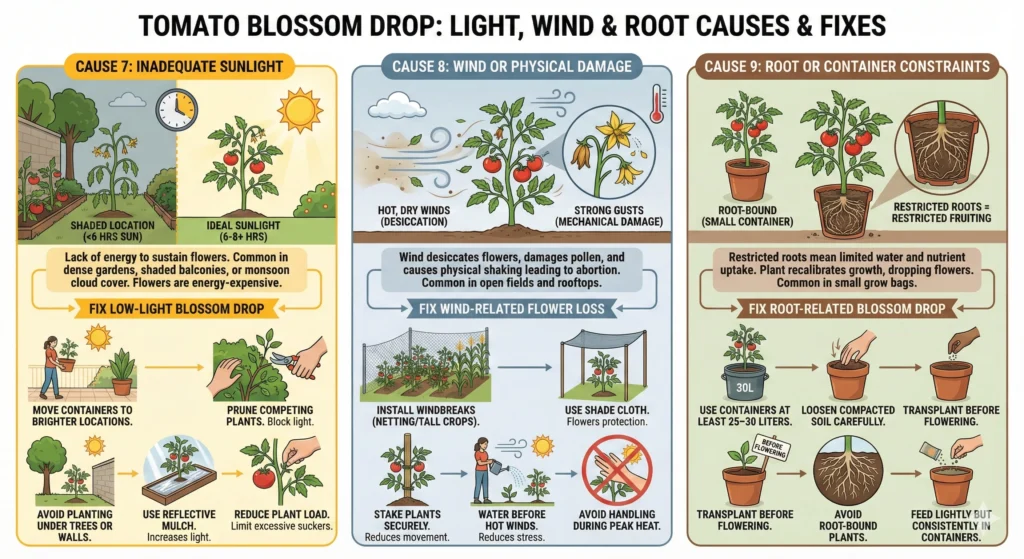
Tomatoes need 6–8 hours of direct sunlight to sustain flowering and fruiting. In dense gardens, shaded balconies, or monsoon cloud cover, plants may initiate flowers but lack the energy to support them.
This issue often overlaps with humidity and disease pressure.
Fix low-light blossom drop:
- Move containers to brighter locations.
- Prune competing plants that block light.
- Avoid planting tomatoes under trees or walls.
- Use reflective mulch to increase light under the canopy.
- Reduce plant load by limiting excessive suckers.
Flowers are energy-expensive structures.
Cause 8: Wind or Physical Damage
+ Fix
Hot, dry winds physically desiccate flowers and damage pollen. Strong gusts also shake flowers excessively, causing them to abort before fertilization. This is common in open fields and rooftops.
Fix wind-related flower loss:
- Install windbreaks using netting or taller crops.
- Use shade cloth tomato flowers protection on exposed sites.
- Stake plants securely to reduce movement.
- Water before hot winds to reduce stress.
- Avoid handling plants during peak heat.
Wind stress is mechanical and physiological.
Cause 9: Root or Container Constraints
+ Fix
Restricted roots mean restricted fruiting. When roots hit hard boundaries or become root-bound, water and nutrient uptake suffers. Flowers drop as the plant recalibrates its growth.
This is very common in grow bags under 15 liters.
Fix root-related blossom drop:
- Use containers at least 25–30 liters per plant.
- Loosen compacted soil carefully without damaging roots.
- Transplant before flowering, not during.
- Avoid letting plants become root-bound.
- Feed lightly but consistently in containers.
Roots determine everything above ground.
Conclusion and Prevention Tips
Blossom drop is not failure—it is feedback. Tomato plants are telling you that conditions are pushing them past their reproductive comfort zone. I have seen thousands of plants drop flowers in high heat, high humidity, and erratic watering. I have also seen those same plants recover and set heavy fruit once conditions improved.
Key prevention principles to remember:
- Control heat, especially at night.
- Stabilize soil moisture.
- Balance nutrition, don’t overload it.
- Improve airflow and light.
- Choose varieties suited for heat.
You cannot control the weather, but you can control the microclimate around your plants. With these adjustments, fix tomato blossom drop heat stress becomes achievable—even in brutal summers. When conditions align, tomatoes respond quickly. Flowers stop falling. Tiny fruits appear. And that moment makes every adjustment worth it.