Revive Leggy Basil & Cilantro: Windowsill Fix Guide
If your basil is stretching toward the window or your cilantro looks tall, thin, and fragile, you’re not doing anything wrong. You’re seeing a predictable response to indoor conditions—especially light direction, intensity, and heat. I’ve grown these herbs on hundreds of windowsills over the years, and leggy growth is one of the most fixable problems once you understand what the plant is reacting to.
This guide stays practical. Every step below addresses what actually works on kitchen windowsills—not greenhouses or ideal labs.
Understanding Leggy Growth
Legginess is not a mystery or a “bad plant.” It’s a survival response.
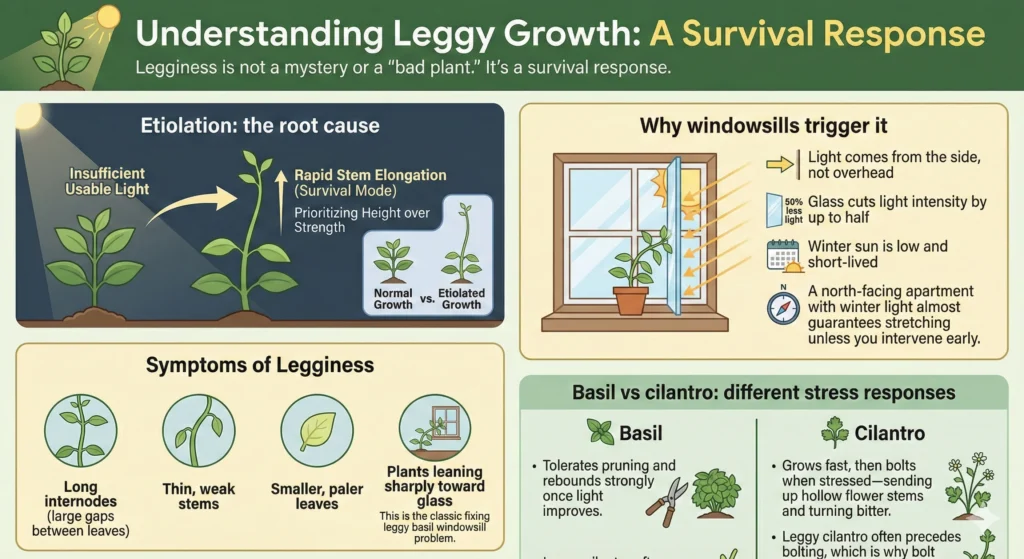
Etiolation: the root cause
When herbs don’t receive enough usable light, they enter etiolation in herbs—a growth mode where stems elongate rapidly to reach brightness. The plant prioritizes height over strength.
You’ll notice:
- Long internodes (large gaps between leaves)
- Thin, weak stems
- Smaller, paler leaves
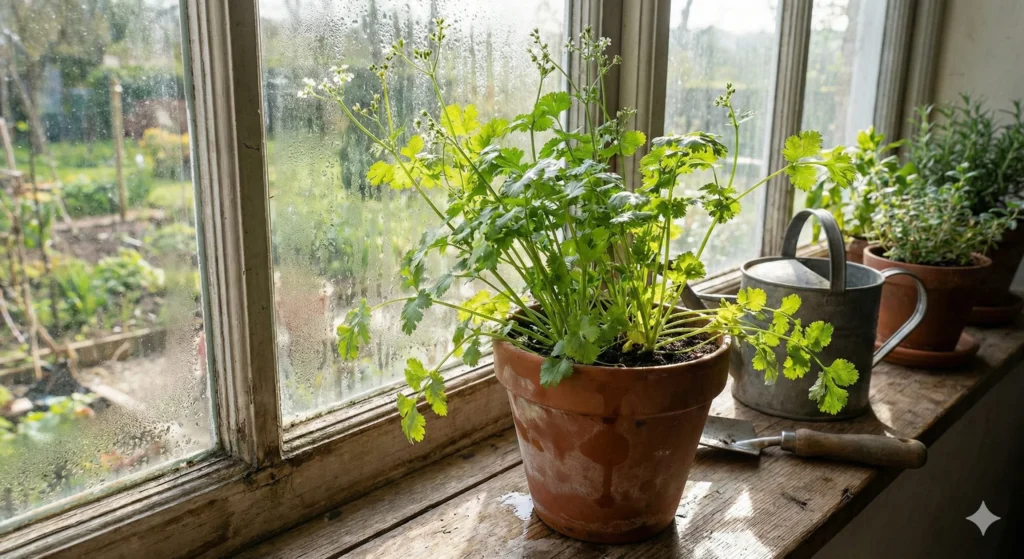
- Plants leaning sharply toward glass
This is the classic fixing leggy basil windowsill problem.
Why windowsills trigger it
Even bright windows are deceptive.
- Light comes from the side, not overhead
- Glass cuts light intensity by up to half
- Winter sun is low and short-lived
A north-facing apartment with winter light almost guarantees stretching unless you intervene early.
Basil vs cilantro: different stress responses
Both herbs stretch, but they react differently over time.
- Basil tolerates pruning and rebounds strongly once light improves.
- Cilantro grows fast, then bolts when stressed—sending up hollow flower stems and turning bitter.
Leggy cilantro often precedes bolting, which is why bolting coriander prevention must start early.
Immediate Fixes
Once herbs are leggy, waiting makes the structure worse. Act decisively.
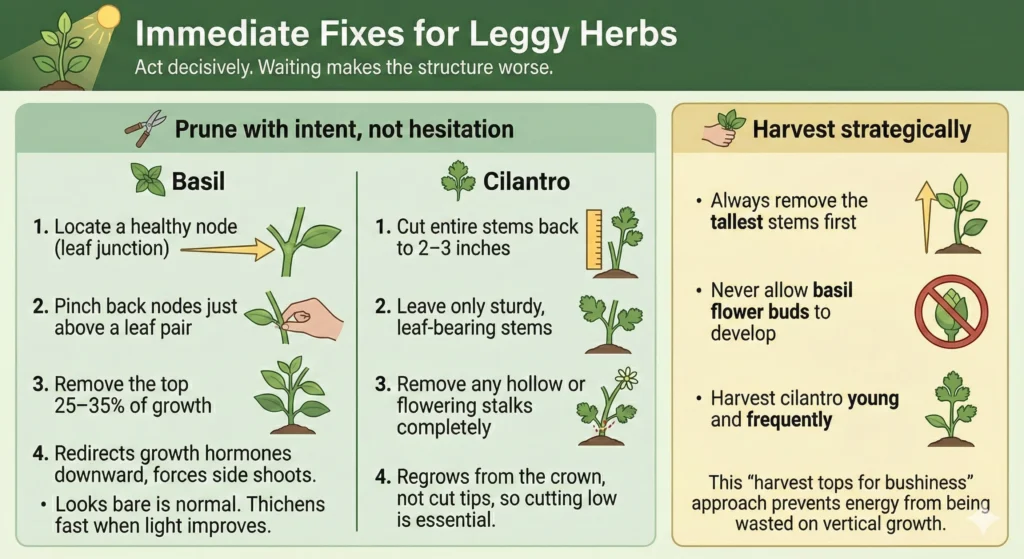
Prune with intent, not hesitation
Basil
To rebuild bushy basil from leggy stems:
- Locate a healthy node (leaf junction)
- Pinch back basil nodes just above a leaf pair
- Remove the top 25–35% of growth
This redirects growth hormones downward and forces side shoots to activate.
If the plant looks bare afterward, that’s normal. Basil thickens fast when light improves.
Cilantro
When you prune leggy coriander kitchen plants:
- Cut entire stems back to 2–3 inches
- Leave only sturdy, leaf-bearing stems
- Remove any hollow or flowering stalks completely
Cilantro regrows from the crown, not cut tips, so cutting low is essential.
Harvest strategically
Regular harvesting isn’t optional—it’s structural training.
- Always remove the tallest stems first
- Never allow basil flower buds to develop
- Harvest cilantro young and frequently
This “harvest tops for bushiness” approach prevents energy from being wasted on vertical growth.
Optimizing Light
Light quality determines whether pruning succeeds or fails.
Window choice matters
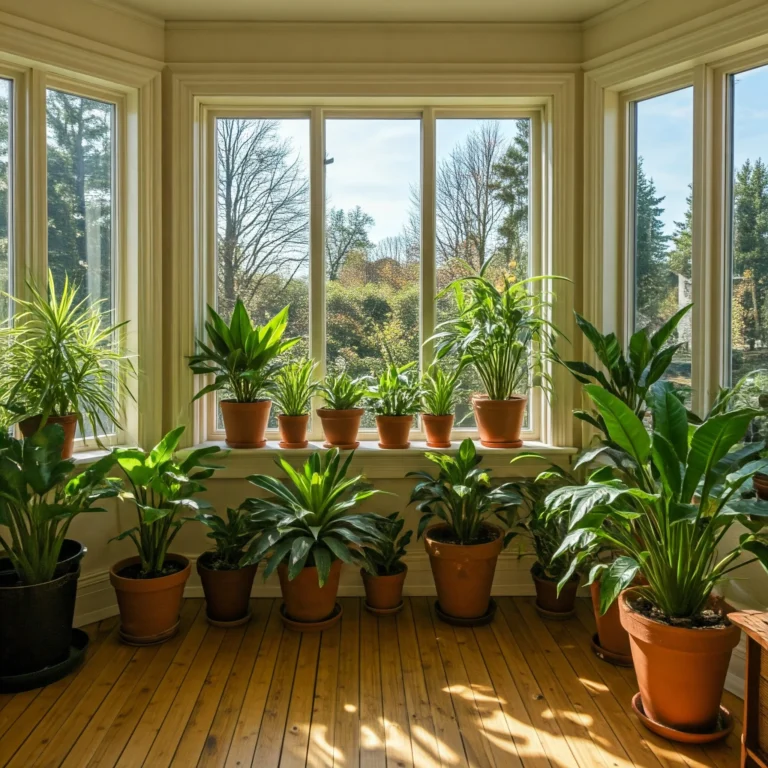
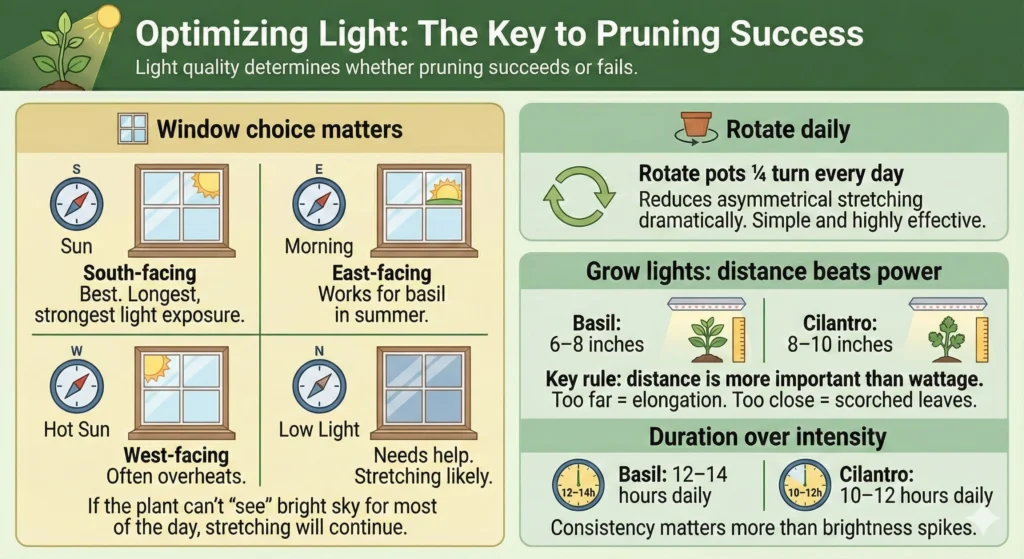
South-facing windowsill herbs perform best because they receive the longest, strongest light exposure.
East-facing works for basil in summer. West-facing often overheats. North-facing needs help.
If the plant can’t “see” bright sky for most of the day, stretching will continue.
Rotate daily
Directional light causes leaning.
- Rotate pots ¼ turn every day
- This alone reduces asymmetrical stretching dramatically
It’s simple and highly effective.
Grow lights: distance beats power
A proper indoor herb leggy solution often includes supplemental light.
Key rule: grow light distance basil is more important than wattage.
- Basil: 6–8 inches from LEDs
- Cilantro: 8–10 inches
Too far = elongation
Too close = scorched leaves
Many leggy plants under lights are simply lit from too far away.
Duration over intensity
- Basil: 12–14 hours daily
- Cilantro: 10–12 hours daily
Consistency matters more than brightness spikes.
Watering and Soil Care
Weak stems often start below the soil line.
Water correctly
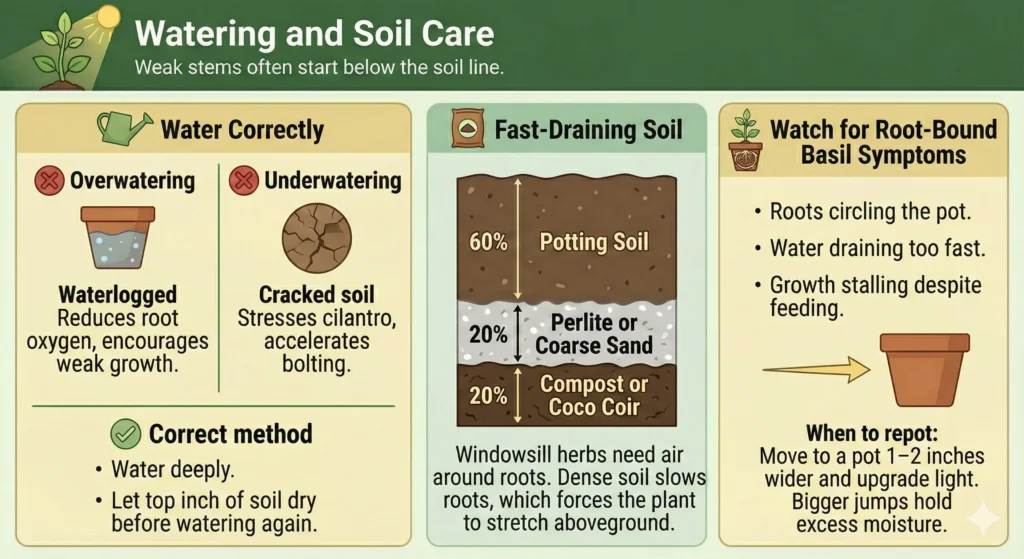
Both over- and under-watering worsen legginess.
- Overwatering reduces root oxygen and encourages weak growth
- Underwatering stresses cilantro and accelerates bolting
Correct method:
- Water deeply
- Let the top inch of soil dry before watering again
Use fast-draining soil
Windowsill herbs need air around roots.
Reliable mix:
- 60% potting soil
- 20% perlite or coarse sand
- 20% compost or coco coir
Dense soil slows roots, which forces the plant to stretch aboveground.
Watch for root-bound basil symptoms
If pruning and light don’t help, check the roots.
Signs include:
- Roots circling the pot
- Water draining too fast
- Growth stalling despite feeding
This is when to repot leggy basil sunlight issues together—move to a pot 1–2 inches wider and upgrade light. Bigger jumps hold excess moisture.
Ongoing Maintenance
Compact herbs are shaped continuously, not occasionally.
Pruning rhythm
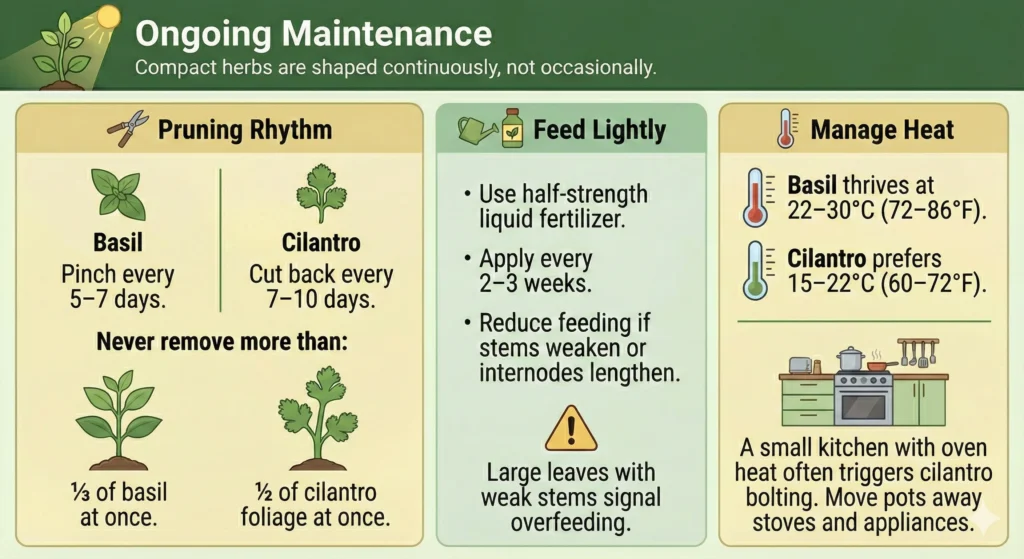
- Basil: pinch every 5–7 days
- Cilantro: cut back every 7–10 days
Never remove more than:
- ⅓ of basil at once
- ½ of cilantro foliage at once
Feed lightly
Excess fertilizer causes soft, elongated growth.
- Use half-strength liquid fertilizer
- Apply every 2–3 weeks
- Reduce feeding if stems weaken or internodes lengthen
Large leaves with weak stems signal overfeeding.
Manage heat
Temperature quietly drives stress.
- Basil thrives at 22–30°C (72–86°F)
- Cilantro prefers 15–22°C (60–72°F)
A small kitchen with oven heat often triggers cilantro bolting. Move pots away from stoves and appliances.
Prevention Tips
- Start herbs under strong light from the first true leaves
- Rotate pots daily on windowsills
- Prune early—don’t wait for severe stretch
- Keep grow lights close and consistent
- Repot before roots circle the container
- Harvest frequently to control structure
- Shield cilantro from heat stress
- Remove basil flower buds immediately