Transform Your Garden with Comfrey Liquid Fertilizer
Introduction
There’s a moment every gardener remembers — the first time they pulled a comfrey leaf the size of their forearm, dropped it in a bucket of water, and three weeks later fed their tomatoes something so potent the plants practically lunged upward overnight. That’s the magic of comfrey liquid fertilizer, and once you make it yourself, you’ll never look at a bag of synthetic feed the same way again.
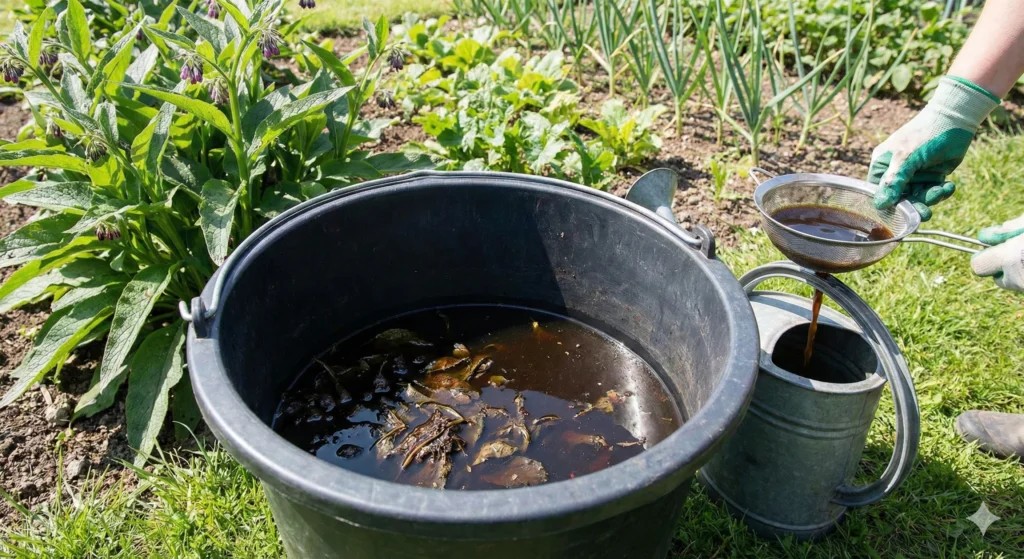
Comfrey (Symphytum officinale and its cultivated cousin Bocking 14) is one of the most generous plants you can grow. Its deep taproot — sometimes reaching 1.8 meters into the soil — mines nutrients from layers most plants can’t touch, then concentrates them in those big, bristly leaves. When you steep those leaves in water, you’re essentially reverse-engineering a slow-release soil amendment into a fast-acting, bioavailable liquid feed your plants can absorb almost immediately.
This guide will walk you through everything: the exact ratios that work, the brewing process from fresh leaves to finished concentrate, how to dilute it without burning your plants, and the safety considerations you need to know before you start. Whether you’re making DIY comfrey tea for tomatoes or feeding an entire market garden, this is the most practical approach you’ll find.
Benefits of Comfrey Liquid Fertilizer
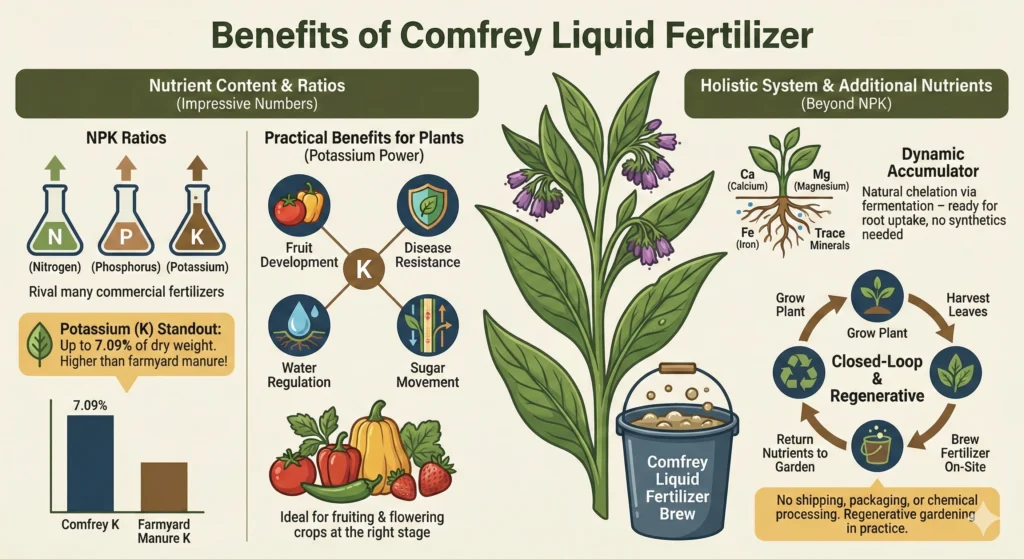
Let’s talk numbers first, because they’re genuinely impressive. Comfrey leaves contain nitrogen (N), phosphorus (P), and potassium (K) in ratios that rival many commercial fertilizers — but the potassium content is where comfrey truly stands apart. Potassium levels in comfrey leaves can reach up to 7.09% of dry weight, higher than farmyard manure, making it an exceptional potassium-rich plant tea for fruiting and flowering crops.
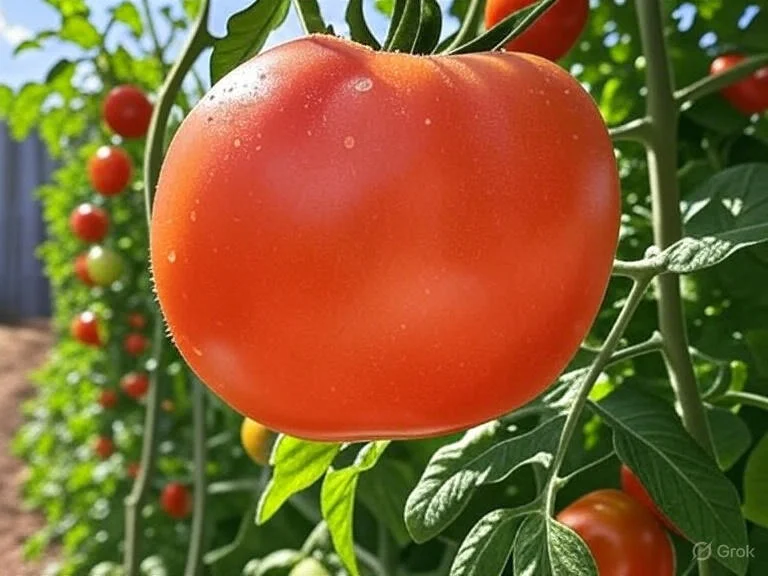
What does that mean in practice? Potassium governs fruit development, disease resistance, water regulation, and the movement of sugars through plant tissue. When you feed tomatoes, peppers, squash, or strawberries with comfrey manure tea at the right stage of growth, you’re delivering exactly what those crops are asking for.
As a dynamic accumulator fertilizer, comfrey doesn’t just provide NPK. It brings along calcium, magnesium, iron, and a suite of trace minerals in a form that’s already partially broken down and ready for root uptake. There are no synthetic chelating agents needed — the fermentation process does the work naturally.
Beyond nutrition, using comfrey liquid fertilizer is a closed-loop system. You grow the plant, harvest the leaves several times a season, brew the fertilizer on-site, and return the nutrients to your garden without shipping, packaging, or chemical processing. That’s regenerative gardening in its most practical form.
Materials Needed
You don’t need specialist equipment — that’s one of the great strengths of this method. Here’s what you’ll gather before your first batch:
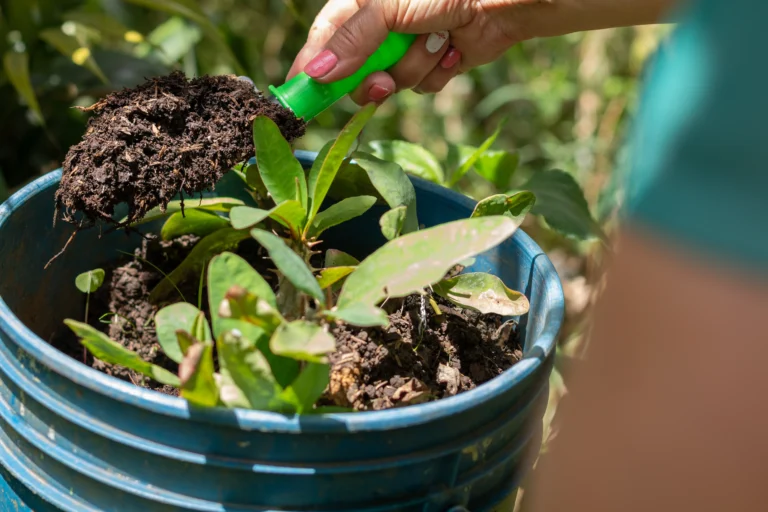
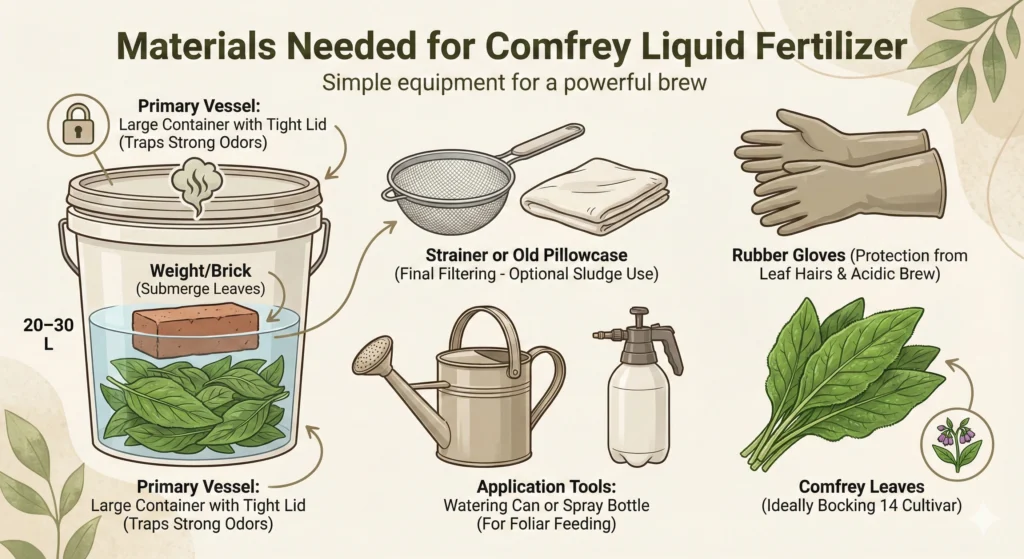
A large container with a lid is your primary vessel. A 20–30 liter food-grade plastic bucket with a tight-fitting lid works well. The lid is non-negotiable — the anaerobic comfrey brew process produces a smell that has been compared, generously, to a canal in August. You want to trap it. If you have a dedicated barrel or IBC tank, even better.
You’ll need a weight or brick to submerge the leaves below the waterline. Leaves exposed to air at the surface will rot aerobically and unevenly, which disrupts the fermentation process.
A strainer or old pillowcase handles the final filtering. Some gardeners skip straining and use the sludge as a soil conditioner — both approaches are valid.
A watering can or spray bottle is your application tool. For foliar feeding, a pressure sprayer with a fine nozzle delivers the diluted comfrey tea fertilizer evenly across leaf surfaces.
Rubber gloves are worth wearing during harvest and handling. Fresh comfrey leaves carry fine hairs that irritate skin on prolonged contact, and the concentrated brew is acidic enough to warrant basic protection.
Finally, you need comfrey leaves themselves — ideally from a Bocking 14 comfrey plant, which we’ll discuss in the safety section.
Step-by-Step Preparation
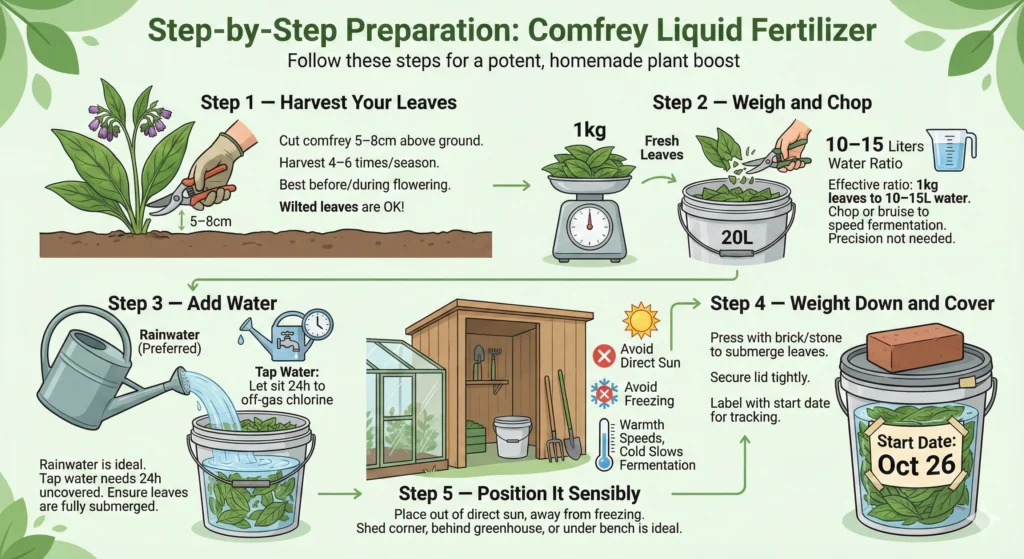
Step 1 — Harvest your leaves. Cut comfrey at 5–8cm above the ground using shears or a sickle. Established plants can be cut 4–6 times per season without stress. Harvest before or during flowering for maximum leaf mass. Wilted or yellowing leaves are fine to use — you’re not eating them.
Step 2 — Weigh and chop. The most effective ratio for how to make comfrey liquid fertilizer is 1kg of fresh leaves to 10–15 liters of water. Chopping or bruising the leaves speeds cell breakdown and accelerates the early fermentation process. You can do this roughly with shears directly over the bucket — no need for precision.
Step 3 — Add water. Rainwater is preferred because it’s free of chlorine and fluoride, which can slow microbial activity. If you’re using tap water, let it sit uncovered for 24 hours to off-gas chlorine before adding your leaves. Ensure leaves are fully submerged.
Step 4 — Weight down and cover. Press a brick or stone on top of the leaves, then secure the lid. Label your bucket with the start date — brewing comfrey tea ratios and timing only make sense if you’re tracking from the beginning.
Step 5 — Position it sensibly. Somewhere out of direct sun but not freezing. A corner of the shed, behind the greenhouse, or under a bench is ideal. Warmth speeds fermentation; cold slows it.
Brewing Process
The comfrey fermentation process unfolds in predictable stages, and understanding them helps you know when your fertilizer is ready rather than guessing.
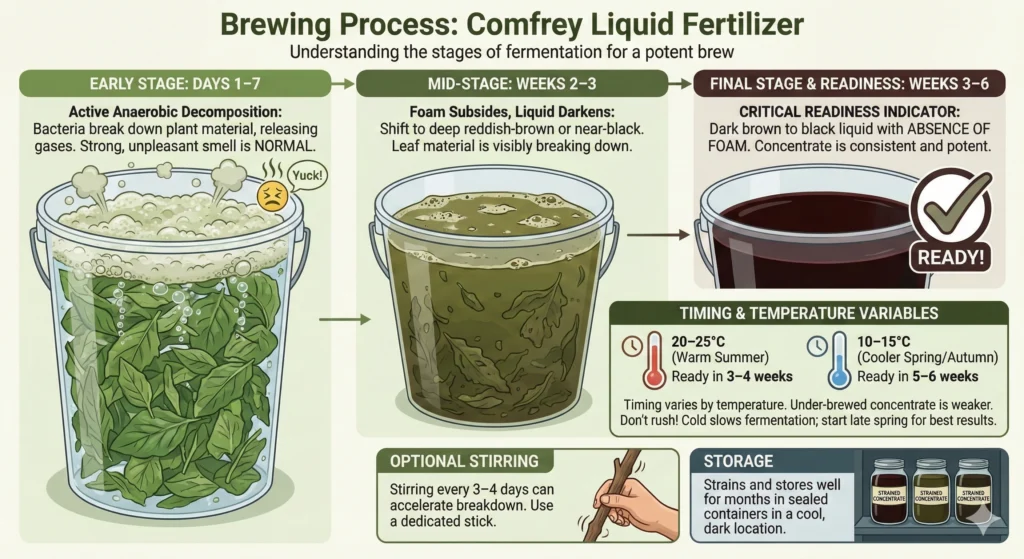
In the first few days, you’ll notice bubbling and foam forming on the surface. This is active anaerobic decomposition — bacteria are breaking down the plant material and releasing gases. The mixture will smell unpleasant almost immediately. This is normal and expected.
Through weeks two and three, the foam subsides and the liquid darkens progressively. You’ll see it shift from green-brown to a deep reddish-brown or near-black color. The leaf material is visibly breaking down and losing structure.
The critical readiness indicator is the absence of foam combined with a dark brown to black liquid. Brewing comfrey tea ratios are consistent across methods, but timing varies based on temperature. In warm summer conditions (20–25°C), your concentrate can be ready in as little as 3–4 weeks. In cooler spring or autumn temperatures (10–15°C), allow 5–6 weeks. At lower temperatures, fermentation can stall almost entirely, so it’s worth starting your first batch in late spring.
The comfrey liquid manure brewing time range of 1–6 weeks accounts for these variables. Don’t rush it — under-brewed concentrate is weaker and less consistent. When it’s dark, still, and foamless, you’re ready to strain and use.
Some gardeners stir the brew every 3–4 days during fermentation. This is optional but can slightly accelerate breakdown. Use a stick you won’t mind dedicating permanently to this purpose.
Once strained, your concentrate stores well in sealed containers for several months in a cool, dark location.
Dilution Ratios and Application
Here is where most beginners go wrong — and it’s the most fixable mistake in the process. Concentrated comfrey tea fertilizer is powerful enough to burn roots and foliage if applied undiluted. Always dilute before use.
Comfrey Fertilizer Dilution Ratio Table
| Concentration | Dilution Ratio | Best Use | Application Frequency |
|---|---|---|---|
| Light feed | 1:20 (1 part concentrate : 20 parts water) | Seedlings, transplants, leafy greens, foliar spray | Every 7–10 days |
| Standard feed | 1:15 | Established vegetables, herbs, shrubs | Every 10–14 days |
| Heavy feed | 1:10 | Fruiting crops (tomatoes, squash, peppers), heavy feeders | Every 14 days at peak fruiting |
| Soil drench | 1:10 | Established trees and perennials, pre-planting soil prep | Monthly or as needed |
For DIY comfrey tea for tomatoes — the most popular application — start at 1:15 when plants are establishing, then move to 1:10 once flowering begins and continues through fruiting. You’ll notice a visible response in 5–7 days under good growing conditions.
For foliar application, strain your concentrate carefully and use a 1:20 dilution to avoid leaf scorch. Apply in the early morning or evening — never in full midday sun. The liquid dries quickly in heat and leaves behind concentrated residue that burns.
For container plants, which are particularly prone to nutrient depletion, a 1:15 drench every 10 days through the growing season will sustain strong growth without buildup.
One practical note: the color of your diluted feed is a rough guide. At 1:10, the liquid should look like weak black tea. At 1:20, it should be more of a pale amber. If it looks darker than this after dilution, dilute further.
Troubleshooting Common Issues
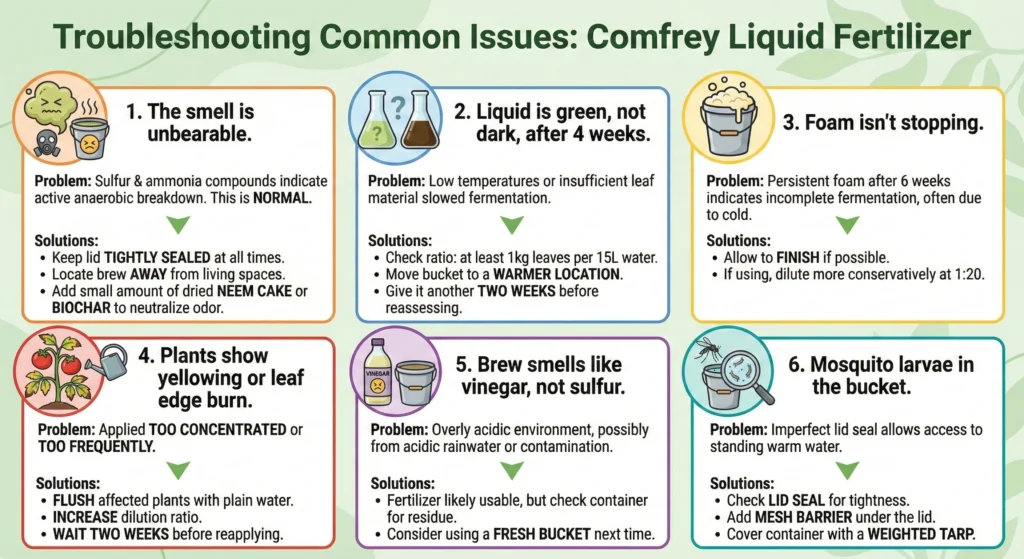
The smell is unbearable. This is almost universal and doesn’t indicate a problem — it indicates the fermentation is working. The sulfur compounds and ammonia produced during anaerobic breakdown are part of the process. Solutions: keep the lid tightly sealed at all times, locate your brew away from living spaces, consider adding a small amount of dried neem cake or biochar to the brew, which can partially neutralize odor compounds without affecting quality.
The liquid is green rather than dark brown after four weeks. This usually means either low temperatures have slowed fermentation or insufficient leaf material was used. Check your ratio — are you at least at 1kg leaves per 15L water? Move the bucket to a warmer location. Give it another two weeks before reassessing.
Foam isn’t stopping. Persistent foam after six weeks indicates incomplete fermentation, often due to cold temperatures. You can still use it by diluting more conservatively at 1:20, but allow it to finish if possible.
Plants are showing yellowing or leaf edge burn after application. You’ve applied it too concentrated or too frequently. Flush the affected plants with plain water, increase your dilution ratio, and wait two weeks before reapplying. This is recoverable in most cases.
The brew smells like vinegar rather than sulfur. This indicates an overly acidic environment, possibly from using very acidic rainwater or a contaminated container. The fertilizer is likely still usable, but check your container for prior residue and consider using a fresh bucket next time.
Mosquito larvae in the bucket. If your lid seal is imperfect, standing warm water is attractive to mosquitoes. Check the lid seal, add a mesh barrier under the lid, or cover the container with a weighted tarp.
Safety and Precautions
This is the section most online guides gloss over, and it deserves your full attention — not because comfrey liquid fertilizer is dangerous when used correctly, but because informed use is always better than uninformed use.
Pyrrolizidine alkaloids (PAs) are the primary safety consideration with comfrey. These naturally occurring compounds are present in comfrey leaves and roots and are known to be hepatotoxic (liver-damaging) in humans and animals when ingested in significant quantities. The relevant caution here is handling, not application: don’t drink the brew, don’t apply it to edible parts of plants close to harvest without rinsing, and keep it away from children and pets.
Regarding food safety concerns about PA uptake in edible crops: current research has not demonstrated proven uptake of pyrrolizidine alkaloids from comfrey liquid fertilizer into edible plant tissue when applied as a soil or root drench under normal gardening conditions. The general scientific consensus is that soil-applied comfrey fertilizer does not meaningfully contaminate edible portions of crops. That said, common sense precautions apply: avoid foliar spraying edible leaves within two weeks of harvest, and always wash harvested produce thoroughly.
Bocking 14 comfrey fertilizer safety is a relevant distinction worth understanding. Bocking 14 is a sterile hybrid cultivar developed at the Henry Doubleday Research Association in Bocking, Essex, UK. It was specifically bred to reduce PA content compared to wild comfrey while producing higher biomass yields. It also doesn’t set viable seed, preventing it from spreading aggressively. If you’re growing comfrey specifically for fertilizer production, Bocking 14 is the variety recommended by most permaculture practitioners and organic farming guides — it’s safer to handle in volume and more productive per plant.
Personal protective equipment during handling: Wear rubber gloves when harvesting large quantities of fresh leaves — the hairs cause dermatitis in sensitive individuals. Consider an apron or old clothing when handling the concentrated brew. Avoid eye contact and wash hands thoroughly after handling either fresh leaves or the liquid.
Storage safety: Keep brewed concentrate in clearly labeled, sealed containers well out of reach of children. The dark liquid looks similar enough to beverages that accidental ingestion is a genuine risk if containers are not properly marked and stored.
Environmental considerations: The concentrated brew can be toxic to aquatic organisms if it enters waterways in volume. Don’t rinse containers directly into storm drains or waterways.
Conclusion and Tips
Comfrey liquid fertilizer is one of the highest-leverage things a gardener can make. One established Bocking 14 plant can yield 4–5 cuts of 1–2kg of leaves per season. At a 1:15 brewing ratio, a single harvest of 2kg gives you 30 liters of concentrate — enough, when diluted at 1:15, to produce 450 liters of ready-to-use feed. That’s an extraordinary amount of fertility from a plant that largely looks after itself once established.
A few final tips that come from long practice:
Start your first batch in late spring when temperatures are reliably warm. This gives you a good first experience with fermentation timing and helps you learn what “ready” looks and smells like before you’re relying on it mid-season.
Grow multiple comfrey plants if space allows. Three Bocking 14 plants in a corner of your garden can realistically supply all the liquid fertilizer a moderate vegetable plot needs through summer.
Save the spent leaf sludge from the bottom of your bucket. It’s an excellent mulch material or worm bin addition — the nutrients aren’t depleted, they’re just redistributed into a slower-release form.
Keep a simple brewing log with start date, leaf weight, water volume, and notes on weather or temperature. After two seasons, you’ll have reliable personal data on exactly how long your batches take under your specific conditions.
Finally — trust the process. The first time you open a finished brew bucket, the smell will make you wonder if you’ve done something terribly wrong. You haven’t. Strain it, dilute it, feed your plants, and then watch what happens. Comfrey has been doing this work for centuries. You’re just the latest gardener to give it a bucket and some water.