Smart Winter Gardening: Cold Frames for Zone 5
December in Zone 5 can feel like a hard stop. Temperatures drop into the single digits, the soil freezes solid, and most gardeners pack it in until March. But a simple wooden box with an old window on top can change all of that. With a cold frame and the right selection of hardy greens, you can harvest fresh food from your garden in January — not as a novelty, but as a reliable part of how you eat.
This is not about keeping tropical plants alive through a Midwest winter. It’s about working with the season using cold-tolerant crops that are actually better after a frost, and a low-tech structure that costs almost nothing to build. Zone 5 winter gardening is more accessible than most people think.
What Is a Cold Frame?
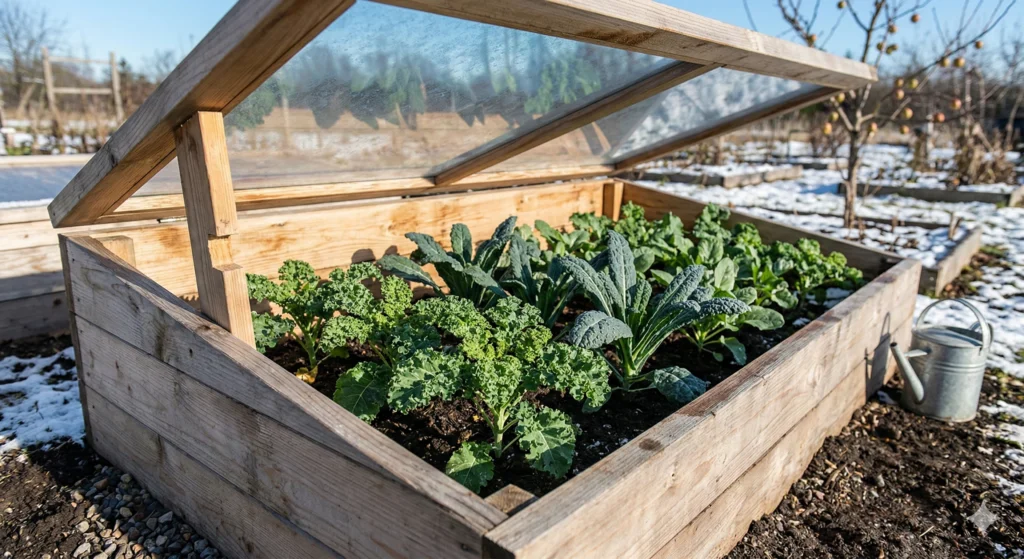
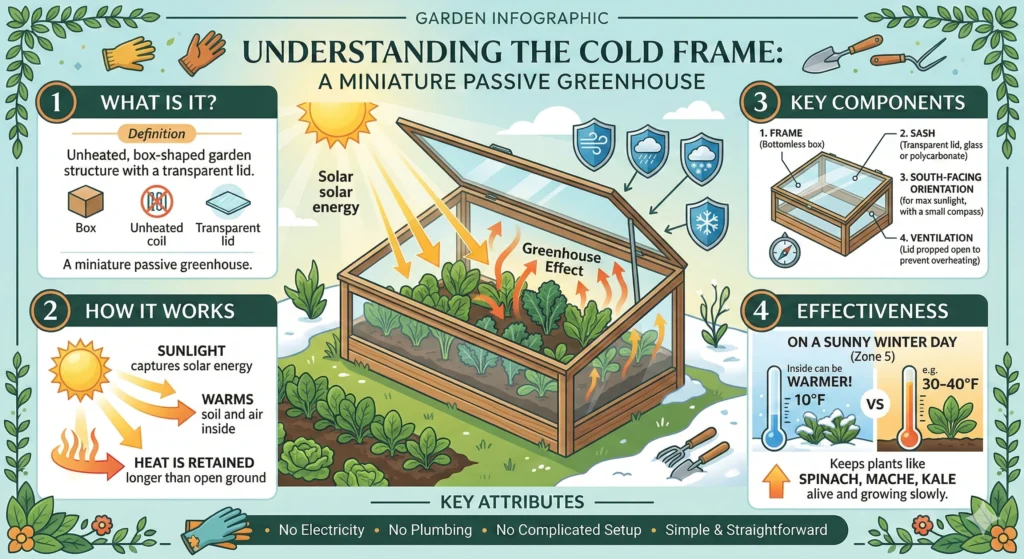
A cold frame is an unheated, box-shaped garden structure with a transparent lid — typically made from glass or polycarbonate — that sits directly on the ground over your plants. Think of it as a miniature passive greenhouse. It has no heating system. Instead, it works by capturing solar energy during the day, trapping warmth around the plants, and shielding them from wind, precipitation, and the worst of the cold.
The mechanics are straightforward. Sunlight passes through the lid, warms the soil and air inside, and that heat is retained longer than it would be in open ground. On a sunny February day in Zone 5, the air inside a well-positioned cold frame can be 20–30°F warmer than the outside temperature. That difference is enough to keep spinach, mache, and kale alive and growing slowly — even when it’s 10°F outside.
A standard cold frame has four components: a bottomless box (the frame), a transparent lid (the sash), a south-facing orientation to maximize sunlight, and some form of ventilation to prevent overheating on warm days. That’s it. There’s no electricity, no plumbing, and no complicated setup.
How to Build a Cold Frame (DIY)
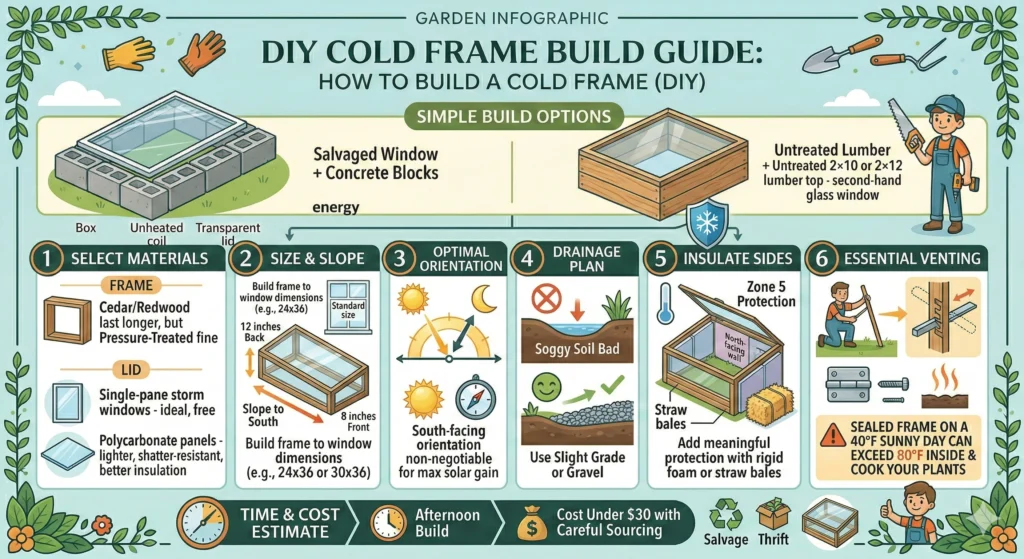
You don’t need carpentry skills or a big budget. The simplest cold frames are built from salvaged materials — an old storm window laid over a rectangle of stacked concrete blocks, or a wooden box made from untreated 2×10 or 2×12 lumber topped with a second-hand glass window.
Basic Construction Steps
1. Choose your materials. Lumber is the most common framing material — rot-resistant options like cedar or redwood last longer, but pressure-treated lumber is fine for most purposes. For the lid, old single-pane storm windows are ideal and often free. Polycarbonate panels (twin-wall or corrugated) are lighter, shatter-resistant, and provide better insulation than single-pane glass.
2. Size it for your windows. Build the frame to match whatever lids you have. Standard storm windows often run 24×36 inches or 30×36 inches, so build your box to those dimensions. Make the back wall taller than the front wall (about 12 inches in back, 8 inches in front) to create a slope that faces south and sheds snow.
3. Orient it south. This is non-negotiable. A south-facing slope maximizes solar gain during short winter days when the sun is low. Even a slight deviation toward southeast or southwest works, but due south is best.
4. Think about drainage. Don’t place a cold frame in a low spot that collects water. Soggy soil in winter encourages rot and mold. A slight grade or a bed of coarse gravel underneath helps.
5. Insulate the sides. In Zone 5, wrapping the outside of the frame with rigid foam insulation or straw bales adds meaningful protection during extreme cold snaps. This is especially important on the north-facing wall.
6. Plan your venting. Prop sticks, notched boards, or adjustable hardware let you crack the lid on warm days. This is essential — a sealed cold frame on a 40°F sunny day can climb above 80°F inside and cook your plants.
The whole build can be done in an afternoon and cost under $30 if you source materials carefully.
Best Vegetables for Cold Frames
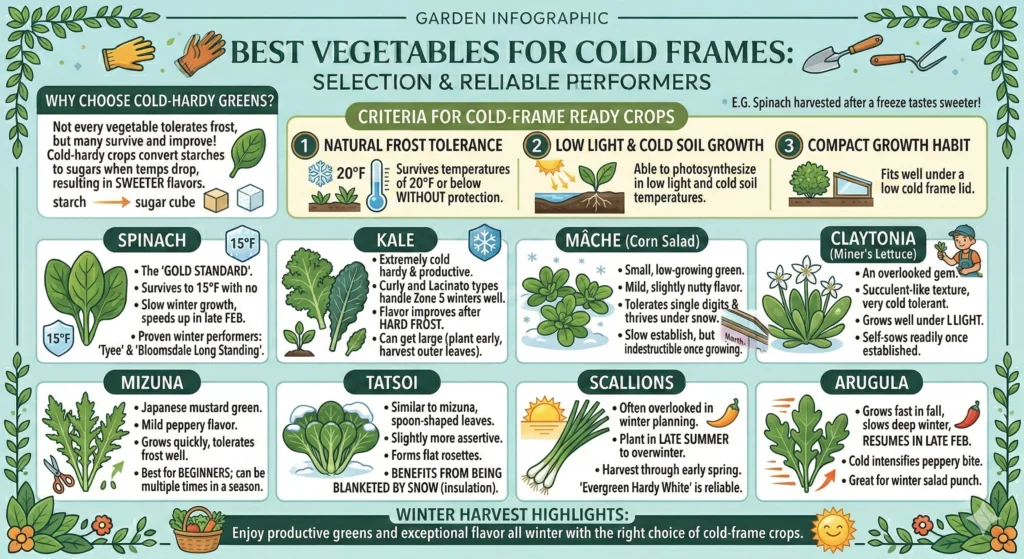
Not every vegetable tolerates frost, but a surprising number not only survive it — they improve because of it. Cold-hardy vegetables have adapted to convert stored starches into sugars when temperatures drop, which is why spinach harvested after a freeze tastes sweeter than anything you’ll find in a summer garden.
What makes a vegetable cold-frame ready? Look for crops with:
- Natural frost tolerance (surviving 20°F or below without protection)
- Ability to photosynthesize in low light and cold soil temperatures
- Compact growth habits that fit under a low lid
Here are the reliable performers:
Spinach — The gold standard for cold frame gardening. Spinach survives temperatures down to 15°F with no protection at all, and inside a cold frame it will grow slowly all winter and pick up speed in late February when days lengthen. Varieties like ‘Tyee’ and ‘Bloomsdale Long Standing’ are proven winter performers.
Kale — Extremely cold hardy and productive. Curly types and Lacinato (dinosaur) kale both handle Zone 5 winters well. Flavor improves dramatically after a hard frost. Kale can get large, so plant it on the early side and harvest outer leaves regularly.
Mâche (Corn Salad) — A small, low-growing green with a mild, slightly nutty flavor. Mâche is one of the hardiest vegetables you can grow — it tolerates temperatures in the single digits and thrives under snow. Slow to establish, but once it is, it’s nearly indestructible.
Claytonia (Miner’s Lettuce) — Another overlooked gem. Claytonia is succulent-like in texture, very cold tolerant, and grows well under low light. It self-sows readily once established, which means less work for you in subsequent winters.
Mizuna — A Japanese mustard green with a mild peppery flavor. It grows quickly, tolerates frost well, and can be cut multiple times in a single season. One of the best choices for a beginner cold frame.
Tatsoi — Similar to mizuna but with a spoon-shaped leaf and a slightly more assertive flavor. It forms flat rosettes that actually benefit from being blanketed by snow, which acts as insulation.
Scallions — Often overlooked in winter planning. Scallions planted in late summer will overwinter in a cold frame and provide harvests through early spring. Varieties like ‘Evergreen Hardy White’ are particularly reliable.
Arugula — Grows fast in fall, slows to almost nothing in deep winter, then resumes in late February. The cold intensifies its peppery bite. Great for adding punch to winter salads.
Zone 5 Hardy Greens That Really Work
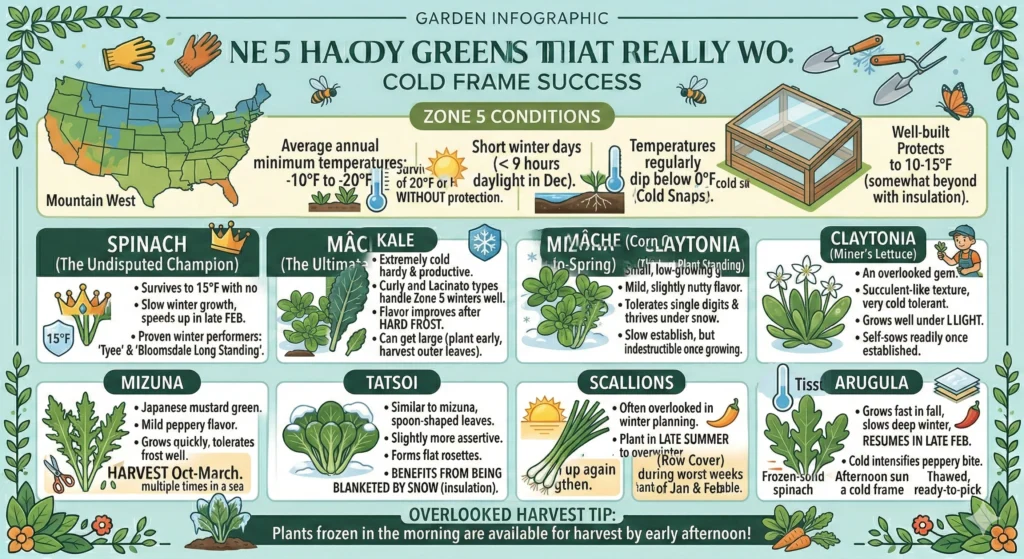
Zone 5 covers a broad swath of the U.S. — including much of the upper Midwest, New England, and the Mountain West — with average annual minimum temperatures between -10°F and -20°F. Winter days are short (sometimes fewer than 9 hours of daylight in December), and temperatures regularly dip below 0°F during cold snaps. A well-built cold frame can protect plants down to about 10–15°F outside, and with added insulation, somewhat beyond that.
Given those conditions, here’s what has consistently performed well in Zone 5 cold frame gardening:
Spinach is the undisputed champion. It goes completely dormant when temperatures drop into the teens but revives quickly when conditions improve. In most Zone 5 winters, you can harvest spinach on any decent day between October and March.
Mâche is arguably even hardier. It grows slowly but steadily even in January, and its compact size makes it ideal for tight cold frame spaces. It’s also one of the few greens that genuinely thrives under snow — the snow pack acts as a thermal blanket.
Tatsoi and mizuna are both reliable performers through Zone 5 winters, particularly when planted in early September. They slow significantly in December and January but don’t die, and they accelerate again as soon as days begin to lengthen in February.
Claytonia is worth growing for reliability alone. It will be standing when everything else has given up.
Kale is more variable — it survives cold well but can suffer tissue damage during extended stretches below 0°F. Row cover over the plants inside the cold frame (a double-layer approach) adds meaningful protection during the worst weeks of January and February.
One thing Zone 5 gardeners sometimes overlook: even when plants aren’t actively growing, they’re alive and available for harvest. A spinach plant that’s frozen solid in the morning is often ready to pick by early afternoon once the cold frame warms up.
When to Plant – Winter Sowing Calendar for Zone 5
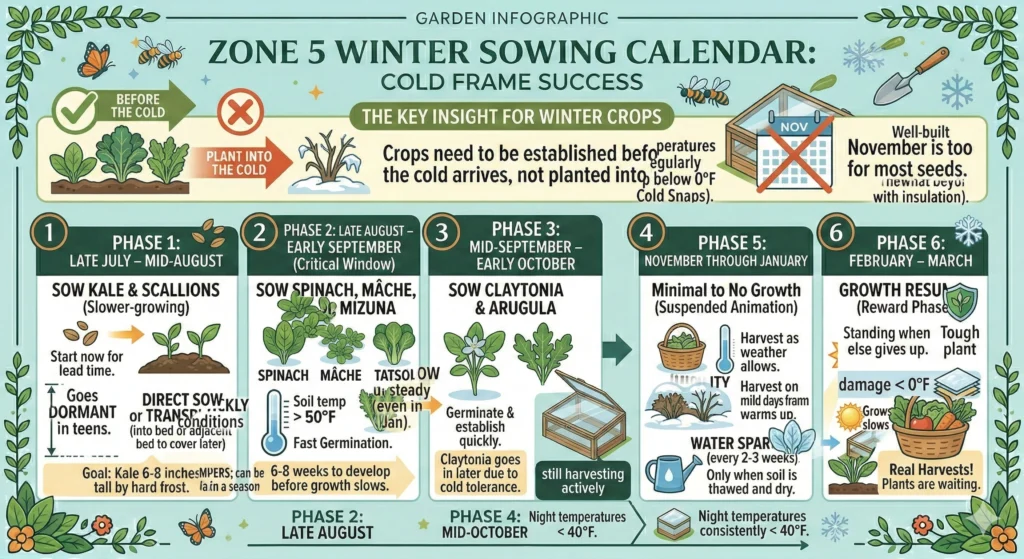
Timing is the piece most gardeners get wrong when they first try cold frame gardening. The key insight: your winter crops need to be established before the cold arrives, not planted into it. By the time you’re thinking about a cold frame in November, it’s already too late for most seeds.
Phase-Based Planting Guide
Late July – Mid-August: Start kale and scallions. These slower-growing crops need the most lead time. Direct sow or transplant into the cold frame bed, or into an adjacent garden bed that you’ll cover later. Kale plants should be 6–8 inches tall before hard frost arrives.
Late August – Early September: Sow spinach, mâche, tatsoi, and mizuna. This is the most critical window for Zone 5. Sow seeds directly into the cold frame bed or into the bed you plan to cover. Soil temperatures are still warm enough for fast germination (above 50°F), and plants will have 6–8 weeks to develop before growth slows dramatically.
Mid-September – Early October: Sow claytonia and arugula. These germinate and establish quickly. Claytonia in particular can go in later than other crops because it’s so cold-tolerant.
Mid-October: Close the cold frame. Once nighttime temperatures are consistently dropping below 40°F, get the lid on. Depending on your fall, you may still be harvesting actively at this point — that’s the goal.
November through January: Minimal to no growth, harvest as weather allows. Plants are essentially in suspended animation. Harvest on mild days when the frame warms up. Water sparingly — about once every 2–3 weeks, and only when the soil is thawed and dry.
February – March: Growth resumes. As daylight increases past 10 hours, you’ll notice your cold frame come alive. This is the most rewarding phase — real harvests from plants that have been quietly waiting all winter.
Tips for Maintaining Cold Frames All Winter
A cold frame is low-maintenance, but it isn’t no-maintenance. A few consistent habits make the difference between a thriving cold frame and a neglected box full of mold.
Ventilation
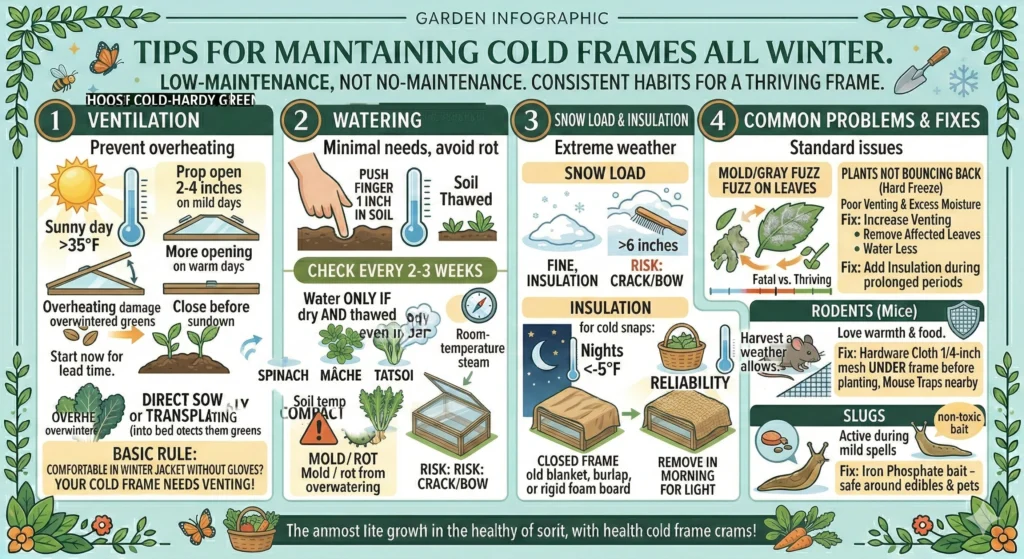
On any sunny day above 35°F, crack the lid. Even in January, a sealed cold frame can overheat within an hour of sunrise on a clear day. Overheating is more damaging to overwintered greens than cold. Prop the lid open 2–4 inches on mild days, more on warm days. Close it before sundown to retain heat overnight.
A basic rule: if you’re comfortable in a winter jacket without gloves, your cold frame probably needs venting.
Watering
Plants in cold frames need very little water in winter. Their metabolic rate is slow, evaporation is minimal, and overwatering leads to mold and rot. Check the soil every 2–3 weeks by pushing your finger an inch into the soil. Water only if it’s dry and the soil is thawed. Use room-temperature water in the morning so it warms the root zone rather than shocking it.
Snow Load and Insulation
A few inches of snow on top of a glass or polycarbonate lid is fine — it even adds insulation. But heavy, wet snow (6 inches or more) can crack glass and bow polycarbonate. Brush it off after significant snowfalls.
During extended cold snaps (nights below -5°F), add an extra layer of insulation over the closed lid — an old blanket, burlap, or a piece of rigid foam board. Remove it in the morning so the plants still get light.
Common Problems and Fixes
Mold or gray fuzz on leaves: Usually caused by insufficient ventilation and excess moisture. Increase venting, remove affected leaves, and water less.
Plants not bouncing back after a hard freeze: Check if they’ve been frozen for more than 48 hours straight. A single overnight freeze is fine; prolonged freezing without thaw can be fatal. Add insulation during extended cold periods.
Rodents: Mice love cold frames in winter — they’re warm, sheltered, and full of food. Hardware cloth (1/4-inch mesh) laid under the frame before planting keeps them out. A few mouse traps near the base of the frame also help.
Slugs: They go dormant in hard cold but can be active during mild spells. Iron phosphate bait (safe around edibles and pets) handles them without toxic residue.
Quick FAQ
What is a cold frame in gardening? A cold frame is an unheated, bottomless box with a transparent lid placed directly over garden beds or soil. It captures solar heat to extend the growing season into winter and protect cold-hardy plants from wind, frost, and snow.
What vegetables are cold hardy? Cold-hardy vegetables can survive frost and even light freezes without protection. Reliable examples include spinach, kale, mâche, claytonia, mizuna, tatsoi, arugula, scallions, and carrots (which become sweeter in cold soil).
What vegetables can be grown in a cold frame? Most cold-hardy greens thrive in a cold frame through Zone 5 winters: spinach, kale, mâche, claytonia, tatsoi, mizuna, arugula, and scallions. Root vegetables like radishes and turnips also work well if started in late summer.
What are the best cold frame vegetables for Zone 5? Spinach, mâche, and claytonia are the most reliable for deep winter in Zone 5. Mizuna and tatsoi are close behind. These crops tolerate the combination of short days, extreme cold, and frozen soil better than almost anything else you can grow.
What vegetables benefit from a cold frame? Any crop that can’t survive a hard freeze unaided benefits from cold frame protection. This includes lettuce, arugula, cilantro, and many Asian greens that would die at 28°F in open ground but thrive at those temperatures inside a frame.
What should I winter sow in Zone 5? Focus on mâche, spinach, tatsoi, mizuna, and claytonia for true winter harvests. Kale and scallions are excellent if started in mid-to-late summer. Avoid trying to winter sow warm-season crops — they simply won’t germinate in cold soil.
When should I winter sow in Zone 5? The main window is late August through early October. Most greens need to be 3–4 weeks old before your first hard frost (typically early to mid-October in Zone 5). Late September is the outer edge for fast-maturing crops like arugula and mizuna.
Start Small, Then Keep Going
You don’t need a sophisticated setup to make Zone 5 winter gardening work. A single cold frame — even a rough one built from salvaged lumber and an old window — filled with spinach and mâche seeds sown in late August can have you harvesting fresh greens in January. That first successful January harvest tends to be a turning point. Once you’ve done it, you’ll understand both the method and the crops well enough to expand from there.
The real value of cold frame gardening isn’t just the food. It’s staying connected to the garden year-round, building a different relationship with the season. Winter doesn’t have to be a pause — it can be a slower, quieter chapter of the same ongoing story.
Start with one frame, two or three crops, and see what happens. The plants will teach you the rest.