Ultimate Comfrey Guide: Grow, Harvest & Thrive
Introduction to Comfrey
If you’ve spent any time in permaculture circles or heritage kitchen gardens, you’ve almost certainly heard comfrey mentioned in reverent tones. Symphytum officinale and its close relatives are hardy, deep-rooted perennial herbs that have earned their place in gardens for centuries—not through trendiness, but through genuine, measurable usefulness. Comfrey grows vigorously, comes back reliably year after year, and produces enormous quantities of lush, mineral-rich biomass with almost embarrassing ease. Once you understand what it does, you’ll wonder how you gardened without it.
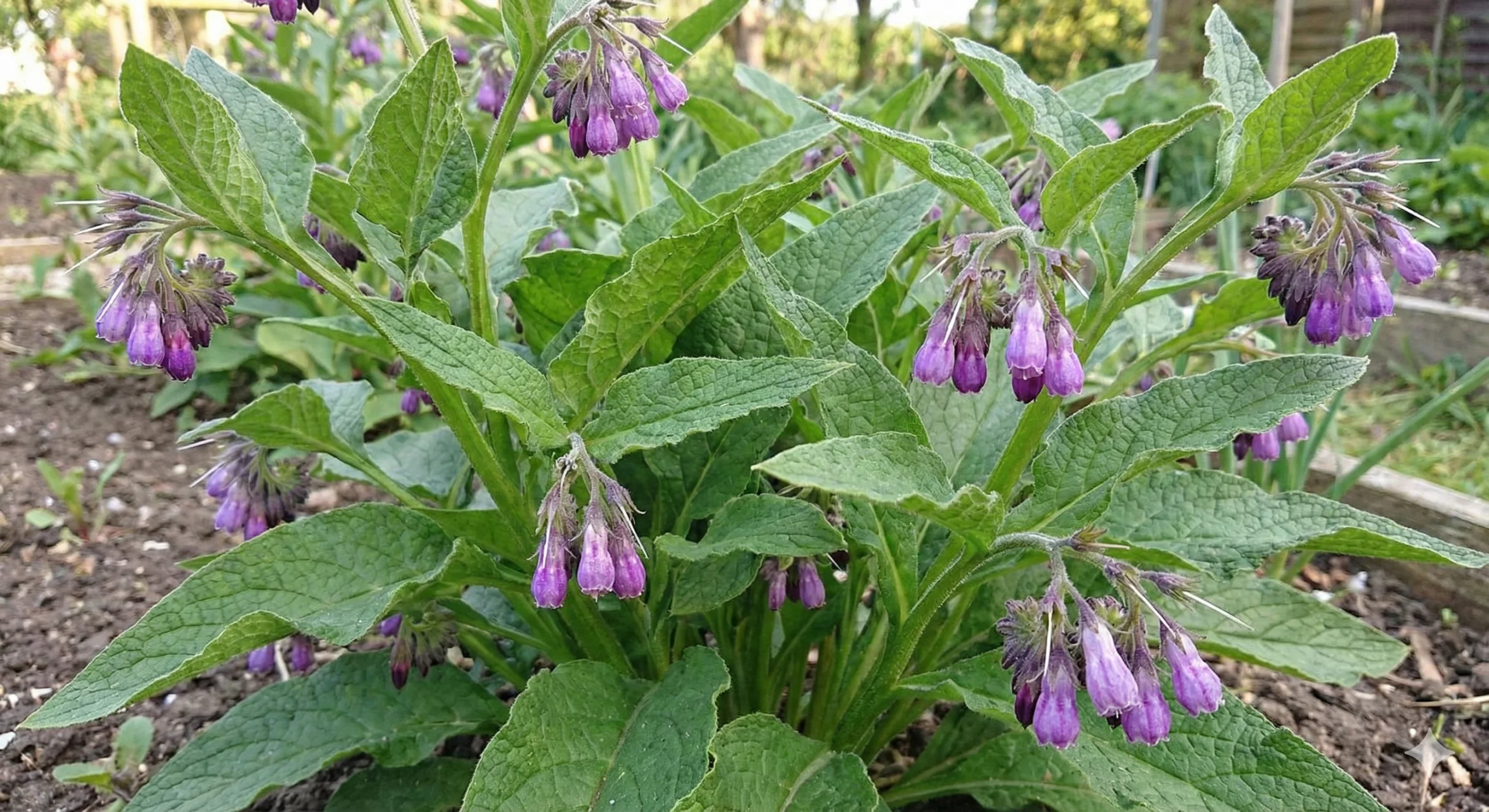
Historically, comfrey was a fixture of cottage gardens, orchards, and self-sufficient homesteads across Europe and beyond. It was called “knitbone” for its traditional external applications, and old-time gardeners used it prolifically as green manure long before the term “dynamic accumulator” entered the horticultural vocabulary. Whether tucked beneath fruit trees, grown in a dedicated fertility bed, or planted along hedge bases, comfrey was simply part of how productive gardens functioned. That wisdom hasn’t dated—if anything, renewed interest in organic and no-till gardening has brought it firmly back into focus.
This comfrey growing guide covers everything you need: choosing the right variety, understanding site and soil requirements, propagation by seed, crown, and root cutting, harvesting at the right moment, and putting those leaves to work as mulch, liquid fertilizer, and compost activator. Whether you have a compact urban plot or a sprawling homestead, there’s a place for comfrey.
Botanical Profile & Types
Growth Habit and Physical Characteristics
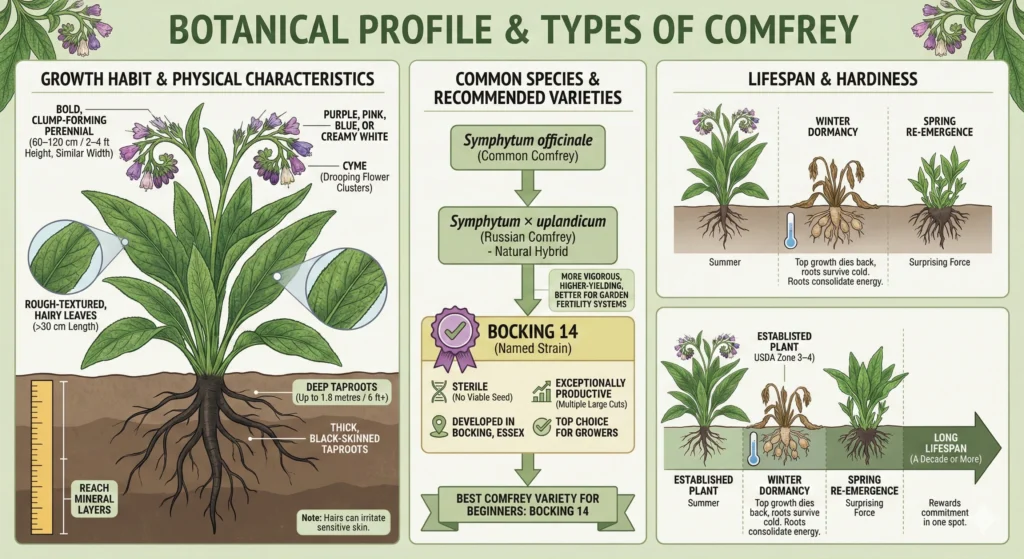
Comfrey is a bold, clump-forming perennial that makes an immediate impression. Mature plants typically reach 60–120 cm (2–4 feet) in height, spreading outward to a similar width, with large, rough-textured, lance-shaped leaves that can exceed 30 cm in length. The leaf surface is covered in coarse hairs—worth noting for those with sensitive skin. Flowers emerge in drooping, curved clusters called cymes and come in shades of purple, pink, blue, or creamy white depending on species and variety. The root system is the plant’s real secret weapon: thick, black-skinned taproots that can descend 1.8 metres (6 feet) or more into the subsoil, reaching mineral layers most plants never touch.
Common Species and Recommended Varieties
The two species most relevant to gardeners are Symphytum officinale (common comfrey) and Symphytum × uplandicum (Russian comfrey), a natural hybrid between S. officinale and S. asperum. Russian comfrey is generally more vigorous, higher-yielding, and better adapted to garden fertility systems. Within Russian comfrey, the named strain Bocking 14 stands out as the top choice for most growers. Developed through selection work in Bocking, Essex in the mid-20th century, Bocking 14 comfrey plants are sterile—they set no viable seed—which dramatically reduces the risk of unwanted spread. They’re also exceptionally productive, yielding multiple large cuts per season. For beginners asking which is the best comfrey variety to start with, Bocking 14 is consistently the answer.
Lifespan and Hardiness
Comfrey is genuinely perennial in most temperate climates, reliably hardy to USDA Zone 3–4 once established. The top growth dies back in winter, but the roots survive cold with ease and re-emerge with surprising force in spring. In milder climates, some basal leaves may persist through winter. This winter dormancy is a feature, not a flaw—the roots are quietly consolidating energy for the next season’s flush of growth. Plan on a comfrey plant living in one spot for a decade or more; it rewards commitment.
Site Selection and Soil Requirements
Light Requirements
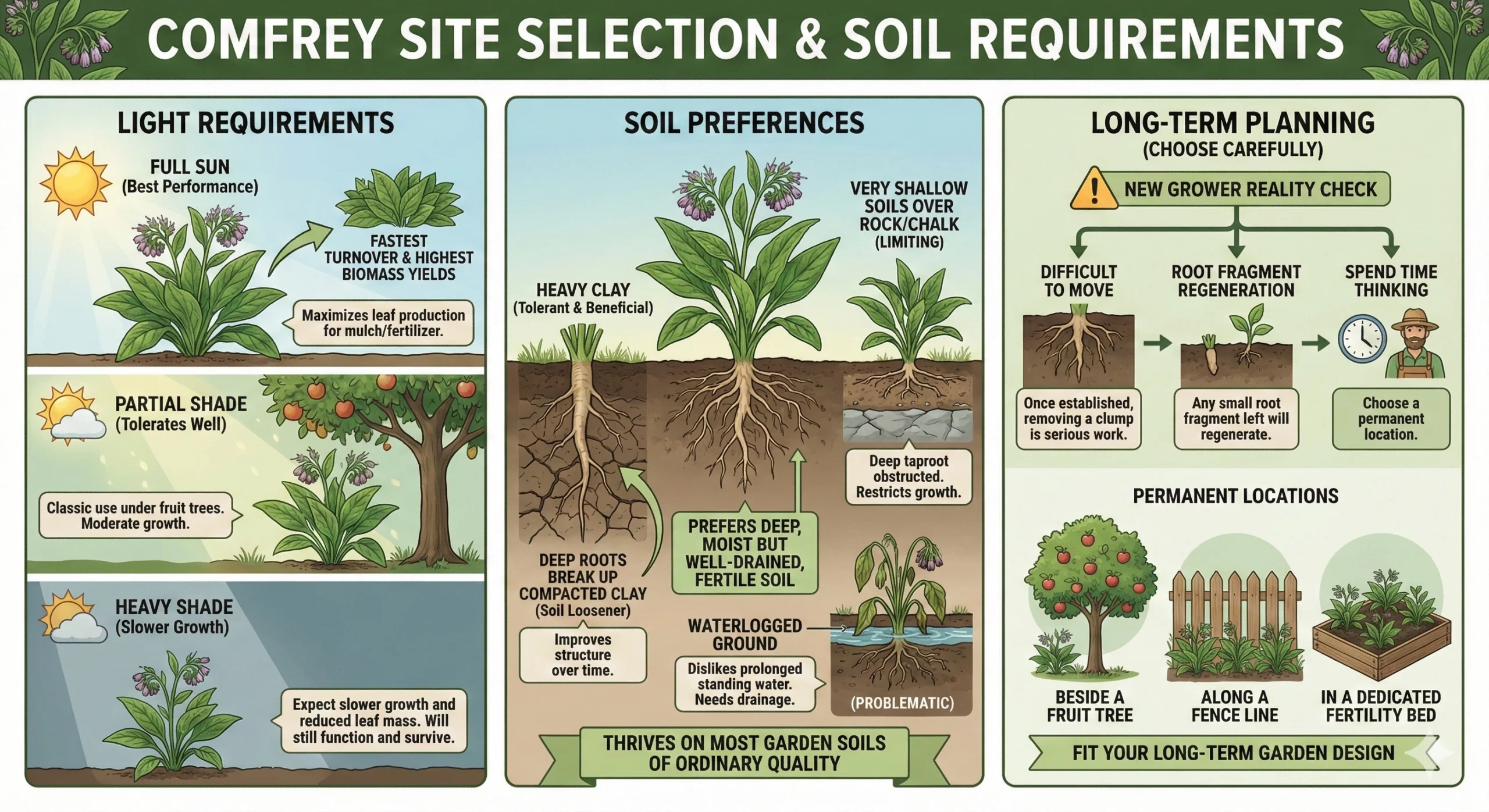
Comfrey performs best in full sun, which encourages the fastest leaf turnover and highest biomass yields. That said, it tolerates partial shade reasonably well—particularly useful when planting beneath the canopy of fruit trees, which is one of its most classic uses. In heavy shade, expect slower growth and reduced leaf mass, but the plant will still function and survive. If maximum leaf production for mulch or comfrey liquid fertilizer is your goal, prioritise the sunniest available spot.
Soil Preferences
Comfrey is tolerant of a wide range of soil types, including heavy clay—in fact, its deep roots actively help break up compacted clay layers over time, making it a useful comfrey soil loosener for heavy clay situations. It prefers deep, moist but well-drained, fertile soil. It does best where it can drive its taproot deeply without obstruction, so very shallow soils over chalk or rock are genuinely limiting. Waterlogged ground is similarly problematic; while comfrey likes moisture, it dislikes sitting in standing water for prolonged periods. On most garden soils—including those of ordinary or moderate quality—comfrey will establish and thrive without fuss.
Long-Term Planning
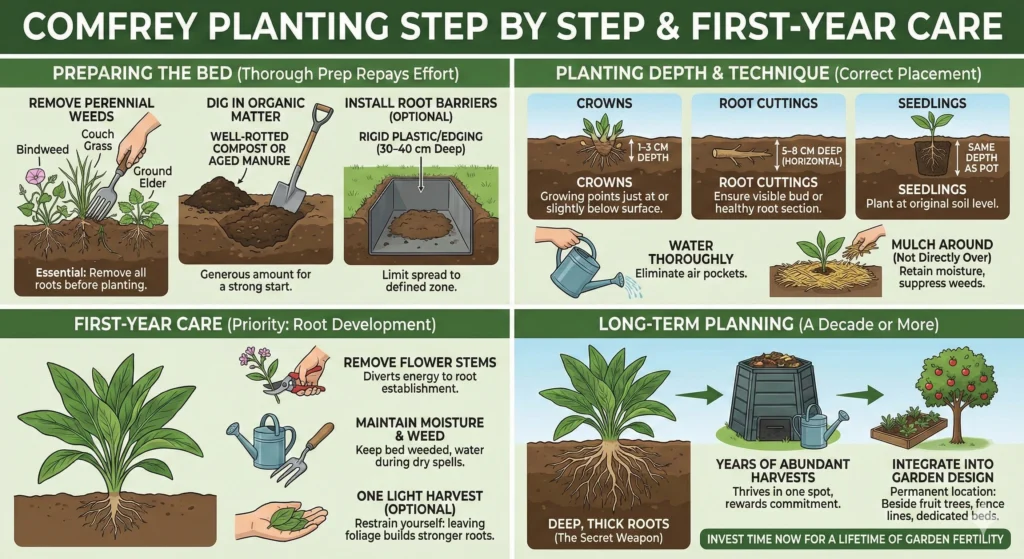
This is where new growers sometimes need a reality check: choose your comfrey location carefully, because it’s difficult to move. Once those deep roots are established, removing a comfrey clump is serious work. Any small root fragment left in the soil will regenerate a new plant. I’ve seen gardeners spend entire seasons trying to eradicate a poorly placed clump. Spend time thinking about where it fits your long-term garden design before you plant—ideally somewhere it can live permanently, such as beside a fruit tree, along a fence line, or in a dedicated fertility bed.
Propagation: Seeds, Crowns and Root Cuttings
Growing from Seed
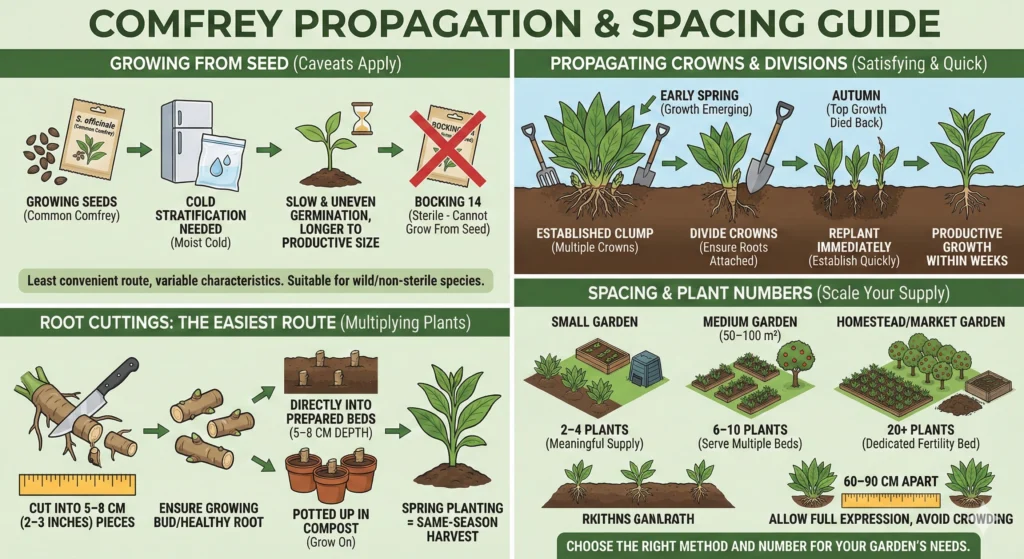
Growing comfrey from seed is possible but comes with caveats. Seeds of S. officinale benefit from cold stratification—a period of moist cold—to break dormancy, and germination can be slow and uneven. Seedlings are small and take longer to reach productive size than plants grown from vegetative material. More practically, if you’re growing Bocking 14, you simply can’t grow it from seed—it’s sterile. Seed-grown plants may show variable characteristics. For most gardeners, seed propagation is the least convenient route unless you’re specifically working with wild or non-sterile species.
Propagating Comfrey Crowns and Divisions
Dividing comfrey plants is one of the most satisfying garden tasks. Established clumps develop multiple growing points or “crowns” at soil level, and these can be separated to create new plants. The best time to divide comfrey plants is early spring as growth begins to emerge, or in autumn once the top growth has died back. Lift the clump with a border fork, taking care to get beneath the rootball, then use a sharp spade or knife to separate crowns, ensuring each piece has some root attached. Replant immediately at the same depth they were growing. Divided crowns establish quickly and typically begin productive growth within a few weeks—far faster than seed-raised plants.
Root Cuttings: The Easiest Route for Multiplying Plants
Learning how to grow comfrey from root cuttings is genuinely empowering—it means one or two purchased plants can multiply into dozens over a couple of seasons. When lifting or dividing comfrey, save the thick root sections. Cut them into pieces 5–8 cm (2–3 inches) long, ensuring each has a visible growing bud or at least a healthy section of root. These can be planted directly into prepared beds at around 5–8 cm depth, or potted up individually in free-draining compost and grown on until roots and shoots are established. Comfrey root cuttings planted in spring will often produce harvestable leaves within the same growing season.
Spacing and Plant Numbers
For a small garden, two to four plants can provide a meaningful supply of mulch material and liquid fertilizer. A medium garden or kitchen garden of 50–100 m² benefits from six to ten plants, ideally positioned to serve multiple beds. A homestead or market garden with fruit trees and large fertility demands might warrant a dedicated comfrey bed of 20 or more plants. Space plants 60–90 cm apart to allow full expression of each clump; crowding reduces yield per plant.
Planting Step by Step
Preparing the Bed
Thorough site preparation repays the effort many times over. Since comfrey will occupy its spot for years, it’s worth removing all perennial weeds—especially bindweed, couch grass, and ground elder—before planting. Dig in a generous amount of well-rotted compost or aged manure to give young plants a strong start. If you’re concerned about spread and want to limit the plant to a defined area, physical root barriers (rigid plastic sheeting or purpose-made edging at least 30–40 cm deep) can be installed around the planting zone before establishment.
Planting Depth and Technique
Crowns should be planted so the growing points sit just at or slightly below the soil surface—1–3 cm depth is ideal. Root cuttings go in horizontally at 5–8 cm deep. Seedlings are planted at the same depth they were growing in their pots. Space plants as outlined above. After planting, water in thoroughly to eliminate air pockets around the roots. A mulch of compost or straw applied around (but not directly over) the growing points helps retain moisture and suppress competing weeds.
First-Year Care
In the first growing season, your priority is root development. Remove any flower stems that appear in year one—allowing the plant to flower and set seed diverts energy that would otherwise go into root establishment. Keep the bed weeded and maintain moisture during dry spells. You can take one light harvest of leaves in the first year without causing harm, but restrain yourself; the more foliage you leave in place, the stronger the root system you build for future seasons of abundant harvests.
Ongoing Care and Maintenance
Watering and Drought Tolerance
Young comfrey plants need regular watering through their first season, particularly during extended dry weather. Once established—typically from year two onward—comfrey’s deep root system allows it to access subsoil moisture and cope with drought remarkably well. In most temperate climates, established plants need no supplemental irrigation except during prolonged dry periods. This drought resilience is one of its great virtues in a changing climate.
Feeding and Mulching
Comfrey is a vigorous feeder that rewards generous soil conditions. An annual top-dressing of compost, aged manure, or a mulch of leaf mold in early spring gives plants the nitrogen and mineral boost they need to push through multiple productive cuts. Straw, compost, or leaf mold all make excellent mulches around established clumps, suppressing weeds and maintaining soil moisture. Interestingly, if you’re growing comfrey specifically to make comfrey liquid fertilizer, investing in the plant’s own fertility upfront translates directly into higher yields of the potassium-rich leaves you’ll harvest.
Weeding and Managing Space
Comfrey’s large leaves create heavy shade at ground level, which naturally suppresses many annual weeds once the plant is established. However, perennial weeds can infiltrate the crown and become difficult to remove without disturbing the plant. Keep the area around each clump clear in the early years. It’s also worth noting that comfrey is a vigorous competitor—don’t plant it directly adjacent to less assertive perennials, as it will overwhelm them. Give it defined territory.
Cutting Schedule for Maximum Yield
From year two onward, you can typically make three to five cuts per growing season in temperate climates. Begin the first cut when plants reach roughly 50–60 cm tall, before flowers open. Cutting at the bud stage gives you leaves at peak nutrient density. Subsequent cuts are made as growth rebounds, usually every four to six weeks through summer. Stop cutting in late August or early September to allow the plant to build root reserves for winter and next year’s strong start. Consistent cutting actually keeps the plant productive by preventing it from putting energy into seed production—though this is less critical with sterile Bocking 14.
Harvesting Leaves and Roots
When and How to Harvest Comfrey Leaves
When to harvest comfrey leaves is a question worth getting right. The optimal moment is when plants reach approximately 50–60 cm and flower buds are just forming but not yet open. At this stage, leaves are large, nutrient-dense, and in peak condition for use as mulch or for making liquid fertilizer. Using loppers, large scissors, or a sharp sickle, cut stems to within 5–8 cm of the ground—above the crown to avoid damaging the growing points that will drive regrowth. Don’t be tentative; comfrey regrows fast and vigorously. Wear gloves and long sleeves if your skin is sensitive to the coarse leaf hairs.
Root Harvest
Roots are harvested for propagation (to make root cuttings), occasionally for traditional external applications in regions where this remains practiced, or simply to manage the size of an overgrown clump. The best time for root harvest is autumn, when top growth has died back and the plant’s energy has retreated into the root. Use a border fork and dig generously around the clump to lift without breaking too many roots. Save healthy sections for propagation; compost the rest.
Comfrey in the Garden: Soil and Plant Nutrition
Dynamic Accumulator: Mining the Subsoil
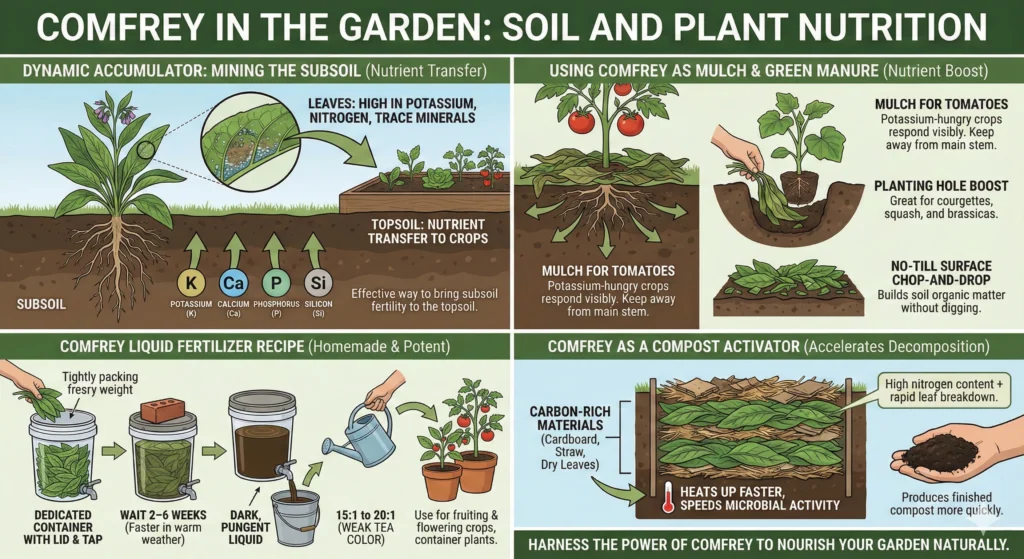
The phrase “dynamic accumulator” refers to plants whose deep root systems mine subsoil nutrients—particularly minerals like potassium, calcium, phosphorus, and silicon—and concentrate them in their leaves. Dynamic accumulator comfrey benefits are well-documented among organic growers: the leaves contain notably high levels of potassium (comparable to commercial fertilizers), along with nitrogen and a suite of trace minerals. When you cut and apply those leaves to your garden beds, you’re effectively transferring subsoil fertility to the topsoil where crops need it.
Using Comfrey as Mulch and Green Manure
Using comfrey as mulch for tomatoes is one of the most popular applications, and for good reason—tomatoes are potassium-hungry fruiting crops that respond visibly to the nutrient boost. Simply lay wilted or freshly cut comfrey leaves around the base of your plants, keeping them away from the main stem. As leaves break down (which happens quickly—comfrey has no tough lignin), they release nutrients directly into the rooting zone. The same approach works brilliantly in planting holes for courgettes, squash, and brassicas: place a handful of wilted leaves in the bottom of each hole before setting in your transplant. In no-till gardening, comfrey as a surface chop-and-drop mulch is invaluable for building soil organic matter without digging.
Comfrey Liquid Fertilizer Recipe
Making comfrey liquid fertilizer at home is straightforward. Pack a container—a large bucket or dedicated barrel with a lid and ideally a tap at the base—tightly with freshly cut comfrey leaves. Press them down, weigh them with a brick or stone, then cover. Over two to six weeks (faster in warm weather), the leaves break down into a dark, pungent liquid. Drain this off through a tap or strainer. For comfrey tea dilution, the general guideline is 15:1 to 20:1 water to concentrate for most garden plants—it should be the color of weak tea. Use it as a liquid feed for fruiting and flowering crops, container plants, or anything that looks like it needs a boost. Tomatoes, peppers, soft fruit, and squash respond particularly well.
Comfrey as a Compost Activator
Adding comfrey leaves to a compost heap accelerates decomposition, earning comfrey its reputation as a compost activator. The high nitrogen content speeds microbial activity, while the rapid breakdown of the soft leaves means they don’t slow the heap the way woodier materials might. Layer comfrey generously between carbon-rich materials—cardboard, straw, dry leaves—and your heap will heat up faster and produce finished compost more quickly.
Wildlife, Companion Planting and Design Uses
Pollinator Value
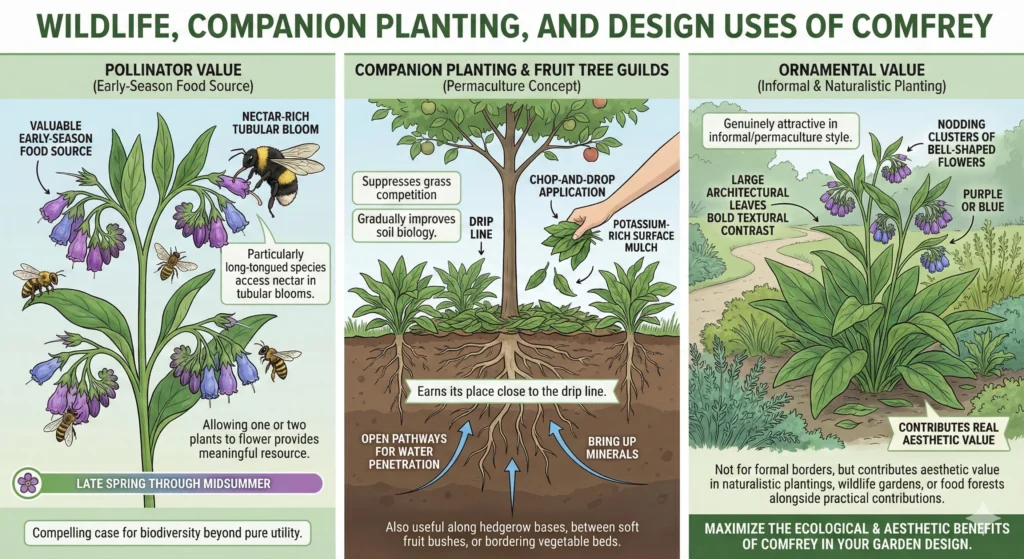
Comfrey flowers are among the most valuable early-season food sources for bumblebees, particularly long-tongued species that can access nectar in the tubular blooms. Allowing even one or two plants to flower rather than cutting them provides a meaningful comfrey pollinator flowers resource from late spring through midsummer. Honeybees, solitary bees, and other beneficial insects also visit freely. In a garden designed with biodiversity in mind, the case for including comfrey is compelling beyond its pure utility.
Companion Planting and Fruit Tree Guilds
Comfrey for fruit tree mulch is perhaps its most celebrated companion planting use. In a fruit tree guild—the permaculture concept of surrounding a tree with mutually beneficial plants—comfrey earns its place close to the drip line. Chop-and-drop applications of comfrey leaves provide potassium-rich surface mulch, suppress grass competition, and gradually improve soil biology. The deep roots don’t compete significantly with shallow-rooted grass at the surface but do open pathways for water penetration and bring up minerals that the tree can access through its own root network. Comfrey planted along hedgerow bases, between soft fruit bushes, or bordering vegetable beds fulfills similar roles wherever chop-and-drop mulching fits your system.
Ornamental Value
In an informal or permaculture-style planting, comfrey is genuinely attractive. The large architectural leaves create bold textural contrast, and the nodding clusters of bell-shaped flowers in purple or blue are lovely from a distance. It won’t win prizes in a formal border, but in naturalistic plantings, wildlife gardens, or food forests, it contributes real aesthetic value alongside its practical contributions.
Safety, Toxicity and Responsible Use
Internal Toxicity Concerns
This section is important. Comfrey contains pyrrolizidine alkaloids (PAs), compounds associated with liver damage when consumed internally in quantity or over extended periods. Internal use of comfrey—teas, tinctures, or eating the leaves—is restricted or formally discouraged in many countries, including by health authorities in the EU, UK, US, and Australia. The guidance here is clear: do not consume comfrey internally without thorough research and qualified professional advice. The traditional reputation for internal medicinal use existed before the risks were fully understood; that context has changed. This guide treats comfrey strictly as a garden plant.
Safer Garden-Only Uses
For garden applications—mulch, liquid fertilizer, compost activator—comfrey is entirely safe when used sensibly. The alkaloids are not absorbed significantly through intact skin, and external traditional applications (poultices for bruises and minor strains) are considered lower risk than internal use, though still warranting caution. If you’re processing large quantities of leaves regularly, wear gloves—both to manage the prickly leaf surface and as a general precaution. Keep liquid feed concentrate clearly labelled and out of reach of children and pets. Follow any local regulations regarding comfrey products.
Practical Precautions
Strong comfrey liquid fertilizer concentrate is potent—using it undiluted can scorch plant roots and foliage. Always dilute correctly before application. When making liquid feed, the fermentation process produces an extremely unpleasant smell; site your barrel somewhere that won’t cause problems with neighbours or household members. Wear old clothes when making or applying the liquid concentrate, as it stains persistently.
Managing Spread and Removing Plants
Understanding How Comfrey Spreads
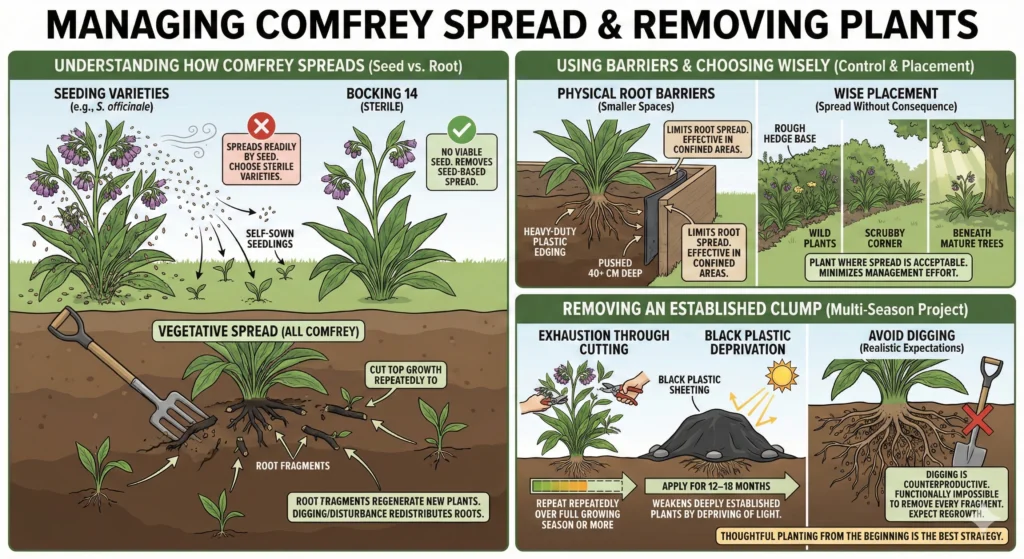
Seeding varieties of comfrey can spread readily, with self-sown seedlings appearing across a garden over time. This is why choosing sterile varieties like Bocking 14 is strongly advisable for most gardeners—it removes seed-based spread entirely. However, all comfrey spreads vegetatively through root fragments. Digging, rotavating, or disturbing established plants redistributes root pieces that each have the potential to form new plants. This is worth understanding before you accidentally spread a plant you later wish you hadn’t.
Using Barriers and Choosing Wisely
Controlling comfrey spread in the garden is primarily a matter of variety selection and initial placement. Bocking 14’s sterility handles the seed issue. For root spread, planting into a root-barrier zone (heavy-duty plastic edging pushed 40+ cm deep around the planting area) provides a reasonable physical limit, particularly in smaller spaces. Alternatively, simply plant where the plant can spread without consequence—a rough hedge base, a scrubby corner, beneath mature trees—and the question of spread largely answers itself.
Removing an Established Clump
This deserves honest advice: removing an established comfrey plant is a multi-season project, not a weekend job. Cut top growth repeatedly to exhaust root reserves—this takes consistent effort over a full growing season or more. Digging is counterproductive unless you can retrieve every root fragment, which is functionally impossible with mature plants. Black plastic sheeting applied for 12–18 months can weaken deeply established plants by depriving them of light. Expect regrowth. Set realistic expectations, and wherever possible, design out the problem before it starts by planting thoughtfully from the beginning.
Conclusion and Practical Takeaways
Comfrey earns its reputation. In a single plant, you get a tireless fertility engine, an abundant mulch source, a potent homemade fertilizer ingredient, a pollinator magnet, and a resilient perennial that asks relatively little in return. For organic and no-till gardeners, it’s close to indispensable.
Consider two simple use-cases. In a small urban raised bed garden, two Bocking 14 plants tucked into a corner can supply enough chop-and-drop mulch for a 10 m² bed of tomatoes and squash through summer, supplemented by a five-litre bucket of liquid fertilizer made from surplus leaves. In a fruit tree guild around a young apple or pear, three to five plants arranged around the drip line provide ongoing potassium-rich surface mulch, open soil with their roots, and feed bees from spring through midsummer. Both scenarios require minimal ongoing input once plants are established.
Start small—a few root cuttings or crowns is all you need. Observe how your plants perform, where they’re most useful in your specific garden, and expand from there. The learning curve is gentle, the rewards generous, and the commitment modest. Plant your first comfrey crown this season—your soil, your crops, and your local bees will thank you.