End Tomato Blossom Drop: 9 Quick Fixes for Bountiful Harvests
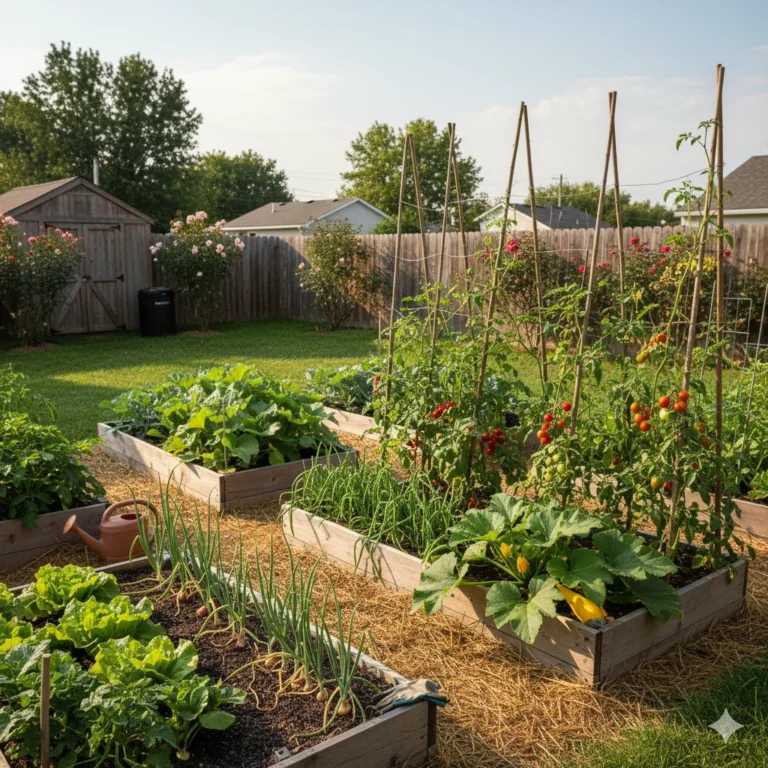
You’ve nurtured your tomato plants from tiny seeds, watching them stretch toward the sun with vibrant green leaves and clusters of yellow flowers promising a summer of juicy red rewards. But then, heartbreak strikes: those tomato flowers falling off, leaving bare stems and no fruit in sight. I remember advising a backyard grower in Texas last year—her plants looked picture-perfect, loaded with blooms, yet she harvested zilch. “Why are my tomato flowers falling off but no fruit?” she asked, echoing the frustration I’ve heard from hundreds of home gardeners over my 20 years in organic vegetable production.
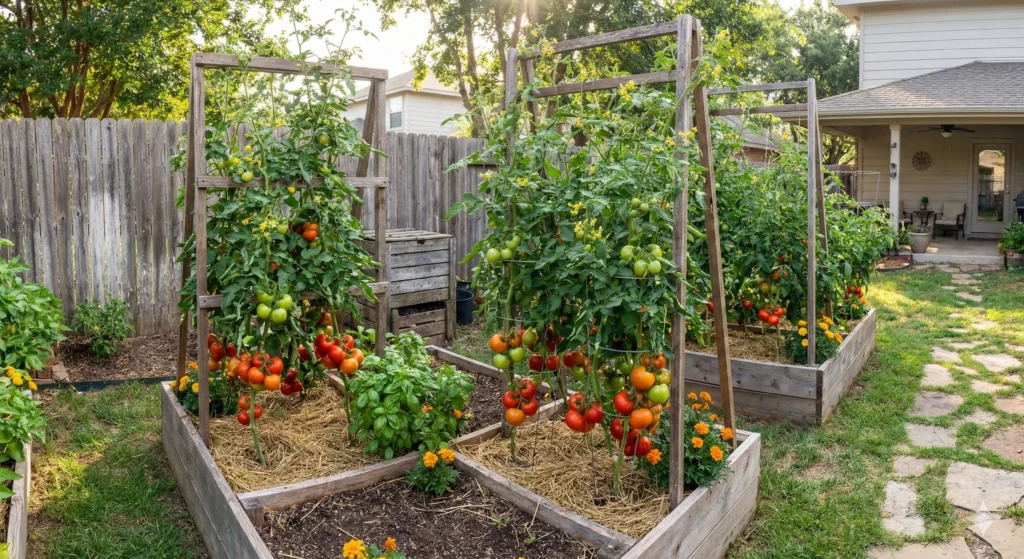
Tomato blossom drop happens when flowers abort before setting fruit, often due to stress that disrupts pollination or fruit development. Like a stressed athlete dropping the ball mid-game, the plant redirects energy from reproduction to survival. Pollen fails to fertilize, or tiny fruits wither and drop. This isn’t always a crisis—some early blooms naturally fall as the plant adjusts—but persistent tomato flowers no fruit signals an issue you can fix.
In this guide, we’ll tackle the nine common causes of blossom drop in tomatoes, from extreme temperatures to pests, with science-backed explanations and step-by-step fixes drawn from real growers’ successes. You’ll learn why tomato flowers drop and how to turn things around today for a bountiful harvest. Note varietal differences: Heirloom tomatoes, prized for flavor, often suffer more from stress than sturdy hybrids bred for resilience. And remember, a bit of early drop is normal as plants prioritize strong growth.
Cause 1: Extreme Temperatures
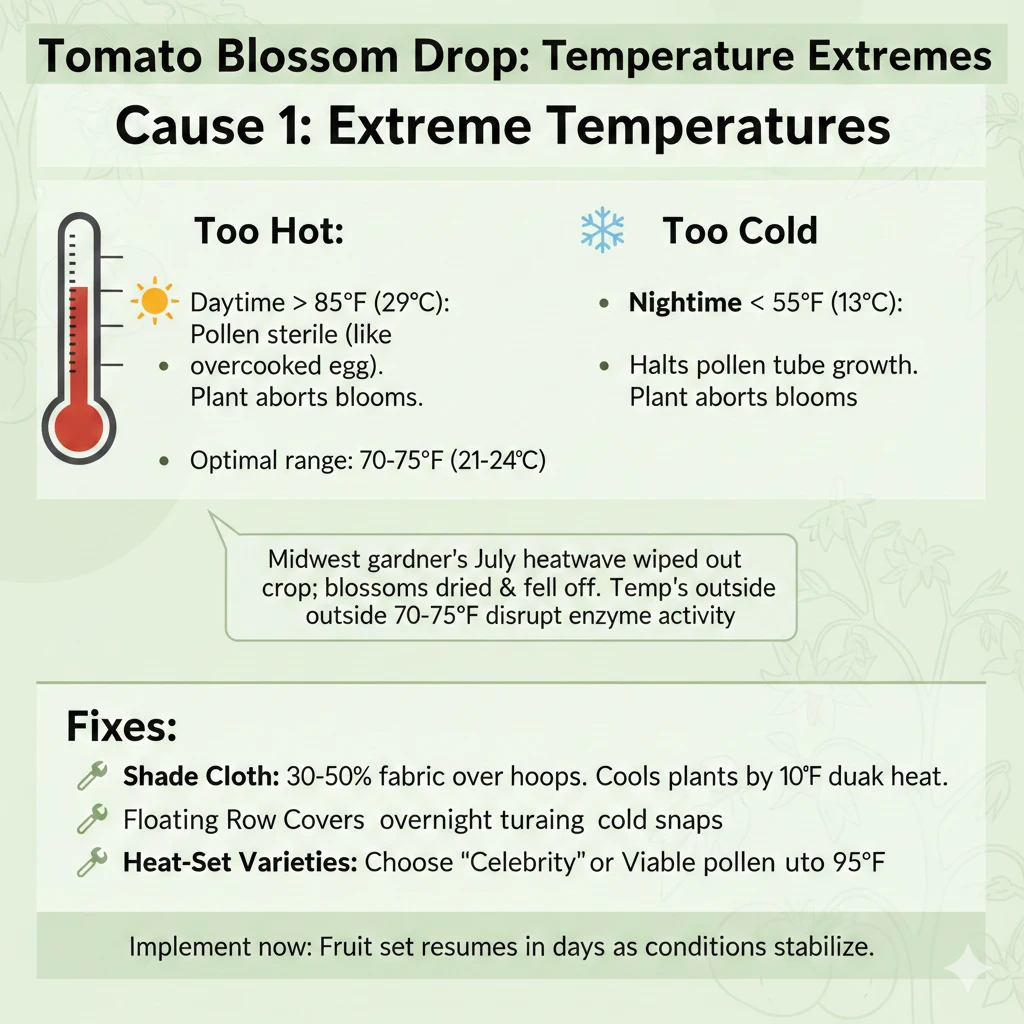
When daytime highs soar over 85°F (29°C), tomato pollen becomes sterile, unable to fertilize flowers—like overcooking an egg until it’s unusable. Nighttime lows below 55°F (13°C) chill the plant, halting pollen tube growth. Even short heat or cold snaps can trigger widespread tomato flowers fall off hot weather, as the plant aborts blooms to conserve resources.
I once helped a Midwest gardener whose July heatwave wiped out her crop. Her tomato blossoms drying up and falling off left her devastated, but we pinpointed the cause quickly. Science shows temperatures outside 70–75°F (21–24°C) optimal range disrupt enzyme activity in pollen.
Fixes: Provide shade cloth during peak heat to cool plants by 10°F—drape 30–50% shade fabric over hoops. For cold snaps, use floating row covers to trap warmth overnight. Choose heat set tomato varieties blossom drop resistant, like hybrids such as ‘Celebrity’ or ‘Heatmaster,’ which produce pollen viable up to 95°F. Implement these now, and you’ll see fruit set resume in days as conditions stabilize.
Cause 2: Poor Pollination
Tomatoes self-pollinate, meaning each flower has both male and female parts, but they need vibration to release pollen—like shaking a salt shaker to get the grains flowing. Wind, bees, or manual shaking does the trick. High humidity clumps pollen into sticky masses, while low humidity dries it out, preventing transfer. This poor pollination tomato flowers drop is rampant in greenhouses or sheltered patios with still air, where natural agitators are absent.
A client in a humid coastal area shared her story: Her indoor tomato flowers blooming but no fruit puzzled her until we realized stagnant air was the culprit. Research from university extensions confirms that without movement, pollen sticks to anthers, failing to reach the stigma.
Fixes: Shake plants daily by gently tapping stems or trusses mid-morning when pollen is fresh. Use an electric toothbrush on stems for 5–10 seconds per cluster to mimic bee buzz—hold it against the flower support. Plant pollinator attractors like marigolds nearby to draw bees and boost natural vibration. Hand pollinate tomato flowers with a soft brush if needed, transferring pollen between blooms. These steps empower you to overcome this today, turning dropped flowers into swelling fruits.
Cause 3: Inconsistent Watering
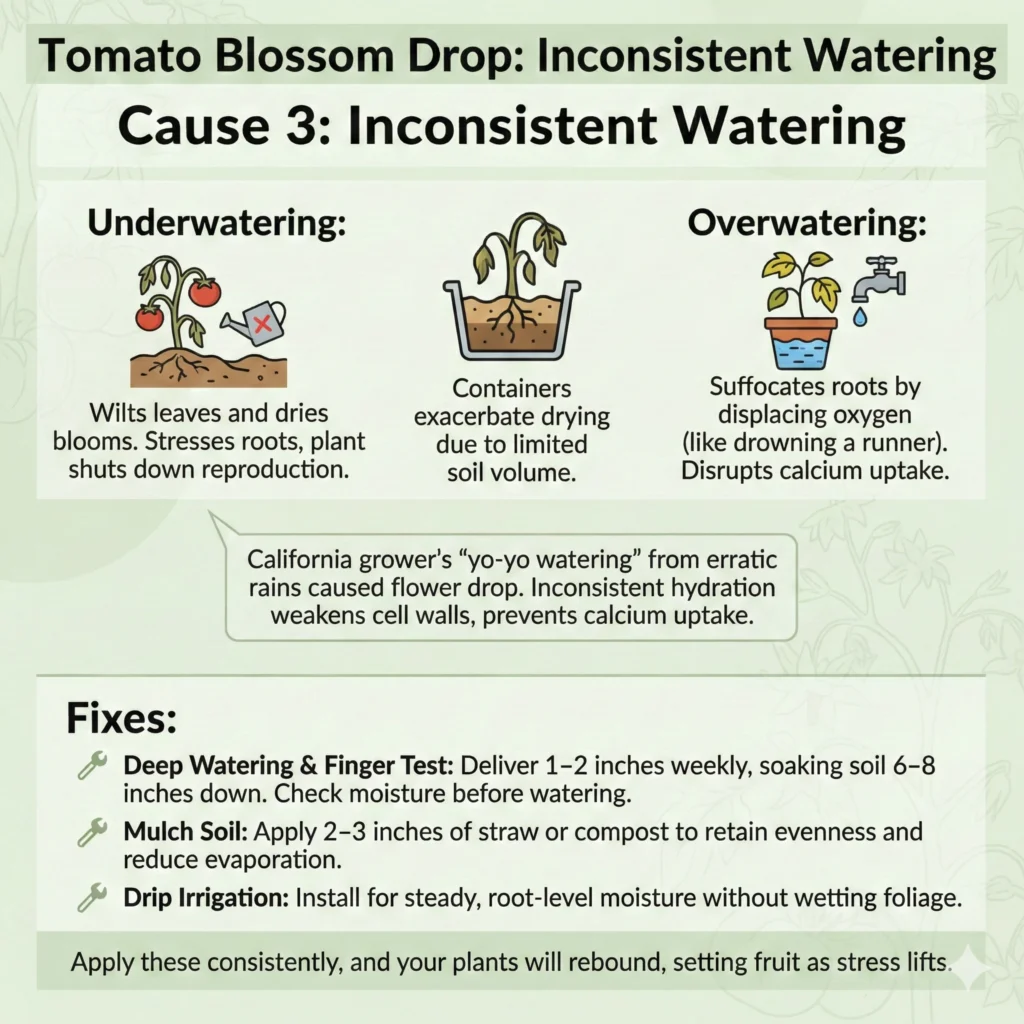
Fluctuating moisture stresses roots, causing tomato flower drop inconsistent watering as the plant shuts down reproduction to survive. Underwatering wilts leaves and dries blooms, while overwatering suffocates roots by displacing oxygen—like drowning a runner mid-marathon. Containers exacerbate this, drying out faster due to limited soil volume.
One organic grower I advised in California battled this after erratic rains; her tomato plant flowers dropping no tomatoes stemmed from yo-yo watering that mimicked drought cycles. Soil science reveals that inconsistent hydration disrupts calcium uptake, weakening cell walls in developing fruits.
Fixes: Water deeply to deliver 1–2 inches weekly, soaking soil to 6–8 inches down—use a finger test to check moisture before watering. Mulch soil with 2–3 inches of straw or compost to retain evenness and reduce evaporation. Install drip irrigation for steady, root-level moisture without wetting foliage. Apply these consistently, and your plants will rebound, setting fruit as stress lifts.
Cause 4: Nutrient Imbalances
Excess nitrogen fuels lush leaves at fruit’s expense, like overfeeding a bodybuilder protein but skimping on carbs for energy. Low phosphorus or calcium weakens blooms, leading to nutrient deficiency tomato blossoms drop. Phosphorus aids energy transfer for pollination, while calcium strengthens cell walls—deficiencies show as weak, aborting flowers.
I recall a novice gardener whose phosphorus deficiency tomatoes flowers caused rampant drop; a soil test revealed the imbalance from nitrogen-heavy lawn fertilizer runoff. Studies from agricultural labs link high NPK first numbers to vegetative overgrowth, sidelining reproductive efforts.
Fixes: Soil test first using a home kit to pinpoint issues—aim for pH 6.0–6.8. Switch to phosphorus-rich fertilizer with a high middle NPK number, like 5-10-5, applied at half strength every two weeks. Add compost or bone meal for organic boosts of phosphorus and calcium. These targeted adjustments will correct the imbalance fast, letting your tomatoes focus on fruit.
Cause 5: Insufficient Sunlight
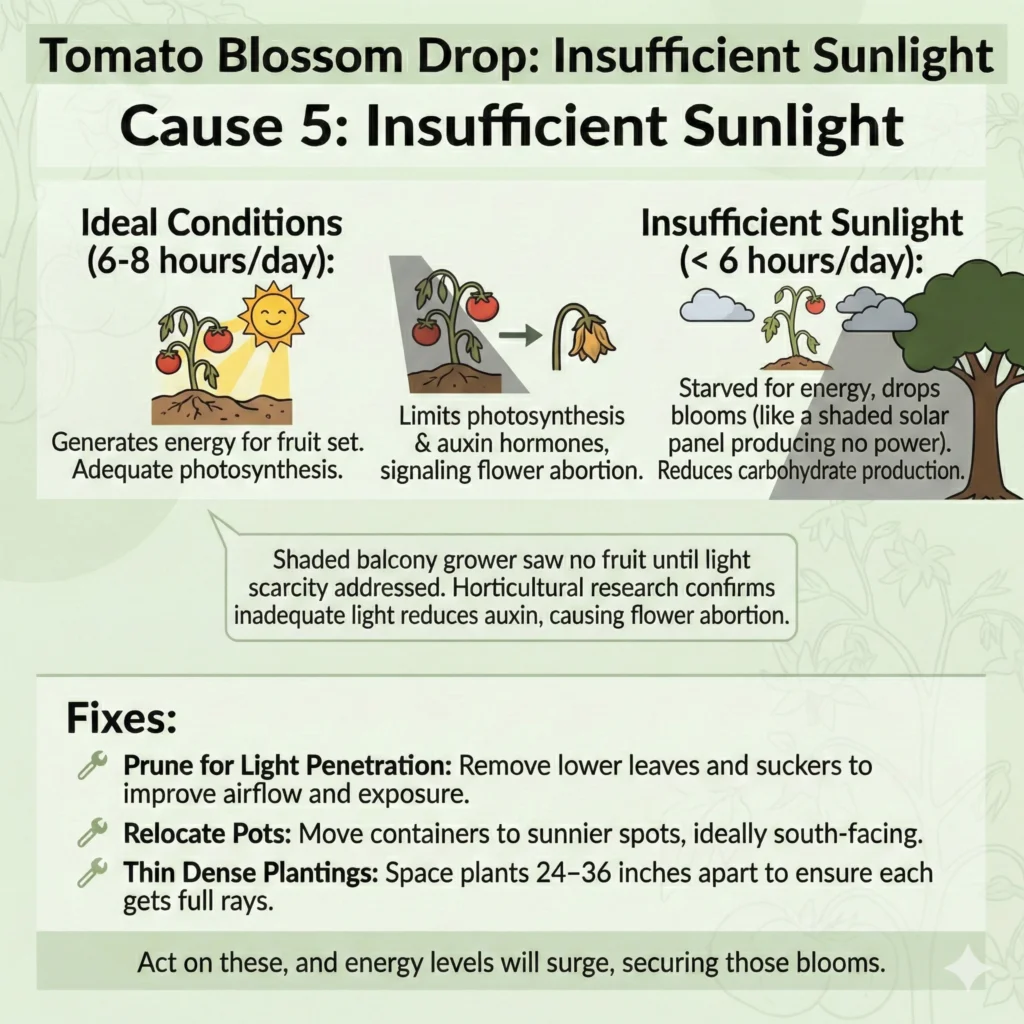
Tomatoes crave 6–8 hours of direct sun daily to generate energy for fruit set; less leaves them starved, dropping blooms like a solar panel in shade producing no power. Overcast weather or overshadowing trees compound this, limiting photosynthesis and carbohydrate production needed for pollination.
A shaded balcony grower I mentored saw her tomato flowers no fruit until we addressed light scarcity. Horticultural research emphasizes that inadequate light reduces auxin hormones, signaling the plant to abort excess flowers.
Fixes: Prune for light penetration by removing lower leaves and suckers, improving airflow and exposure. Relocate pots to sunnier spots if possible—aim south-facing. Thin dense plantings to 24–36 inches apart, ensuring each gets full rays. Act on these, and energy levels will surge, securing those blooms.
Cause 6: Root Stress in Containers
Small pots under 5 gallons cramp roots, restricting water and nutrient uptake—like confining a growing child in too-tight shoes, leading to stress mimicking drought. This container tomato roots flower drop forces plants to prioritize survival over fruiting.
One urban gardener’s story sticks with me: Her potted heirlooms suffered until upsizing revealed bound roots. Botany explains that confined roots circle and girdle, reducing absorption efficiency.
Fixes: Upsize pots to at least 10 gallons for indeterminates, transplanting carefully to avoid shock. Use fabric pots for air pruning, which encourages denser root systems by trimming tips on contact with air. Ensure good drainage with holes and gravel layers to prevent rot. These upgrades will free your roots, ending the drop cycle promptly.
Cause 7: High Winds or Humidity Extremes
Strong winds batter delicate blooms, causing physical damage and drop, while humidity extremes disrupt pollen: low levels dry it out, high cause clumping—like glue in a humid room or dust in a desert. Humidity causing tomato flower drop thrives in windy exposed sites or muggy greenhouses.
I advised a windy hillside grower whose plants shed flowers relentlessly; adjusting for airflow turned her season around. Environmental studies show winds over 10 mph desiccate petals, and humidity outside 40–70% impairs viability.
Fixes: Stake plants securely with ties every 12 inches to support against gusts. Create windbreaks using fences or taller companion plants like corn. Improve airflow in humid spots by spacing wider and pruning for circulation. Implement these protections, and your blooms will hold strong.
Cause 8: Pests and Diseases
Thrips and aphids suck sap from flowers, weakening them to drop, while botrytis mold or blight in damp conditions rots blooms outright—like invaders sabotaging a fortress from within. These target stressed plants, amplifying tomato blossom end drop in extremes.
A disease-plagued community garden I consulted recovered after targeted interventions. Entomology confirms pests vector diseases, and fungi thrive in wet foliage, causing abortion.
Fixes: Inspect undersides daily for tiny pests or gray mold. Use neem oil sprays weekly, diluted per label, as an organic knockdown. Rotate crops yearly to break cycles; avoid overhead watering to keep leaves dry. These vigilant steps will clear threats, restoring healthy fruit set.
Cause 9: Overcrowding or Heavy Fruit Load
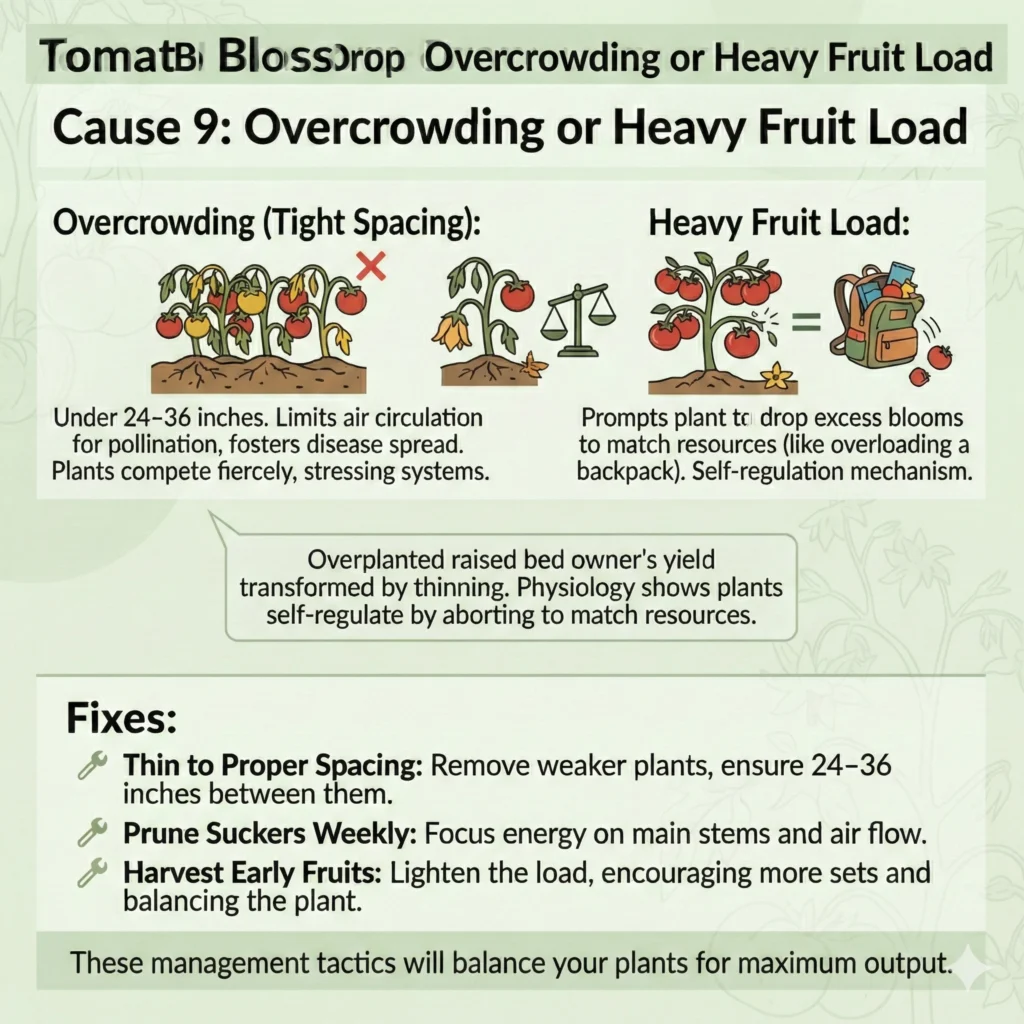
Tight spacing under 24–36 inches fosters disease spread and limits air for pollination, while heavy fruit loads prompt plants to drop excess blooms—like overloading a backpack until items fall out. Overcrowded plants compete fiercely, stressing systems.
An overplanted raised bed owner learned this the hard way; thinning transformed her yield. Physiology shows plants self-regulate by aborting to match resources.
Fixes: Thin to proper spacing, removing weaker plants. Prune suckers weekly to focus energy on main stems. Harvest early fruits to lighten load, encouraging more sets. These management tactics will balance your plants for maximum output.
Troubleshooting Checklist
| Symptom | Likely Causes | Quick Test/Fix |
|---|---|---|
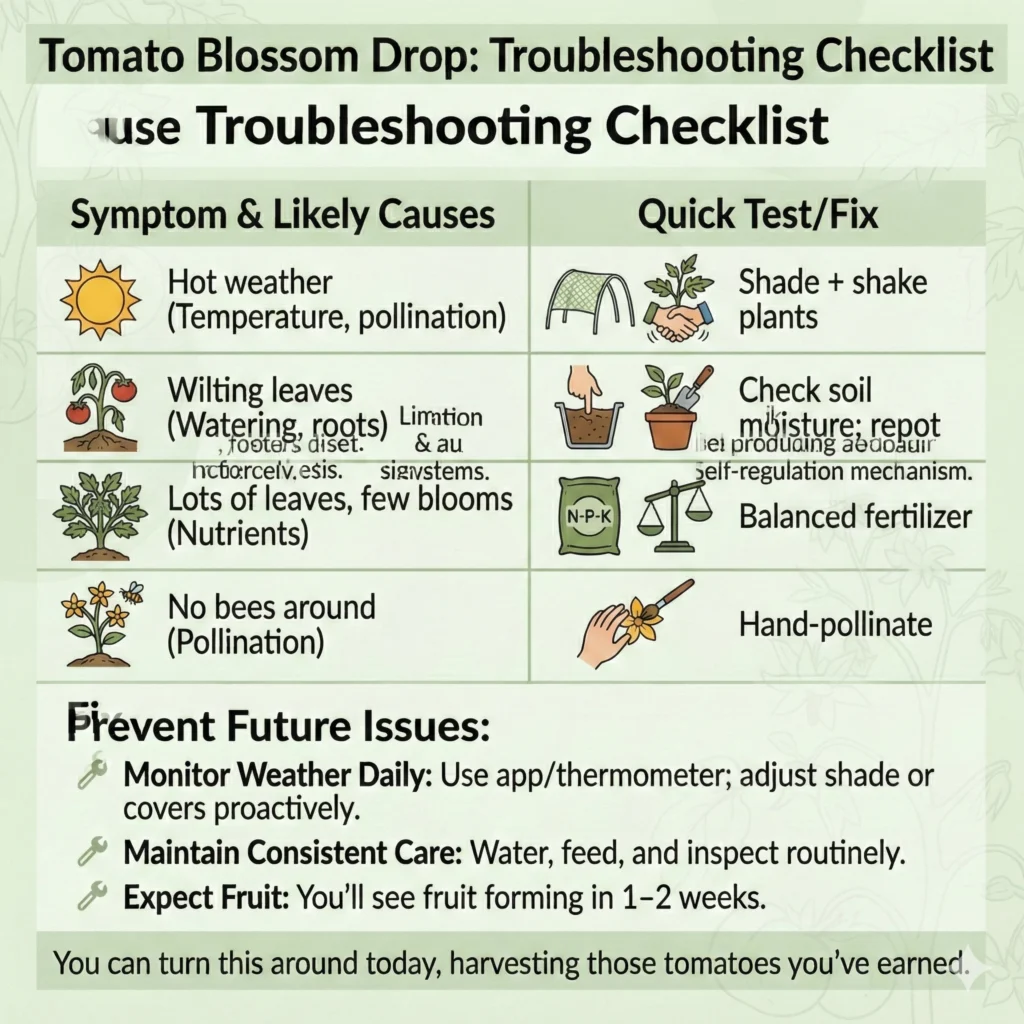
| Hot weather | Temperature, pollination | Shade + shake plants |
| Wilting leaves | Watering, roots | Check soil moisture; repot |
| Lots of leaves, few blooms | Nutrients | Balanced fertilizer |
| No bees around | Pollination | Hand-pollinate |
To prevent future issues, monitor weather daily with a simple app or thermometer, adjusting shade or covers proactively. Maintain consistent care—water, feed, and inspect routinely—and you’ll see fruit forming in 1–2 weeks. You can turn this around today, harvesting those tomatoes you’ve earned.