Unlock Thriving Urban Gardens: 5 Essential Plants For Australia
Urban gardening has surged across Australian cities in recent years, transforming balconies in Sydney high-rises, Melbourne terrace courtyards, Brisbane apartment patios, and Perth rooftops into productive green spaces. Whether you’re motivated by rising grocery costs, environmental concerns, or simply craving fresh herbs steps from your kitchen, starting your first garden can feel overwhelming. The secret to success? Begin with just five carefully chosen plants that forgive beginner mistakes while delivering real results. This focused approach saves money, reduces food waste, connects you to nature’s rhythms, and provides the mental health benefits of nurturing living things—all within the constraints of compact city living.
Understanding Urban Gardening Basics
Urban gardening encompasses any food or ornamental plant cultivation in city environments using limited spaces: apartment balconies, narrow courtyards, windowsills, vertical wall planters, or small raised garden beds on concrete. Unlike traditional backyard gardens, you’re working with containers rather than ground soil, which gives you control but requires more attention to watering and nutrients.
Australian city gardeners face distinct challenges. Intense summer sun, particularly in northern regions, can scorch delicate leaves and evaporate water rapidly from pots. Water restrictions during droughts limit irrigation options. Balconies may receive only morning light or be completely shaded by neighbouring buildings. Wind on higher floors dries plants faster and can snap stems.
Container gardening succeeds through three fundamentals. First, always use quality potting mix—not garden soil—because it drains well while retaining moisture, and won’t compact like dirt. Second, every pot needs drainage holes to prevent root rot, Australia’s number one plant killer. Third, establish a watering routine based on your specific microclimate: containers dry out much faster than ground gardens, sometimes needing daily attention during summer heatwaves. Master these basics, and you’ve overcome the biggest hurdles to apartment balcony garden success.
Selecting the Right Starter Plants
Beginner-friendly plants share specific traits that set you up for victories rather than frustration. They tolerate irregular watering when life gets busy, bounce back from minor neglect, and grow quickly enough to maintain your enthusiasm. They suit Australian climate zones—whether you’re dealing with Brisbane’s subtropical humidity or Melbourne’s cool winters—and ideally serve a practical purpose, like seasoning tonight’s dinner or purifying indoor air.
Avoid temperamental varieties that demand precise conditions. Skip orchids, fiddle-leaf figs, or heirloom vegetables with specific pH requirements. Instead, choose plants labelled “hardy,” “heat tolerant,” or “drought resistant.” Compact varieties bred for containers perform better than sprawling garden types. Edible plants offer extra motivation because you’ll harvest regularly, which encourages continued care. This five-plant starter kit balances herbs, vegetables, and ornamentals to teach you different care techniques while guaranteeing at least some successes even if one struggles.
The Five-Plant Starter Kit
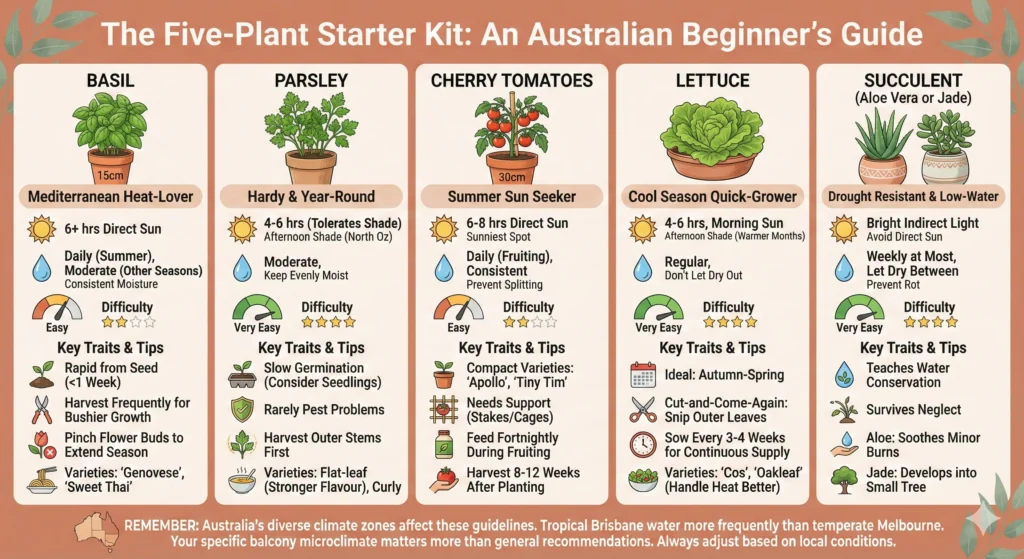
Basil This classic Mediterranean herb thrives in Australian warmth, making it perfect for beginner gardeners facing hot summers. Basil grows rapidly from seed—you’ll see sprouts within a week—and suits pots as small as 15cm diameter. Plant it in full sun locations receiving 6+ hours of direct light, and harvest leaves frequently to encourage bushier growth. Pinching off flower buds extends the productive season. Basil needs consistent moisture but tolerates brief dry spells better than soggy soil. Varieties like ‘Genovese’ or ‘Sweet Thai’ adapt well to container gardening and deliver fresh flavour for pasta, salads, and stir-fries within weeks of planting.
Parsley Hardier than basil, parsley tolerates partial shade and cooler temperatures, giving you year-round harvests in most Australian cities. Both flat-leaf and curly varieties work in containers, though flat-leaf offers stronger flavour. Parsley germinates slowly—sometimes taking 3-4 weeks—so consider buying seedlings rather than starting from seed. This low maintenance balcony herb requires moderate watering and actually benefits from afternoon shade in northern Australia’s intense summer heat. It rarely suffers pest problems and keeps producing if you harvest outer stems first, leaving the central growing point intact. Fresh parsley transforms simple dishes and justifies its space through sheer versatility.
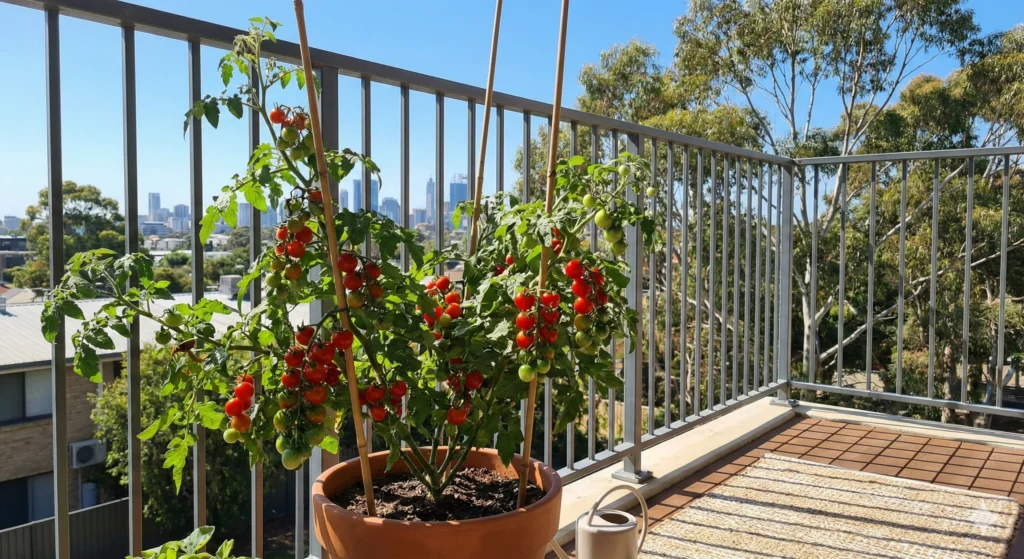
Cherry Tomatoes Few plants match cherry tomatoes for beginner satisfaction. Compact varieties like ‘Apollo’ or ‘Tiny Tim’ produce abundant fruit in containers as small as 30cm wide. These heat tolerant plants love Australia’s summer sun—give them the sunniest spot on your balcony. Cherry tomatoes need support: bamboo stakes or small tomato cages prevent stems breaking under fruit weight. Water consistently once flowering begins, as irregular moisture causes fruit splitting. Feed with liquid tomato fertilizer fortnightly during fruiting. You’ll harvest ripe tomatoes 8-12 weeks after planting seedlings, with production continuing for months. Nothing beats sun-warmed tomatoes picked fresh for lunch.
Lettuce Quick-growing lettuce thrives in cooler seasons, making it ideal for autumn through spring planting in most Australian regions. Loose-leaf varieties suit cut-and-come-again harvesting: snip outer leaves while the plant keeps producing from the centre. Lettuce prefers morning sun with afternoon shade during warmer months, and tolerates lower light better than most edibles. It needs consistent moisture—dry soil causes bitter flavour and premature bolting to seed. Sow seeds every 3-4 weeks for continuous supply. Varieties like ‘Cos’ or ‘Oakleaf’ handle heat better than traditional iceberg types. Fresh salad leaves ready 6-8 weeks after sowing represent the fastest return on your gardening investment.
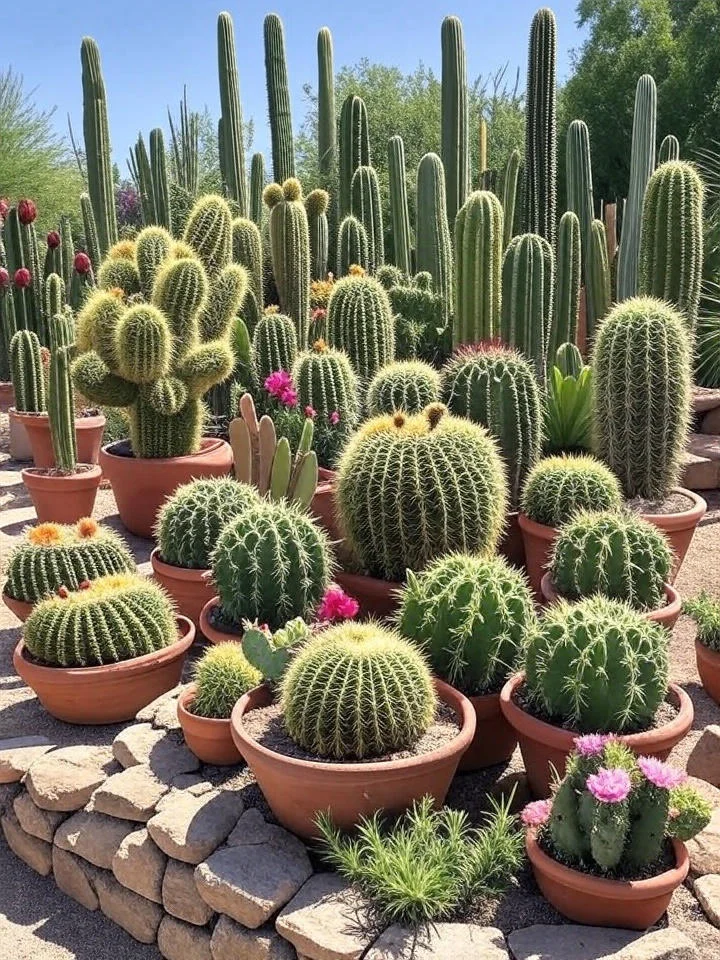
Succulent (Aloe Vera or Jade Plant) Drought resistant plants like aloe vera or jade plant teach water conservation while adding aesthetic appeal. These low-water ornamentals survive weeks of neglect, perfect for balcony spots that receive inconsistent attention. Aloe vera offers practical benefits: the gel soothes minor burns and skin irritations. Jade plant develops into an attractive small tree over years. Both need bright indirect light—too much direct sun actually damages them—and very infrequent watering. Let potting mix dry completely between waterings to prevent rot. These nearly indestructible plants build your confidence while demonstrating that successful gardening doesn’t always mean constant effort.
| Plant | Sunlight | Watering | Difficulty |
|---|---|---|---|
| Basil | 6+ hours direct sun | Daily in summer, moderate other seasons | Easy |
| Parsley | 4-6 hours, tolerates shade | Moderate, keep evenly moist | Very Easy |
| Cherry Tomatoes | 6-8 hours direct sun | Daily when fruiting, consistent moisture | Easy |
| Lettuce | 4-6 hours, prefers morning sun | Regular, don’t let dry out | Very Easy |
| Succulent | Bright indirect light | Weekly at most, let dry between | Very Easy |
Remember that Australia’s diverse climate zones affect these guidelines: tropical Brisbane gardeners water more frequently than temperate Melbourne residents. Your specific balcony microclimate matters more than general recommendations.
Basic Tools and Supplies You’ll Need
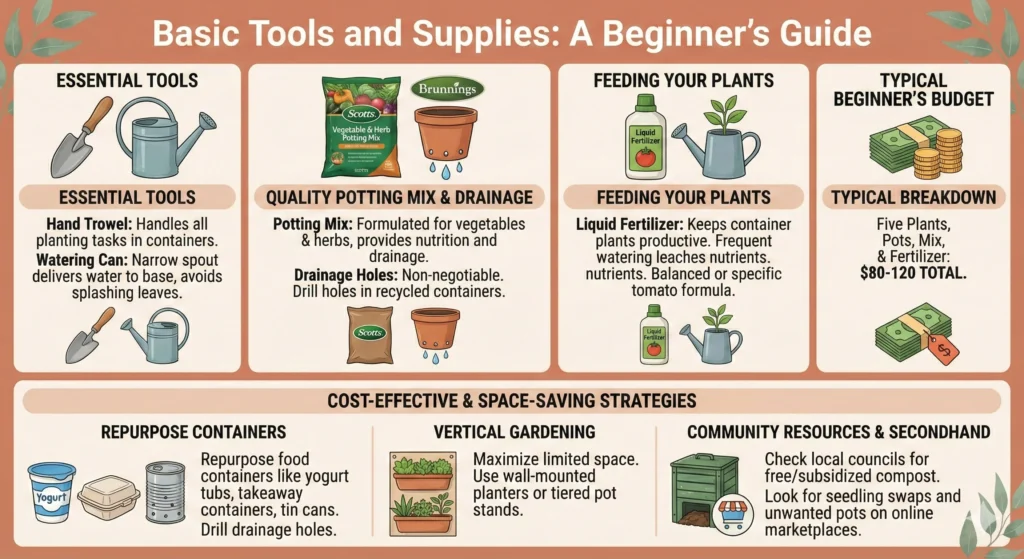
Starting small means minimal investment. A hand trowel handles all planting tasks in containers. A watering can with a narrow spout delivers water to pot bases without splashing leaves. Quality potting mix formulated for vegetables and herbs—look for Australian brands like Scotts or Brunnings—provides the nutrition and drainage your plants need. Drainage holes are non-negotiable, so buy proper nursery pots or drill holes in recycled containers before planting.
Liquid fertilizer keeps container plants productive since frequent watering leaches nutrients. Choose a balanced formula or specific tomato fertilizer. Most balcony gardening beginners spend $80-120 total for five plants, pots, mix, and fertilizer—less than two weeks of grocery store herbs and vegetables.
Cost-effective options include repurposing food containers as pots: yogurt tubs, takeaway containers, even large tin cans work after drilling drainage holes. Vertical gardening maximizes limited space through wall-mounted planters or tiered pot stands. Many local councils offer free or subsidized compost and sometimes seedling swap events. Online marketplaces frequently list unwanted pots and equipment. Starting economically lets you expand gradually as you discover what works in your specific space.
Care and Maintenance Tips
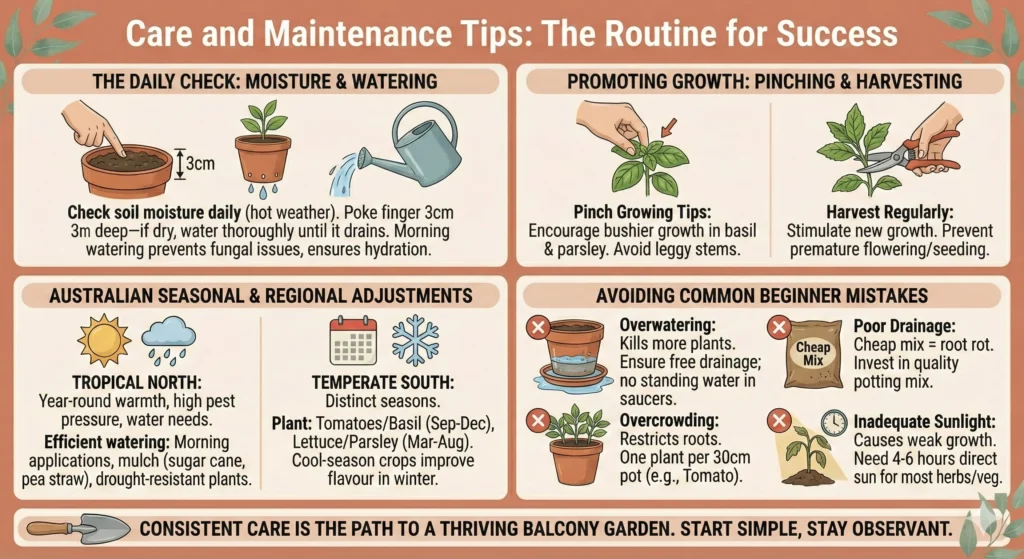
Successful small space gardening follows a simple routine. Check soil moisture daily during hot weather by poking your finger 3cm deep—if it’s dry, water thoroughly until liquid drains from pot bases. Morning watering prevents fungal issues and ensures moisture throughout hot days. Pinch growing tips on basil and parsley to encourage bushier, more productive plants rather than tall, leggy stems. Harvest regularly rather than waiting for plants to grow large; frequent picking stimulates new growth and prevents plants going to seed prematurely.
Australian regions demand seasonal adjustments. In tropical northern zones, year-round warmth means continuous growing but also greater pest pressure and water needs. Water restrictions during summer droughts require efficient watering: early morning applications, mulching containers with sugar cane or pea straw, and choosing drought resistant plants. Temperate southern cities experience distinct seasons: plant tomatoes and basil September through December, lettuce and parsley March through August. Cool-season crops actually improve flavour in Melbourne or Adelaide’s winter chill.
Common beginner mistakes are easily avoided. Overwatering kills more container plants than underwatering—those drainage holes must drain freely, and saucers shouldn’t hold standing water for hours. Poor drainage from cheap potting mix causes root rot; invest in quality mix from nurseries rather than budget options from discount stores. Overcrowding pots restricts root growth and creates competition: one tomato plant per 30cm pot, not three. Finally, inadequate sunlight causes weak, disappointing growth—honestly assess your balcony’s light before selecting plants. Most herbs and vegetables need at least 4-6 hours of direct sun.
Encouragement and Next Steps
Your first harvest—whether it’s fragrant basil leaves torn into a Caprese salad or sweet cherry tomatoes warm from the vine—delivers profound satisfaction. You’ve nurtured seeds or seedlings into productive plants using just pots, potting mix, water, and attention. That achievement proves you can grow food regardless of living situation.
Once these five plants establish your routine, expand thoughtfully. Chilli plants thrive in containers and produce for years with minimal care. Mint grows aggressively—perfect for beginners but keep it contained or it invades everything. Native Australian flowers like grevilleas attract beneficial pollinators and suit our climate better than European imports. Spring onions and radishes grow incredibly fast for quick wins. Strawberries cascade beautifully from hanging baskets.
Australian gardeners have exceptional resources. ABC’s Gardening Australia provides region-specific advice and inspiring stories. Your local nursery staff offer personalized guidance about what thrives in your specific suburb. Many councils run community gardens where you can learn from experienced growers. Online communities like Australian gardening subreddits and Facebook groups share advice, plant swaps, and encouragement. Tap into these networks rather than struggling alone.
Conclusion
Urban gardening begins not with sprawling plots but with realistic, achievable goals: five plants, basic supplies, and commitment to regular care. Australian cities present unique challenges—intense sun, water restrictions, small spaces—but also unique opportunities to grow fresh food and greenery where you actually live. Whether you’re on a Brisbane balcony, Melbourne courtyard, Sydney rooftop, or Perth patio, these five carefully chosen plants teach fundamental skills while producing tangible results.
Share your progress in online communities or with neighbours who’ve admired your budding balcony herb garden for beginners Australia. Their encouragement sustains motivation during inevitable setbacks. Remember that every expert urban gardener started exactly where you are now: staring at empty pots, wondering if they could really grow anything. They could, and you can.
Consider your container gardening journey as both self-care practice and environmental stewardship. Each plant you nurture reduces packaging waste, food miles, and your carbon footprint while providing stress relief, outdoor connection, and genuine accomplishment. Start today with quality potting mix, five good plants, and the confidence that anyone can succeed at apartment balcony gardening. Your future self will thank you for beginning.