Rapid 5-Day Microgreens: Easy Beginner Timeline
I’ve spent a decade growing microgreens commercially and teaching thousands of beginners, and I can tell you this: nothing builds confidence like harvesting your first crop in under a week. Microgreens—those nutrient-dense baby greens you see garnishing restaurant plates—are the perfect entry point for new growers. They deliver on speed (5-10 days from seed to harvest), require minimal space (a 10×20 tray fits on any countertop), and cost pennies per tray while yielding 12-18 ounces of fresh greens.
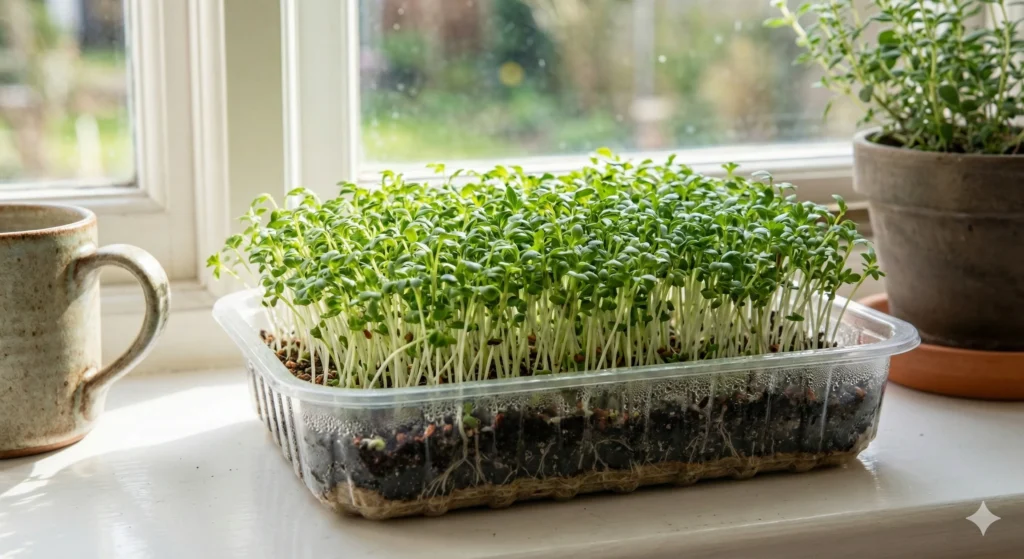
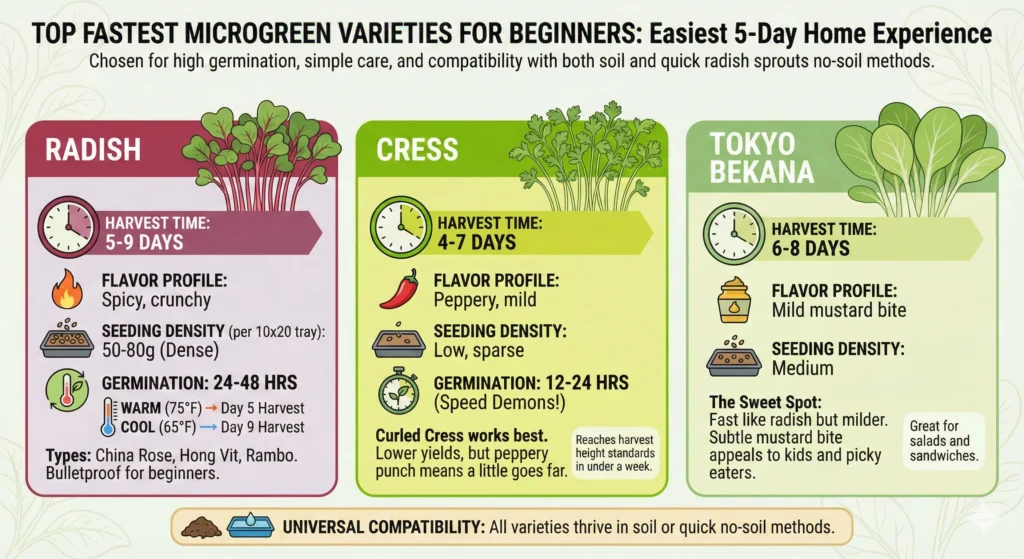
The fastest microgreens to grow for beginners aren’t just quick—they’re forgiving. Radish microgreens hit harvest in 5-9 days with a spicy crunch, cress microgreens race ahead in just 4-7 days with peppery mildness, and Tokyo Bekana microgreens deliver a mild mustard bite in 6-8 days. These three varieties germinate reliably, tolerate beginner mistakes, and don’t require seed soaking techniques microgreens growers sometimes overthink. Let’s break down exactly how to grow them, day by day.
Top Fastest Varieties
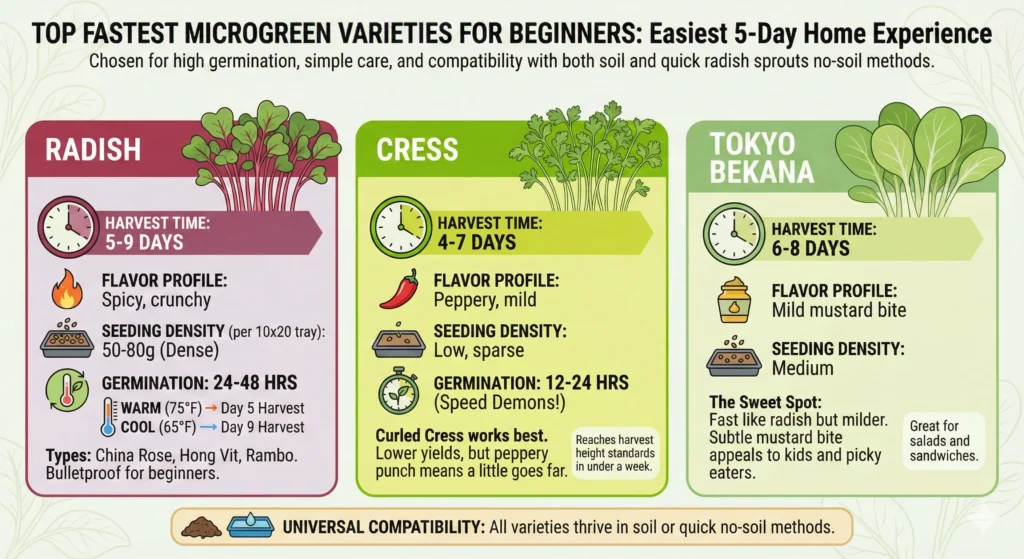
After testing dozens of varieties with beginner students, these three consistently deliver the easiest 5 day microgreens at home experience. They’re chosen for high germination rates, simple care, and quick radish sprouts no soil method compatibility (though soil works beautifully too).
| Variety | Harvest Time | Flavor Profile | Seeding Density (per 10×20 tray) |
|---|---|---|---|
| Radish | 5-9 days | Spicy, crunchy | 50-80g |
| Cress | 4-7 days | Peppery, mild | Low, sparse |
| Tokyo Bekana | 6-8 days | Mild mustard bite | Medium |
Radish microgreens (China Rose, Hong Vit, Rambo) pack that signature spicy radish microgreen flavor without the bite being overwhelming. They’re bulletproof for beginners—sow them densely at 50-80g per tray, and you’ll see germination within 24-48 hours. Warm temperatures (75°F) push harvest to day 5, while cooler rooms (65°F) extend it to day 9.
Cress microgreens are the speed demons. These fastest cress microgreens indoors varietals (curled cress works best) germinate in 12-24 hours and reach harvest height microgreens standards in under a week. The trade-off? Lower yields due to sparse seeding, but their peppery punch means a little goes far in salads.
Tokyo Bekana microgreens occupy the sweet spot—fast like radish but milder, with a subtle mustard bite that appeals to kids and picky eaters. The tokyo bekana microgreens harvest time flexibility lets you pick tender cotyledons at day 6 or wait until day 8 for first true leaves with more substance.
Materials Needed
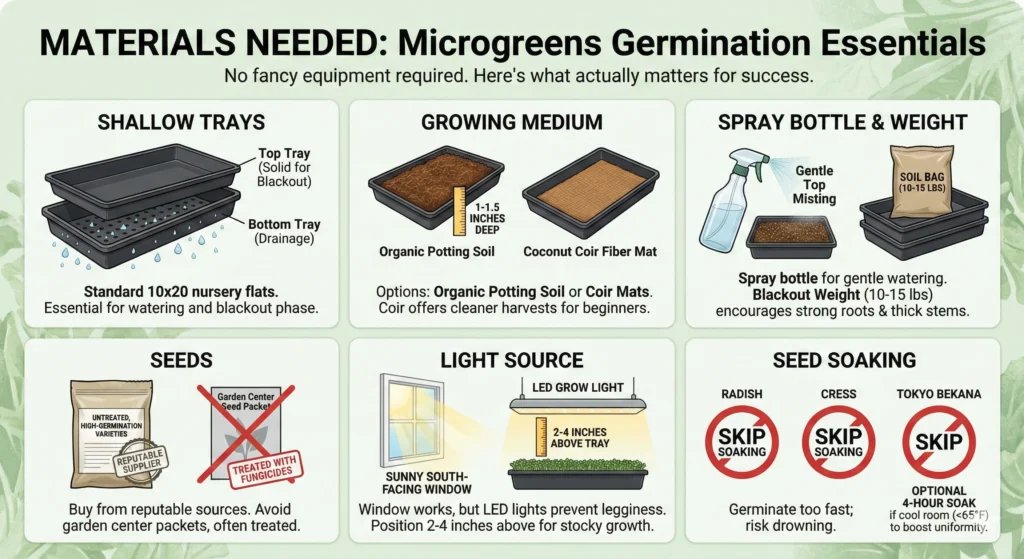
You don’t need fancy equipment. Here’s what actually matters for the microgreens germination process:
- Shallow trays: Standard 10×20 nursery flats with drainage holes (bottom tray) and solid watering trays (top tray for blackout).
- Growing medium: Organic potting soil (1-1.5 inches deep) or coconut coir fiber mats for hydroponic microgreens setup beginners appreciate for cleaner harvests.
- Seeds: Buy untreated, high-germination varieties from reputable suppliers. Avoid garden center seed packets—they’re often treated with fungicides.
- Spray bottle: For gentle top misting without displacing seeds.
- Weight for blackout period for sprouts: A second stacked tray works, but 10-15 pounds (a bag of soil, books, or dedicated weights) encourages strong root systems and thick stems.
- Light source: A sunny south-facing window works, but LED grow lights eliminate legginess. Position lights 2-4 inches above trays for stocky growth—this is critical for low light fastest microgreens varieties success.
Seed soaking: Skip it entirely for radish and cress. These small seeds germinate so fast that soaking risks drowning them. Tokyo Bekana also doesn’t require soaking, though a 4-hour soak can boost uniformity if your room runs cool (below 65°F).
General Growing Steps
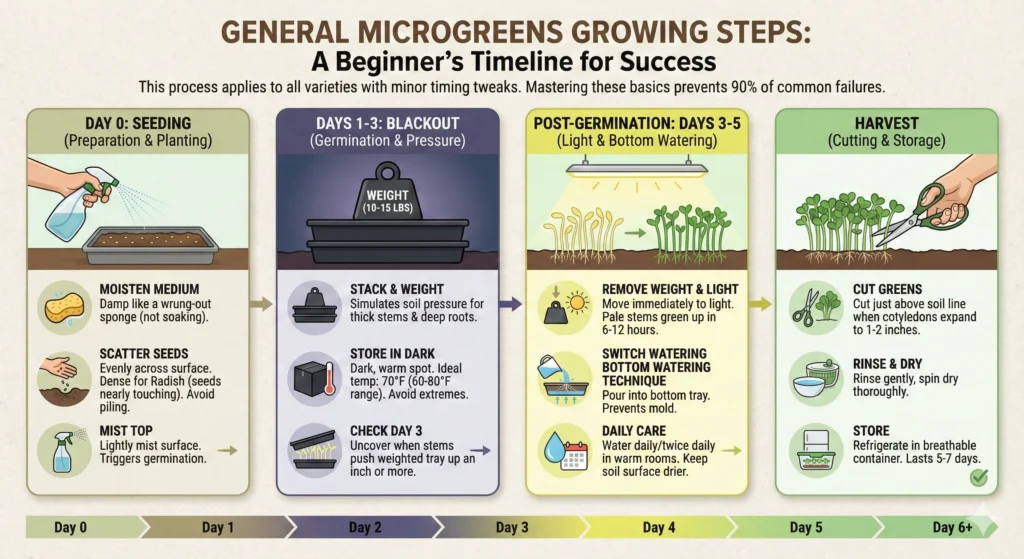
This process applies to all three varieties with minor timing tweaks. Understanding these beginner microgreens timeline chart basics prevents 90% of common failures.
Day 0 (Seeding): Moisten your growing medium until it’s damp like a wrung-out sponge—not soaking. Scatter seeds evenly across the surface. Dense seeding (seeds nearly touching for radish) maximizes yields, but avoid piling seeds on top of each other. Mist the top layer lightly with your spray bottle. This surface moisture triggers germination.
Days 1-3 (Blackout): Stack a second tray directly on the seeds and add 10-15 pounds of weight. This simulates soil pressure, forcing stems to grow thick and roots to dig deep. Store trays in a dark, warm spot—70°F is ideal. Too cold (below 60°F) slows germination; too hot (above 80°F) causes uneven sprouting. Check day 3 microgreens blackout tips: if stems push the weighted tray up an inch or more, it’s time to uncover.
Post-germination (Days 3-5): Remove the weight when you see dense, pale shoots lifting the tray. Move immediately to light. Within 6-12 hours, those pale stems green up through photosynthesis. Switch to bottom watering trays technique: pour water into the bottom tray and let roots wick it up. This prevents mold on leaves and keeps soil surface drier. Water daily or twice daily in warm rooms.
Harvest: Cut greens with clean scissors just above the soil line when cotyledons (first leaves) fully expand to 1-2 inches tall. Rinse gently, spin dry, and store in the fridge in a breathable container. Properly grown nutrient dense baby greens last 5-7 days refrigerated.
Radish Microgreens Day by Day Timeline
This radish microgreens day by day timeline reflects warm room conditions (70-75°F). Cooler temperatures add 1-2 days at each stage.
Day 0: Moisten soil in your tray. Measure 50-80g of radish seeds (about 2-3 handfuls for a 10×20 tray). Scatter evenly—aim for seeds nearly touching but in a single layer. Mist the surface until seeds glisten. Stack a weighted tray on top and place in a dark cabinet or closet.
Days 1-2: Germination starts within 24 hours. You’ll see tiny white root tails by day 2 if you peek (but don’t disturb them too often—moisture loss slows growth). Keep the weight on and maintain darkness.
Day 3: Check your trays. If pale, yellow-white shoots have pushed the weighted tray up about an inch, remove the weight and move to light. If stems are under half an inch, give them another 12-24 hours in blackout. Once exposed to light, water the bottom tray with 1-2 cups of water. Roots should reach the bottom tray within 24 hours.
Days 4-7/9: Water daily via bottom tray—roots will drink aggressively. Under grow lights, radish greens turn deep purple-green within 48 hours. At warm temps (75°F+), harvest on day 5-6 when cotyledons spread wide and stems reach 1.5-2 inches. In cooler rooms (65-68°F), wait until day 8-9. Look for thick, crunchy stems and fully expanded leaves. This cress microgreens growth stages beginners pattern applies similarly to radish—watch the cotyledons, not a calendar.
Yield: Expect 12-18 ounces per 10×20 tray. That’s 6-9 generous salad servings from 60g of seeds costing $2-4.
Cress Microgreens Growth Stages Beginners
Cress is the fastest but trickiest because it’s sparse and delicate. Here’s the proven timeline:
Day 0: Use damp paper towels, hemp mats, or a thin layer of soil (half-inch max). Cress seeds are tiny—sow them sparsely, about 1/4 the density of radish. They need space to breathe. Mist lightly and cover with a lid or second tray, but skip heavy weights. Cress stems are fragile and crush easily.
Days 1-2: Germination happens fast—often within 12-18 hours. Check on day 2. If you see a carpet of white roots and tiny shoots, reduce the blackout period. Cress needs less darkness than radish; 48 hours is plenty.
Days 3-4: Move to light. Cress greens up almost instantly—within 6 hours under LEDs. Begin watering twice daily because shallow mediums dry out fast. Use bottom watering if your setup allows, or mist the soil surface gently without soaking leaves.
Days 5-7: Harvest when stems reach 1-2 inches. Cress stays tender and peppery at this height. If you wait beyond day 7, stems toughen and flavor intensifies (great for some dishes, harsh for salads). Cut cleanly above roots and rinse. Cress is fragile, so handle gently.
Note: Cress yields are lower—expect 6-10 ounces per tray—but its speed and unique flavor make it worthwhile for succession planting microgreens rotations.
Tokyo Bekana Microgreens Harvest Time
Tokyo Bekana balances speed, mildness, and forgiving growth. It’s my top recommendation when beginners want something fast that isn’t too spicy.
Day 0: Sow seeds on moist soil at medium density—closer to radish density than cress, but with slight gaps visible between seeds. Mist well. Apply a weighted tray (10-15 lbs) and store in darkness at 68-72°F.
Day 1: Tokyo Bekana often germinates overnight. By morning of day 1 (24 hours post-seeding), you may see tiny roots emerging. Keep the blackout going—rushing to light causes weak, leggy stems.
Day 2: Check for strong germination. If shoots are pushing the tray up and roots are visible, uncover and move to light. If germination is patchy, leave weighted another 12-24 hours. Once exposed, water the bottom tray generously. Tokyo Bekana drinks heavily once greening starts.
Days 3-6/8: Water daily via bottom watering. By day 3-4, cotyledons expand and turn bright green. Day 6 is the earliest harvest window—greens are tender with mild flavor, perfect for delicate dishes. Day 8 brings first true leaves with a bit more mustard bite and substance. Both stages work; it’s personal preference.
Harvest tip: Tokyo Bekana stems are sturdy enough to withstand a second cut. After your first harvest, keep watering the tray. Within 5-7 days, you’ll get smaller regrowth shoots (though yields drop to 30-40% of the first cut).
Common Mistakes and Tips
Overwatering causes mold prevention growing greens failures: Mold (usually fuzzy white or gray) thrives in soggy soil with poor airflow. Solution: Bottom-water only, point a small fan across trays for circulation, and avoid misting after day 0. True root hairs (fine white fuzz on roots) are often mistaken for mold—they’re normal and healthy.
Legginess (tall, thin, weak stems): This screams “not enough light.” Move lights closer—2-4 inches above greens—or increase light duration to 12-16 hours daily. Low light fastest microgreens varieties like cress tolerate shadier spots better than others, but even they need decent light to stay compact.
Temperature matters: Below 65°F, germination crawls. Above 80°F, seeds bake or germinate unevenly. The sweet spot is 68-75°F. If your home runs cold, use a seedling heat mat under trays during blackout phase only.
Scaling up with succession planting microgreens: Once you’re confident, start new trays every 3 days. This creates a continuous harvest cycle—you’ll cut fresh greens 2-3 times per week indefinitely. I run 12 trays in rotation in a 3×3-foot space, yielding 3-4 pounds weekly.
Yields vary by variety and conditions: Radish consistently delivers 12-18oz per 10×20 tray. Cress yields 6-10oz. Tokyo Bekana hits 10-14oz. Warmer temps, stronger light, and proper watering push the high end.
Conclusion and Next Steps
Your first 5-day radish harvest will feel like a small miracle. That’s not beginner’s luck—it’s the power of choosing the fastest microgreens to grow for beginners and following a proven timeline. Quick wins build the confidence to experiment: try mixing radish and Tokyo Bekana in one tray for flavor complexity, or tackle slightly slower varieties like sunflower (10-12 days) and pea shoots (12-14 days) once you’ve mastered these basics.
Use your harvests immediately for maximum nutrition—toss them on scrambled eggs, blend into smoothies, or pile them on avocado toast. Fresh microgreens lose nutrients within days, so eat fast and grow often.
The beauty of microgreens is their forgiveness. Miss a watering? They’ll bounce back. Harvest a day late? Still delicious. This isn’t a fussy orchid—it’s a crop designed to succeed in beginners’ hands. Start with one tray of radish today. By next week, you’ll be hooked, and the week after that, you’ll be teaching your friends how you pulled off a 5-day harvest cycle. That’s when you’ll know: you’re not a beginner anymore.