Transform Your Container Garden: Fix These 7 Mistakes
Introduction
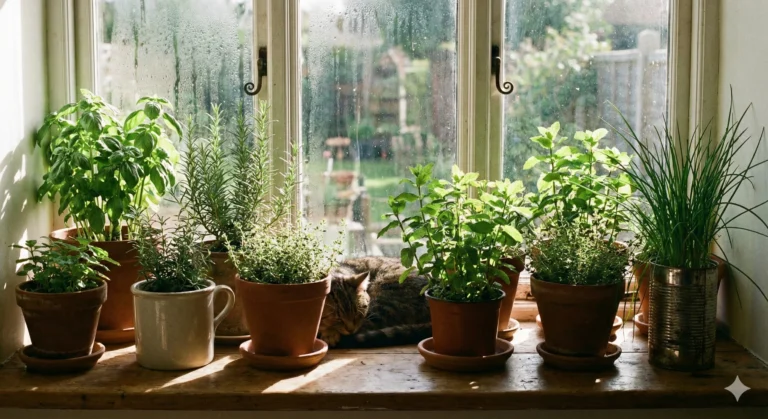
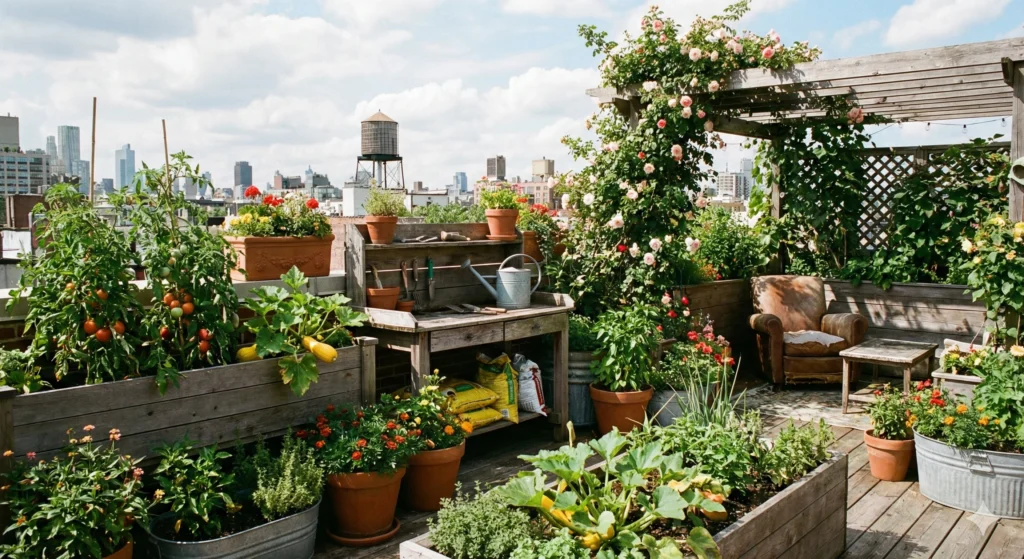
Container gardening opens doors for anyone to grow vibrant plants, regardless of space limitations. You can cultivate tomatoes on an apartment balcony, herbs on a sunny windowsill, or flowers on a small patio. The beauty of container gardening lies in its accessibility and flexibility.
Yet many beginners struggle initially, watching plants wilt, yellow, or fail to thrive despite their best intentions. These challenges stem from preventable mistakes rather than lack of skill. Understanding common container gardening problems and their solutions transforms frustrating experiences into rewarding successes. This guide provides container gardening tips for beginners to help you build confidence and grow thriving potted plants from day one.
Choosing the Wrong Containers
The Problem
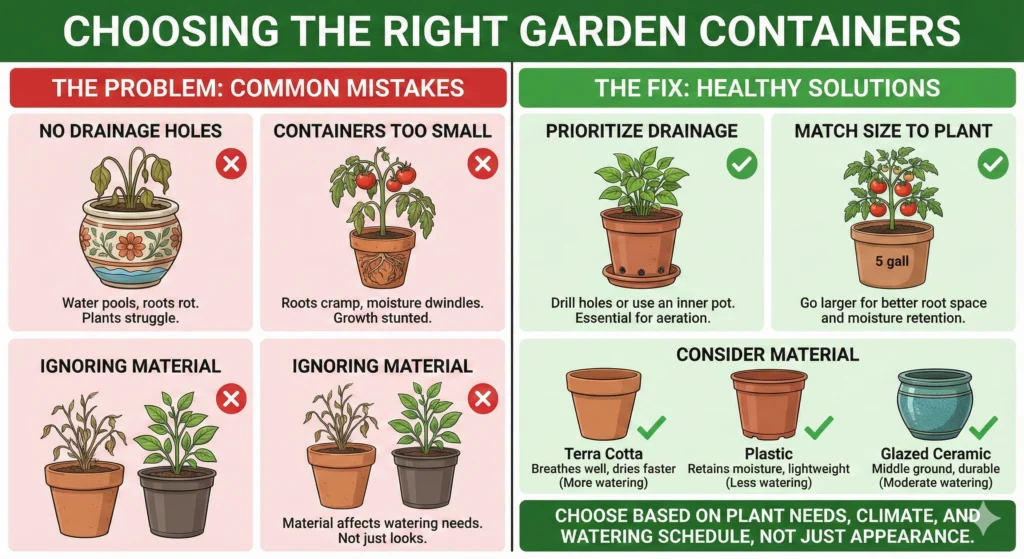
New gardeners often select containers based solely on appearance, grabbing decorative pots without drainage holes or choosing containers far too small for their plants’ needs. I’ve seen countless frustrated beginners wondering why their plants struggle, only to discover water pooling at the bottom of sealed containers or roots circling desperately in cramped quarters.
The Fix
Prioritize proper drainage for potted plants above all else. Every container needs drainage holes in the bottom. If you fall in love with a pot lacking holes, either drill them yourself or use it as a decorative outer sleeve for a functional inner pot.
Match container size to plant needs. Small herbs like thyme work beautifully in six-inch pots, while tomatoes demand at least five-gallon containers. When uncertain, go larger. Bigger containers hold more soil, retain moisture longer, and provide roots adequate space to develop strong, healthy plants.
Consider material thoughtfully. Terra cotta breathes well but dries quickly, requiring more frequent watering. Plastic retains moisture longer and weighs less. Glazed ceramic offers middle ground. Choose based on your watering schedule and climate rather than appearance alone.
Poor Soil Choices
The Problem
Garden soil from your yard seems like a logical, economical choice for containers. This represents one of the most common container gardening problems beginners face. Garden soil compacts severely in containers, suffocating roots and creating drainage nightmares. Similarly, cheap potting mix often contains excessive wood chips or poor-quality ingredients that break down rapidly.
The Fix
Invest in quality potting mix specifically formulated for containers. These mixes contain ingredients like peat moss, coconut coir, perlite, and vermiculite that maintain structure, provide aeration, and drain properly while retaining appropriate moisture.
Never use straight garden soil in containers. If you must incorporate garden soil for budget reasons, blend it with equal parts quality potting mix and add extra perlite for drainage. However, pure potting mix consistently delivers superior results.
Refresh soil annually. Potting mix depletes nutrients and breaks down over time. Each spring, either replace soil completely or remove the top third and replace with fresh mix. Your plants will reward this investment with vigorous growth.
Incorrect Watering Habits
The Problem
Watering issues plague more container gardens than any other factor. Beginners typically water on autopilot, giving the same amount daily regardless of weather, plant needs, or soil moisture. Overwatering drowns roots and promotes fungal diseases, while underwatering stresses plants and stunts growth.
The Fix
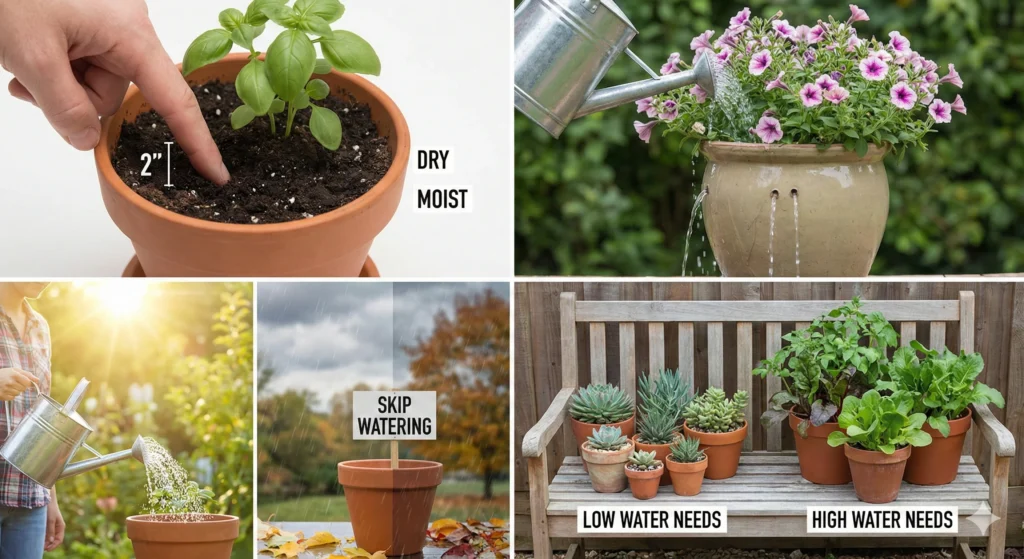
Water based on actual soil moisture, not schedules. Stick your finger two inches into the soil. If it feels dry at that depth, water thoroughly. If still moist, wait. Different plants, containers, and weather conditions create varying water needs.
Water deeply and thoroughly when you do water. Add water until it flows freely from drainage holes, ensuring the entire root zone gets moistened. Shallow watering encourages weak, surface roots rather than deep, drought-resistant systems.
Adjust frequency by season and weather. Summer heat demands more frequent watering, sometimes twice daily for small containers. Spring and fall require less. Rainy days mean skipping watering entirely. Pay attention rather than following rigid routines.
Group containers with similar water needs together. This practical strategy simplifies watering and prevents under- or over-watering individual plants trying to maintain one schedule for vastly different species.
Ignoring Sunlight Needs
The Problem
New gardeners position containers where they look attractive rather than where plants will thrive. Placing sun-loving tomatoes in shade or shade-preferring hostas in blazing afternoon sun creates stress no amount of water or fertilizer can overcome. Plants become leggy, fail to flower, or simply languish.
The Fix
Research light requirements before purchasing plants. Full sun means six-plus hours of direct sunlight daily. Part sun requires three to six hours. Shade means less than three hours or filtered light all day. Match plants to your available light conditions.
Observe your space throughout the day. That “sunny” spot might receive only morning sun, while afternoon shade moves in by noon. Track actual sun exposure for a week before committing plants to locations.
Embrace container mobility. Unlike in-ground gardens, containers move easily. If plants show signs of insufficient light, such as stretching toward light sources or producing few flowers, relocate them to brighter spots. Too much sun causes leaf scorch and wilting even after watering. Move affected plants to shadier locations.
Use light requirements as problem-solving tools. Struggling plants often simply need lighting adjustments rather than complex interventions.
Skipping or Overdoing Fertilization
The Problem
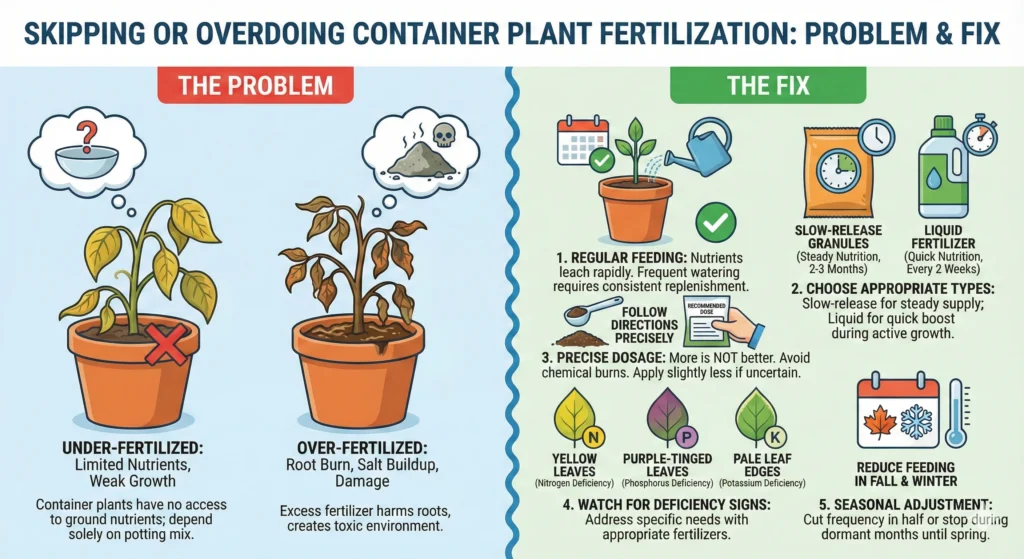
Container plants can’t access nutrients from surrounding soil like in-ground plants. They depend entirely on what exists in their limited soil volume. Some beginners never fertilize, watching plants yellow and weaken. Others apply excessive fertilizer, burning roots and creating salt buildup that damages plants more than neglect.
The Fix
Understand that container plants need regular feeding. Frequent watering leaches nutrients rapidly from potting mix. Without supplemental fertilization, plants exhaust available nutrients within weeks, regardless of initial soil quality.
Choose appropriate fertilizer types. Slow-release fertilizer in containers provides steady nutrition over months, making it ideal for beginners. Mix granules into soil at planting, then replenish every two to three months. Liquid fertilizers offer quick nutrition but require more frequent application, typically every two weeks during active growth.
Follow package directions precisely. More fertilizer doesn’t mean better growth. It means chemical burns and potentially dead plants. When uncertain, apply slightly less than recommended rather than more.
Watch for deficiency signs. Yellowing leaves, particularly on older growth, often indicate nitrogen deficiency. Purple-tinged leaves may signal phosphorus needs. Pale leaf edges can mean potassium shortages. Address specific deficiencies with appropriate fertilizers.
Reduce feeding in fall and winter. Most plants slow growth during shorter days. Cut fertilizer frequency in half or stop entirely until spring growth resumes.
Overcrowding Plants in Containers
The Problem
Seed packets and nursery pots show lush, full plantings that tempt beginners to cram multiple plants into single containers. While initially attractive, overcrowded containers quickly become battlegrounds. Plants compete fiercely for water, nutrients, and light. Air circulation drops, inviting fungal diseases. Individual plants never reach their potential, remaining stunted and stressed.
The Fix
Follow spacing guidelines on plant tags. These recommendations account for mature plant size, not current nursery pot dimensions. A plant needing twelve inches of space requires that distance from its neighbors, even if it looks tiny at planting time.
Calculate container capacity realistically. One large tomato plant fills a five-gallon container completely. Three to four small annual flowers work well in a twelve-inch pot. When designing mixed containers, choose one thriller, one filler, and one spiller rather than cramming in every appealing plant.
Thin seedlings appropriately. If direct-seeding into containers, remove excess seedlings once they develop true leaves. This feels wasteful but gives remaining plants space to thrive. You can often transplant thinned seedlings to other containers rather than discarding them.
Prune regularly to manage size. Strategic trimming keeps plants within bounds while promoting bushier growth. Remove overcrowded stems to improve air circulation and reduce disease pressure.
Neglecting Regular Maintenance and Pest Control
The Problem
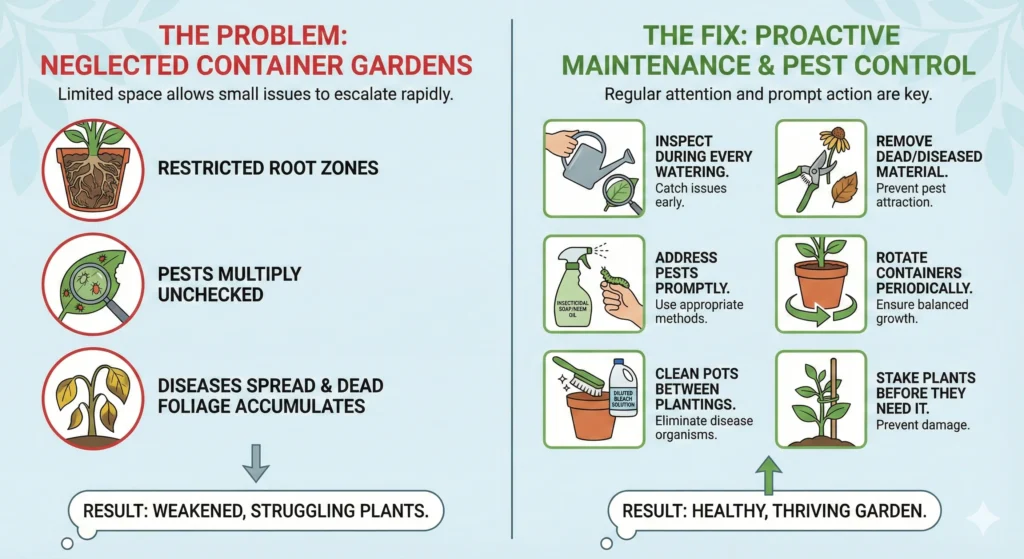
Container gardens look self-sufficient, leading beginners to plant and forget them. However, restricted root zones and concentrated plantings create conditions where small problems escalate rapidly. Pests multiply unchecked, diseases spread quickly, and dead foliage accumulates, harboring problems.
The Fix
Inspect plants during every watering. This takes mere minutes but catches issues early when solutions are simple. Look for chewed leaves, stippling from spider mites, sticky residue from aphids, or discolored foliage indicating disease.
Remove dead or diseased material immediately. Yellowed leaves, spent flowers, and dead stems attract pests and spread diseases. Deadheading flowers encourages continued blooming while cleaning up appearance.
Address pest problems promptly with appropriate methods. Hand-pick large pests like caterpillars and beetles. Spray aphids off with water streams. Apply insecticidal soap for stubborn infestations. Neem oil handles various pest and fungal issues organically.
Rotate containers periodically. Plants leaning toward light or developing unevenly benefit from quarter-turns every few days, ensuring balanced growth.
Clean containers between plantings. Scrub pots with diluted bleach solution (one part bleach to nine parts water) to eliminate disease organisms before replanting. This prevents carrying problems from one season to the next.
Stake plants before they need it. Installing supports early prevents damage from trying to stake already-flopped plants and gives stems time to grow against supports naturally.
Conclusion: Your Container Garden Journey
Every experienced container gardener started exactly where you are now, making these same mistakes and learning from them. The difference between frustration and success isn’t innate talent. It comes from understanding how to fix container garden problems as they arise and implementing proven solutions.
Container gardening rewards attention and responsiveness. Your plants communicate their needs through appearance and growth patterns. Learning to read these signals and adjust accordingly develops naturally with practice and observation.
Start small if you feel overwhelmed. Master three or four containers before expanding. Choose forgiving plants like herbs, cherry tomatoes, and marigolds for early successes that build confidence. Join online communities or local gardening groups where you can ask questions and share experiences.
Most importantly, embrace the learning process. Each growing season teaches new lessons. Mistakes become valuable teachers rather than failures. Your container garden will flourish as your knowledge and skills grow, providing beauty, fresh food, and deep satisfaction for years to come. Keep growing, keep learning, and enjoy every moment of your container gardening adventure.