10 Thriving Indoor Plants for Absolute Beginners (Yes, Even You)
Most beginners kill their first houseplants through overwatering, choosing plants that need more light than they have, or simply forgetting to check on them for weeks. The good news: you don’t need a green thumb or a consistent routine to keep indoor plants alive. You need the right plants.
This guide introduces 10 genuinely forgiving houseplants that tolerate irregular care, adapt to typical home conditions, and give you clear signals when something’s wrong. Each one comes with simple instructions you can actually follow on a hectic schedule.
What “Low-Maintenance” Really Means
When we say a plant is low-maintenance for beginners, here’s what that actually looks like:
Tolerates typical home conditions. These plants handle average indoor temperatures, normal humidity levels, and don’t need special equipment or grow lights.
Forgives missed waterings. They store water in their leaves, stems, or roots, so skipping a week (or two) won’t kill them.
Adapts to imperfect light. Most survive in bright indirect light, low light corners, or even north-facing rooms without much natural sun.
Shows stress slowly. Instead of dying overnight, these plants give you visual warnings—yellowing leaves, drooping, or dry tips—with enough time to course-correct.
One important reality check: “hard to kill” doesn’t mean indestructible. Every plant needs some water and some light. But these ten handle beginner mistakes far better than most.
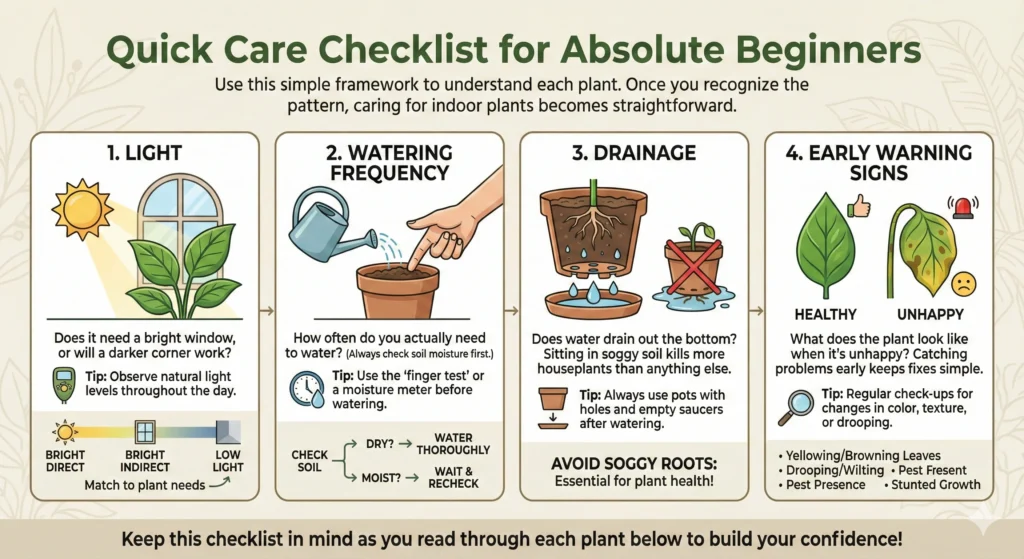
Quick Care Checklist for Absolute Beginners
Use this simple framework to understand each plant. Once you recognize the pattern, caring for indoor plants becomes straightforward.
Light: Does it need a bright window, or will a darker corner work?
Watering frequency: How often do you actually need to water? (Always check soil moisture first.)
Drainage: Does water drain out the bottom? Sitting in soggy soil kills more houseplants than anything else.
Early warning signs: What does the plant look like when it’s unhappy? Catching problems early keeps fixes simple.
Keep this checklist in mind as you read through each plant below.
The 10 Best Low-Maintenance Indoor Plants
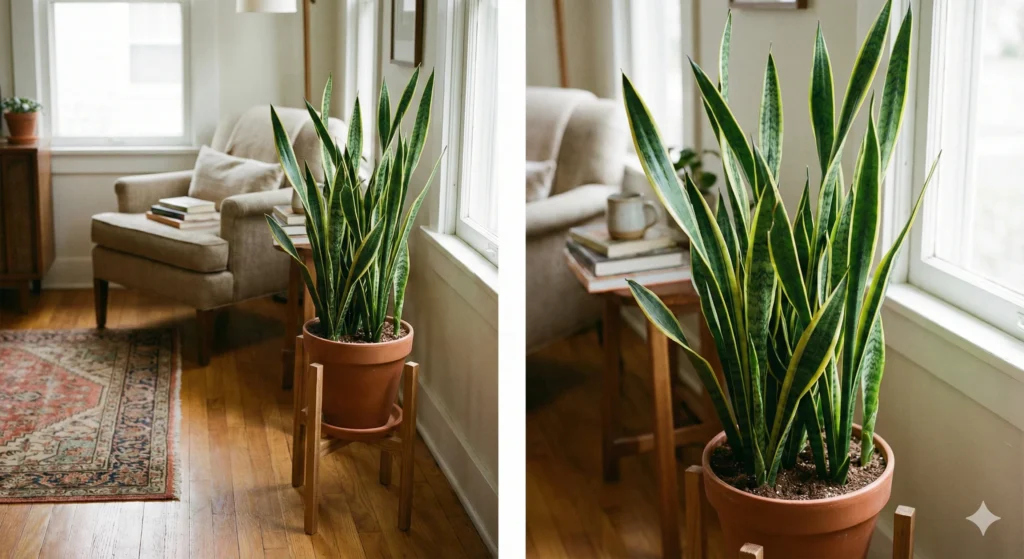
1. Snake Plant (Sansevieria / Dracaena trifasciata)
Why beginners love it: The snake plant survives weeks of neglect, low light corners, and irregular watering schedules. It’s nearly impossible to kill through underwatering, which makes it perfect for forgetful plant parents.
Light needs: Tolerates low light but grows faster in bright indirect light. Works well in offices, bedrooms, or any room without direct sun exposure.
Watering frequency: Every 2–4 weeks. Let the soil dry out completely between waterings. In winter, you might water once a month.
Ideal spots: Bedroom corners, home office desk, dark hallways, or bathroom shelves.
Key tips:
- Do this: Use a pot with drainage holes and well-draining potting mix. Water less in winter.
- Avoid this: Overwatering. Mushy, yellow leaves mean too much water. This plant prefers to stay on the dry side.
Bonus: Snake plant care for beginners is genuinely simple because this air-purifying houseplant forgives almost every rookie mistake.
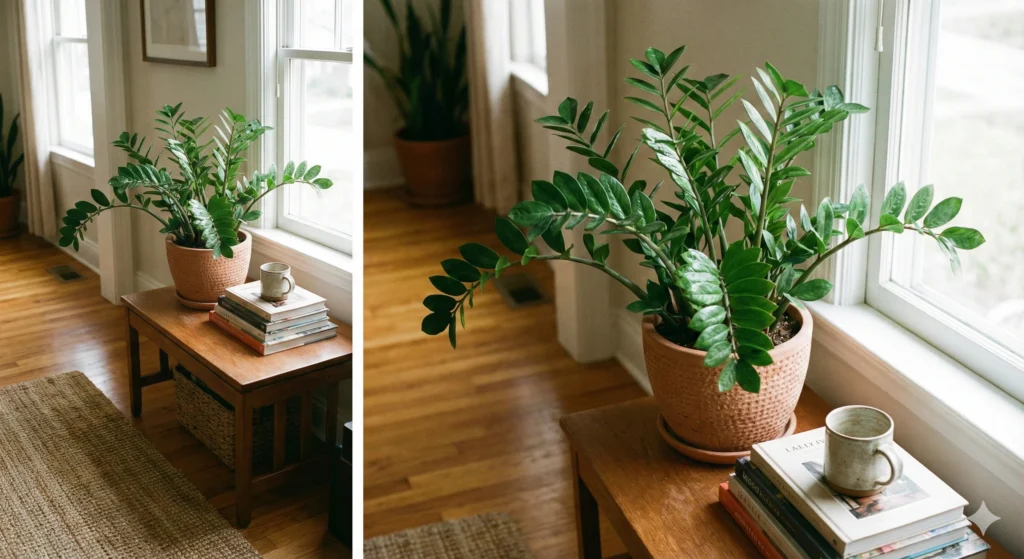
2. ZZ Plant (Zamioculcas zamiifolia)
Why beginners love it: The ZZ plant has thick, waxy leaves that store water, allowing it to survive 3–4 weeks without attention. It thrives in low light and tolerates fluorescent office lighting better than most houseplants.
Light needs: Adaptable. Grows in low light corners or bright indirect light. Avoid harsh direct sun, which can burn the leaves.
Watering frequency: Every 2–3 weeks in warmer months, less in winter. The thick stems store water, so err on the side of underwatering.
Ideal spots: Low light corners, north-facing rooms, offices without windows, small apartments with limited natural light.
Key tips:
- Do this: Let the top 2 inches of soil dry completely before watering again.
- Avoid this: Frequent watering. Yellow stems signal overwatering. Brown, crispy leaf tips mean too much direct sun or underwatering (though the latter is rare).
Bonus: ZZ plant low maintenance care makes it one of the best houseplants for forgetful owners and busy lifestyles.
3. Pothos (Epipremnum aureum)
Why beginners love it: Pothos grows fast, looks lush, and tells you exactly when it needs water by drooping slightly. It bounces back within hours of watering, which builds confidence for new plant parents.
Light needs: Thrives in bright indirect light but tolerates low light surprisingly well. Variegated varieties (with white or yellow patterns) need slightly more light to maintain their colors.
Watering frequency: Every 1–2 weeks. Water when the leaves start to look a bit limp or the top inch of soil feels dry.
Ideal spots: Hanging baskets, high shelves, bathroom counters, or office desks. Its trailing vines create an indoor jungle look over time.
Key tips:
- Do this: Trim long vines to encourage fuller growth. You can propagate cuttings in water easily.
- Avoid this: Letting it sit in standing water. Pothos tolerates occasional dryness but hates wet, soggy roots.
Bonus: Pothos easy indoor plant care makes it ideal for busy people who want greenery without constant attention.
4. Spider Plant (Chlorophytum comosum)
Why beginners love it: Spider plants are nearly indestructible and produce baby “spiderettes” you can propagate into new plants. They adapt to various light conditions and forgive inconsistent watering.
Light needs: Prefers bright indirect light but tolerates medium to low light. More light produces more baby plants.
Watering frequency: Every 1–2 weeks. Water when the top inch of soil feels dry. Spider plants have thick roots that store moisture.
Ideal spots: Hanging planters, high shelves, bathroom windows, or bedrooms. The arching leaves look best when displayed at eye level or higher.
Key tips:
- Do this: Use filtered or distilled water if your tap water is heavily chlorinated. Brown leaf tips often indicate fluoride or chlorine sensitivity.
- Avoid this: Overwatering. Root rot happens when soil stays constantly wet.
Bonus: Spider plant care for beginners includes easy propagation, which means free plants for friends once yours starts producing babies.
5. Cast Iron Plant (Aspidistra elatior)
Why beginners love it: Named for its indestructible nature, the cast iron plant survives low light, neglect, temperature fluctuations, and irregular care better than almost any houseplant.
Light needs: Thrives in low to medium light. Can handle darker corners where other plants struggle. Too much direct sun bleaches the leaves.
Watering frequency: Every 2–3 weeks. Prefers slightly moist soil but tolerates periods of dryness.
Ideal spots: Dark hallways, low light corners, basements with minimal windows, or north-facing rooms.
Key tips:
- Do this: Wipe dust off the broad leaves occasionally to help them absorb light efficiently.
- Avoid this: Overwatering or placing in hot, direct sun. Brown spots on leaves usually indicate too much light or inconsistent watering.
Bonus: Cast iron plant care tips always emphasize its tolerance for neglect, making it perfect for lazy gardeners who want greenery without effort.
6. Peace Lily (Spathiphyllum)
Why beginners love it: Peace lilies dramatically droop when thirsty, giving you an unmistakable signal it’s time to water. They recover quickly once watered, teaching you to read plant stress signals.
Light needs: Prefers medium to low indirect light. Tolerates darker rooms but blooms more in brighter (not direct) light.
Watering frequency: Every 1–2 weeks, or when the leaves droop noticeably. The plant tells you exactly when it needs water.
Ideal spots: Bathrooms (they enjoy humidity), bedrooms, offices, or low light corners.
Key tips:
- Do this: Water when the leaves start drooping. They’ll perk up within hours. Occasional misting helps if your home is very dry.
- Avoid this: Letting it droop repeatedly. While forgiving once or twice, constant stress weakens the plant over time.
Bonus: Peace lilies are popular air-purifying houseplants and work well in small apartments or urban living spaces.
7. Jade Plant (Crassula ovata)
Why beginners love it: As a succulent, jade stores water in its thick leaves, tolerating weeks without watering. It’s one of the best succulents for beginners indoors because it adapts to typical home conditions.
Light needs: Prefers bright indirect light or a sunny window. Can tolerate medium light but grows more slowly.
Watering frequency: Every 2–3 weeks in spring and summer, less in winter. Let soil dry completely between waterings.
Ideal spots: Bright windowsills, desks near windows, sunny kitchen counters, or bedroom shelves with good light.
Key tips:
- Do this: Use a well-draining potting mix designed for succulents or cacti. Ensure pots have drainage holes.
- Avoid this: Overwatering. Wrinkled, shriveling leaves mean underwatering; mushy, translucent leaves mean overwatering.
Bonus: Jade plants develop a tree-like appearance over time, adding character to your space with minimal effort.
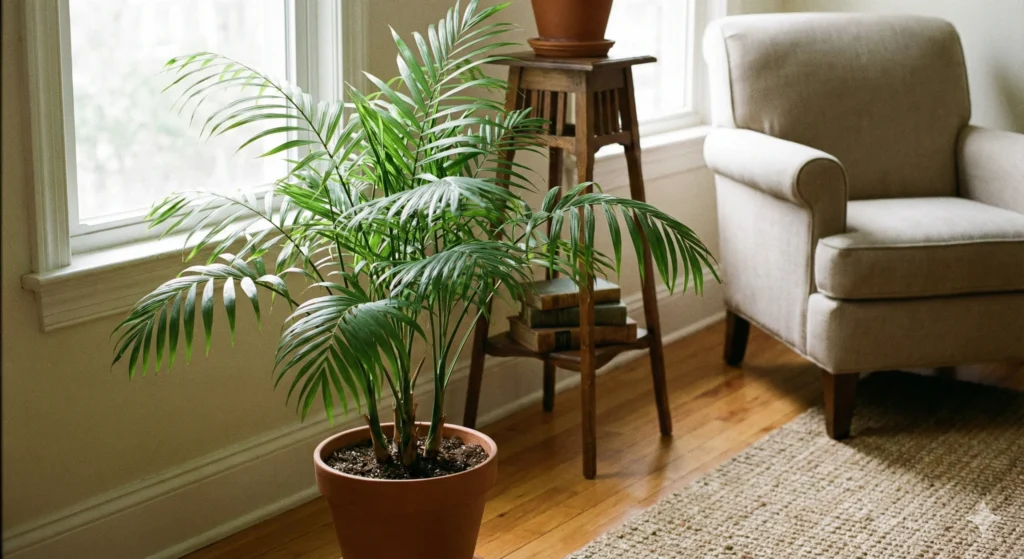
8. Parlor Palm (Chamaedorea elegans)
Why beginners love it: Parlor palms bring a tropical vibe without the demanding care requirements of most palms. They tolerate low light and adapt to average home humidity.
Light needs: Thrives in medium to low indirect light. Avoid direct sun, which scorches the delicate fronds.
Watering frequency: Every 1–2 weeks. Keep soil lightly moist but not soggy. They prefer consistent moisture more than other plants on this list.
Ideal spots: Living room corners, bedrooms, offices, or bathrooms with indirect light.
Key tips:
- Do this: Maintain slightly more consistent watering than other low-maintenance plants. Brown leaf tips usually indicate low humidity or underwatering.
- Avoid this: Overwatering or placing in harsh, direct sunlight. Yellow fronds often signal too much water.
Bonus: Parlor palms are pet friendly, making them safe for homes with curious cats or dogs.
9. Rubber Plant (Ficus elastica)
Why beginners love it: Rubber plants have thick, glossy leaves that make a bold statement. They tolerate some neglect and adapt to various light conditions once established.
Light needs: Prefers bright indirect light but tolerates medium light. Variegated varieties need more light to maintain their patterns.
Watering frequency: Every 1–2 weeks. Water when the top 2 inches of soil feel dry. Reduce watering in winter.
Ideal spots: Living rooms, bright corners, near east or west-facing windows, or as a focal point in larger spaces.
Key tips:
- Do this: Wipe leaves with a damp cloth to remove dust and keep them glossy. Rotate the plant occasionally for even growth.
- Avoid this: Overwatering or sudden temperature changes. Dropping leaves often indicate overwatering, drafts, or moving the plant too frequently.
Bonus: Rubber plants grow into impressive floor plants over time, creating an indoor jungle look with minimal upkeep.
10. Aloe Vera
Why beginners love it: Aloe stores water in its thick, fleshy leaves, surviving 2–3 weeks without attention. It’s practical, low-maintenance, and useful—you can apply the gel to minor burns or skin irritation.
Light needs: Prefers bright indirect light or a sunny window. Can tolerate medium light but grows more slowly.
Watering frequency: Every 2–3 weeks. Water deeply, then let soil dry completely. In winter, water even less frequently.
Ideal spots: Sunny windowsills, kitchen counters, bathroom shelves, or bedroom desks with good natural light.
Key tips:
- Do this: Use a well-draining cactus or succulent potting mix. Ensure the pot has drainage holes.
- Avoid this: Overwatering. Brown, mushy leaves indicate rot from too much moisture. Pale, thin leaves suggest insufficient light.
Bonus: Aloe vera is one of the hard to kill indoor plants for busy people, combining practicality with easy care.
How to Choose the Right Plant from This List
Not sure which plant matches your space and lifestyle? Use these simple decision rules:
Low light + very forgetful watering? Start with snake plant or ZZ plant. Both tolerate neglect and darker corners exceptionally well.
Bright window + occasional forgetfulness? Try aloe vera or jade plant. Succulents love light and store plenty of water.
Want a hanging or trailing look? Choose pothos or spider plant. Both create lush, cascading vines with minimal effort.
Need something for a bathroom? Peace lily or parlor palm enjoy the extra humidity and handle low to medium light.
Have pets? Check toxicity before buying. Spider plant, parlor palm, and some prayer plants are pet friendly, while pothos, snake plant, and peace lily are toxic to cats and dogs if ingested. Research your specific plant if you have curious pets.
Want a statement plant? Rubber plant or parlor palm grow larger and make bold focal points in living spaces.
Start with one or two plants that match your light conditions and schedule. Build confidence before expanding your collection.
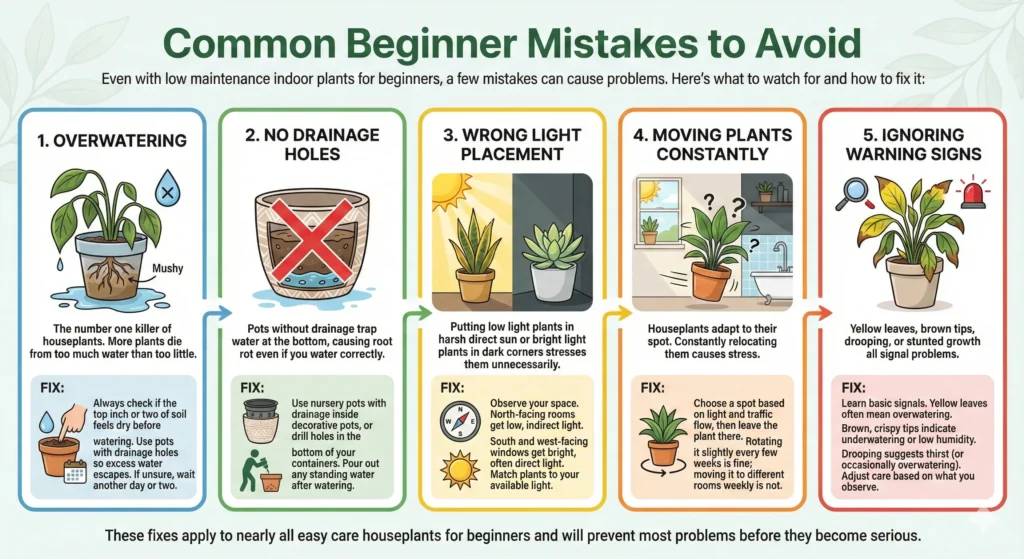
Common Beginner Mistakes to Avoid
Even with low maintenance indoor plants for beginners, a few mistakes can cause problems. Here’s what to watch for and how to fix it:
Overwatering: The number one killer of houseplants. More plants die from too much water than too little.
- Fix: Always check if the top inch or two of soil feels dry before watering. Use pots with drainage holes so excess water escapes. If you’re unsure, wait another day or two.
No drainage holes: Pots without drainage trap water at the bottom, causing root rot even if you water correctly.
- Fix: Use nursery pots with drainage inside decorative pots, or drill holes in the bottom of your containers. Pour out any standing water after watering.
Wrong light placement: Putting low light plants in harsh direct sun or bright light plants in dark corners stresses them unnecessarily.
- Fix: Observe your space. North-facing rooms get low, indirect light. South and west-facing windows get bright, often direct light. Match plants to your available light.
Moving plants constantly: Houseplants adapt to their spot. Constantly relocating them causes stress.
- Fix: Choose a spot based on light and traffic flow, then leave the plant there. Rotating it slightly every few weeks is fine; moving it to different rooms weekly is not.
Ignoring warning signs: Yellow leaves, brown tips, drooping, or stunted growth all signal problems.
- Fix: Learn basic signals. Yellow leaves often mean overwatering. Brown, crispy tips indicate underwatering or low humidity. Drooping suggests thirst (or occasionally overwatering). Adjust care based on what you observe.
These fixes apply to nearly all easy care houseplants for beginners and will prevent most problems before they become serious.
Start Small and Build Confidence
If you’ve killed plants before or feel intimidated by plant care, that’s completely normal. Most experienced plant parents started exactly where you are now.
Begin with one or two plants from this list. Use the care checklist for each one. Water only when the soil feels dry. Place them in appropriate light. Check on them once a week.
These ten indoor plants that survive neglect are specifically chosen because they forgive mistakes and give you time to learn. You don’t need perfect conditions or a rigid schedule. You need realistic expectations and plants that match your lifestyle.
With these forgiving options, you’re far more likely to succeed than fail. Give it a try—your first thriving houseplant is simpler than you think.