Thriving Organic Indoor Herb Garden: Beginner’s Guide
Organic Indoor

Organic Kitchen Herb Garden Indoors: A Step-by-Step Guide for Beginners:
Introduction
Indoor organic herb gardening has quietly moved from a niche hobby to a daily ritual for people who want fresher food, calmer kitchens, and more control over what they consume. As apartments get smaller and outdoor space becomes limited, growing herbs indoors—right where you cook—has become both practical and deeply satisfying.
An organic kitchen herb garden indoors gives you fresh herbs year-round, eliminates plastic packaging and food waste, saves money over time, and reconnects you with the natural rhythm of plant growth—even in the middle of a busy life. There is something grounding about snipping basil for dinner or brushing your hand against rosemary while waiting for water to boil.
This guide walks you through the entire process step by step: understanding organic principles, choosing the right herbs, setting up containers and soil, managing light and water, harvesting properly, and solving common problems beginners face. Every step is explained simply, with the quiet wisdom of experience—so you can succeed even if this is your very first plant.
1. Understanding Organic Indoor Herb Gardening
What “organic” truly means
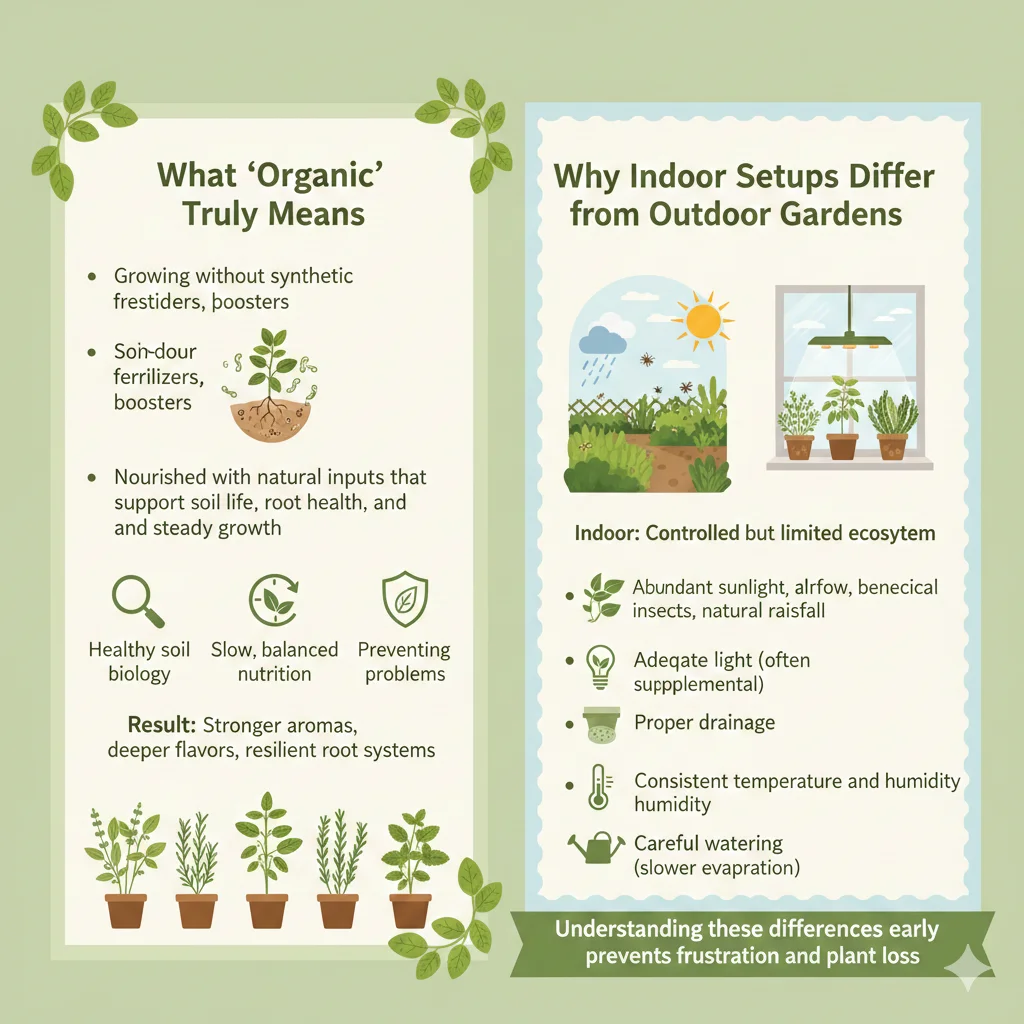
Organic indoor herb gardening means growing plants without synthetic fertilizers, pesticides, or growth boosters. Instead, plants are nourished with natural inputs that support soil life, root health, and steady growth.
Organic practices focus on:
- Healthy soil biology (microbes, fungi, organic matter)
- Slow, balanced nutrition instead of rapid forced growth
- Preventing problems before they start, rather than reacting with chemicals
When herbs grow organically, they develop stronger aromas, deeper flavors, and more resilient root systems—exactly what you want in a kitchen garden.
Why indoor setups differ from outdoor gardens
Indoor gardens operate in a controlled but limited ecosystem. Outdoors, plants receive abundant sunlight, airflow, beneficial insects, and natural rainfall. Indoors, you must intentionally provide:
- Adequate light (often supplemental)
- Proper drainage to prevent root rot
- Consistent temperature and humidity
- Careful watering, since evaporation is slower
Understanding these differences early prevents frustration and plant loss.
Common beginner misconceptions and how to avoid them
- “Herbs need very little light.”
Most culinary herbs need 12–16 hours of bright light daily to thrive. - “More water equals healthier plants.”
Overwatering is the #1 cause of indoor herb failure. - “Any soil will work.”
Garden soil compacts indoors and suffocates roots; use organic potting mix. - “Plants should grow tall quickly.”
Fast, weak growth often means leggy growth caused by low light.
2. Choosing the Right Herbs
Easiest herbs for beginners
Start with forgiving herbs that adapt well to indoor conditions:
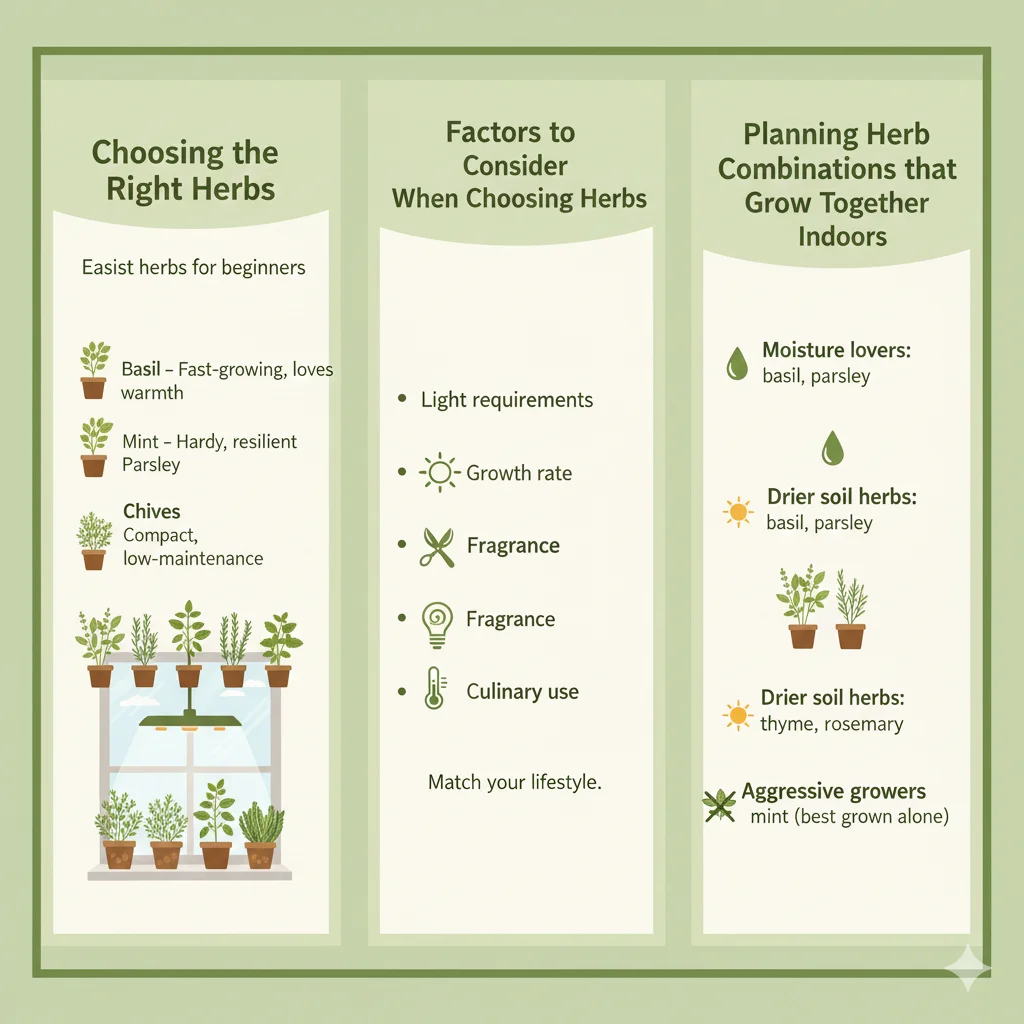
- Basil – Fast-growing, aromatic, loves warmth and bright light
- Mint – Hardy, resilient, thrives even with imperfect care
- Parsley – Slow to start but dependable once established
- Chives – Compact, low-maintenance, excellent for windowsills
- Thyme – Drought-tolerant, prefers drier soil and good airflow
These are among the best herbs to grow in a kitchen window, especially for first-time growers.
Factors to consider when choosing herbs
Before planting, consider:
- Light requirements – Basil and rosemary need more light than mint or chives
- Growth rate – Fast growers need more frequent pruning
- Fragrance – Strong scents like mint and rosemary can dominate small spaces
- Culinary use – Grow what you actually cook with regularly
A small indoor organic herb garden for beginners succeeds best when it matches your lifestyle.
Planning herb combinations that grow well together indoors
Group herbs with similar needs:
- Moisture lovers: basil, parsley
- Drier soil herbs: thyme, rosemary
- Aggressive growers: mint (best grown alone)
This companion planning prevents competition and uneven growth.
3. Selecting Containers and Soil
Ideal container types
Choose containers that balance function and aesthetics:
- Terracotta – Breathable, helps prevent overwatering
- Ceramic (glazed) – Attractive but must have drainage holes
- Recycled containers – Only if thoroughly cleaned and drilled
- Self-watering pots – Helpful for consistency, but monitor closely
Importance of drainage holes and proper pot size
Drainage holes are non-negotiable. Without them:
- Water pools at the bottom
- Roots suffocate
- Root rot develops quickly
Pot size guidelines:
- Small herbs: 4–6 inches wide
- Larger herbs (basil, rosemary): 6–8 inches
- Deep enough to allow root expansion
Choosing quality organic potting mix
A good organic potting mix should include:
- Compost – Nutrients and microbial life
- Coco coir or peat – Moisture retention
- Perlite or pumice – Airflow and drainage
Avoid mixes labeled “feeds for 6 months” unless certified organic.
DIY organic soil blend for herbs
Simple homemade mix:
- 40% compost
- 40% coco coir
- 20% perlite
This blend drains well, holds moisture evenly, and supports healthy roots indoors.
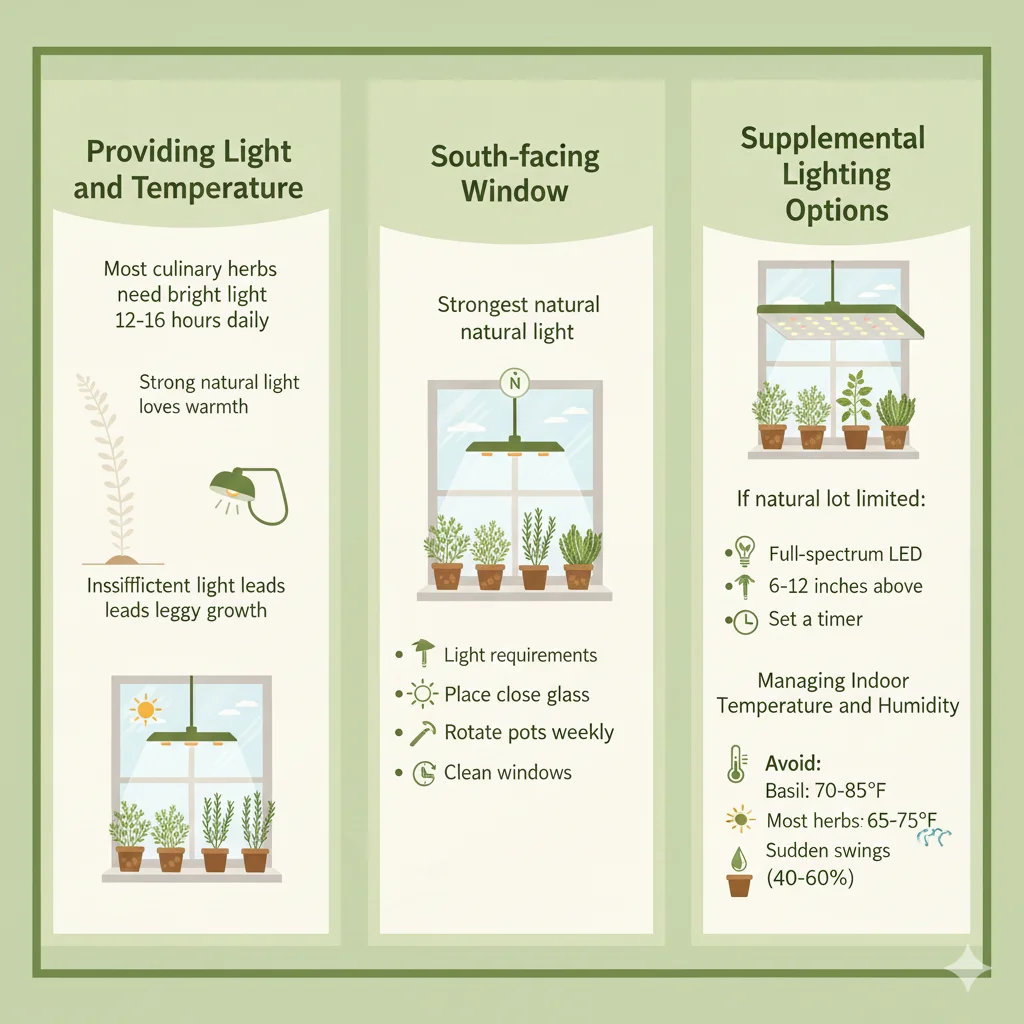
4. Providing Light and Temperature
Understanding herbs’ light needs
Most culinary herbs need bright light for 12–16 hours daily. Indoors, this means:
- Strong natural light or
- Grow lights designed for plants
Insufficient light leads to leggy growth, pale leaves, and weak flavor.
South-facing window placement
A south-facing window provides the strongest natural light:
- Place herbs as close to the glass as possible
- Rotate pots weekly for even growth
- Clean windows regularly to maximize light penetration
Supplemental lighting options
If natural light is limited:
- Use full-spectrum LED grow lights
- Position lights 6–12 inches above plants
- Set a timer for consistent daily exposure
Managing indoor temperature and humidity
Ideal temperature ranges:
- Basil: 70–85°F
- Most herbs: 65–75°F
Avoid:
- Cold drafts
- Heat vents
- Sudden temperature swings
Moderate humidity (40–60%) keeps leaves healthy without encouraging mold.
5. Watering and Feeding Organically
Signs of over- and underwatering
Overwatering signs:
- Yellowing leaves
- Mushy stems
- Sour-smelling soil
- Fungus gnats
Underwatering signs:
- Wilting
- Dry, crumbly soil
- Slow growth
Always check soil moisture with your finger before watering.
Using compost tea or organic liquid fertilizers
Compost tea provides gentle nutrition and beneficial microbes:
- Use once every 2–4 weeks
- Dilute well to avoid salt buildup
- Apply to moist soil, never dry
Other organic options:
- Fish emulsion (very diluted)
- Seaweed extract for trace minerals
Schedule and quantity guidelines
- Water when top 1–2 inches of soil are dry
- Water thoroughly until excess drains out
- Empty saucers to prevent standing water
Consistency matters more than frequency.
6. Pruning, Harvesting, and Promoting Growth
How often to trim herbs
Regular trimming encourages bushier plants:
- Trim every 1–2 weeks during active growth
- Never remove more than ⅓ of the plant at once
Proper harvesting technique
- Cut just above a leaf node
- Harvest outer growth first
- Use clean, sharp scissors
This technique promotes branching and continuous yield.
Common pruning mistakes to avoid
- Letting herbs flower too early
- Cutting too low on woody stems
- Harvesting tiny plants before establishment
Patience early leads to abundance later.
7. Organic Pest Control Indoors
Identifying common indoor pests
- Aphids – Sticky residue, curled leaves
- Whiteflies – Tiny white insects that fly when disturbed
- Fungus gnats – Small black flies near soil surface
Natural remedies
- Neem oil spray (diluted properly)
- Soap spray using pure castile soap
- Sticky traps for monitoring
- Beneficial insects (rare indoors, but effective in sunrooms)
Preventive measures
- Avoid overwatering
- Ensure airflow
- Quarantine new plants
- Practice companion planting where possible
Healthy plants resist pests naturally.
8. Troubleshooting Common Problems
Yellowing leaves, leggy growth, poor aroma
- Yellow leaves: often overwatering or nutrient imbalance
- Leggy growth: insufficient light
- Weak aroma: low light or overfertilizing
Adjust one factor at a time for clarity.
Reviving wilted or moldy plants
- Trim damaged growth
- Improve airflow
- Repot if soil smells sour or moldy
- Reduce watering frequency
Knowing when to repot or restart
Repot when:
- Roots circle the pot
- Water drains too quickly
- Growth stalls despite good care
Restart when:
- Disease persists
- Plant becomes woody and unproductive
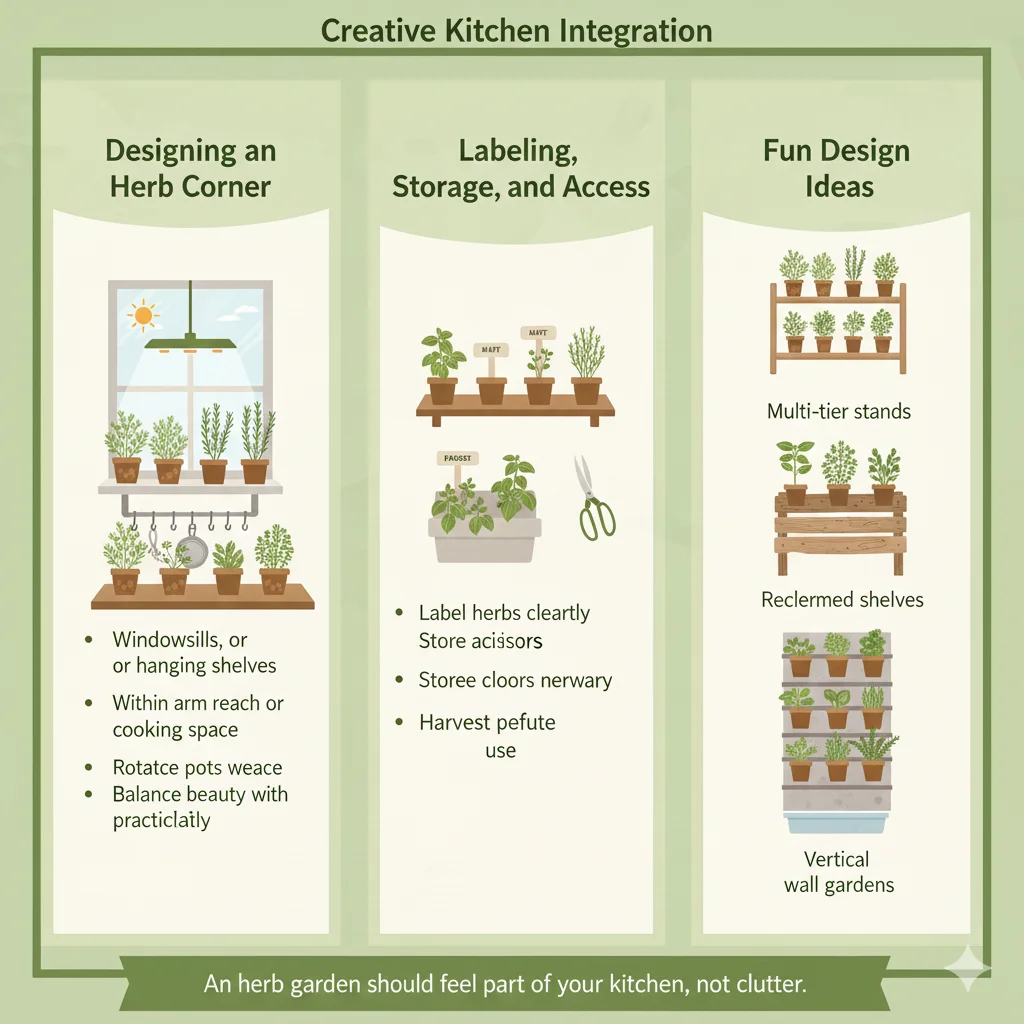
9. Creative Kitchen Integration
Designing an herb corner
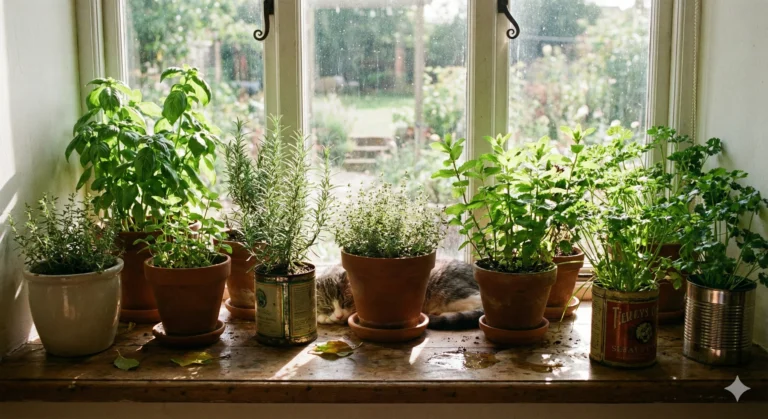
- Use windowsills, countertops, or hanging shelves
- Keep herbs within arm’s reach of cooking space
- Balance beauty with practicality
Labeling, storage, and access
- Label herbs clearly
- Store scissors nearby
- Harvest just before use for maximum flavor
Fun design ideas
- Multi-tier stands for small kitchens
- Reclaimed wood shelves
- Vertical wall gardens with drip trays
An herb garden should feel like part of your kitchen, not clutter.
Conclusion
Every thriving indoor organic herb garden begins quietly—with a single pot, a small decision, and a willingness to observe. You will make small mistakes. Leaves will yellow. One herb may fail while another flourishes. This is not failure; it is how gardeners learn.
In return, you gain something rare: fresh fragrance in winter, living flavor at your fingertips, and the quiet satisfaction of growing food with care. Over time, confidence replaces doubt, and curiosity leads you toward deeper, more complex organic indoor gardening—one healthy plant at a time.