Essential Pollinator Plants for Australia (Pot Sizes)
Flowering plants that attract pollinators are not a “nice extra” in Australian gardens—they’re essential. Native bees, butterflies, and birds rely on consistent nectar, pollen, and host plants to survive in urban areas where natural habitat is shrinking fast.
The good news is you don’t need a big backyard. With the right native plants Australia is known for, plus sensible plant pot sizing, you can support pollinators on a balcony, courtyard, or paved patio. Containers make it practical, flexible, and renter-friendly.
This guide focuses on what to plant, why it helps pollinators, and what pot size to use, drawing on real-world experience with container gardening Australia wide.
What are pollinator-friendly plants?
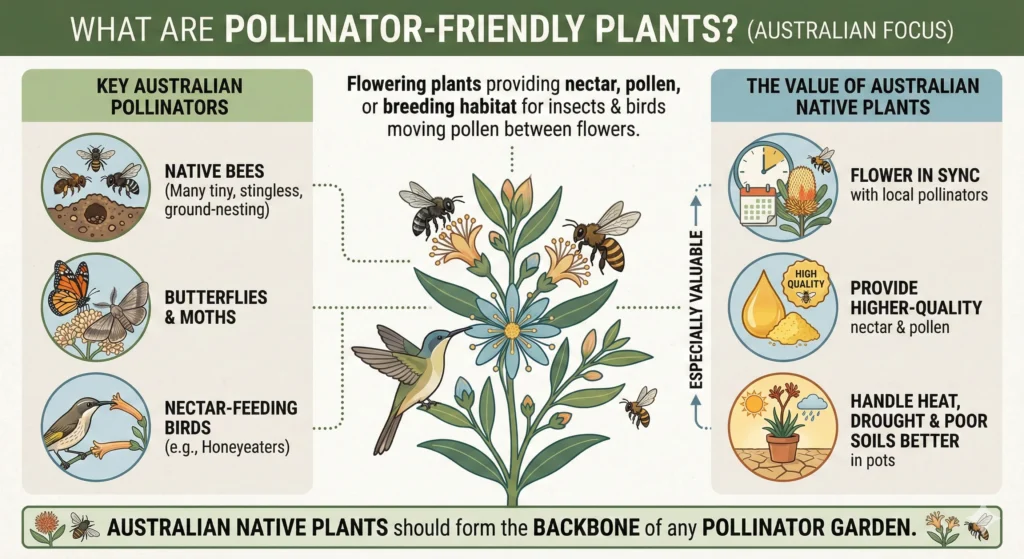
Pollinator-friendly plants are flowering plants that provide nectar, pollen, or breeding habitat for insects and birds that move pollen between flowers.
In Australia, the key pollinators are:
- Native bees (many are tiny, stingless, and ground-nesting)
- Butterflies and moths
- Nectar-feeding birds like honeyeaters
Native pollinator plants—plants that evolved here—are especially valuable. Australian native plants tend to:
- Flower in sync with local pollinators
- Provide higher-quality nectar and pollen
- Handle heat, drought, and poor soils better in pots
That’s why australia native plants should form the backbone of any pollinator garden.
Best native flowering plants for Australian pollinators
Below are reliable, container-friendly pollinator plants grouped by the pollinators they support most strongly.
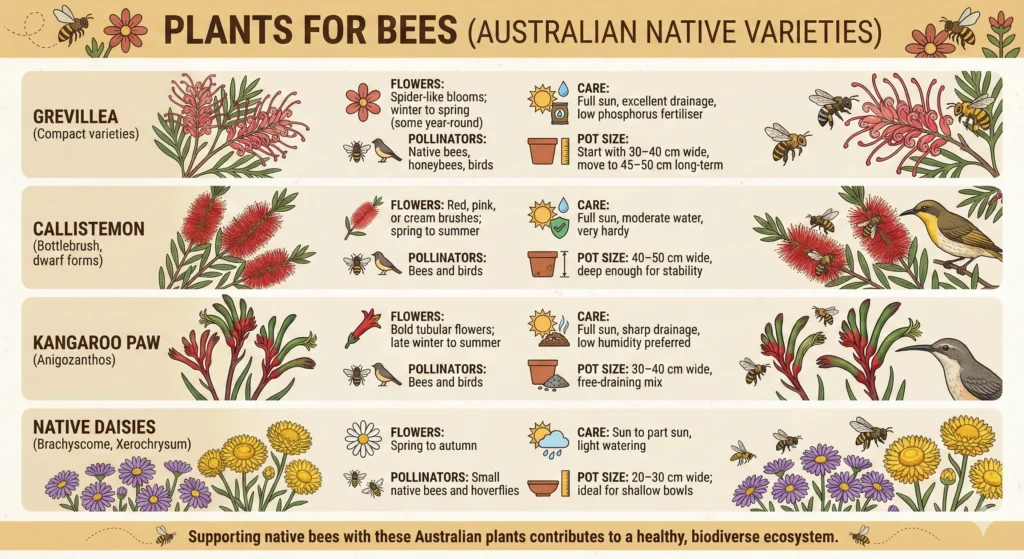
Plants for bees
Grevillea (compact varieties)
- Flowers: Spider-like blooms; winter to spring (some year-round)
- Pollinators: Native bees, honeybees, birds
- Care: Full sun, excellent drainage, low phosphorus fertiliser
- Pot size: Start with 30–40 cm wide, move to 45–50 cm long-term
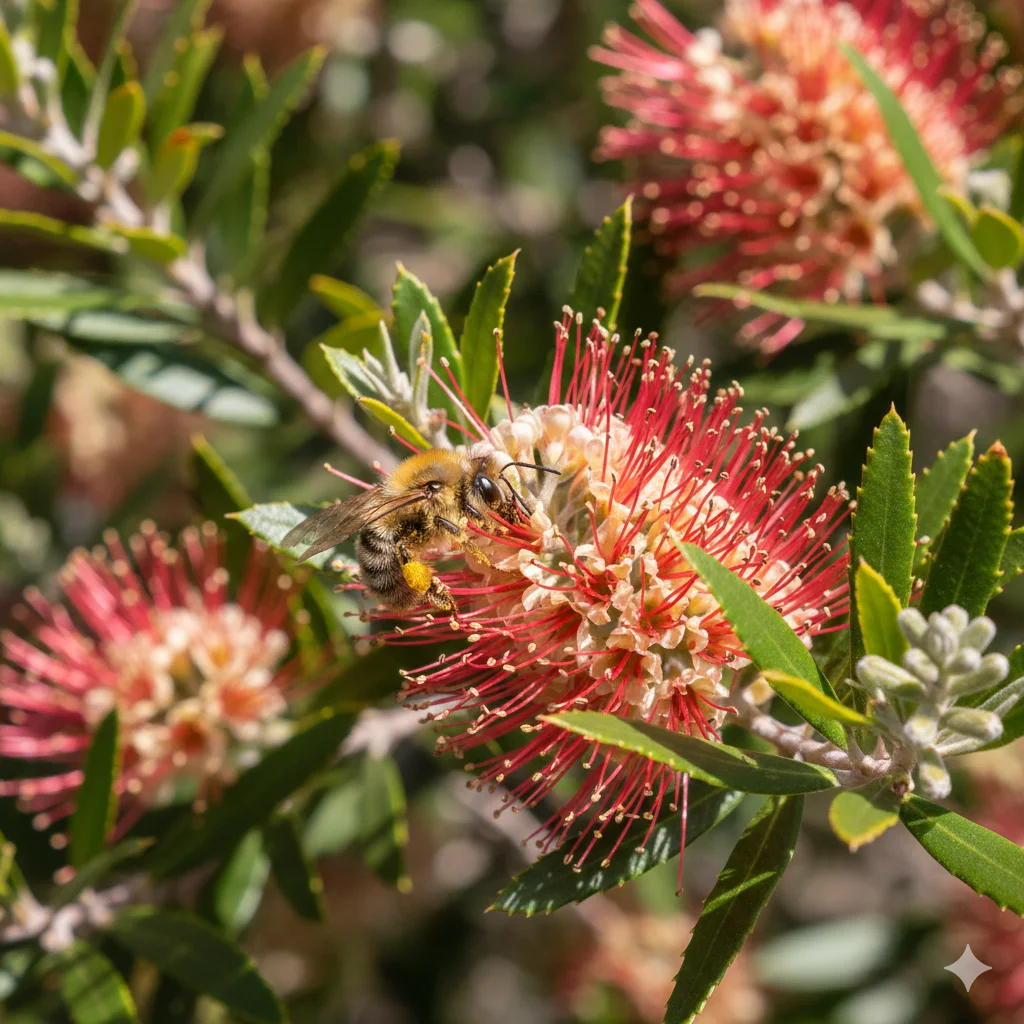
Callistemon (Bottlebrush, dwarf forms)
- Flowers: Red, pink, or cream brushes; spring to summer
- Pollinators: Bees and birds
- Care: Full sun, moderate water, very hardy
- Pot size: 40–50 cm wide, deep enough for stability
Kangaroo Paw (Anigozanthos)
- Flowers: Bold tubular flowers; late winter to summer
- Pollinators: Bees and birds
- Care: Full sun, sharp drainage, low humidity preferred
- Pot size: 30–40 cm wide, free-draining mix
Native daisies (Brachyscome, Xerochrysum)
- Flowers: Spring to autumn
- Pollinators: Small native bees and hoverflies
- Care: Sun to part sun, light watering
- Pot size: 20–30 cm wide; ideal for shallow bowls
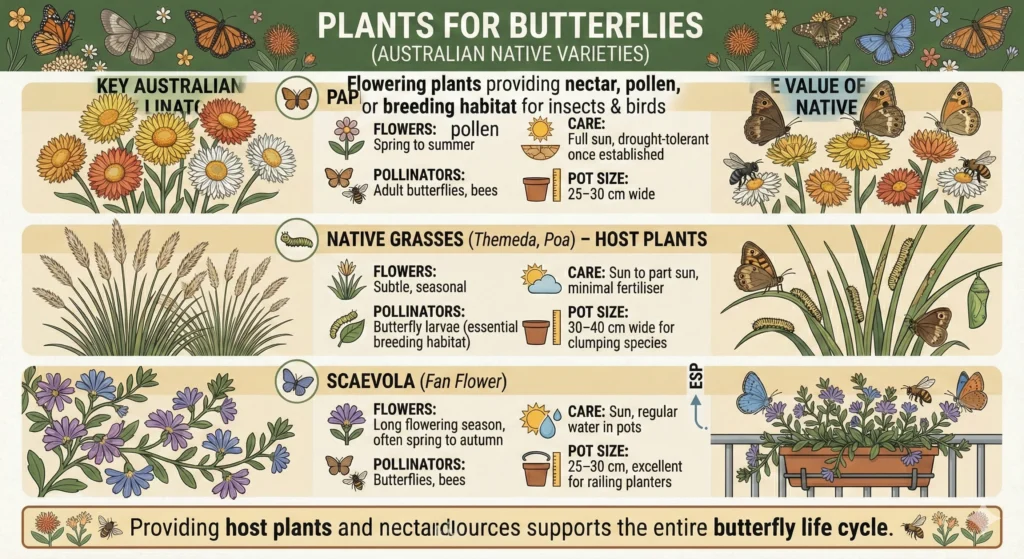
Plants for butterflies
Paper daisies (Xerochrysum spp.)
- Flowers: Spring to summer
- Pollinators: Adult butterflies, bees
- Care: Full sun, drought-tolerant once established
- Pot size: 25–30 cm wide
Native grasses (Themeda, Poa) – host plants
- Flowers: Subtle, seasonal
- Pollinators: Butterfly larvae (essential breeding habitat)
- Care: Sun to part sun, minimal fertiliser
- Pot size: 30–40 cm wide for clumping species
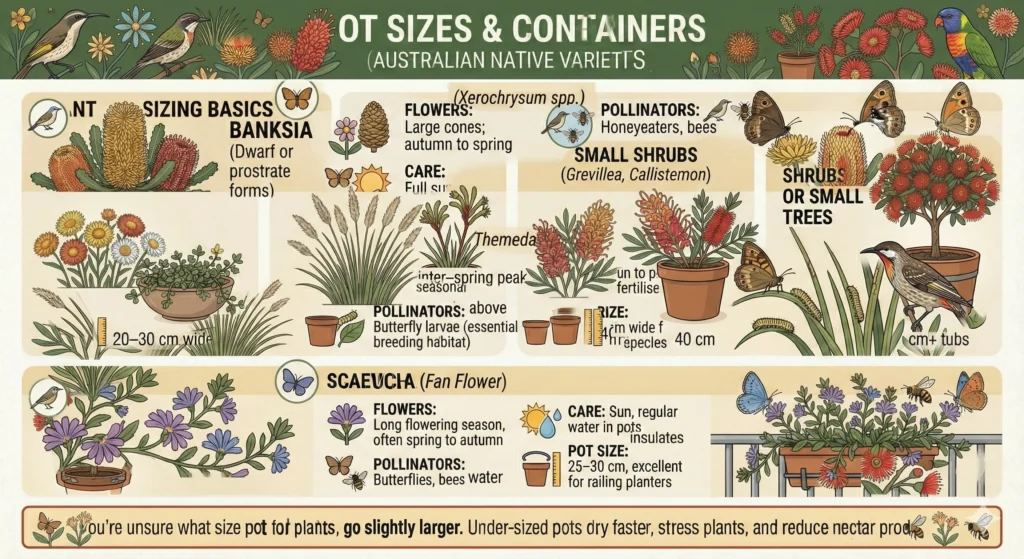
Scaevola (Fan Flower)
- Flowers: Long flowering season, often spring to autumn
- Pollinators: Butterflies, bees
- Care: Sun, regular water in pots
- Pot size: 25–30 cm, excellent for railing planters
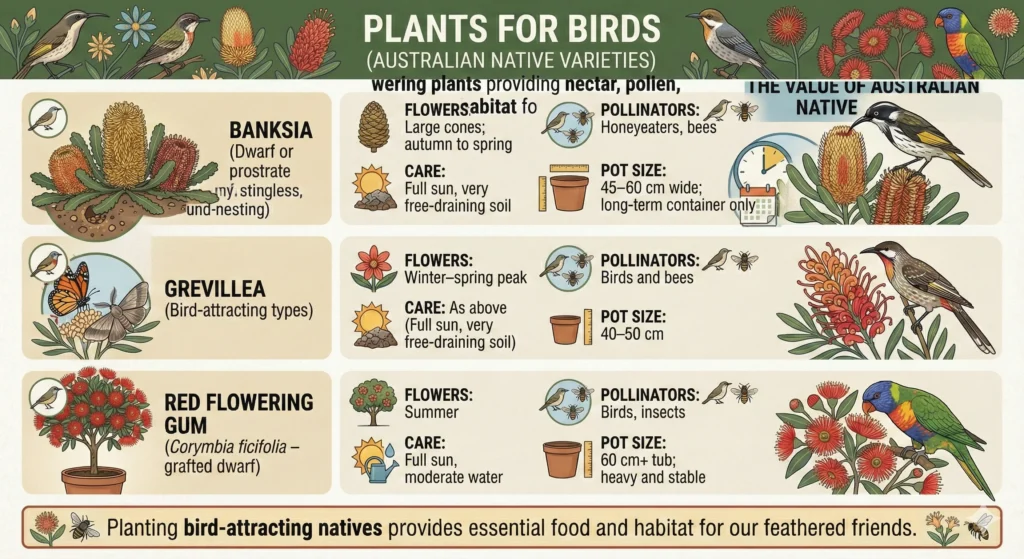
Plants for birds
Banksia (dwarf or prostrate forms)
- Flowers: Large cones; autumn to spring
- Pollinators: Honeyeaters, bees
- Care: Full sun, very free-draining soil
- Pot size: 45–60 cm wide; long-term container only
Grevillea (bird-attracting types)
- Flowers: Winter–spring peak
- Pollinators: Birds and bees
- Care: As above
- Pot size: 40–50 cm
Red Flowering Gum (Corymbia ficifolia – grafted dwarf)
- Flowers: Summer
- Pollinators: Birds, insects
- Care: Full sun, moderate water
- Pot size: 60 cm+ tub; heavy and stable
Pot sizes and containers for pollinator plants
Choosing the right pot size is one of the most important—and misunderstood—steps in container gardening Australia wide.
Plant pot sizing basics:
- Small flowers & groundcovers: 20–30 cm wide
- Clumping grasses & perennials: 30–40 cm wide
- Small shrubs (grevillea, callistemon): minimum 40 cm
- Large shrubs or small trees: 50–60 cm+ tubs
Depth matters as much as width. Deeper pots:
- Support stronger root systems
- Reduce heat stress
- Improve flowering longevity
If you’re unsure what size pot for plants, go slightly larger. Under-sized pots dry faster, stress plants, and reduce nectar production.
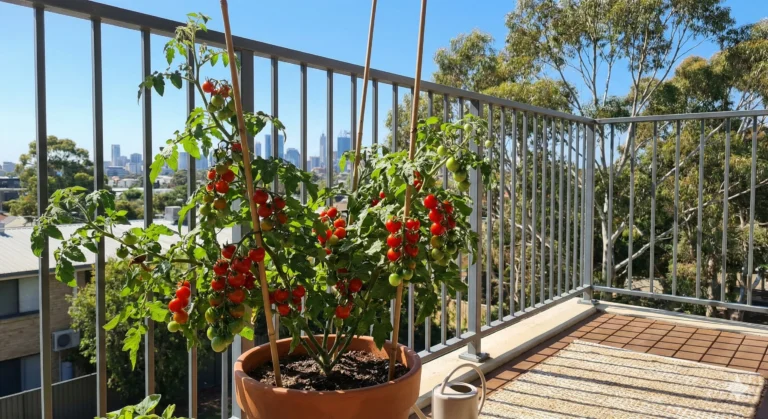
Balcony and small-space pollinator gardens
Pollinator-friendly planting works brilliantly in small spaces.
Balcony garden ideas Australia gardeners use successfully:
- Cluster pots together to create a “nectar patch”
- Mix flower shapes and colours
- Use railing planters for daisies and scaevola
Simple balcony setup:
- Bees: Grevillea in a 40 cm pot
- Butterflies: Paper daisies + native grass in 30–35 cm pots
- Birds: Kangaroo paw or dwarf callistemon in 40–45 cm pots
This approach suits balcony gardening Australia apartments and rentals, and every pot contributes.
Seasonal and regional planting tips
Seasonal flowering
Pollinators need food year-round.
- Winter flowering native plants Australia: Grevillea, banksia, correa
- Summer flowering native plants Australia: Kangaroo paw, callistemon, flowering gums
Staggering bloom times ensures continuous nectar, especially during winter scarcity.
Regional notes
- Western Australia native plants: Kangaroo paw, banksia, grevillea thrive in pots with sharp drainage
- Victoria & NSW: Broad range of grevillea, callistemon, daisies
- South Australia: Focus on drought-tolerant natives and larger pots to buffer heat
Always match plant selection to your local climate first.
How to attract pollinators to your garden (step-by-step)
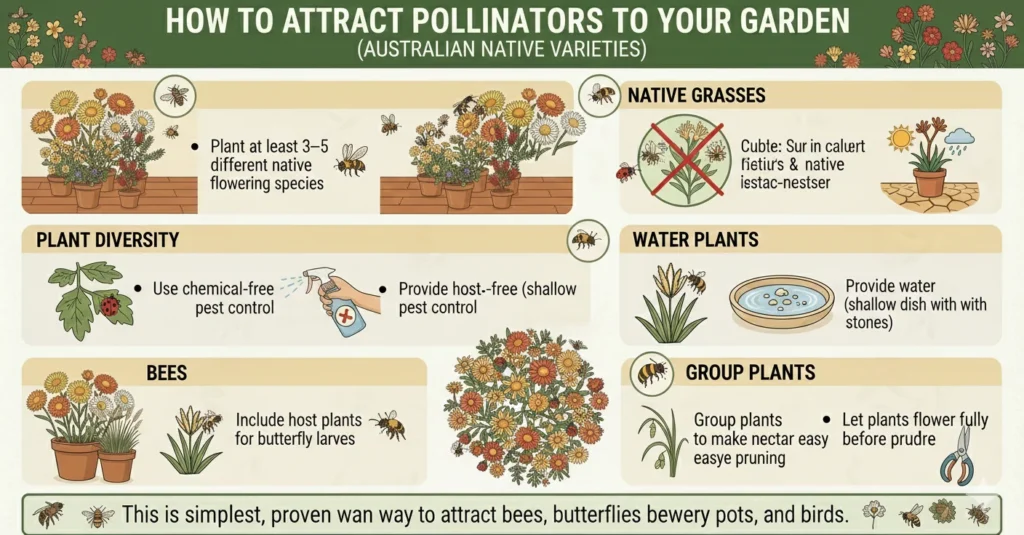
- Plant at least 3–5 different native flowering species
- Use chemical-free pest control
- Provide water (shallow dish with stones)
- Include host plants for butterfly larvae
- Group plants to make nectar easy to find
- Let plants flower fully before pruning
This is the simplest, proven way to attract bees, butterflies, and birds.
Quick FAQs
What are the easiest native plants for bees in pots?
Grevillea, kangaroo paw, and native daisies are reliable, forgiving, and highly attractive to bees.
How big should a pot be for a small grevillea?
Start with 30–40 cm, but plan to move to 45–50 cm for long-term health and flowering.
Can I grow pollinator plants on a shaded balcony?
Yes, but focus on part-shade tolerant natives like scaevola and some native daisies. Full sun gives the best results.
Do native plants really work better than exotics?
Yes. Native pollinators recognise and benefit more from native nectar and pollen sources.
How often should I water pollinator plants in pots?
Water deeply when the top few centimetres dry out. Avoid constant shallow watering.
Can I mix multiple pollinator plants in one pot?
Yes, if the pot is large enough (40–50 cm) and plants have similar sun and water needs.
Do pollinator plants need fertiliser?
Light feeding only. Use low-phosphorus fertiliser designed for Australian native plants.
Well-chosen native plants, sensible pot sizes, and year-round flowers can turn even the smallest space into a genuine pollinator refuge.