Thriving Shade Pots: 25+ Low-Light Winners for Lush Container Gardens
Introduction
If your patio gets no sun, you’re not alone—and you’re not out of luck. Shade container gardens bring lush greenery and vibrant color to patios, balconies, and porches with limited sunlight, transforming dim corners into thriving oases. These setups excel in partial to full shade conditions, defined as less than 6 hours of direct sun daily, using carefully selected plants tolerant of low light. Whether you’re working with a north-facing balcony that never sees direct rays or a covered porch shaded by mature trees, shade container garden ideas abound for every space and skill level. The key lies in understanding that shade gardening isn’t about settling for less—it’s about embracing a different palette of textures, forms, and colors that sun-loving plants simply can’t match. From the silvery fronds of Japanese painted ferns to the bold foliage of caladiums, best plants for shady pots offer year-round interest without demanding full sun exposure. This guide draws from two decades of hands-on experience designing urban shade gardens, helping beginners and enthusiasts alike create thriving, low-maintenance displays that prove darkness can be just as beautiful as light.
Key Benefits
Container plants for full shade offer distinct advantages that make them ideal for urban dwellers and busy gardeners. First, container gardening in shade requires significantly less watering than sun-exposed pots because slower evaporation keeps soil moist longer—critical during hot summer months when daily watering becomes a chore. This moisture retention means you can skip the morning watering routine without risking wilted plants, freeing up time for other pursuits. Second, low light container gardening suits small spaces perfectly, allowing apartment residents to maximize limited square footage with vertical displays, hanging baskets, and clustered pots that create privacy screens and green sanctuaries. Third, shade containers provide year-round interest through strategic plant selection: evergreen boxwoods maintain structure in winter, while perennials like heucheras and ferns offer seasonal transitions that keep displays fresh. Finally, well-draining pots with adequate drainage holes prevent the root rot that often plagues shade gardens, where reduced evaporation can lead to waterlogged soil. Choosing quality containers with multiple drainage openings ensures that shade loving plants for pots thrive without succumbing to fungal issues common in poorly drained setups.
Plant Selection Criteria
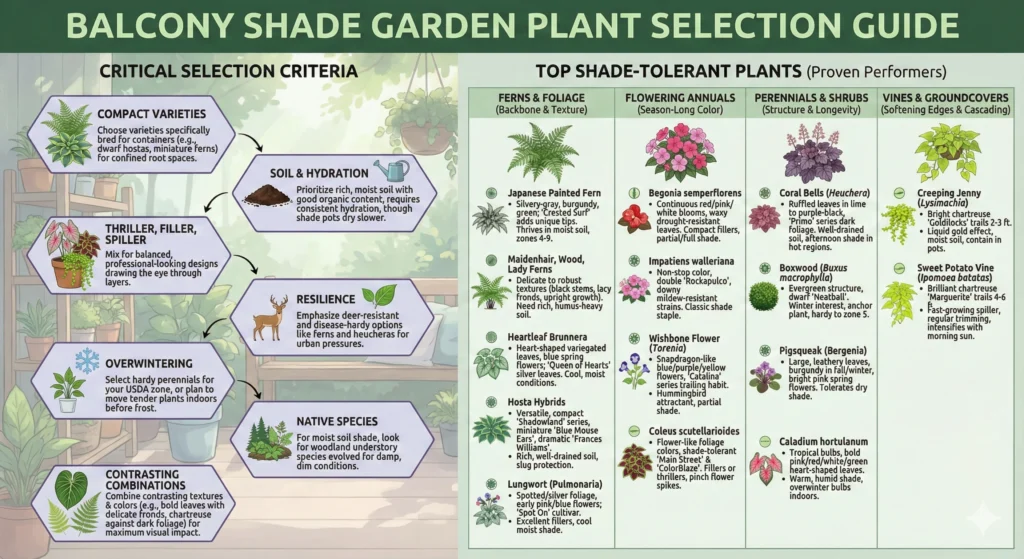
Selecting the right plants determines success in any balcony shade garden plants project. Start by choosing compact varieties specifically bred for container life—dwarf hostas, miniature ferns, and smaller heuchera cultivars perform better than their full-sized counterparts in confined root spaces. Prioritize plants that prefer moist, rich soil with good organic content, as shade containers dry out slower but still need consistent hydration. Mix thrillers (tall focal points like caladiums or upright ferns), fillers (medium mounds such as coleus or impatiens), and spillers (trailing edges like creeping Jenny or sweet potato vine) for balanced, professional-looking designs that draw the eye through multiple layers. Emphasize deer-resistant and disease-hardy options like ferns and heucheras, which withstand urban pressures better than delicate flowering annuals. Consider overwintering shade containers when selecting perennials—choose hardy varieties rated for your USDA zone, or plan to move tender plants indoors before frost. For moist soil shade pot plants, look for species native to woodland understories, as these evolved to thrive in damp, dim conditions. Finally, incorporate shade pot plant combinations that offer contrasting textures and colors: pair bold-leaved hostas with delicate fern fronds, or combine chartreuse spillers against dark heuchera foliage for maximum visual impact.
Top Shade-Tolerant Plants
The following 25+ options represent proven performers for partial shade hanging baskets and container displays, organized by type for easy reference. Each selection has been tested in real-world urban shade gardens and offers reliable performance with proper care.
Ferns and Foliage
Ferns form the backbone of sophisticated shade containers, offering textural variety and year-round presence in mild climates.
Japanese Painted Fern (Athyrium niponicum): Silvery-gray fronds brushed with burgundy and green create living art in shaded pots. The ‘Crested Surf’ cultivar adds unique crested tips that catch morning light, while standard varieties reach 12-18 inches tall—perfect as thriller elements in medium containers. These ferns for shady containers prefer consistently moist soil and protection from afternoon sun, thriving in USDA zones 4-9.
Maidenhair Fern, Wood Fern, Lady Fern: This hardy trio offers delicate texture for layered designs. Maidenhair ferns (Adiantum pedatum) feature black stems contrasting with lacy green fronds, while wood ferns (Dryopteris species) provide robust, upright growth reaching 2-3 feet. Lady ferns (Athyrium filix-femina) offer feathery, light green foliage that brightens dark corners. All prefer rich, humus-heavy soil and regular watering.
Heartleaf Brunnera (Brunnera macrophylla): Often called false forget-me-not, this perennial offers heart-shaped leaves with stunning variegation and clusters of blue spring flowers that resemble true forget-me-nots. The ‘Queen of Hearts’ cultivar features large, silver leaves with green veining, creating bold statements in hosta in containers shade combinations. Plants reach 12-18 inches and prefer cool, moist conditions.
Hosta Hybrids: No shade container is complete without these versatile perennials. The ‘Shadowland’ series offers compact varieties specifically bred for pot culture, with leaves ranging from deep blue-green to bright gold. Miniature hostas like ‘Blue Mouse Ears’ work in small containers, while larger varieties such as ‘Frances Williams’ make dramatic thriller statements. All hostas prefer rich, well-drained soil and protection from slug damage.
Lungwort (Pulmonaria hybrid): This early-blooming perennial provides spotted or silver-splashed foliage that remains attractive after spring flowers fade. The ‘Spot On’ cultivar offers crisp white spots on deep green leaves, with pink buds opening to blue flowers. Lungworts excel as fillers in mixed containers, reaching 10-12 inches tall and preferring cool, moist shade.
Flowering Annuals
Annuals deliver season-long color in impatiens shade container combo designs and mixed plantings.
Begonia semperflorens: Wax begonias offer continuous summer blooms in red, pink, or white, with waxy leaves that resist drought better than most shade annuals. These workhorses thrive in partial to full shade, blooming from spring until frost without deadheading. Their compact, mounded habit makes them ideal fillers between taller plants.
Impatiens walleriana: The classic shade annual delivers non-stop color in vibrant shades of pink, red, white, and coral. The ‘Rockapulco’ series offers double flowers resembling roses, while standard varieties provide single blooms on 10-12 inch plants. Modern breeding has produced downy mildew-resistant strains, solving the disease issues that plagued these staples in recent years.
Wishbone Flower (Torenia hybrid): Often overlooked, torenia produces snapdragon-like flowers in unique shades of blue, purple, and yellow with distinctive wishbone-shaped stamens. The ‘Catalina’ series offers improved heat tolerance and trailing habits perfect for caladium low light pots combinations. Plants bloom continuously in partial shade, attracting hummingbirds with their tubular flowers.
Coleus scutellarioides: While technically grown for foliage, coleus delivers flower-like color through leaves patterned in combinations of burgundy, chartreuse, pink, and cream. Modern shade-tolerant varieties like ‘Main Street’ and ‘ColorBlaze’ series thrive with minimal sun, reaching 18-24 inches as fillers or thrillers. Pinch flower spikes to maintain bushy growth and vibrant leaf color.
Perennials and Shrubs
Long-lived plants provide structure and reduce annual replanting costs.
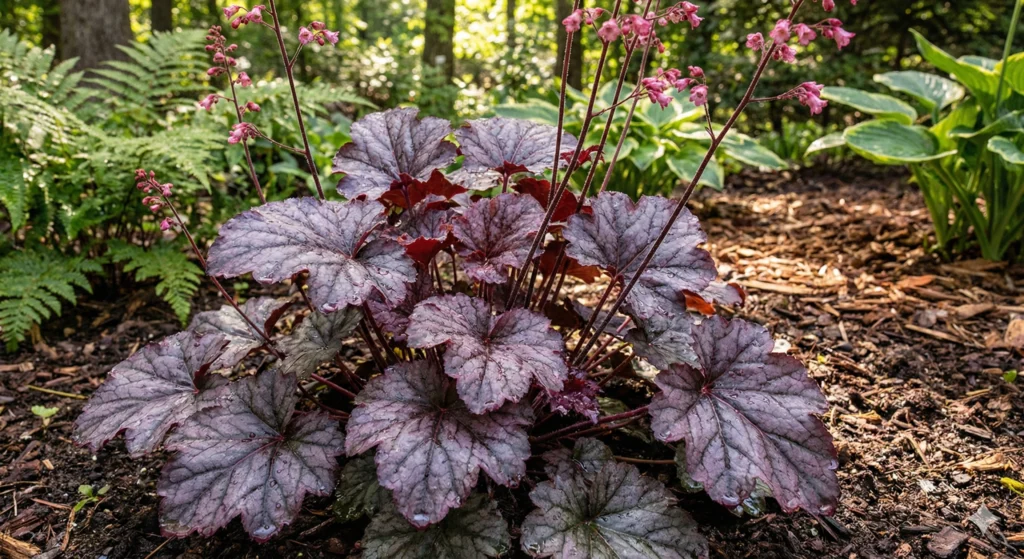
Coral Bells (Heuchera hybrid): These heuchera shade pot plants offer ruffled leaves in colors ranging from lime green to deep purple-black. The ‘Primo’ series features large, vigorous plants with black foliage that creates dramatic contrast against green companions. Heucheras prefer well-drained soil and benefit from afternoon shade in hotter regions, making them perfect for what plants thrive in shade pots lists.
Boxwood (Buxus macrophylla): For evergreen structure, dwarf boxwoods like ‘Neatball’ maintain neat, spherical shapes without constant pruning. These provide winter interest when annuals die back and serve as anchor plants in mixed containers. Hardy to zone 5, they tolerate full shade though growth slows significantly without morning sun.
Pigsqueak (Bergenia cordifolia): Named for the sound produced when rubbing its thick, leathery leaves, bergenia offers large, rounded foliage that turns burgundy in fall and winter. The ‘Miss Piggy’ cultivar features bright pink spring flowers on 12-inch stems. This tough perennial tolerates dry shade better than most, making it ideal for how to garden in shady balcony situations with inconsistent watering.
Caladium hortulanum: Tropical bulbs produce bold, heart-shaped leaves in shocking combinations of pink, red, white, and green. Varieties like ‘White Christmas’ and ‘Red Flash’ thrive in warm, humid shade, growing 12-24 inches tall. In cooler climates, dig and store bulbs indoors for winter, or treat as annuals in overwintering shade containers strategies.
Vines and Groundcovers
Trailing plants soften container edges and create cascading effects.
Creeping Jenny (Lysimachia nummularia): The ‘Goldilocks’ cultivar offers bright chartreuse, coin-shaped leaves that trail 2-3 feet over pot edges, creating liquid gold effects in shade. This aggressive spreader performs best in moist soil and can be invasive in garden beds—contain it in pots for worry-free enjoyment. It pairs beautifully with dark-leaved plants for high-contrast designs.
Sweet Potato Vine (Ipomoea batatas): Chartreuse varieties like ‘Marguerite’ provide brilliant spillers that illuminate dark corners. These fast-growing vines trail 4-6 feet, requiring regular trimming to prevent overwhelming companion plants. They thrive in partial shade, though leaf color intensifies with some morning sun exposure.
Additional Options (16+ More)
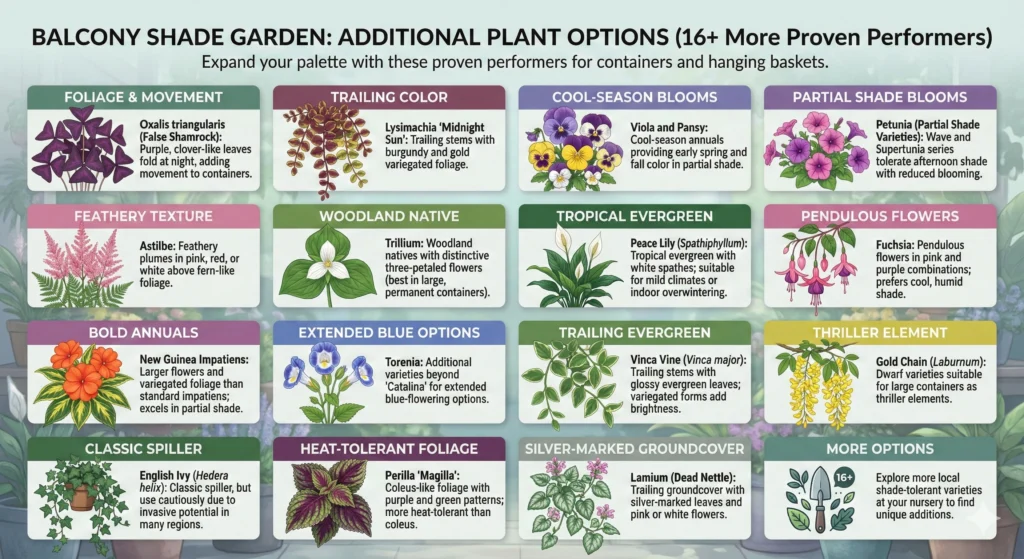
Expand your palette with these proven performers:
- Oxalis triangularis (False Shamrock): Purple, clover-like leaves fold at night, adding movement to containers
- Lysimachia ‘Midnight Sun’: Trailing stems with burgundy and gold variegated foliage
- Viola and Pansy: Cool-season annuals providing early spring and fall color in partial shade
- Petunia (Partial Shade Varieties): Wave and Supertunia series tolerate afternoon shade with reduced blooming
- Astilbe: Feathery plumes in pink, red, or white above fern-like foliage
- Trillium: Woodland natives with distinctive three-petaled flowers (best in large, permanent containers)
- Peace Lily (Spathiphyllum): Tropical evergreen with white spathes; suitable for mild climates or indoor overwintering
- Fuchsia: Pendulous flowers in pink and purple combinations; prefers cool, humid shade
- New Guinea Impatiens: Larger flowers and variegated foliage than standard impatiens; sun-tolerant but excels in partial shade
- Torenia: Additional varieties beyond ‘Catalina’ for extended blue-flowering options
- Vinca Vine (Vinca major): Trailing stems with glossy evergreen leaves; variegated forms add brightness
- Gold Chain (Laburnum): Dwarf varieties suitable for large containers as thriller elements
- English Ivy (Hedera helix): Classic spiller, but use cautiously due to invasive potential in many regions
- Perilla ‘Magilla’: Coleus-like foliage with purple and green patterns; more heat-tolerant than coleus
- Lamium (Dead Nettle): Trailing groundcover with silver-marked leaves and pink or white flowers
| Plant Type | Examples | Light Needs | Pot Role |
|---|---|---|---|
| Ferns | Japanese painted, Maidenhair, Lady | Full/partial shade | Thriller/Filler |
| Foliage Plants | Hosta, Heuchera, Brunnera | Partial to full shade | Thriller/Filler |
| Flowering Annuals | Begonia, Impatiens, Torenia | Partial shade | Filler/Spiller |
| Shrubs/Structure | Boxwood, Bergenia | Full shade OK | Thriller/Anchor |
| Vines/Trailers | Creeping Jenny, Sweet Potato Vine | Partial shade | Spiller |
| Bulbs/Tropicals | Caladium, Oxalis | Warm shade | Thriller/Filler |
Design Tips
Successful thriller filler spiller shade designs follow proven principles while allowing creative expression. Layer plants by height: position tall thrillers like caladiums or upright ferns in the center or back of containers, arrange bushy fillers such as coleus or impatiens around them, and let trailers like creeping Jenny cascade over edges. This three-tier approach creates professional-looking displays with visual depth and interest from all angles.
Use oversized pots—18 inches or larger in diameter—for stability and moisture retention. Large containers dry out slower than small ones, reducing watering frequency and providing root space for multiple plants. In shade gardens where evaporation is already reduced, this buffer prevents the root rot that plagues plants in undersized pots.
Combine textures for maximum impact: contrast the broad, smooth leaves of hostas with the delicate fronds of maidenhair ferns, or pair the ruffled foliage of heucheras with the trailing stems of lysimachia. Best shade fillers for containers often provide textural contrast rather than just color variation. Picture a lush fern spilling over your apartment balcony railing, its fronds catching the breeze while caladiums stand tall behind it—this layered approach transforms utilitarian spaces into garden rooms.
Consider color temperature: cool shades of blue, green, and silver recede in shade, making spaces feel larger, while warm colors of red, orange, and yellow advance, creating cozy intimacy. Silver-variegated plants like Japanese painted ferns or lamium brighten dark corners by reflecting available light.
Care Essentials
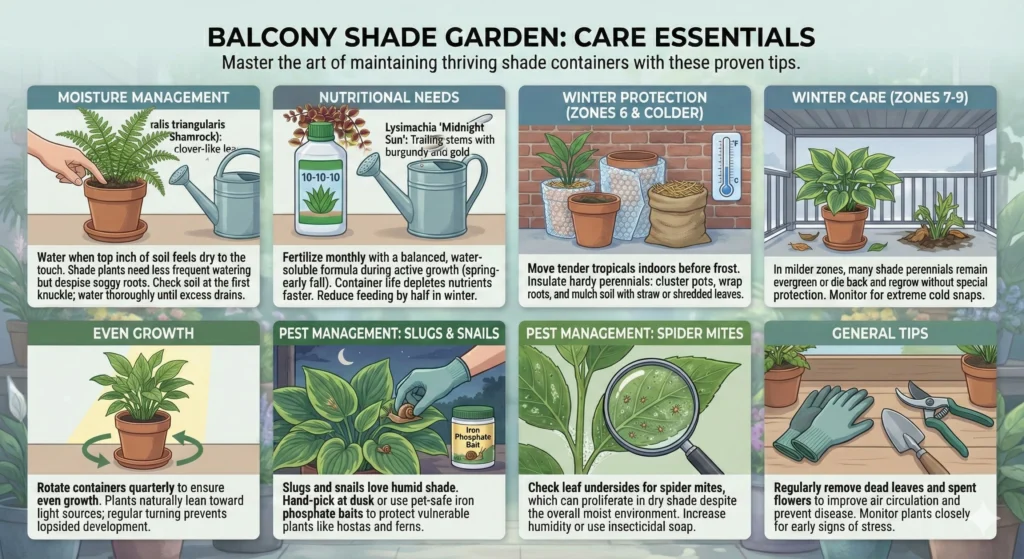
Container gardening shade tips focus on balancing moisture management with nutritional needs. Water when the top inch of soil feels dry to the touch—shade plants need less frequent watering than sun containers, but they still despise soggy roots that lead to fungal diseases. Stick your finger into the soil; if it feels dry at the first knuckle, it’s time to water thoroughly until excess drains from holes.
Fertilize monthly with a balanced, water-soluble formula (10-10-10 or 20-20-20) during the active growing season from spring through early fall. Shade plants often grow slower than sun lovers, so they require less frequent feeding, but container life depletes nutrients faster than garden soil. Reduce feeding by half in winter when growth naturally slows.
Overwintering shade containers requires planning for your climate. In USDA zones 6 and colder, move tender tropicals like caladiums and peace lilies indoors before frost, or treat them as annuals and replace next spring. Hardy perennials in pots benefit from winter protection: cluster containers together against a sheltered wall, wrap pots in bubble wrap or burlap to insulate roots, and mulch the soil surface with straw or shredded leaves. In milder zones (7-9), many shade perennials remain evergreen or die back and regrow without special protection.
Rotate containers quarterly to ensure even growth—plants naturally lean toward light sources, and regular turning prevents lopsided development. This simple practice maintains symmetrical, professional-looking displays throughout the growing season.
Monitor for pests that favor humid shade conditions: slugs and snails particularly love hostas and ferns. Hand-pick these invaders at dusk, or use iron phosphate baits safe for pets and wildlife. Check leaf undersides for spider mites, which can proliferate in dry shade despite the overall moist environment.
Common Mistakes to Avoid
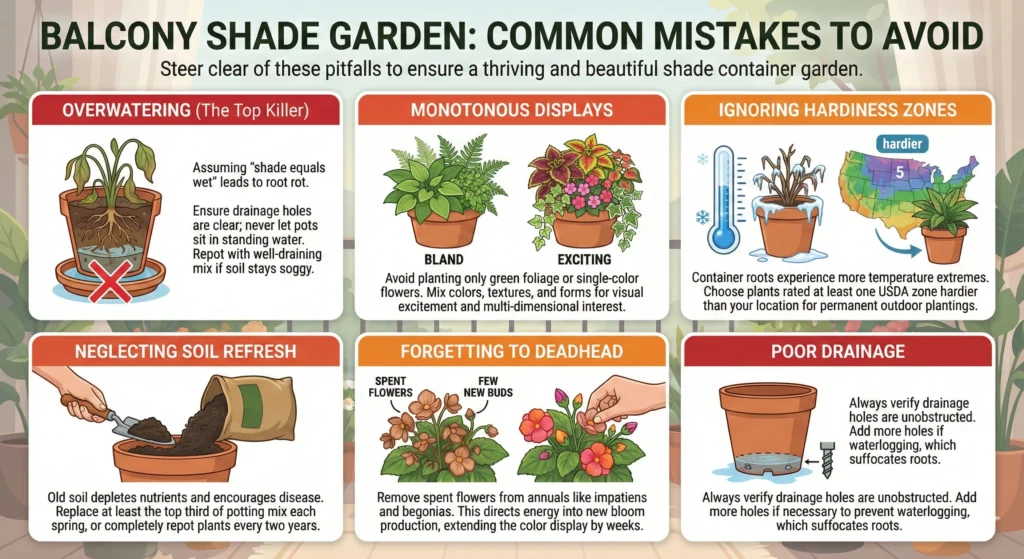
Even experienced gardeners stumble with shade pot plant combinations when they ignore fundamental principles. Overwatering ranks as the top killer of shade container plants—assuming that “shade equals wet” leads to root rot in poorly drained soil. Always verify drainage holes are unobstructed, and never let pots sit in saucers of standing water. If soil remains soggy days after watering, repot with fresh, well-draining mix containing perlite or coarse sand.
Skipping variety results in bland, monotonous displays. Avoid planting only green foliage or single-color flowers; instead, mix colors, textures, and forms for visual excitement. A container filled solely with different hostas can be stunning, but beginners often achieve better results combining ferns, flowers, and trailing plants for multi-dimensional interest.
Ignoring hardiness zones risks winter losses. Many beautiful shade plants thrive in containers during summer but perish when temperatures drop. Know your USDA zone and choose plants rated at least one zone hardier than your location when growing in pots—container roots experience more temperature extremes than in-ground plantings. For example, if you garden in zone 6, select plants hardy to zone 5 or lower for permanent container plantings, or plan to overwinter tender specimens indoors.
Neglecting to refresh soil annually depletes nutrients and encourages disease. Replace at least the top third of potting mix each spring, or completely repot plants every two years. Old, tired soil cannot support the lush growth that makes shade containers spectacular.
Forgetting to deadhead spent flowers reduces blooming in annuals like impatiens and begonias. While not all shade plants require deadheading, removing faded blooms directs energy into new flower production rather than seed set, extending the color display by weeks.
Conclusion
Shade container gardening transforms challenging low-light spaces into lush, vibrant retreats that rival any sun-drenched border. By selecting from these 25+ proven plants—from the architectural elegance of Japanese painted ferns to the bold tropical statements of caladiums—you create thriving gardens that prove darkness breeds beauty, not limitations. Remember the fundamentals: choose compact varieties suited to container life, balance thrillers, fillers, and spillers for visual harmony, and manage moisture carefully to prevent the root rot that threatens shade plantings.
Whether you’re working with a north-facing balcony that never sees direct sun, a covered porch shaded by mature trees, or a dim patio corner begging for life, these shade container garden ideas provide the roadmap to success. Start small with a single statement pot featuring a hosta, heuchera, and creeping Jenny, or dive deep with a multi-container display incorporating ferns, begonias, and trailing vines. The plants are ready; the designs are proven; your perfect shade garden awaits just outside your door.
Grab your trowel, pick your favorite low light container gardening combinations from this list, and start planting today. That shady corner isn’t a problem—it’s an opportunity waiting to bloom.