Spring Holly Secrets: Master Osmanthus Growing Guide
Introduction
Spring holly, commonly known as Osmanthus, is one of those evergreen shrubs that quietly earns its place in a garden. It doesn’t shout for attention with flashy flowers, yet when it blooms, the air stops you in your tracks. The fragrance—sweet, apricot-like, and surprisingly strong—often arrives before you even notice the flowers.
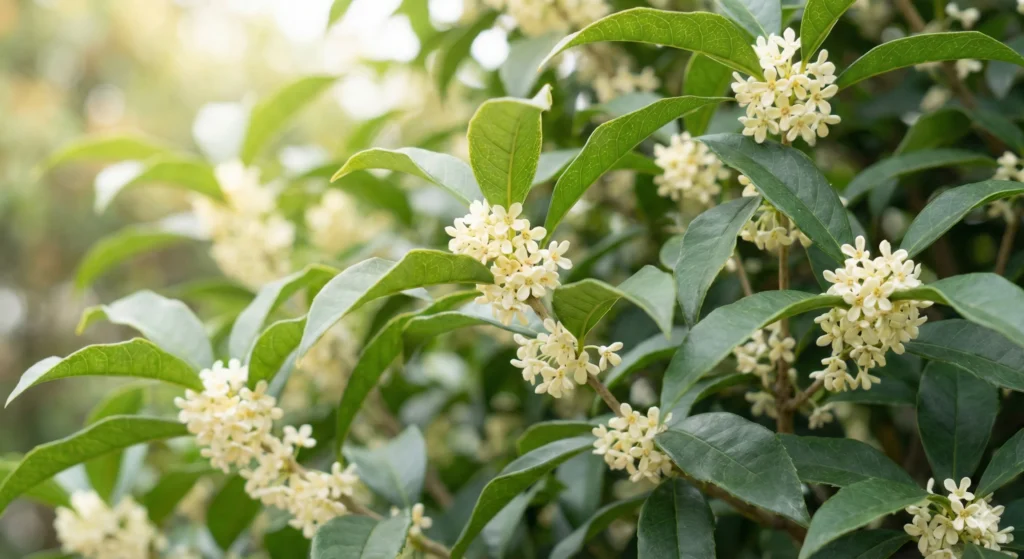
This guide is written for gardeners who want more than surface-level advice. Whether you’re planting Osmanthus fragrans as a fragrant hedge, a specimen shrub, or a long-lived evergreen backbone for a sustainable garden, this article will walk you through every step with clarity and confidence.
Understanding Spring Holly (Osmanthus)
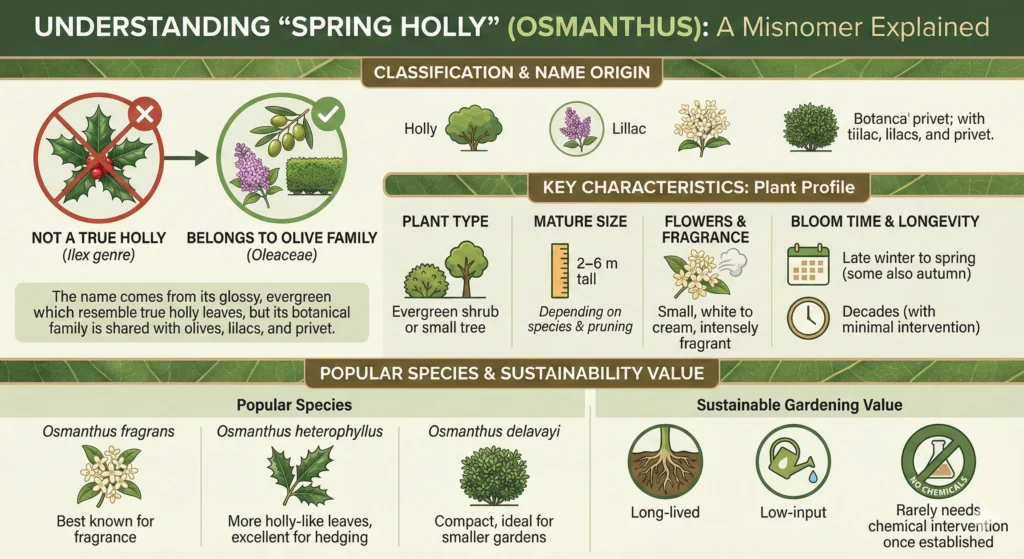
Despite the common name “spring holly,” Osmanthus is not a true holly. It belongs to the olive family (Oleaceae), alongside olives, lilacs, and privet. The name comes from its glossy, holly-like evergreen leaves.
Key characteristics:
- Plant type: Evergreen shrub or small tree
- Mature size: 2–6 m tall, depending on species and pruning
- Flowers: Small, white to cream, intensely fragrant
- Bloom time: Late winter to spring (some varieties also flower in autumn)
- Longevity: Decades with minimal intervention
Popular species include:
- Osmanthus fragrans – best known for fragrance
- Osmanthus heterophyllus – more holly-like leaves, excellent for hedging
- Osmanthus delavayi – compact, ideal for smaller gardens
Osmanthus is valued in sustainable gardening because it’s long-lived, low-input, and rarely needs chemical intervention once established.
Ideal Growing Conditions
Osmanthus is adaptable, but it performs best when its basic preferences are met.
Light
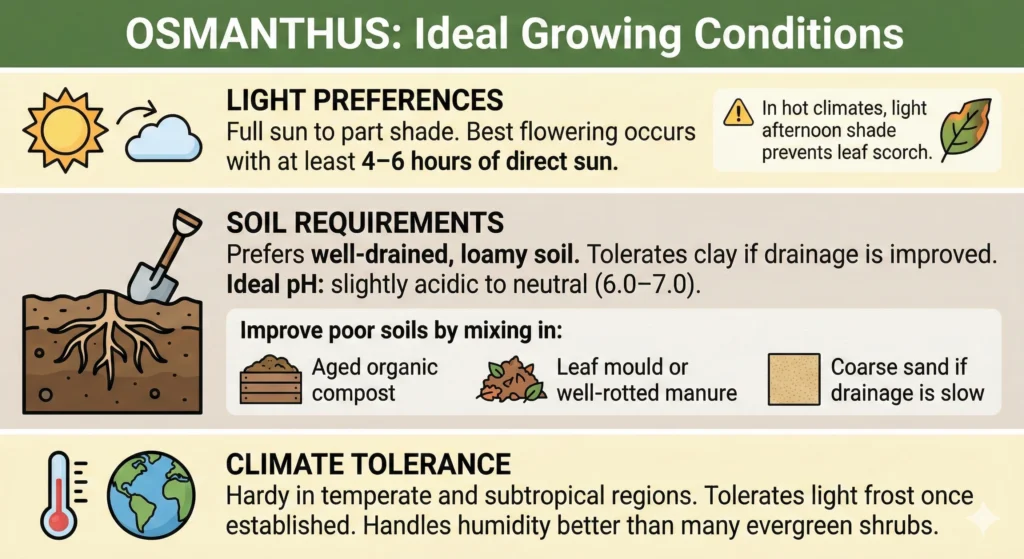
- Full sun to part shade
- Best flowering occurs with at least 4–6 hours of direct sun
- In hot climates, light afternoon shade prevents leaf scorch
Soil
- Prefers well-drained, loamy soil
- Tolerates clay if drainage is improved
- Ideal pH: slightly acidic to neutral (6.0–7.0)
Improve poor soils by mixing in:
- Aged organic compost
- Leaf mould or well-rotted manure
- Coarse sand if drainage is slow
Climate
- Hardy in temperate and subtropical regions
- Tolerates light frost once established
- Handles humidity better than many evergreen shrubs
How to Plant Osmanthus
Good planting technique determines how well your shrub establishes in its first year.
Step-by-step planting
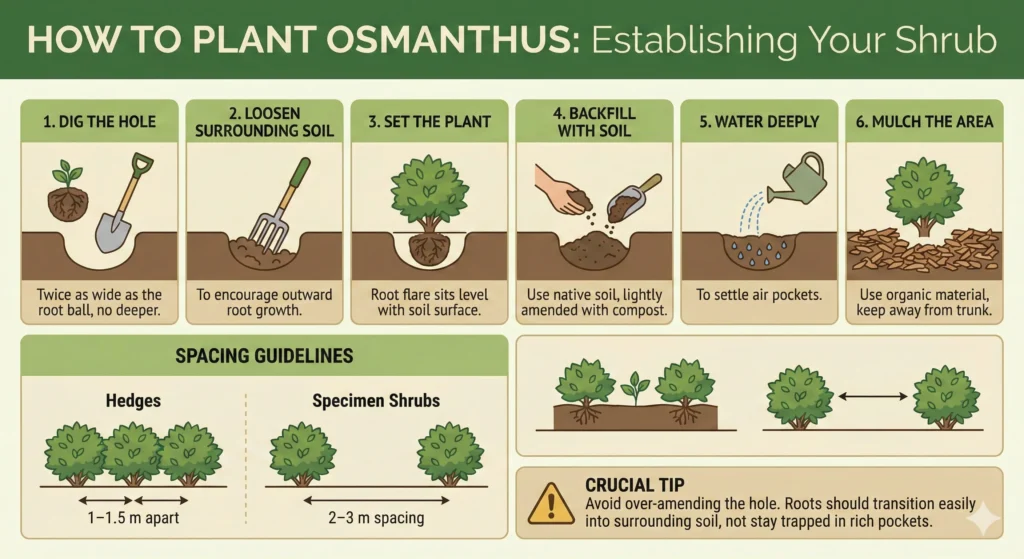
- Dig a hole twice as wide as the root ball, no deeper.
- Loosen the surrounding soil to encourage outward root growth.
- Set the plant so the root flare sits level with the soil surface.
- Backfill with native soil amended lightly with compost.
- Water deeply to settle air pockets.
- Mulch with organic material, keeping it away from the trunk.
Spacing guidelines
- Hedges: 1–1.5 m apart
- Specimen shrubs: 2–3 m spacing
Avoid over-amending the hole. Roots should transition easily into surrounding soil, not stay trapped in rich pockets.
Watering and Fertilizing
Watering
- First year: water deeply once or twice a week, depending on rainfall
- Established plants: drought-tolerant but flower better with consistent moisture
Signs of stress include dull leaves and reduced flowering.
Fertilizing
Osmanthus is not a heavy feeder.
- Apply organic compost in early spring
- Use a slow-release, balanced fertilizer only if growth is weak
- Avoid high-nitrogen feeds—they encourage leaves at the expense of flowers
Healthy soil does more for Osmanthus than frequent fertilizing.
Pruning and Maintenance
One of Osmanthus’ strengths is how little pruning it needs.
Pruning tips
- Prune immediately after flowering
- Remove dead, crossing, or inward-growing branches
- Light shaping maintains a dense, attractive form
For hedges:
- Trim lightly 1–2 times a year
- Avoid hard pruning in late summer or autumn—it can remove flower buds
Regular mulching and occasional soil top-ups are usually all the maintenance required.
Propagation Methods
Osmanthus can be propagated successfully at home, though patience is required.
Semi-hardwood cuttings (most reliable)
- Take cuttings in late summer
- Use 10–15 cm sections with a heel
- Dip in rooting hormone
- Place in free-draining propagation mix
- Keep warm and lightly moist
Roots typically form in 6–10 weeks.
Seed propagation
- Possible but slow and variable
- Seeds require fresh sowing and extended germination time
- Best used for experimentation, not consistency
Cuttings ensure the fragrance and growth habit match the parent plant.
Common Pests and Problems
Osmanthus is notably resilient.
Occasional issues
- Scale insects: treat with horticultural oil
- Leaf yellowing: often drainage-related, not nutrient deficiency
- Poor flowering: insufficient sun or over-fertilizing
Good air circulation, healthy soil, and minimal interference prevent most problems. This makes Osmanthus ideal for low-input, sustainable gardening systems.
Companion Planting and Landscape Ideas
Osmanthus excels as a structural evergreen shrub.
Landscape uses
- Fragrant hedge along paths or boundaries
- Background planting in mixed borders
- Courtyard or patio feature where scent can be appreciated
Companion plants
Pair with plants that won’t compete aggressively for nutrients:
- Camellias
- Gardenias
- Ferns in shaded positions
- Spring bulbs beneath the canopy
These combinations highlight Osmanthus’ glossy foliage and seasonal fragrance.
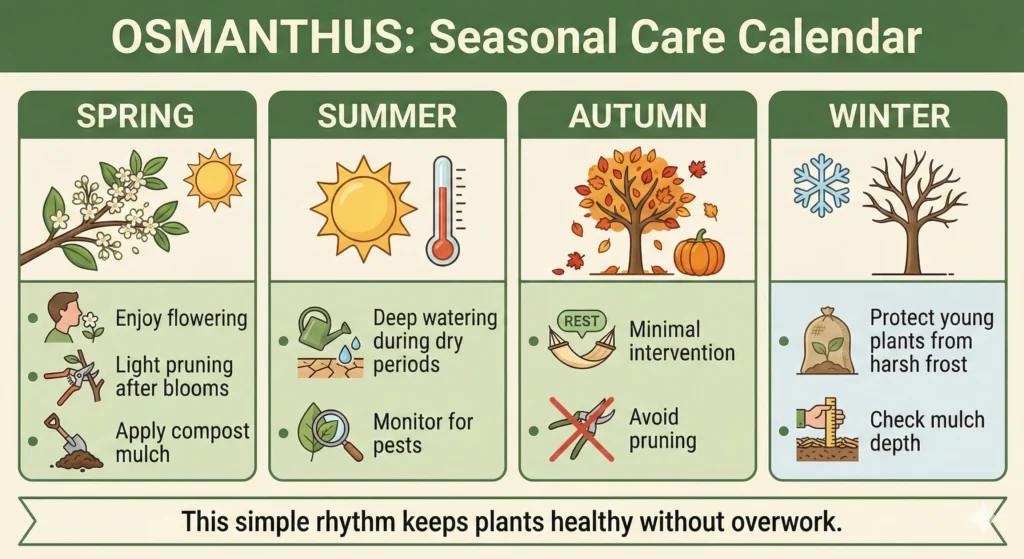
Seasonal Care Calendar
Spring
- Enjoy flowering
- Light pruning after blooms
- Apply compost mulch
Summer
- Deep watering during dry periods
- Monitor for pests
Autumn
- Minimal intervention
- Avoid pruning
Winter
- Protect young plants from harsh frost
- Check mulch depth
This simple rhythm keeps plants healthy without overwork.
Conclusion
Spring holly, or Osmanthus, rewards patience with fragrance, structure, and year-round greenery. It’s a shrub that suits gardeners who value longevity, restraint, and sustainable practices over constant intervention. Once established, it becomes a quiet anchor in the garden—dependable, elegant, and surprisingly generous.
With the right planting site, thoughtful pruning, and healthy soil, Osmanthus will thrive for decades. Plant it once, care for it well in the early years, and you’ll enjoy one of the most satisfying evergreen shrubs a garden can offer—season after season, scent after scent.