Photograph by Garden Horticultural Society
12 Stunning Campanula Varieties
for Thriving Gardens
The Campanula Genus at a Glance
Bellflowers, known scientifically as Campanula, represent one of horticulture's most diverse and rewarding perennial genera, encompassing over 300 species prized for their distinctive bell- or star-shaped blooms. Royal Horticultural Society recognizes the genus as among the most adaptable for temperate gardens.
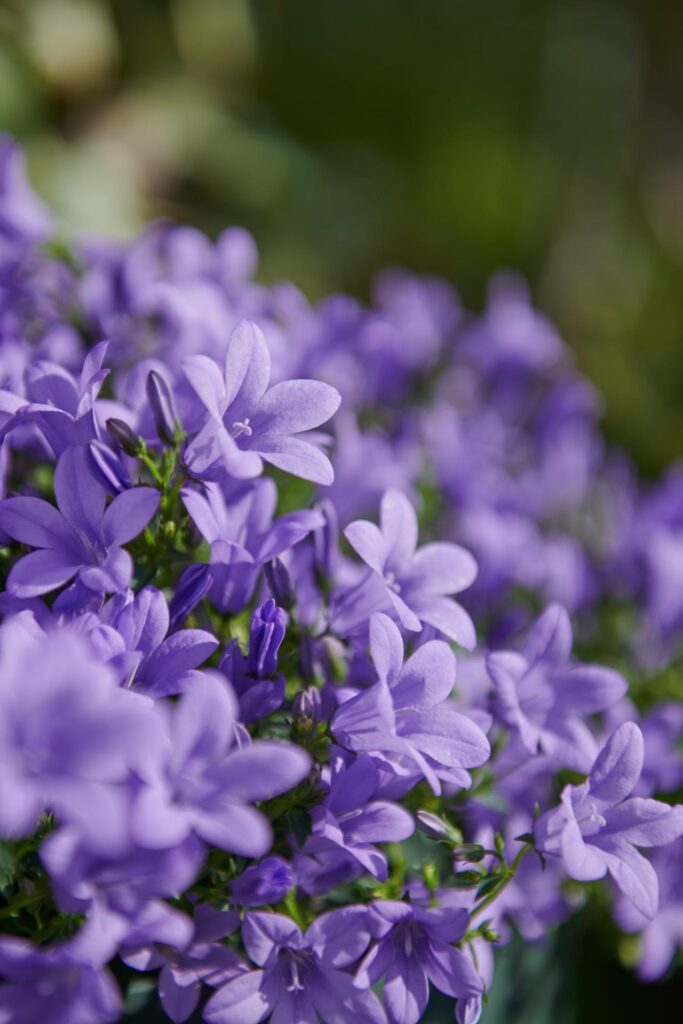
The color palette spans the cool spectrum with remarkable saturation—deep violet-blues, soft lavenders, pure whites, and increasingly popular pinks—while flower architecture ranges from tightly closed bells to wide-open stars and even the extraordinary spidery forms of modern cultivars.
Life Cycle Flexibility
- Annuals for quick seasonal color
- Biennials like Canterbury bells for structured planning
- Perennials that establish enduring presence
Garden Versatility
- Low, mat-forming species for edging
- Trailing types for containers and walls
- Upright clump-formers for border middle-grounds
- Tall spires for vertical architecture
What unifies this diversity is a shared preference for cool climates—these are plants that thrive where summers remain moderate, making them invaluable for temperate gardens where heat-loving alternatives falter. The genus's pollinator-friendly character, with nectar-rich flowers specifically adapted to bee visitation, delivers ecological function alongside aesthetic appeal. Pollinator Partnership Research confirms consistent bee activity across Campanula species.
Botanical Overview
Size and Hardiness Specifications
| Size Category | Height | Spread | Primary Applications |
|---|---|---|---|
| Miniature/Alpine | 3–6 in (8–15 cm) | 6–12 in (15–30 cm) | Rock gardens, troughs, crevice planting |
| Compact/Edging | 6–12 in (15–30 cm) | 12–18 in (30–45 cm) | Border fronts, containers, pathway edging |
| Medium/Border | 12–24 in (30–60 cm) | 12–24 in (30–60 cm) | Mid-border massing, woodland edges |
| Tall/Accent | 24–36 in (60–90 cm) | 12–24 in (30–60 cm) | Background plantings, cut flowers |
| Architectural | 36–72 in (90–180 cm) | 18–36 in (45–90 cm) | Vertical focal points, cottage garden drama |
Environmental Requirements
- Light: Full sun to partial shade, species-dependent
- Soil: Fertile, well-drained loam
- Moisture: Consistent, never waterlogged
- USDA Zones: 3-9, species-specific
Bloom Period
Primary bloom extends from late spring through September:
- Early: May-June (C. carpatica)
- Main: June-July (C. medium, C. persicifolia)
- Late: August-September (C. takesimana)
Pollinator Value
Nectar-rich flowers adapted for bee visitation:
- Bell-shaped: Long-tongued bumblebees
- Star-shaped: Smaller native bees
- Extended bloom: Sustained resource provision
General Growing Guide
Planting Fundamentals
Timing
Spring planting after soil workable and frost passage allows full-season root development. Fall planting reserved for mild climates (zones 6-8).
Soil Preparation
Incorporate 2-4 inches of compost to 8-12 inch depth. Planting hole twice root ball diameter, crown at or slightly above grade.
Spacing
8-12 inches for compact species, 15-18 inches for medium clump-formers, 24-36 inches for vigorous spreaders.
Mulching
2-3 inches organic material, clear of crown contact, for moisture retention and temperature moderation.
Maintenance Care
Fertilization
Single spring application of balanced 10-10-10 at 1-2 pounds per 100 square feet. Avoid high-nitrogen formulations.
Deadheading Impact
Systematic removal of spent flowers doubles bloom period by preventing seed set and stimulating lateral buds. In trials, deadheading Canterbury bells extended flowering from 4 to 8+ weeks.
Post-Bloom Care
Remove senescing stems to basal foliage after flowering completes. For evergreen species, selective removal preserves photosynthetic foliage.
Pest and Disease Management
Slugs/Snails
Irregular holes, silvery slime trails
Prevention: Reduce hiding places, copper barriers
Treatment: Iron phosphate baits
Aphids
Clustered insects, distorted shoots
Prevention: Encourage predators
Treatment: Strong water spray, neem oil
Rust
Orange-brown pustules on leaf undersides
Prevention: Spacing, morning watering
Treatment: Remove infected foliage
Powdery Mildew
White powdery coating on leaves
Prevention: Full sun, air circulation
Treatment: Cultural correction
Neem oil functions as effective, low-toxicity intervention for both aphid control and rust prevention when applied according to label directions. Integrated Pest Management Studies
12 Beautiful Varieties: Detailed Profiles
Tall and Stately Selections for Border Architecture
Campanula americana (American Bellflower)
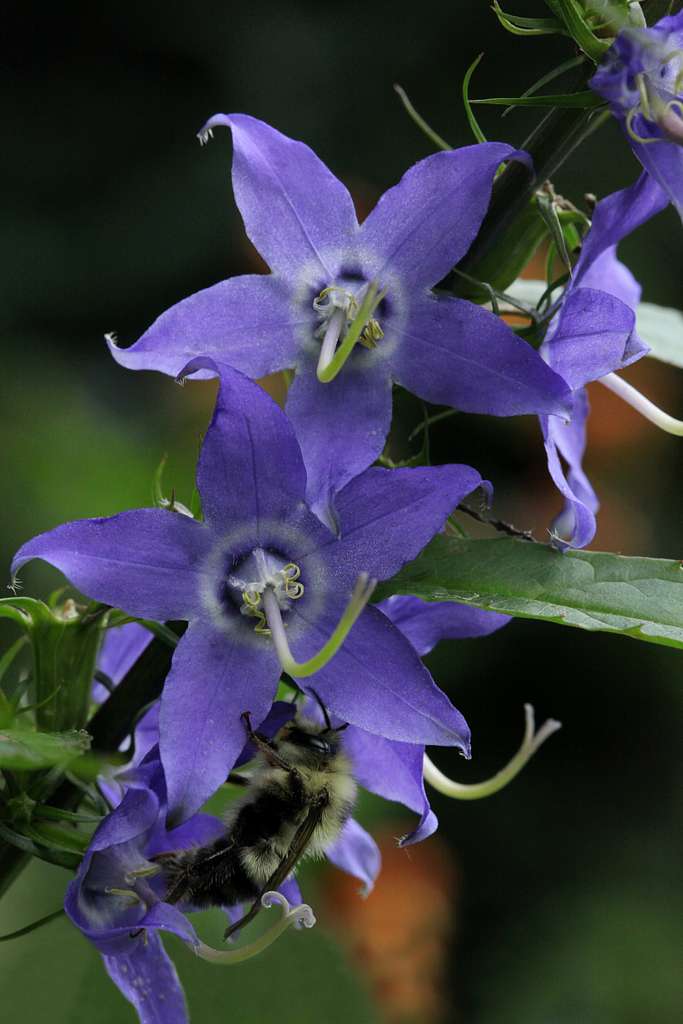
This native North American species delivers exceptional ecological value alongside garden beauty, reaching 3–6 feet with slender, branching stems that terminate in loose panicles of lavender, star-shaped flowers from July through September.
Unlike bell-shaped blooms, the open, reflexed petals attract diverse pollinators including long-tongued bees, butterflies, and beneficial wasps. Native to moist woodlands and stream margins from Ontario to Florida.
Key Requirements: Partial to full shade with consistently moist, humus-rich soil. Essentially biennial or short-lived perennial, maintaining presence through self-seeding.
Campanula medium (Canterbury Bells)
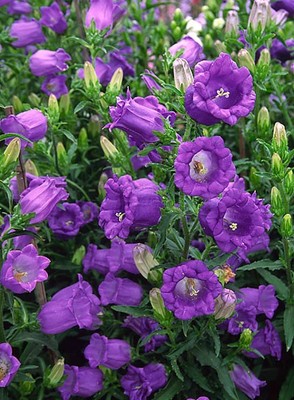
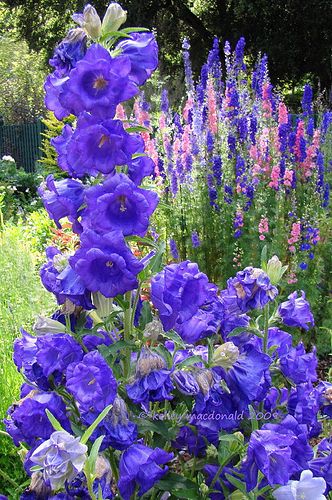
The quintessential cottage garden biennial embodies romantic garden history with its cup-and-saucer flowers—a broadly bell-shaped corolla subtended by an expanded, ruffled calyx creating distinctive two-tiered effect.
Reaching 2–3 feet with strong, upright stems, producing blue, pink, or white blooms of exceptional substance, each to 2 inches in diameter.
Cultural Notes: Biennial life cycle requires planning—seed sown in early summer produces rosettes that overwinter and flower the following spring. Modern 'Champion' series bred for first-year flowering.
Campanula rotundifolia (Bluebell, Harebell)
This circumboreal species demonstrates exceptional ecological adaptability that translates to garden resilience. Wiry, thread-thin stems rise 12–18 inches from basal rosettes, bearing nodding, bell-shaped flowers of intense sky-blue from June through September.
The specific epithet rotundifolia references rounded basal leaves that often senesce before flowering, creating the ethereal impression of leafless blooming.
Special Requirements: Excels in lean, sandy, or rocky soils where drainage is excellent. Excessive richness produces weak, floppy growth. Hardiness to zone 2 extends utility to coldest climates.

Campanula persicifolia (Peachleaf Bellflower)
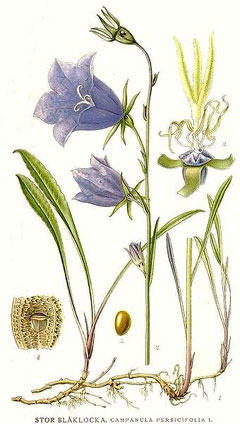
The peachleaf bellflower persicifolia stands among the most elegant border perennials, combining architectural presence with refined floral detail. Erect, unbranched stems to 2–3 feet rise from evergreen basal rosettes of narrow, glossy, peach-like leaves.
The outward-facing, cup-shaped flowers—2+ inches across in violet-blue, lavender, or white—distinguish this species from nodding relatives, maximizing visibility and pollinator access.
Notable Cultivars: 'Takion Blue' and 'Takion White' (compact 16-20"), 'Telham Beauty' (rich lavender-blue to 30"), 'Grandiflora' (exceptional flower size).
Compact and Edging Varieties
Campanula carpatica (Carpathian Bellflower)
The Campanula carpatica varieties represent the gold standard for compact, non-creeping bellflowers, transforming this alpine species into a mainstream garden essential. Native to the Carpathian Mountains, forming neat, mounded clumps 6–8 inches tall.
The 'Clips' series established horticultural benchmarks: 'Blue Clips' (intense violet-blue), 'White Clips' (pure white), 'Deep Blue Clips' (saturated color), and 'Light Blue Clips' (soft tone).
Carpathian harebell blue clips selections share: non-creeping clump habit, exceptional cold hardiness (zone 3), and extended bloom (June–September with deadheading).

Campanula saxifraga (Saxifrage Bellflower)
This diminutive Caucasian native occupies specialized niches with mat-forming growth to 4–6 inches and trailing stems that root at nodes. The blue-purple bells, relatively large for plant stature, emerge in late spring to early summer.
The specific epithet references saxatile (rock-dwelling) ecology—demanding moist but exceptionally well-drained conditions that replicate native limestone scree habitats.
Applications: Trough gardens, crevice plantings, shaded rock walls. Winter wetness causes rapid crown deterioration; raised beds and gritty soil mixes essential.

Specialty and Novelty Cultivars
Campanula 'Pink Octopus'
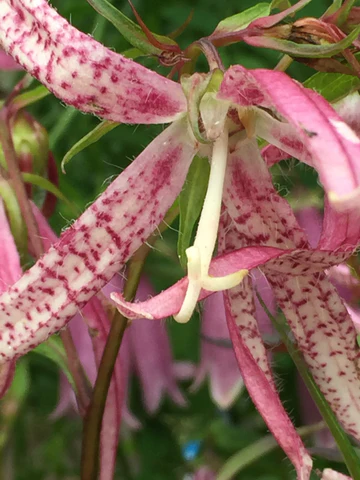
The Pink Octopus bellflower review demands attention as one of the most distinctive recent introductions. Developed from C. punctata breeding lines, producing flowers with 8–12 narrow, strap-like petals radiating like tentacles from a central core.
The nodding buds open to reveal extraordinary architecture in soft pink with darker veining, creating conversation-worthy focal points. Growth is low and spreading: 6–10 inches tall with indefinite expansion through rhizomes.
Cultural Requirements: Moist, well-drained, fertile soil in partial shade, with afternoon shade essential in warm climates. Less drought-tolerant than many Campanula.
Campanula 'Champion' Series
The 'Champion' series transforms Canterbury bells culture through annual-flowering performance from spring sowing. Recognized with Fleuroselect Gold Medals, maintaining C. medium essentials while eliminating biennial scheduling complexity.
Available in separate blue and pink forms or mixtures, delivering predictable, uniform performance. The quantitative long-day flowering response requires daylength restriction to 12 hours during seedling stage.
Spacing Impact: 4-6 inch spacing produces single stems for dense bedding; 12 inch spacing encourages branching with 6-8 flowering stems per plant.

Campanula 'Double Melton Bells'
This cultivar addresses demand for floral opulence with fully double, pompon-like flowers in pink, lavender, and purple. The numerous petal whorls create substantial blooms to 2.5 inches that resist weather damage.
Individual flower longevity extends to 3–4 weeks versus 1–2 for single forms. The medium height—18–24 inches—and clump-forming, non-spreading habit suit cottage garden compositions.
Considerations: Double form eliminates pollinator accessibility, making this purely ornamental. Heavy flower production demands adequate nutrition; deadheading essential.
Trailing and Spreading Types
Campanula poscharskyana (Serbian Bellflower)
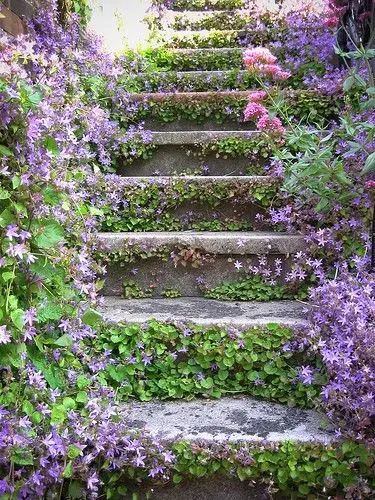
The Campanula poscharskyana trailing habit defines this species' exceptional garden utility. Native to the Balkan Dinaric Alps, producing prostrate stems to 10 inches that root at nodes, creating expanding mats with indefinite spread potential.
The lavender star-shaped flowers—distinctly non-bell-shaped, with five pointed petals—appear in overwhelming profusion June through September, often continuing to frost in mild climates.
Management Required: RHS notes "can be invasive as spreads by underground runners"—aggressively colonizing in gardens. Physical barriers (8-10 inch depth) recommended for containment.
Campanula glomerata (Clustered Bellflower)
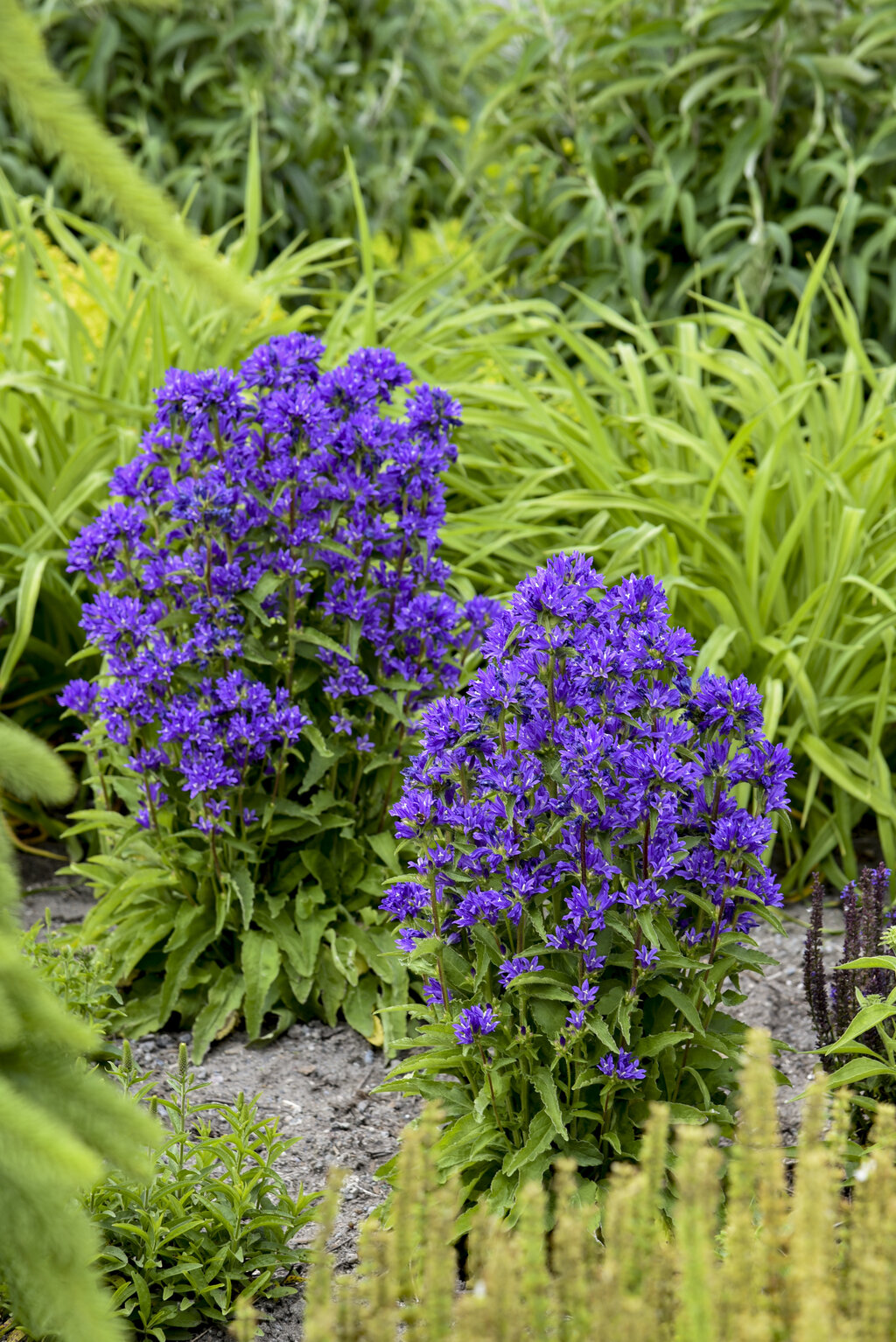
The clustered bellflower glomerata designation precisely describes this species' signature: dense, spherical heads of 10–15 violet-purple, upward-facing bells that create substantial visual mass from moderate distance.
Native across Eurasia with naturalized populations in 12 U.S. states including Alaska, demonstrating exceptional cold hardiness and ecological adaptability. Growth is upright and clump-forming: 12–28 inches.
Notable Cultivars: 'Superba' (deep violet, dense globular heads to 3"), 'Alba' (white-flowered), 'Acaulis' (dwarf 6-inch for rock gardens).
Shade-Tolerant and Elegant Species
Campanula takesimana (Korean Bellflower)
This East Asian native introduces exotic elegance to shade gardens, with large, heart-shaped leaves to 6 inches and pendant, spotted pink bells that distinguish it from European congeners. Native to Ulleung Island, reaching 24 inches.
The 'Elizabeth' cultivar—selected by British plantswoman Elizabeth Strangman—offers pale pink flowers of exceptional refinement with darker, more pronounced spotting than the species.
Cultural Requirements: Partial to full shade, consistently moist, humus-rich soil. Large leaves scorch readily in direct sun; afternoon protection essential. Strong spreader requires deadheading before seed set and regular division.

Complete Variety Comparison
| Variety | Height | Flower Characteristics | Best Use | Special Notes |
|---|---|---|---|---|
| C. americana | Tall | Lavender star-shaped | Woodland shade | Native, moist rich soil |
| C. medium | 2-3 ft | Blue/pink cup-and-saucer | Borders, cut flowers | Biennial, full/part sun |
| C. rotundifolia | Tall thin stems | Blue bell-shaped | Sandy borders | Summer-long bloom |
| C. carpatica | 6-8 in | Blue/white open bells | Edging, pots | Compact, non-creeping |
| C. persicifolia | 2-3 ft | Lavender/purple | Borders | Evergreen, self-seeds |
| C. saxifraga | 4-6 in | Blue-purple bells | Groundcover | Moist well-drained soil |
| C. 'Pink Octopus' | Low | Pink octopus-like | Rock gardens | Full/part sun |
| C. 'Champion' | 2-3 ft | Blue/pink | Borders | Canterbury bells type |
| C. 'Double Melton Bells' | Medium | Double pink/purple | Cottage gardens | Showy doubles |
| C. poscharskyana | Trailing | Lavender star | Hanging baskets | Vigorous spreader |
| C. glomerata | 1-2 ft | Violet clustered bells | Borders | Upright, drought-tolerant |
| C. takesimana | 2 ft | Spotted pink bells | Shade borders | Large leaves, elegant |
Propagation and Maintenance
Propagation Methods
Seed Propagation
Seeds typically small and light-requiring—surface sow or cover minimally. Optimal germination: 18–22°C, 2–3 weeks for most species.
Stratification: Alpine species (C. carpatica, C. rotundifolia) benefit from 4-6 week cold-moist treatment.
Vegetative Propagation
Campanula propagation division most reliable for cultivar maintenance. Timing: spring for most species, autumn for spring-bloomers in mild climates.
Frequency: Every 2-4 years depending on species. Lift with soil mass, separate sections with adequate roots and shoots, replant immediately.
Ongoing Maintenance
Container Care
Campanula container planting requires modified protocols for constrained root environments.
- • Drainage priority: multiple holes, drainage layer
- • Potting medium: 25-30% perlite or coarse grit
- • Daily monitoring in warm weather
- • Annual repotting with fresh medium
Structural Support
Tall species—C. medium, C. lactiflora, C. americana—require proactive staking.
Installation: Install support when plants reach one-third final height, allowing natural growth through support.
Germination Requirements by Species
C. carpatica
Temp: 18–22°C | Light required | 7-14 days | Short days prevent premature flowering
C. medium 'Champion'
Temp: 18–20°C | Daylength management required | 5-10 days
C. persicifolia
Temp: 18–21°C | Surface sow, press into medium | 14-28 days
C. takesimana
Complex dormancy: 25°C warm, then 5°C cold | GA3 or stratification essential | 2-8 weeks
Self-seeding Management
Seedlings of named cultivars do not come true to type—vegetative propagation required for genetic fidelity.
Garden Design Tips
Roses
Color complementarity; textural contrast (rounded bells vs. layered roses)
Shared Requirements: Full sun, fertile well-drained soil, consistent moisture
Salvias
Architectural contrast (vertical spires vs. rounded bells); sequential bloom
Shared Requirements: Well-drained soil, full sun, moderate fertility
Shade Companions
Hostas, ferns, Astilbe for textural layering with bold foliage
Shared Requirements: Partial shade, moist humus-rich soil
Spatial Design Principles
| Height Category | Species Examples | Placement Function |
|---|---|---|
| Groundcover/Edging (3–8 in) | C. carpatica, C. saxifraga, C. poscharskyana | Border definition, pathway softening, container spillers |
| Middle ground (12–24 in) | C. glomerata, C. takesimana, C. 'Pink Octopus' | Visual transition, massing for color blocks |
| Background/Accent (24–36 in) | C. medium, C. persicifolia, C. rotundifolia | Vertical structure, screening, cut flower production |
| Architectural (36+ in) | C. lactiflora, C. americana | Focal points, cottage garden drama |
Layering Principle: Position low varieties where flowers are viewed from above; place tall varieties where stems rise above foreground plantings without obscuring them.
Warm Climate Adaptations
Zones 7-9 strategies:
- • Afternoon shade provision reduces temperature stress 10-15°F
- • Reflective mulching with white gravel moderates soil temperature
- • Species selection: Prioritize C. takesimana, C. poscharskyana
- • Irrigation timing: Deep, morning watering maximizes availability
Wildlife Benefits
Pollinator friendly Campanula characteristics:
- • Bell-shaped species: Long-tongued bumblebees, specialized bee visitors
- • Star-shaped species: Smaller native bees, hoverflies, butterflies
- • Extended bloom periods: Sustained resource provision
- • Deer resistance: Consistently reported across species
Beginner Guidance and Quick Reference
Best Campanula for Beginners
C. carpatica
Compact, predictable, excellent drainage tolerance, long bloom, minimal pests
Primary caution: Avoid overwatering; ensure drainage
C. poscharskyana
Extremely adaptable, long bloom, drought-tolerant once established
Primary caution: Manage spread; can be vigorous
C. glomerata
Upright habit, drought-tolerant, long-lived, deer-resistant
Primary caution: Woody crowns complicate division
C. persicifolia
Classic beauty, evergreen foliage, good cut flower, self-maintaining
Primary caution: May self-seed; deadhead for control
USDA Zones for Bellflowers
Zones 3-4
C. carpatica, C. glomerata, C. rotundifolia | Select cold-hardy cultivars; winter mulch protection
Zones 5-6
Most species adaptable | Standard cultural practices apply; optimal growing range
Zones 7-8
Heat-tolerant selections prioritized | Afternoon shade essential; moisture management critical
Zone 9
Limited: C. poscharskyana, C. takesimana | Shade mandatory; species selection severely limited
Campanula Self-Seeding Tips
Encourage Naturalization
Allow seed maturation and dispersal; minimal disturbance of seedling beds
Species: C. rotundifolia, C. persicifolia, C. americana
Manage Through Deadheading
Remove spent flowers before seed set; transplant desirable volunteers
Species: C. poscharskyana, C. takesimana
Prevent Entirely
Consistent deadheading; rogue seedlings promptly; vegetative propagation for increase
Application: Formal, geometric plantings where design integrity paramount
Quick Success Tips for Beginners
Right Light
More sun north, more shade south. Alpine species need full sun; woodland edges prefer partial shade.
Perfect Drainage
Well-drained soil is non-negotiable. Add compost and grit to improve heavy soils.
Deadhead Diligently
Remove spent flowers to extend bloom period by 4-6 weeks and prevent unwanted self-seeding.
References
- Royal Horticultural Society. Campanula Plant Profile. London: RHS Gardening, 2024.
- Pollinator Partnership. Pollinator-Friendly Plant Selection Guide. San Francisco: Pollinator Partnership Research, 2024.
- Integrated Pest Management Institute. Neem Oil Application Studies in Ornamental Horticulture. Davis: University of California, 2024.