The Ultimate Balcony Garden Calendar for Warm Climates
1. Introduction
Balcony gardening in warm climates—whether you’re growing on a sun-drenched apartment terrace in a subtropical city, a Mediterranean rooftop, a tropical coastal flat, or a hot-dry urban balcony baking in reflected heat—is one of the most rewarding things you can do with a small outdoor space. You don’t need a backyard, a greenhouse, or even much money. What you do need is a plan.
That’s exactly what a month-by-month balcony garden calendar gives you: a rhythm. Instead of buying random seedlings on impulse and watching them struggle in the wrong season, you work with your climate’s natural cycles—timing your plantings to hit the sweet spot between too cold and too scorching, spacing out harvests so you’re picking something every week rather than drowning in tomatoes for three weeks and then nothing. For small containers on a balcony, timing isn’t just helpful—it’s everything.
This article walks you through every month of the year, telling you what to sow, what to transplant, what to protect, and what to harvest on a warm-climate balcony where winters are mild and summers are intense.
2. Understanding Your Warm-Climate Balcony
Before you follow any calendar, you need to understand your specific balcony, because no two are identical even in the same building.
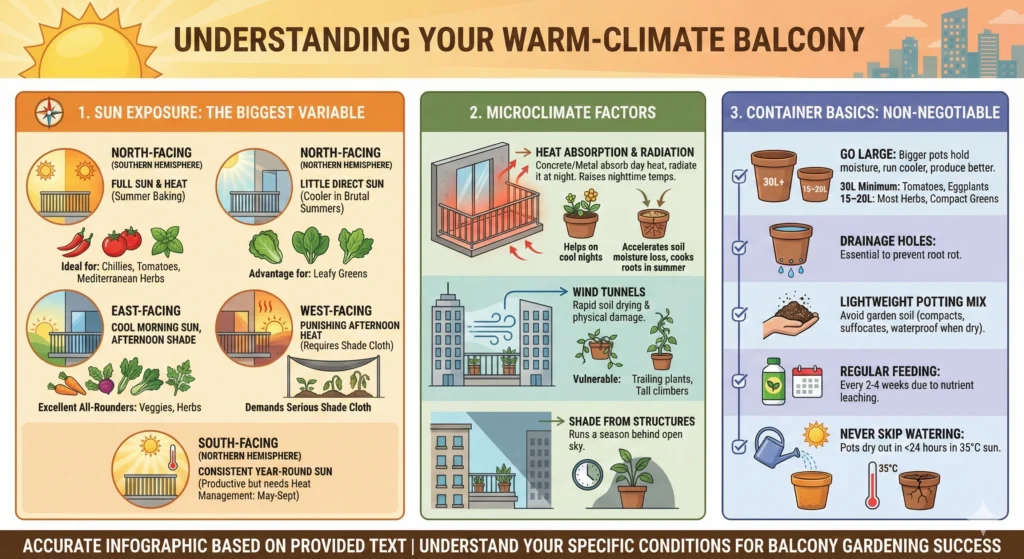
Sun exposure is the single biggest variable. A north-facing balcony in the Southern Hemisphere gets full sun and bakes in summer—ideal for heat-tolerant balcony plants like chillies, tomatoes, and Mediterranean herbs. The same direction in the Northern Hemisphere gets little direct sun, which actually becomes an advantage in brutal summers for growing leafy greens. East-facing balconies get cool morning sun and afternoon shade, making them excellent all-rounders for warm climate balcony vegetables and herbs. West-facing balconies get punishing afternoon heat, which demands serious shade cloth use in peak summer. South-facing balconies (Northern Hemisphere) often get the most consistent sun year-round and can be highly productive but require thoughtful heat management from May through September.
Microclimate factors matter just as much. Concrete walls and metal railings absorb heat during the day and radiate it back at night, sometimes raising nighttime temperatures around your pots by several degrees compared to an open garden. This can help plants on cool nights but accelerates soil moisture loss and can cook roots in summer. Wind tunnels created between buildings cause rapid soil drying and physical damage to plants—trailing plants and tall climbers are especially vulnerable. Shade cast by a neighboring building or overhead structure might mean your balcony effectively runs a season behind what the open sky suggests.
Container basics are non-negotiable. Go as large as your balcony can safely handle—bigger pots hold more moisture, run cooler, and produce better plants. A 30-liter container is a bare minimum for tomatoes and eggplants; 15–20 liters works for most herbs and compact greens. Every pot must have drainage holes—root rot is just as deadly as drought. Use a lightweight potting mix rather than garden soil, which compacts in containers, suffocates roots, and becomes waterproof when dry. Because nutrients leach out with every watering, balcony container gardening in heat requires regular feeding—every two to four weeks through the growing season. Never skip watering: a pot in 35°C sun can go from moist to bone dry in less than 24 hours.
3. How to Use This Calendar
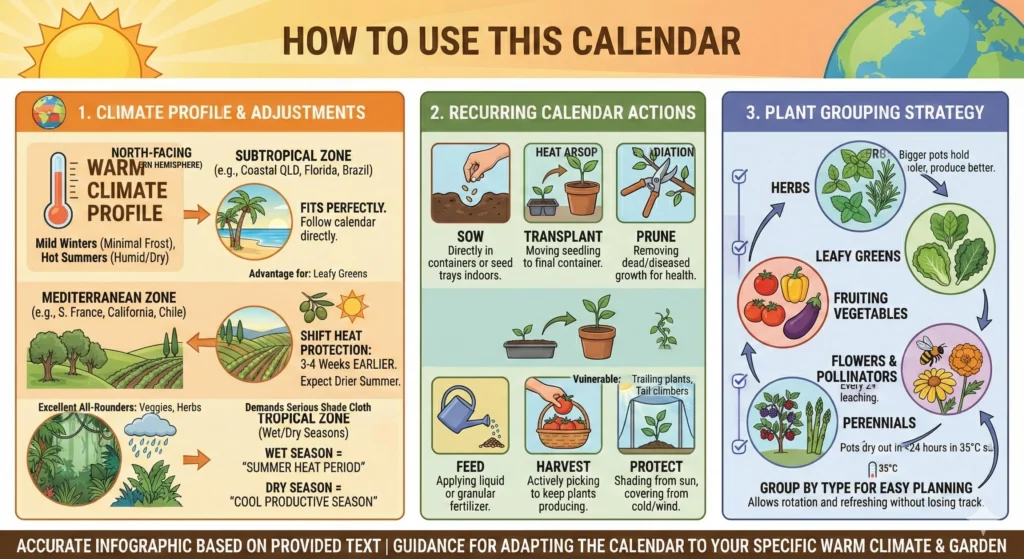
This calendar is built around the most common warm climate profile: mild winters with minimal or no frost, and hot, often humid or hot-dry summers. If you’re in a subtropical zone like coastal Queensland, South Africa’s eastern coast, Florida, or parts of Brazil, this fits you almost perfectly. If you’re in a Mediterranean zone—Southern France, California, central Chile, coastal Turkey—shift the “heat protection” months about three to four weeks earlier and expect a drier summer. If you’re in a true tropical zone with a wet and dry season rather than summer and winter, treat the wet season as your “summer heat period” and the dry season as your “cool productive season.”
Throughout the calendar, recurring actions appear consistently. Sow means putting seeds directly in containers or in seed trays indoors. Transplant means moving a seedling from its starter tray into its final container. Prune means removing dead, diseased, or overgrown growth to keep plants healthy and productive. Feed means applying liquid or granular fertilizer. Harvest means actively picking—even when you don’t need everything—to keep plants producing. Protect means shading from sun, covering from cold, or shielding from wind.
Group your plants by type as you plan: herbs, leafy greens, fruiting vegetables, flowers and pollinators, and perennials. This lets you rotate and refresh each group without losing track of what’s where.
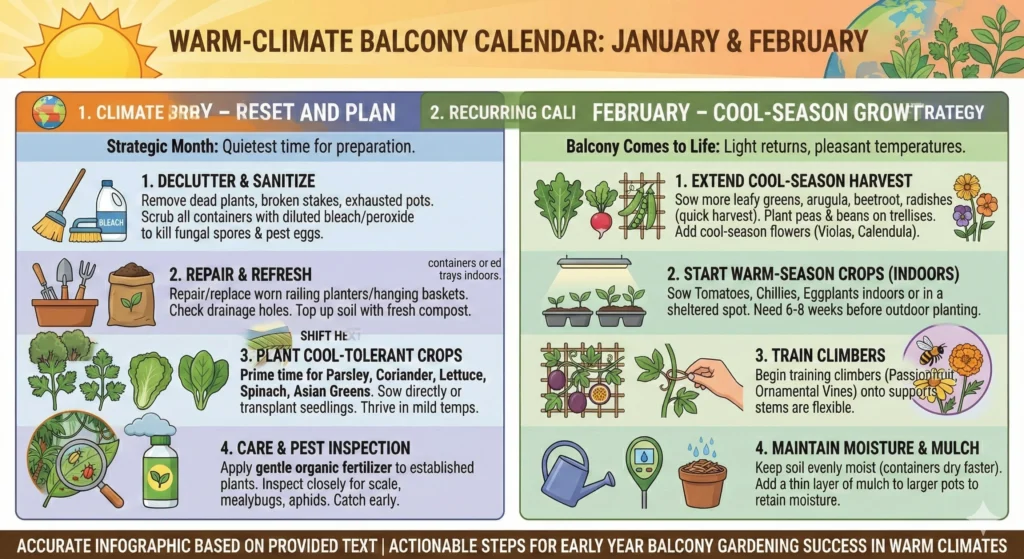
4. January – Reset and Plan
January on a warm balcony is your quietest month, and that makes it your most strategic one. Use this lower-intensity period to set yourself up for success across the rest of the year.
Start by decluttering the entire balcony—remove dead plants, broken stakes, exhausted pots. Scrub every container with diluted bleach or hydrogen peroxide to kill fungal spores and pest eggs that overwinter in the residue. Check drainage holes and clear any that are blocked. If railing planters or hanging baskets are showing rust or wear, repair or replace them now rather than discovering the problem when they’re full of soil and plants. Top up potting mix in any pots that have settled significantly—mix in fresh compost to reinvigorate the soil without fully replacing it.
In terms of planting, January is prime time for cool-tolerant herbs and greens in warm climates. Parsley, coriander, lettuce, spinach, and Asian greens like pak choi all thrive when temperatures are mild and the sun isn’t yet punishing. Sow directly into pots or transplant seedlings bought from the nursery. These crops genuinely enjoy cooler nights and will bolt and become bitter once heat arrives, so growing them now is working with your climate, not against it.
For care, apply a gentle organic fertilizer—seaweed solution or a balanced granular slow-release—to any established herbs or perennials still in their pots. Inspect every plant closely for scale insects, mealybugs, and aphids, which don’t disappear in mild winters—they slow down and wait. Catch them now before they build up into serious infestations.
5. February – Cool-Season Growth
February is when your balcony comes to life after the January reset. The light is returning, temperatures stay pleasant, and you can plant generously knowing the heat is still weeks away.
Sow or plant additional leafy greens to extend your cool-season harvest—more lettuce, arugula, spinach, beetroot (grown for leaves as well as roots), and radishes, which are ready to harvest in three to four weeks and excellent for filling gaps between slower crops. Peas and beans do remarkably well in deep containers with a simple bamboo trellis or wire frame attached to the railing. Cool-season flowers like violas, calendula, and snapdragons bring color and attract early pollinators—plant them in window boxes along the rail or in gaps between vegetable pots.
February is also the moment to start your warm-season crops in a sheltered indoor spot or on the most protected part of the balcony. Sow tomatoes, chillies, and eggplant seeds in small trays or individual cells indoors. These plants are slow starters and need six to eight weeks before they’re ready for their final containers outdoors. Starting them in February means they’ll be strong, well-rooted seedlings by the time April warmth arrives—giving them the long, productive season balcony tomatoes in warm climates are capable of.
Begin training any climbers—passionfruit, climbing beans, or ornamental vines—onto their supports now while stems are young and flexible. Keep soil evenly moist; cool weather can give a false sense of security, but containers still dry faster than ground soil. Start a thin layer of mulch on larger pots to retain moisture and protect roots.
6. March – Transition to Warm Season
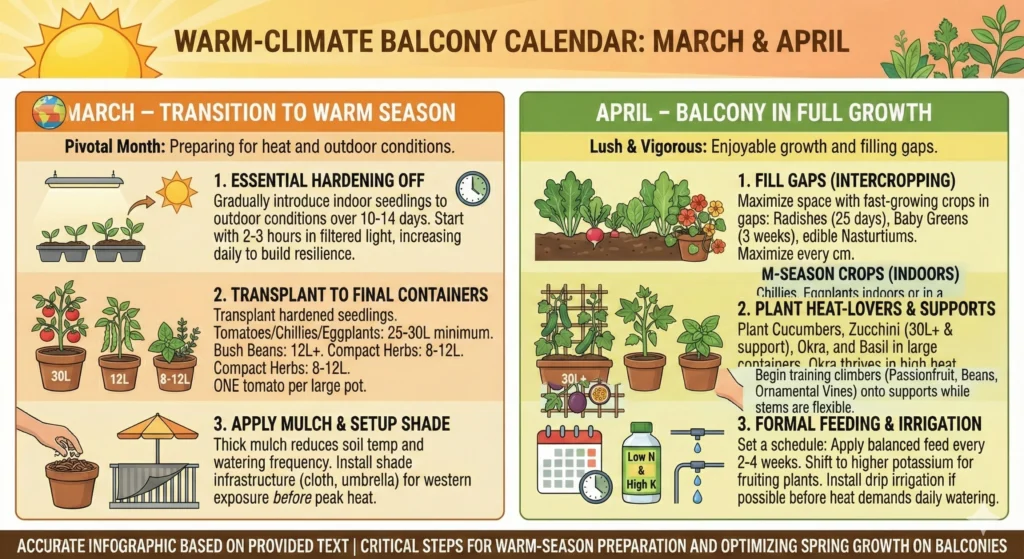
March is a pivotal month. The warm season is arriving, and seedlings that have been growing in sheltered conditions need to start getting used to the real world outside.
Hardening off—the process of gradually introducing seedlings to outdoor conditions—is essential and often skipped. Tomato, chilli, and eggplant seedlings that go directly from a cozy indoor spot to a sun-exposed balcony will suffer sunscald, wilting, and setback. Instead, move them outside for two to three hours in filtered light on the first day, four to five hours the next, and gradually increase exposure over ten to fourteen days. This builds resilience without the shock.
Once hardened off, transplant your tomato, pepper, and eggplant seedlings into their final large containers—at least 25 to 30 liters each. Bush beans go into medium containers (12 liters or more), and compact herbs like basil, thyme, and oregano into 8 to 12-liter pots. Don’t crowd plants—one tomato per large container performs better than two competing for the same roots and nutrients.
Apply a thicker mulch layer across all containers—coco coir, wood chips, or even dried leaves work well. This is a simple act that makes a significant difference: mulch on balcony containers in hot climates can cut soil temperature by 5 to 10 degrees and halve the frequency of watering needed. Set up basic shade infrastructure now—a shade cloth panel on the western railing, a market umbrella, or a bamboo screen—before temperatures climb and you’re scrambling. Anticipating heat is far easier than reacting to it.
7. April – Balcony in Full Growth
April is one of the most enjoyable months in balcony gardening for warm climates. Temperatures are warm but not yet brutal, plants are growing vigorously, and the balcony looks and feels lush.
Fill any gaps between established plants with fast-growing crops: radishes ready in 25 days, baby greens harvestable in three weeks, and nasturtiums that spill beautifully over the edge of containers while their flowers and leaves are fully edible. This technique—using fast crops to fill the space around slower, larger plants—is called intercropping, and it maximizes every square centimeter of balcony space.
This is the right time to plant cucumbers, zucchini, okra, and heat-loving herbs in their large, deep containers. Cucumbers and zucchini need big pots—30 liters minimum—and a firm support structure. They grow fast and reward consistent watering and feeding with remarkable productivity. Okra thrives in the kind of heat that slows down almost everything else, making it one of the most reliable warm climate balcony vegetables for midsummer. Basil, planted now, will hit peak production in two months—align that with your tomato harvest and you have everything for a caprese salad from your own balcony.
Set a formal feeding schedule this month and stick to it. Every two to four weeks, depending on the fertilizer type, apply a balanced liquid feed or a slow-release granular fertilizer. Fruiting plants like tomatoes and chillies benefit from shifting to a lower-nitrogen, higher-potassium feed once they begin flowering—this supports fruit development over excessive leaf growth. If a self-watering pot or simple drip irrigation setup is within your budget, April is a good time to install it before the heat demands twice-daily attention.
8. May – Heat Management Starts
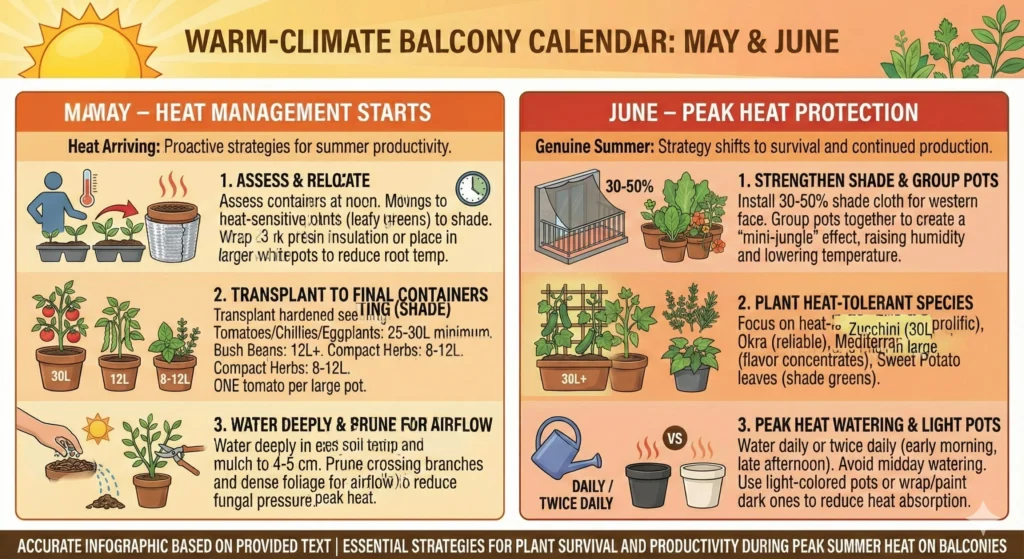
By May, the heat is no longer a future concern—it’s arriving. Managing it proactively means your balcony stays productive through summer rather than becoming a graveyard of scorched, wilted plants.
Walk your balcony at noon on a clear day and assess which containers are baking. Dark-colored pots in direct sun can reach soil temperatures above 40°C, which inhibits root function and can kill plants even when watered. Relocate heat-sensitive plants—leafy greens, parsley, coriander—to the shadiest, most protected corners. Group heat-loving plants together in the sunniest positions. Wrapping dark pots in reflective insulation or placing them inside a slightly larger white container dramatically reduces root zone temperature.
In any spot that gets afternoon shade, succession plant a small batch of quick greens—lettuce, baby spinach, Asian greens—every two to three weeks. These will bolt when temperatures climb above 28 to 30°C, but you can harvest them young and fast before they do. Replace them without guilt; that’s the nature of continuous planting in balcony gardening in hot summers.
Water deeply in the early morning so plants have full moisture reserves before the heat of the day. Shallow watering just wets the surface and encourages roots to stay near the top, where soil is hottest. Increase mulch depth where possible—4 to 5 cm of coco coir or wood chips makes a real difference. Prune for airflow: remove crossing branches and dense foliage from inside fruiting plants to let air move through, which reduces fungal pressure significantly.
9. June – Peak Heat Protection
June in most warm climates marks the arrival of genuine summer—relentless heat, dry winds or high humidity, and soil that drains moisture faster than you can replace it. Your strategy now shifts from growth optimization to plant survival and continued productivity in tough conditions.
Strengthen shade structures. A 30 to 50% shade cloth across the western face of your balcony blocks the worst afternoon sun while still allowing enough light for fruiting plants. This single intervention can reduce ambient balcony temperature by 3 to 5°C. Grouping pots together creates a “mini-jungle” effect—the combined leaf mass of clustered plants transpires moisture, raising local humidity and lowering temperature in a way that isolated pots in a bare arrangement simply cannot. Position taller plants where they shade smaller ones.
Focus new planting efforts on genuinely heat-tolerant species. Chillies love extreme heat and produce prolifically through summer with minimal care beyond watering. Okra keeps producing in temperatures that shut down most other vegetables. Mediterranean herbs—thyme, oregano, rosemary—slow their growth but survive and even concentrate flavor compounds in hot, dry conditions. For cut-and-come-again greens in shade, sweet potato leaves are both productive and strikingly ornamental.
In peak heat, water daily or twice daily—early morning without exception, and a second watering in the late afternoon for plants showing heat stress. Never water in midday sun; water droplets on leaves can magnify sunlight and cause scorch marks. Use light-colored containers wherever possible—white, cream, or light grey pots absorb significantly less radiant heat than black or dark brown. If you can’t replace pots, paint them or wrap them in light-colored fabric.
10. July – Maintenance and Harvest
July is high summer, and your balcony’s productivity depends entirely on how consistently you maintain it. This is the month of daily attention.
Harvest constantly and aggressively. Chillies, tomatoes, beans, cucumbers, and herbs all produce more when harvested regularly—leaving mature fruit on the plant signals it to slow production. Pick tomatoes the moment they reach full color; pick chillies at whatever stage suits your heat preference; snip basil and other herbs weekly to prevent flowering, which reduces leaf quality. Deadhead flowers to extend bloom time. The balcony that gets visited daily produces more than the one checked every few days.
In any container that has been emptied by a finished crop—spring peas, cool-season greens—refresh the top layer of potting mix with compost and plant a new wave of heat-tolerant herbs or a compact okra plant. This keeps the whole balcony in rotation rather than sitting empty.
Spider mites are the primary pest threat in July. They love hot, dry air and reproduce explosively, producing visible webbing on the undersides of leaves and causing leaves to turn bronzed and stippled. The most effective control is aggressive hosing—blast plant foliage with a strong jet of water daily, targeting leaf undersides. Keep humidity up around plants to make the environment less favorable for mite reproduction. Neem oil sprays in the early evening are effective if populations are established.
11. August – Revive and Prepare for Late Season
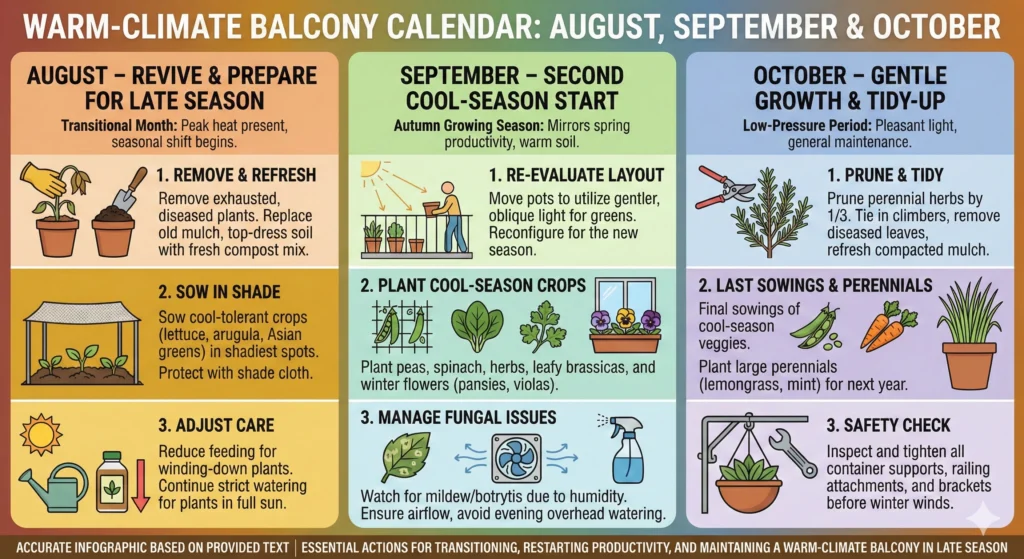
August is a transitional month with conflicting energy: peak heat is still present, but the seasonal shift is coming, and the choices you make now determine how good your autumn balcony will be.
Start by removing any plants that are truly exhausted—leggy, diseased, or unproductive beyond recovery. There’s no reward in keeping them. Remove old mulch that has broken down into compacted mats and replace it with fresh material. On pots where plants are being kept, refresh the top 5 cm of potting mix by scraping it off and replacing with a mixture of fresh potting mix and mature compost. This top-dressing feeds roots without disturbing the plant.
Begin sowing cool-tolerant crops in the shadiest pots on the balcony. Lettuce, arugula, and Asian greens can germinate and establish in August if given adequate shade and moisture, putting them in excellent position for rapid growth as temperatures moderate in September and October. Sow in the early morning shade and protect seeds with a light shade cloth until they’re established.
Reduce feeding for plants that are winding down—overfeeding tired plants promotes weak, pest-susceptible growth. Continue strict watering for any plants remaining in full sun. Don’t let August become a neglected month; it’s a setup month, and balconies that get careful attention in August hit September running.
12. September – Second Cool-Season Start
September signals the start of your balcony’s second productive cycle of the year—the autumn growing season that mirrors your spring in productivity and enjoyment. In warm climates, this often rivals or beats spring for leafy green harvests because the soil is warm and plants establish quickly.
Re-evaluate your balcony layout with fresh eyes. Spots that were in punishing afternoon sun through summer may now be receiving gentler, more oblique light—ideal for growing greens. Move pots around deliberately rather than leaving everything where it stood through summer. The reconfiguration takes thirty minutes and can transform how your balcony performs over the next three months.
Plant peas, spinach, coriander and cilantro, parsley, and leafy brassicas now. All thrive in the gradually cooling temperatures of autumn in warm climates. Nasturtiums and marigolds planted now will bloom prolifically through autumn and into winter. Winter flowers suited to warm climates—pansies, violas, snapdragons, stock—should go into any decorative containers or window boxes for color through the cooler months.
Watch for fungal issues as humidity rises and temperatures moderate. Powdery mildew, downy mildew, and botrytis all thrive when warm days and cool nights create condensation. Ensure good airflow between pots, avoid overhead watering in the evening, and remove affected leaves promptly. Copper-based sprays are effective for prevention if fungal problems have been an issue in previous years.
13. October – Gentle Growth and Tidy-Up
October is a gentle month—plants are growing without stress, the light is pleasant, and the balcony asks relatively little of you while giving back generously.
Use this lower-pressure period for general maintenance that gets skipped during busy growing months. Prune perennial herbs that have become woody or leggy—rosemary, sage, lemon verbena, thyme—cutting back by a third to encourage fresh, productive growth. Tie in any climbers that have become unruly. Remove any diseased leaves and strip old mulch from pots that look compacted, replacing it with a fresh layer.
Get last sowings of cool-season vegetables in the ground—this is your final window before temperatures drop to levels that slow germination significantly. Bush beans, beetroot, carrots (in deep containers), and a final round of lettuce all work well sown in October. This is also an excellent time to plant perennials into large containers—established perennial herbs like lemongrass, Vietnamese mint, and chives will sit through winter and come back strongly in spring, getting larger and more productive each year.
Check all container supports, railing attachments, and hanging basket brackets before winter winds arrive. A container that has been slowly loosening from a railing clip over summer is a serious hazard—inspect and tighten everything now when conditions are calm.
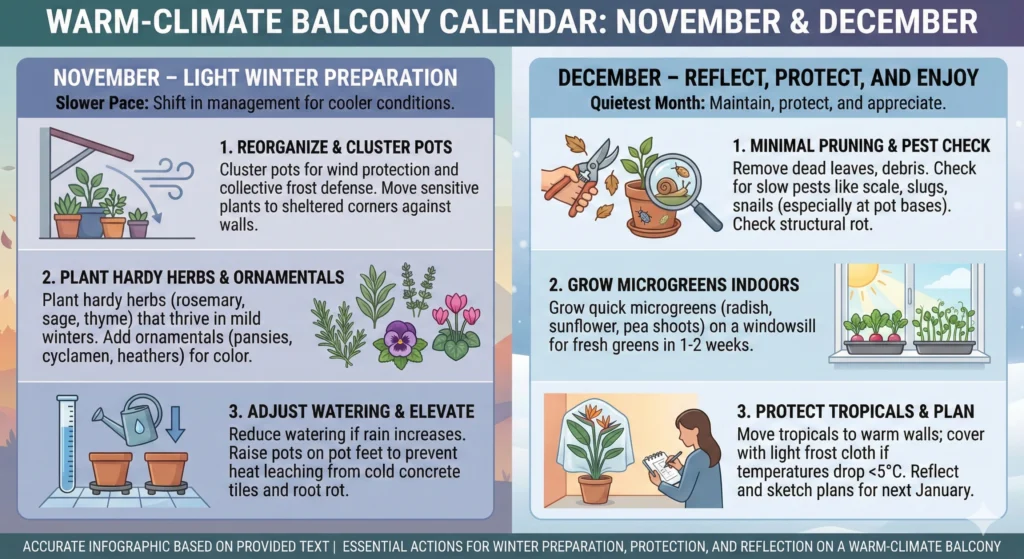
14. November – Light Winter Preparation
November in warm climates is rarely severe, but it still calls for a shift in how you manage the balcony. The growing pace slows, watering needs reduce, and some plants will start to look a little tired.
Reorganize pots to reduce wind exposure—cluster them closer together and move the most sensitive ones to sheltered corners against walls or under any roof overhang. This grouping reduces evaporation and gives some collective frost protection if a brief cold snap arrives. Making the balcony easier to navigate and water in winter also means you’re more likely to stay on top of maintenance during the less motivating months.
Plant hardy herbs that genuinely thrive in mild winters—rosemary, sage, and thyme handle cool nights without problem and continue growing, just more slowly. Ornamentals like pansies, cyclamen, and winter-flowering heathers add color when the rest of the garden looks bare. These are satisfying plants to have because they look good with minimal effort.
If rain increases in November (as it does in many Mediterranean and subtropical zones), reduce your watering frequency accordingly. Overwatering in cool, low-light conditions causes root rot faster than almost anything else. Raise pots off cold balcony tiles on pot feet or improvised stands—cold concrete leaches heat from pot bases, chilling roots and slowing growth. This simple action costs almost nothing and makes a measurable difference.
15. December – Reflect, Protect, and Enjoy
December is the quietest gardening month, and in a warm climate, that’s a relative statement—your balcony should still be green, producing herbs and greens, and genuinely beautiful to sit near.
Keep pruning minimal—remove dead leaves, clean up any fallen debris, and check for slow-moving pests like scale and snails that become active in cool, moist conditions. Inspect the base of pots for slugs and snail eggs hiding in the drainage tray area. Check any structural rot in wooden trellises or planters and make notes for replacement in January.
In the most sheltered corner of your balcony, or on an indoor windowsill with good light, grow microgreens—radish, sunflower, pea shoots, or cress—in shallow trays. They germinate and are harvestable in one to two weeks, giving you fresh, nutritious greens without any significant outdoor growing. This keeps your gardening habit alive through the quietest weeks of the year.
For any genuinely tropical plants that have been on the balcony through summer—bird of paradise, tropical gingers, tender hibiscus—move them against the warmest wall on cold nights. If temperatures threaten to drop below 5°C, a single layer of light frost cloth draped loosely over them through the night provides enough protection. In most warm climates, this is only needed a handful of times at most. December is also the month to simply enjoy what you’ve built over the year: sit on the balcony with something warm, look at what’s growing, and start sketching your plan for next January.
16. Sample Plant Lists for Warm Balconies
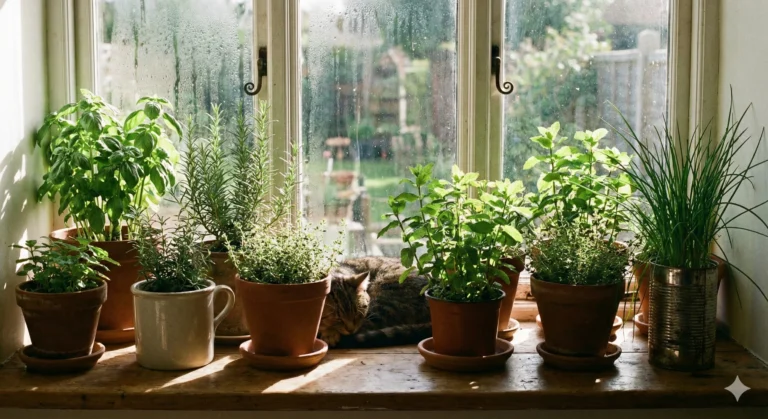
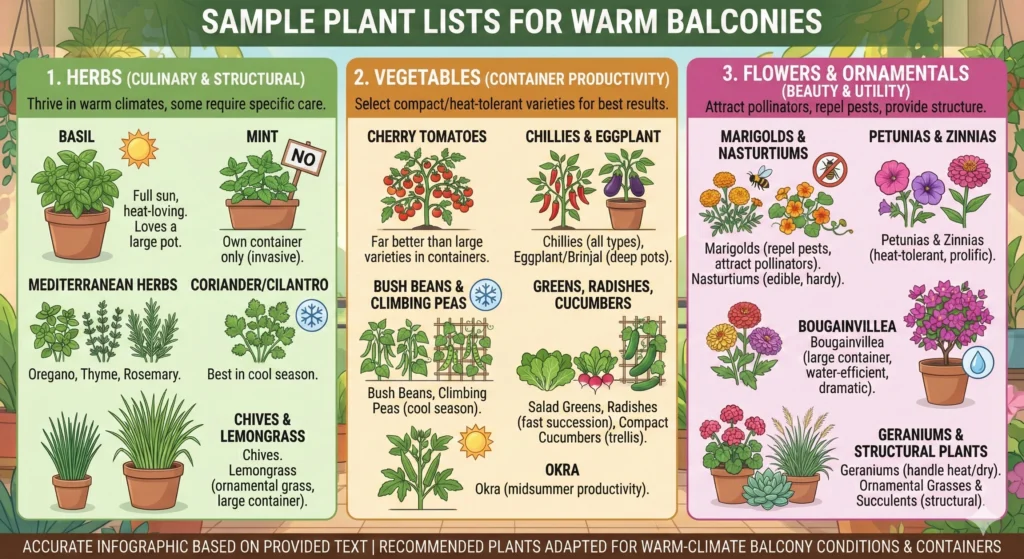
Herbs: Basil (full sun, heat-loving, loves a large pot), mint (effective only in its own container—it takes over everything else), oregano, thyme, rosemary, coriander and cilantro (best in cool season), chives, and lemongrass (which doubles as an ornamental grass and grows impressively large in a big container).
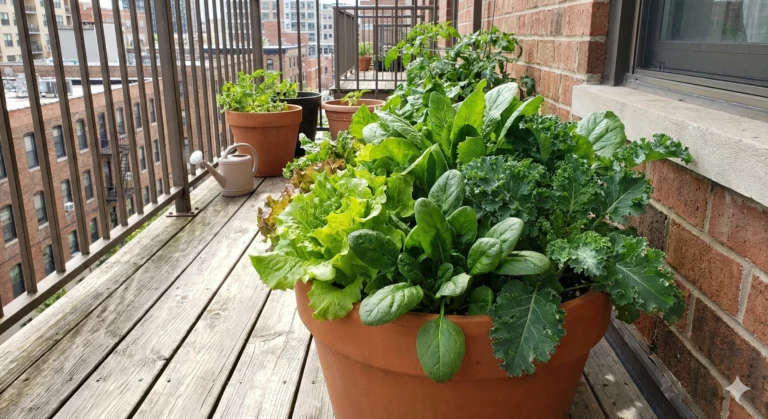
Vegetables: Cherry tomatoes (far better than large varieties in containers—shorter internodes, quicker harvest, more forgiving of root restriction), chillies of all types from sweet to superhot, eggplant and brinjal in deep pots, bush beans, climbing peas in cool season, all varieties of salad greens, radishes for fast succession planting, compact cucumbers trained on a trellis, and okra for midsummer productivity when everything else falters.
Flowers and ornamentals: Marigolds repel some pests and attract pollinators—plant them as companions throughout the balcony. Nasturtiums are edible from flower to seed and incredibly hardy. Petunias and zinnias handle heat well and bloom prolifically. Bougainvillea in a large container becomes a dramatic, water-efficient feature plant. Geraniums handle heat and dry spells with minimal complaint. Heat-tolerant ornamental grasses and succulents fill structural roles that don’t require regular replacement.
17. Balcony Gardening Tips for Success
Choose the largest container you can realistically manage. A 30-liter pot on a balcony with strong flooring will outperform three 10-liter pots for almost every crop. The volume of soil buffers heat, holds moisture longer, and gives roots the space they need to establish a healthy plant capable of producing through stress.
Use a high-quality, lightweight commercial potting mix—never garden soil—and renew it meaningfully each year. Completely replacing the mix every two years and top-dressing with compost in the alternating year keeps nutrients available and structure open. Old, compacted potting mix is one of the leading causes of underperforming container plants.
Practice continuous small plantings rather than large single sowings. Sowing six lettuce seeds every two weeks gives you ongoing harvests for months; sowing thirty seeds at once gives you a glut and then nothing. This succession planting approach is the foundation of a productive balcony through most months of the year.
Combine vertical structures—bamboo teepees, wire obelisks, wall-mounted trellis panels—with hanging baskets for trailing herbs and flowers, and rail planters for quick-turnover crops. Thinking in three dimensions rather than just the floor of the balcony doubles or triples your effective growing area without adding weight to a single spot.
Keep a simple garden journal. One page per month, noting what you planted, what worked, what failed, and what you’d change. After two seasons, your own notes become more valuable than any generalized calendar, because they’re calibrated to your exact balcony, your exact microclimate, and your exact growing style.