Revive Houseplants: Winter Survival Checklist
Common Winter Killers
The moment your heating kicks on for the season, your houseplants enter survival mode—and most of us don’t realize it until leaves start dropping. Winter doesn’t kill plants through cold alone. The real culprits are the invisible stressors we create indoors: bone-dry air from radiators, shorter days that starve plants of light, and our well-meaning habit of watering on the same summer schedule when roots need far less moisture. If your fiddle leaf fig is suddenly dropping leaves or your pothos looks limp, you’re not alone—these are classic signs your green friends are struggling with seasonal stress.
Drafts are another silent killer, especially for tropical foliage that evolved in stable, warm climates. That burst of icy air from a cracked window or door might feel refreshing to you, but to a peace lily or monstera, it’s like standing in front of an open freezer. Cold drafts mimic frost conditions, causing cells in leaves to rupture and turn brown overnight. Even air purifying plants like spider plants and snake plants, which tolerate neglect beautifully in summer, can suffer leaf damage when positioned near drafty entryways or leaky window seals during the chilly season.
Overwatering becomes especially dangerous in winter because plants enter dormancy—a natural slowdown where they photosynthesize less, grow minimally, and drink a fraction of what they need in summer. When roots sit in soggy soil during cold months, they suffocate like feet stuck in wet socks all day. Without oxygen, roots rot, turning brown and mushy. This is why overwatering succulents in cold months is the fastest way to lose them—their thick leaves already store water, and winter dormancy means they need almost none from you.
Pests also thrive in winter’s indoor conditions. Spider mites love the dry heat that houseplants hate, multiplying rapidly on stressed plants with crispy leaf edges. You might notice fine webbing between leaves or tiny specks crawling on the undersides. Meanwhile, fungus gnats breed in overly moist soil, their larvae munching on roots while adults buzz annoyingly around your face. These winter houseplant pests exploit weakened plants, so prevention through proper care is your best defense.

Light Adjustments
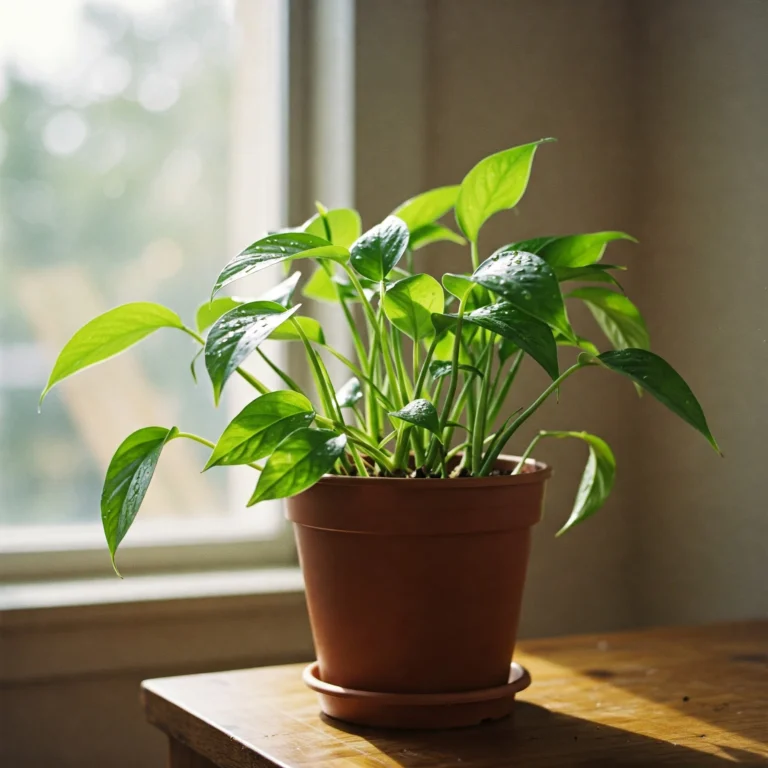
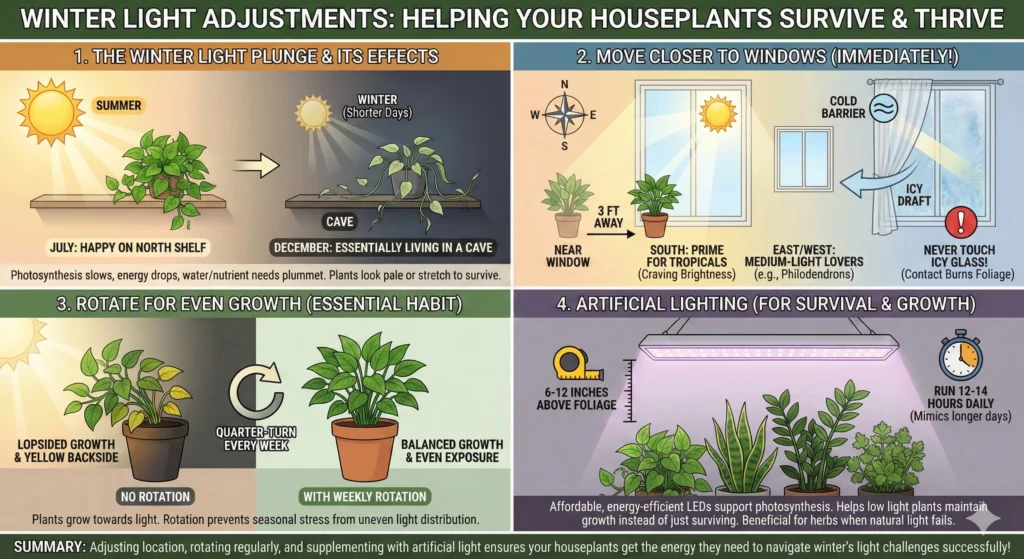
Shorter winter days slash the light your plants receive, sometimes by half compared to summer. Even if your pothos sat happily on a north-facing shelf in July, by December it’s essentially living in a cave. Photosynthesis slows dramatically when light drops, meaning plants produce less energy and their need for water and nutrients plummets. This is why low light indoor plants in winter often look pale or stretch toward windows—they’re literally reaching for survival.
Move plants closer to windows immediately. That spot three feet from your south window might have worked in June, but winter’s low sun angle means light intensity drops off sharply indoors. South-facing windows become prime real estate for tropical plants craving brightness, while east and west exposures work for medium-light lovers like philodendrons. If you’re dealing with houseplants dying from winter drafts near windows, create a barrier—a sheer curtain can diffuse cold air while still transmitting light. Never let leaves touch icy glass, as contact cold can burn foliage within hours.
Rotating houseplants for winter light is essential but often forgotten. Plants naturally grow toward light sources, and in winter’s weak sun, this becomes exaggerated. Rotate each pot a quarter-turn every week so all sides receive equal exposure. Otherwise, you’ll end up with lopsided growth and a backside of yellowing leaves that never saw the sun. This simple habit keeps indoor greenery balanced and prevents seasonal stress from uneven light distribution.
Consider artificial lighting for houseplant survival if you lack bright windows or live in northern climates with brutal winters. LED grow lights have become affordable and energy-efficient, providing full-spectrum light that supports photosynthesis. Position them 6-12 inches above foliage and run them for 12-14 hours daily to mimic longer days. This is especially helpful for low light indoor plants in winter that would otherwise languish—pothos, snake plants, and ZZ plants will maintain growth instead of merely surviving. Even leafy greens like herbs benefit enormously from supplemental lighting when natural light fails.
Watering Checklist
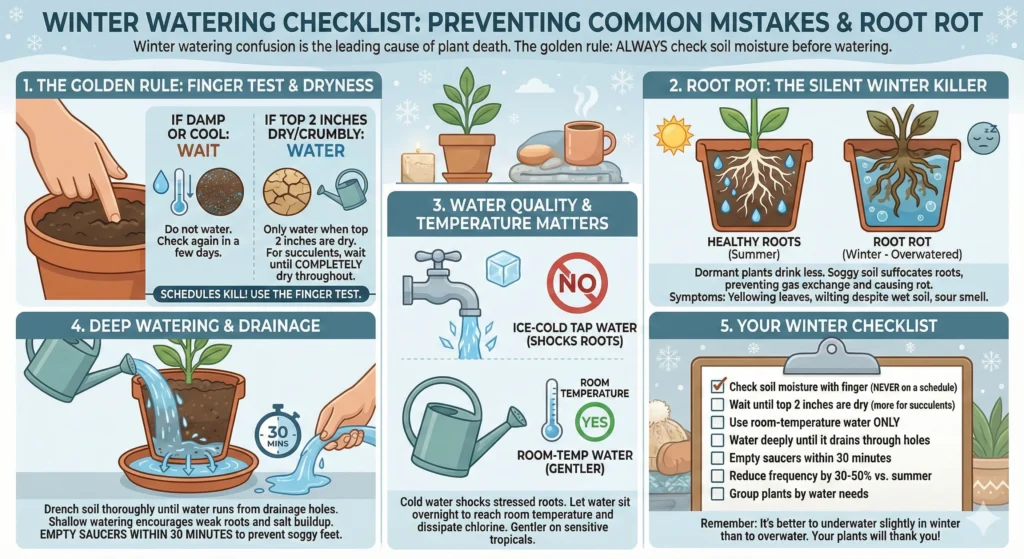
Winter watering confusion causes more plant deaths than any other mistake. The golden rule: check soil moisture before every watering session. Stick your finger two inches deep into the soil—if it feels damp or cool, wait. Only water when the top two inches feel dry and crumbly. For succulents and cacti, wait until soil is completely dry throughout the pot, which might mean watering once monthly instead of weekly.
Root rot from overwatering happens fast in winter because dormant plants no longer actively pull moisture from soil. Soggy roots suffocate, unable to exchange gases, and quickly turn to mush. You’ll notice symptoms above ground: yellowing lower leaves, wilting despite wet soil, or a sour smell from the pot. Prevention is simple—reduce watering frequency by roughly half compared to summer. If you watered every seven days in August, shift to every 14 days in January, but always confirm with the finger test first.
Water quality and temperature matter more in winter. Use room-temperature water, never ice-cold tap water straight from the faucet. Cold water shocks roots already stressed by lower light and dormancy. Let water sit overnight to reach room temperature and allow chlorine to dissipate, which is gentler on sensitive tropical houseplants. When you do water, drench the soil thoroughly until water runs from drainage holes, then discard the excess from saucers. Shallow watering creates salt buildup and encourages shallow root systems that struggle year-round.
Here’s your winter watering checklist:
- Check soil moisture with your finger before watering—never on a schedule
- Wait until the top 2 inches feel dry (more for succulents)
- Use room-temperature water only
- Water deeply until it drains through holes
- Empty saucers within 30 minutes to prevent root rot
- Reduce frequency by 30-50% compared to summer
- Group plants by water needs to simplify your routine
Humidity and Temperature
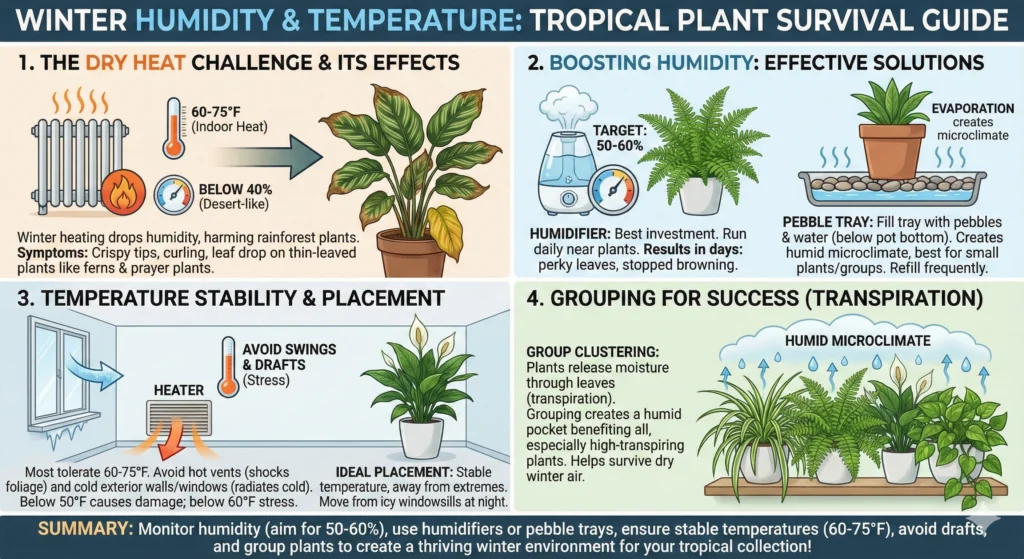
Dry heat is brutal for tropical houseplants evolved in rainforests where humidity hovers near 60-80%. Your winter furnace or radiator can drop indoor humidity below 40%, sometimes even to desert-like 20% levels. This causes leaf tips to crisp and turn brown, edges to curl, and older leaves to yellow and drop. You’ll notice it most on thin-leaved plants like calatheas, ferns, and prayer plants—their foliage evolved for moist air and simply can’t cope with arid conditions.
A humidifier for tropical houseplants in winter is the single best investment you’ll make if you’re serious about keeping them thriving. Place a cool-mist humidifier near your plant groupings and aim for 50-60% humidity, which you can monitor with an inexpensive hygrometer. Run it daily during heating season. You’ll see results within days—leaves perk up, brown edges stop spreading, and new growth emerges healthier. Even hardy plants like pothos appreciate the moisture boost.
Pebble trays offer a humidity boost for plants without buying equipment. Fill shallow trays with pebbles, add water just below the pebble tops, and set pots on top. As water evaporates, it creates a microclimate of humid air around foliage. This works best for smaller plants or when you group several pots together. Just ensure pot bottoms don’t touch water directly, or you’ll encourage root rot. Refill trays every few days as water evaporates.
Group clustering creates its own microclimate through a process called transpiration—plants release moisture through their leaves, and when grouped together, they create a humid pocket of air that benefits everyone. Arrange your tropical collection close together on a table or shelf, and they’ll help each other survive dry winter air. This is especially effective for spider plants, ferns, and peace lilies that naturally transpire more moisture.
Temperature stability matters as much as humidity. Most houseplants tolerate 60-75°F happily, but swings cause stress. Avoid placing plants near heating vents where blasts of hot air shock foliage, or against exterior walls that radiate cold. Tropical foliage has limited cold tolerance—most suffer damage below 50°F, and many show stress below 60°F. If windowsills get icy at night, move plants back several feet or pull curtains to insulate them from glass chill.
Maintenance Routine
Winter dormancy means no fertilizer for dormant plants—this is crucial. Feeding plants when they’re not actively growing is like force-feeding someone who’s sleeping. Unused nutrients accumulate in soil as salts, burning roots and causing leaf tip browning. Stop fertilizing completely from November through February for most houseplants. Resume with diluted applications in March when daylight increases and you notice new growth emerging.
Pruning dead growth during low sun months keeps plants tidy and prevents pest infestations. Brown, crispy leaves harbor spider mites and fungus gnats, so remove them promptly. Use clean scissors to snip off damaged foliage at the base where it connects to the main stem. Don’t worry about cutting back—plants redirect energy to healthy growth instead of maintaining dying leaves. This is also a good time to prune leggy stems that stretched toward windows, cutting just above a leaf node to encourage bushier regrowth when spring arrives.
Pest control becomes critical in winter. Check plants weekly for spider mites—look for fine webbing, stippled leaves, or tiny moving dots. Treat immediately with a soapy spray for pest control: mix one tablespoon of mild liquid soap per quart of water, spray all leaf surfaces including undersides, and repeat every five days for three treatments. Spider mites in winter houseplants spread fast in dry conditions, so boosting humidity simultaneously helps control them. For fungus gnats, let soil dry more between waterings to break their breeding cycle, and consider yellow sticky traps to catch adults.
Dust accumulates faster in winter’s closed-up homes and blocks light absorption through leaves. Wipe large leaves like monstera and rubber plants monthly with a damp cloth, or take smaller plants to the shower for a gentle rinse. Clean leaves photosynthesize more efficiently, which is especially important when winter light is already limited. This simple task makes a visible difference—dusty leaves look dull and gray, while clean foliage gleams with health.
Repotting should wait until spring unless a plant is severely rootbound or suffering from root rot. Disturbing roots during dormancy stresses plants further, and cold soil temperatures slow root recovery. If you must address winter houseplant root rot, remove rotted roots with sterile scissors, repot in fresh well-draining mix, and water sparingly until new growth signals recovery. Otherwise, save all transplanting for March or April when warmer days and stronger light help plants bounce back quickly from the disturbance.